DIVING NEWS
Divers check out Polish river wreck
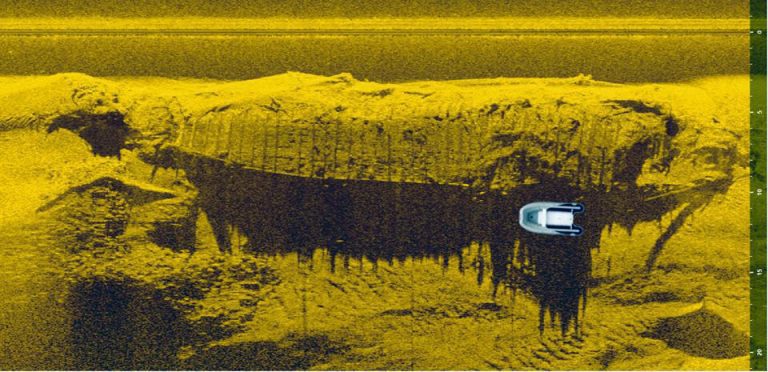
Picture: Stowarzyszenie Archeologów Jutra
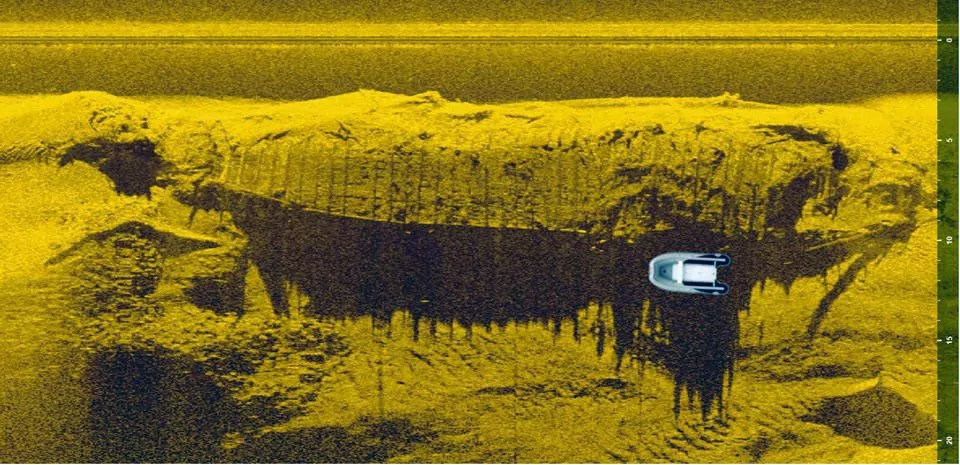
Archaeological divers surveying the Vistula river near Poland’s capital Warsaw have discovered a well-preserved timber szkuta or barge, which they reckon could be as much as 600 years old.
The 37m-long, 6m-wide vessel is believed to have been constructed between the 14th and 18th centuries to carry up to 100 tons of grain. Poland was for a long period western Europe’s major supplier, and the 650-mile Vistula is its biggest river, draining into the Baltic Sea.
The researchers from Stowarzyszenie Archeologów Jutra (Archaeologists of Tomorrow Association) had been using side-scan sonar to survey the Vistula’s muddy bed as part of their work to create an inventory of collapsed river-bridges.
They also found part of the timber frame of another boat of indeterminate age during their survey of an eight-mile section of the river north of Warsaw, as well as pilings and remains of the structure of a German Army-built bridge from WW2.
24 January 2020
Their scuba dives at the barge site were hampered by visibility of no more than 20cm and the rapid flow of the river. No traces of a cargo were found, as might be expected if it was a grain-carrier.
Until now, only two wrecks had been found in this section of the river, a 19th-century barge and a 16th-century vessel too badly deteriorated to identify. Samples from both the newly discovered wreck-sites are to be age-tested.