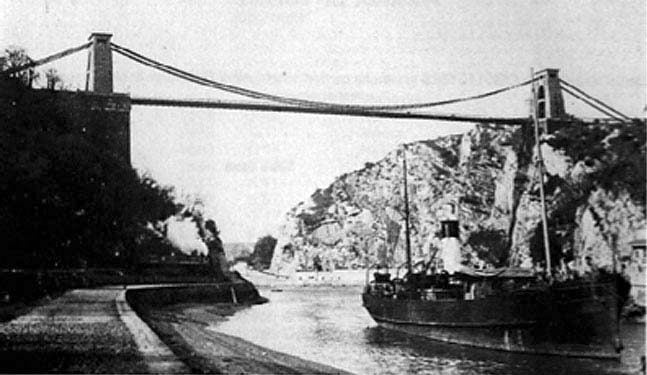
This big steamer wreck, The Glanmire, was built 120 years ago and gives many divers out of Berwickshire a lot of pleasure, says JOHN LIDDIARD.
First Impressions of the Glanmire
The Glanmire was one of those wrecks that everyone who had been to the St Abbs and Eyemouth area seemed to have dived – except me. There had been various reasons for me missing the wreck, ranging from dodgy wreck-finding from a small inflatable in my formative diving years to rough weather.
Finally, I struck lucky, but even then it was a close thing. The sea was picking up, and it was only just possible to dive it.
On the other hand, we had one of the best neap tides of the year and nice visibility. Underwater, the dive more than made up for all the times I had missed out.
Jim Easingwood dropped the shot just aft of the port boiler, and close to the upturned helm and steering engine, so that I crossed the boilers on the way down the line.
Wreck Orientation & Layout
For general orientation, the wreck lies across a slight slope, with the port side down-slope and the starboard side up-slope and the bow towards St Abbs.
It has also generally broken to port, so deck fittings tend to be on the deeper side of the wreck, with the keel towards the shallower side. The big triple-expansion steam engine has fallen over intact with its frame.
Like much of the wreck of the Glanmire, the engine is covered in clumps of yellow and white dead men’s fingers, which brighten the scene.
From the aft end of the engine, the open thrust-bearing leads to the propeller shaft. The shaft itself disappears beneath the keel, but as far as I can tell, it is intact all the way to the stern.
As noted above, the wreck has fallen to port, so other than the propulsive machinery, most items of interest are between the centre-line and the port side of the wreckage.
From the thrust-bearing, heading across the wreck leads to a section of railing from the superstructure, perhaps guarding the back of the deck above the engine-room, looking out across the aft holds.
There are plenty of lobsters and ling hiding beneath the hull-plates. The ling are sufficiently used to divers that one may even come out and follow you around.
A small break in the wreckage indicates the location of the first hold aft, followed by an intact section of deck with a long cargo winch spanning it. Continuing aft and a little out to port, the aft mast has fallen out from the wreck. This would have been seated close to the winch.
Touring the Stern
By the end of the mast, a row of fairleads indicates proximity to the stern.
The stern itself is largely upside-down, with the curved hull presenting little detail, though a section of deck does poke out from below and a prominent stern post rests nearby, still attached to a small section of deck.
Rounding the stern, the rudder is still in place, even if the rudder shaft is a little skewed. Behind the rudder, the four-bladed propeller is still attached to the tail-end of the propeller-shaft, and is half-buried in the seabed.

Following the shaft forward through the stern gland, it disappears beneath the keel in a line to the thrust-bearing and engine.
Midships & Cargo Handling
Our tour route now crosses back to the port side of the wreck and past the cargo winch to a small cargo-handling crane. Cranes would be fitted to a ship to speed cargo-handling in ports that had little dockside equipment.

We last met such cranes on the wreck of the Zaanstroom off Sussex (Wreck Tour 92, October 2006). I suspect that while now located just aft of the boilers, this crane would have originally been fitted alongside the forward holds, so the forward holds were serviced by cranes and the aft holds by a winch and derricks.
Either during salvage or as the wreck broke up, a crane from alongside the second hold was deposited further aft, as was the helm and steering engine.

Two large boilers rise to 26m from a general 30m seabed. Level with the front of the boilers, another crane, still attached to a scrap of deck, lies off to port, next to a smaller donkey boiler.
Back on the main part of the wreckage is a third crane. This suggests that there would originally have been four such cranes, two for each of the forward holds.
However, I was unable to find any sign of a fourth crane, so either it is well clear of the main body of the wreck, or perhaps buried beneath fallen hull plates.
Somewhat surprisingly for a cargo steamship wreck of this age, a section of deck still has wooden deck-planking intact.
The Bow Section
The wreckage now becomes more broken and sparse, with the only recognisable structures being the coamings from the two forward holds and.
The forward of these two coamings is almost tucked under the bow.
Off to port, a reel of mooring cable has fallen from the deck. Then, immediately below the bow, the anchor winch is upside-down beneath its mounting plate.
The bow has fallen to port to leave the deck almost vertical. As on the main deck earlier, the deck planking is nicely intact.
The back of the bow is open, and hull plates have rotted sufficiently to make a nice swim-through on the starboard edge of it.
The starboard anchor has fallen back on its chain to dangle over the bow.
It has also snagged a trawl-net, which is well bundled up and heavy against the seabed, so presents little danger to divers.

Maximum Depth & Ascent Options
This is the deepest point of the dive at 33m, although divers are unlikely to hit this depth unless they move off the bow to look back and take in the classic bow shape in such good visibility.
The typically good visibility also keeps options open for the ascent. Slack water permitting, it should be easy enough to relocate the shotline if you don’t want to bother with a delayed SMB.
Just make sure that you agree in advance with the skipper what you will be doing to ascend.
Tour Guide (Practical Information)
GETTING THERE: Eyemouth is on the A1107, just off the A1. Once there, follow the signs for the harbour. The Harbourside is on the north side of the harbour area.
HOW TO FIND IT: The Glanmire lies a few hundred metres off the cliffs and in line with the coast, with the bow towards St Abbs. GPS co-ordinates are 55 55.237 N, 002 08.239 W (degrees, minutes and decimals).
TIDES: Slack water is three hours after high water or two hours after low water at Eyemouth. On a good neap, the Glanmire may be diveable throughout the tide.
DIVING & AIR: Marine Quest Boat Charters operates the Offshore 105 North Star from Eyemouth, 01890 752444, www.marine-quest.co.uk. It has an air compressor at the Harbourside. The closest source of helium is in North Berwick. 713358.
ACCOMMODATION: Marine Quest is based at the Harbourside, with bunk-room accommodation for up to 15 divers, a lounge, TV, free Internet access and a very efficient drying-room for kit.
QUALIFICATIONS: The 30m depth and usually good visibility make the Glanmire suitable for PADI Advanced Open Water or BSAC Sports Divers.
LAUNCHING: Slipways are at St Abbs and Eyemouth.
FURTHER INFORMATION: Admiralty Chart 175, Fife Ness to St Abbs Head. Admiralty Chart 160, St Abbs Head to the Farne Islands. Ordnance Survey Map 67, Duns, Dunbar & Eyemouth. Shipwrecks of the Forth by Bob Baird. Shipwreck Index of the British Isles Volume 4, Scotland by Richard & Bridget Larn. Dive St Abbs & Eyemouth by Lawson Wood. St Abbs & Eyemouth Marine Reserve. Berwickshire Dive Tourism Association.
PROS: A big wreck with lots of colourful life and good opportunities for photographers.
CONS: A popular dive, so the site can be a bit busy.
DEPTH: 20 m – 35 m
Captain Clueless: The Sinking of the Glanmire
THE GLANMIRE, armed steamer. BUILT 1888, SUNK 1912
THE CAPTAIN OF THE 1141-TON iron steamer Glanmire put her onto the Black Carr Rocks on a rising tide in fog at 6.20 in the morning of 25 July, 1912, writes Kendall McDonald.
He would later admit to the enquiry into her loss that the fog was so thick that he didn’t know where he was, nor could he see the light of the St Abbs Lighthouse, though he was only 300m north of it. He also knew nothing of the tides in the area.
The Black Carrs are a large group of rocks just south of St Abbs Head, and the Glanmire struck them so hard that the order to abandon ship was given almost at once.
The crew of 22 and the 15 passengers responded immediately and reached the shore in two of the ship’s boats remarkably swiftly.
But when they tried to see the ship, she had disappeared in the fog. In fact, the rising tide had lifted her off the rocks, and she drifted north to founder 550m off St Abbs Head.
At the time of the enquiry, no one seemed very sure where the wreck was. And the rough seas and gales soon started to break it apart, even though it lay on its side in 30m. It was first dived in 1965.
The Glanmire, which was on a voyage from Amsterdam to Leith and Grangemouth with a general cargo at the time of her loss, had been built in 1888 by WB Thompson & Co of Dundee, 242ft long with a beam of 32ft and a draught of 16ft.
Intended to carry 66 first class and 37 steerage passengers, her main deck was designed for livestock, as she was originally built to be a replacement for the 888-ton coastal steamer Bally Cotton, which was later lost in February 1900 on rocks near Newton, Northumberland.
Thanks to Iain and Jim Easingwood.
FAQs
Where is the Glanmire wreck located?
The Glanmire lies a few hundred metres off the cliffs near St Abbs, Berwickshire, with the bow facing towards the coast. GPS coordinates: 55 55.237 N, 002 08.239 W.
What are the diving conditions at the Glanmire?
Depths range from 20–35m. Visibility is generally good, and slack water occurs three hours after high water or two hours after low water at Eyemouth.
What makes the Glanmire a popular dive site?
Divers enjoy the large steamer wreck, abundant marine life including lobsters and ling, colourful coral, intact deck-planking, and photogenic features like cranes, boilers, and the four-bladed propeller.
What is the history of the Glanmire?
Built in 1888, the Glanmire struck the Black Carr Rocks in fog on 25 July 1912, carrying cargo and passengers. The crew and passengers survived, but the ship sank off St Abbs Head.
What qualifications are needed to dive the Glanmire?
The wreck is suitable for PADI Advanced Open Water or BSAC Sports Divers due to its 30m depth, generally good visibility, and moderate current conditions
How can divers access the Glanmire wreck?
Launching is available from St Abbs or Eyemouth slipways. Marine Quest Boat Charters operates the Offshore 105 North Star from Eyemouth and provides air and helium for dives.
This article was originally published in Scuba Diver Magazine
Subscribe today with promo code DIVE1 — enjoy 12 months for just £1!
