What is a Personal Locator Beacon?
Personal Locator Beacons (PLBs) are essential safety devices for scuba divers venturing into open waters, especially in remote or offshore locations. These compact, battery-powered transmitters send distress signals via satellite networks, alerting Search and Rescue (SAR) teams to your exact location. Unlike traditional VHF radios or AIS (Automatic Identification System) devices, PLBs operate independently of nearby vessels, offering a direct line to emergency services.
It’s also worth pointing out that Personal locator beacons are different to EPIRBs (Emergency Position Indicating Radio Beacon) as there has been confusion in the past. The main difference is that EPIRBs are larger, vessel-registered devices designed for maritime use, with some models automatically deploying in water, while PLBs are smaller, person-registered beacons for land or sea use but with less transmission life and a manual deployment requirement. There are other differences, but be assured, they are not the same.
Why Divers Should Carry a Personal Locator Beacon
Even experienced divers can be swept away at the surface by currents, wind, or boat traffic. A personal locator beacon provides an extra layer of safety, giving rescuers your exact location in case of an emergency. They’re particularly valuable when diving in remote or challenging locations such as Malpelo, the outer reefs of the Great Barrier, Cocos Island, or the Banda Sea, where help may be far away. Many liveaboards even require guests to carry a PLB, or provide one for use on board, so having one ensures you meet safety standards and gives peace of mind. For any diver who ventures beyond busy coastal waters, a PLB is a compact, reliable way to stay safe.
Features To Look For When Choosing a Personal Locator Beacon
The evolution of PLBs has seen significant advancements over the last few years, with models offering improved GPS accuracy, longer battery life, and enhanced durability.
Key features to consider when selecting a PLB include:
- GPS Accuracy: Ensures precise location tracking.
- Battery Life: Longer operational time increases reliability.
- Waterproof Rating: Essential for underwater use.
- Buoyancy: Helps the device float, aiding in recovery.
- Activation Mechanism: Quick and easy activation is crucial in emergencies.
Top Personal Locator Beacons for Divers in 2025
In this guide, we’ve curated a list of 10 top-rated PLBs suitable for divers in 2025. These models span a range of budgets and offer various features to cater to different diving needs. Whether you’re diving locally or internationally, these PLBs provide peace of mind, knowing you’re equipped with reliable emergency signaling technology.
Nautilus Marine Rescue GPS NexGen – £195 / $249
The Nautilus LifeLine Marine Rescue GPS NexGen is a compact, diver-ready PLB that puts safety in the palm of your hand. Less than half the size of the original Nautilus radio, it’s incredibly simple to operate: open the latch, turn on, remove the antenna retainer, and press the red distress button. Once activated, your GPS position, which is accurate to 1.5 m, is broadcast to AIS-equipped ships up to 34 miles away.
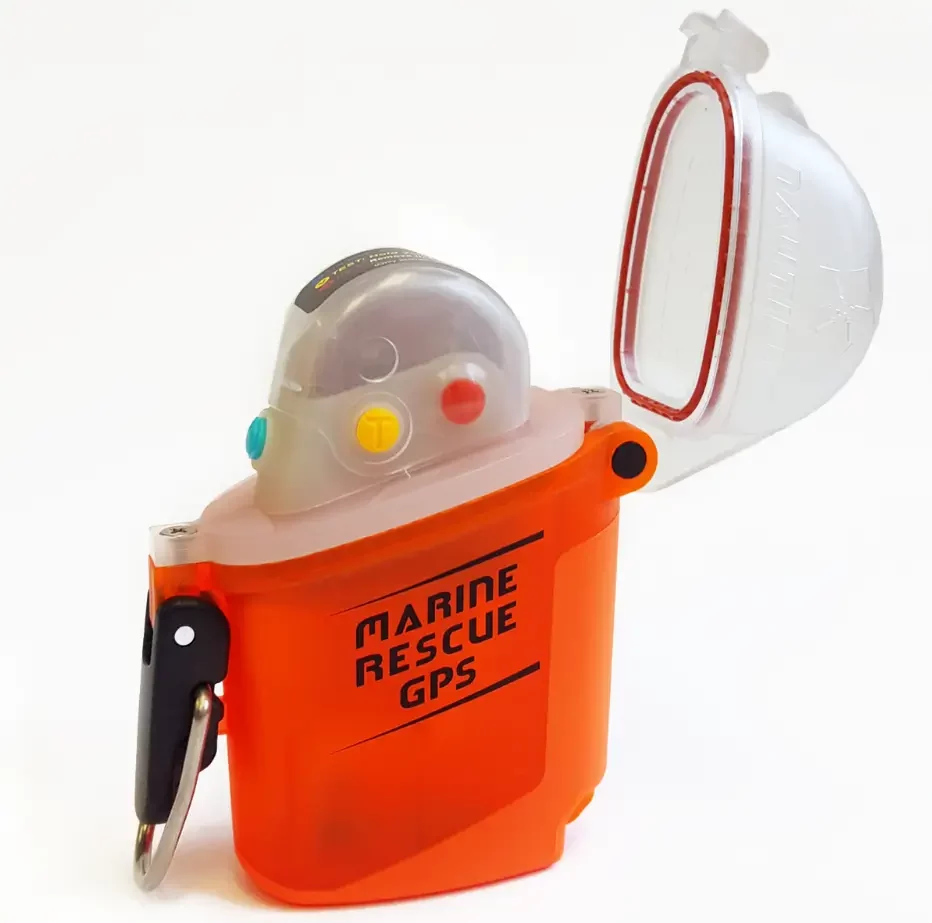
At the same time, a DSC (Digital Selective Calling) message is sent to the marine radio on your own vessel, allowing nearby boats to see your exact location automatically without relying on voice communication. Rated to 425 ft (130 m) with the dive cap closed and splash-proof with it open, it’s fully waterproof in all sea conditions. Positively buoyant, it floats for easy recovery. With a user-replaceable 5-year battery life, it’s ideal for remote or offshore dives.
Pros:
Depth-rated to 425 ft (130 m)
AIS/DSC technology with GPS accurate to 1.5 m
Floats and fully waterproof
Long battery life (up to 5 years)
No subscription required
Cons:
Batteries not included
Slightly larger than ultra-mini handheld PLBs
No two-way messaging
Garmin inReach Mini 2 with Dive Case – £295 + 60 for the case / $399.99 + 79.99 for the case
The Garmin inReach Mini 2 is a compact, rugged satellite communicator offering GPS navigation, two-way messaging, and SOS capabilities via the Iridium satellite network. To use the device, an active satellite subscription is required, with plans ranging from £13/$13 to £65/$49 per month depending on coverage. For diving, it requires the separately purchased water-resistant dive case, which protects the device to a depth of 100 m (10 ATM) and allows you to bring it safely on your dives.

Once activated, the SOS feature sends your exact GPS location to rescue authorities, giving peace of mind when surfacing far from your boat or diving in remote locations. Lightweight and portable, the inReach Mini 2 clips easily to a BCD or harness and has a long battery life suitable for multi-day trips. While not a traditional PLB, it combines emergency signaling, location tracking, and communication in one durable device.
Pros:
Two-way satellite messaging and GPS navigation
SOS function for emergencies
Dive case protects to 100 m (10 ATM)
Compact, rugged, and impact-resistant
Can be activated from a Garmin dive computer without removing from housing
Re-chargeable and usable for non-diving activities
Cons:
Dive case sold separately
Requires initial registration and subscription (can be paused when not diving)
Negatively buoyant
More expensive than standard PLBs
Uses Garmin Response private network; additional dive/rescue insurance is recommended
ENOS Rescue System – Price Upon Request
The ENOS (Elektronisches Notruf- und Ortungssystem) ENOSpro Rescue System is a German-engineered rescue system designed specifically for divers, and more specifically, for dive organisers. The system is a professional-grade diver safety solution designed for liveaboards, dive boats, and remote diving expeditions. It consists of the compact ETXpro transmitter and a range of ERXpro receivers, which can be installed on boats, inflatables, or other support vessels. The transmitter is only activated in an emergency, sending a distress signal with real-time GPS updates every 15 seconds, so the crew always knows your exact position.

With protected internal antennas, the ETXpro is rugged and pressure-tested to 150 m, ensuring reliability in harsh conditions. Ranges vary depending on antenna type, with standard setups reaching 17 nautical miles and the EF5pro-S antenna achieving up to 28 nautical miles. The transmitter is extremely lightweight (160 g with batteries), compact (200 × 35 mm), and easy to attach to gear. Its simple 180° turn switch works even with gloves or in the dark, making activation straightforward in emergencies.
Pros:
Extremely long-range transmission: up to 28 nautical miles with EF5pro-S antenna
Rugged, pressure-tested to 150 m; internal antenna protection
Real-time position updates every 15 seconds
Lightweight, compact, and easy to attach
Multiple receiver options for mobile or fixed installations
Cons:
With the receiver units coming in at over £3,000 and transmitters over £400 GBP, it is not cheap to set up
Requires both the transmitter and receiver; the receiver is typically owned by the dive operator.
Price on request; not a consumer plug-and-play PLB
Best suited for organised dive operations or liveaboards
Top Marine Personal Locator Beacons in 2025
While the selection of PLBs specifically designed for deep diving is limited, divers can still benefit from a wide range of traditional marine PLBs used in boating, sailing, or general offshore activities. These devices are engineered to transmit reliable distress signals via the Cospas-Sarsat (SARSAT) satellite network, providing global coverage and rapid notification of search and rescue teams.
For divers, the key consideration is how to safely use a surface-rated PLB underwater. Many divers opt to pair a standard marine PLB with a purpose-built dive canister. These canisters are designed to protect the device from pressure, saltwater, and impacts, while allowing easy deployment at the surface. This approach combines the global rescue coverage of a traditional marine PLB with the practical requirements of diving, offering peace of mind when exploring remote reefs, offshore drift dives, or liveaboard adventures.
Using a marine PLB in a dive canister also has the advantage of flexibility: the same device can be used for multiple activities, from boating and snorkeling to hiking or other outdoor adventures, by simply updating its registration details as needed.
ACR ResQLink View – From approximately £365 / $399
The ACR ResQLink View is a compact, buoyant Personal Locator Beacon that operates on the 406 MHz frequency, transmitting distress signals to the SARSAT network. It features a digital display showing GPS coordinates and battery status, providing real-time feedback during an emergency.

Pros:
Digital display with Return Link Service (RLS) for confirmation of distress signal receipt
Buoyant and waterproof, suitable for surface use
No subscription fees required
Battery life of up to 28 hours; replaceable after 5 years
Cons:
Not designed for deep-water use; primarily for surface emergencies
Requires manual activation; no automatic deployment
Requires a canister for diving
Ideal For
Divers who plan to deploy the PLB at the surface after surfacing from a dive.
Ocean Signal rescueMe PLB1 – From approximately £335 / $455
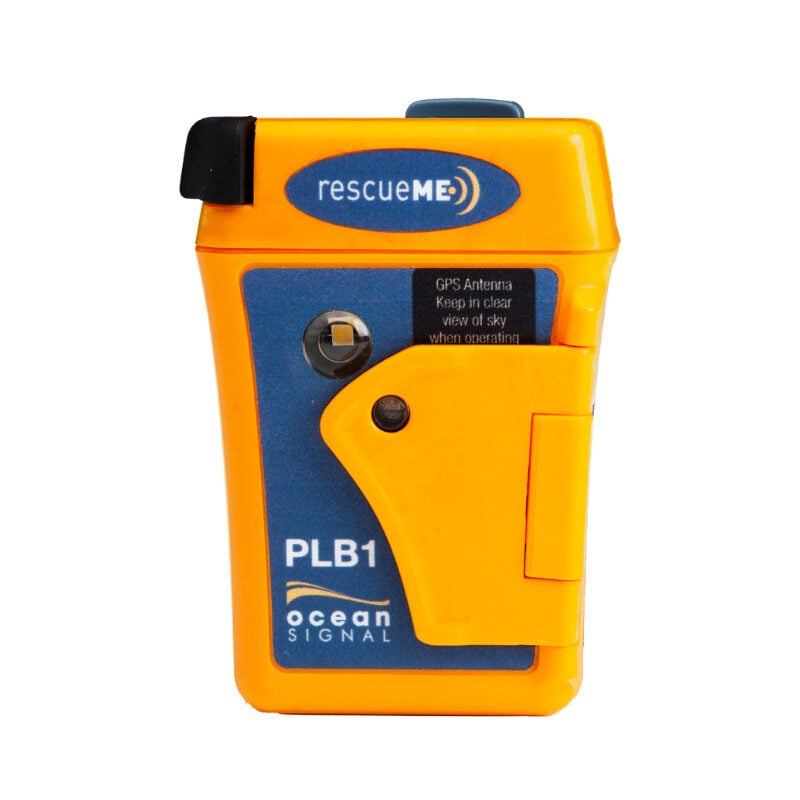
The Ocean Signal rescueME PLB1 series is another option for surface or snorkeling emergencies. It is the world’s smallest 406 MHz GPS-enabled PLB. It is designed for personal safety in marine, aviation, and outdoor environments. The device is waterproof up to 49 feet and has a 7-year battery life.
Pros:
No subscription fees
Compact and lightweight
Easy to activate with a single button
7-year battery life
Cons:
Not suitable for underwater use; must be deployed at the surface
Requires a canister for diving
Manual activation required
Ideal For
Divers who intend to use the PLB for surface signaling after surfacing
Dive Storage Canisters for Personal Locator Beacons
While dry fobs and dive storage solutions deserve a separate in-depth guide, divers looking for extra security and protection for their personal locator beacons have several purpose-built canisters available. These canisters ensure your PLB remains safe underwater and ready for use once you surface.
- Custom Divers (UK) – Designed to fit a variety of PLBs, lightweight, and easy to clip to your BCD.
- DRYFOB (US) – Robust canisters suitable for liveaboards or extended trips, keeping your PLB protected and ready.
- WICKED Dive Canisters – Specialised housings for deep dives, compatible with many PLBs, including technical dive setups.
Using a dedicated dive canister allows divers to take full advantage of surface-rated marine PLBs while keeping the device safe during the dive. With the right housing, your PLB remains protected underwater, floats for easy recovery, and is ready to transmit your location to rescue authorities the moment you surface.
Final Word
Choosing the right personal locator beacon is an essential step in responsible diving. Whether you’re a recreational diver exploring local reefs or venturing into remote locations like Malpelo, Cocos Island, or the Banda Sea, having a reliable emergency signalling device can save lives.
In 2025, divers can select from a range of options, from compact, AIS-enabled devices like the Nautilus LifeLine Marine Rescue GPS to versatile satellite communicators like the Garmin inReach Mini 2, and professional systems like ENOSpro for liveaboard or technical diving operations.
When selecting a PLB, consider your typical dive environment, depth, and whether you want two-way communication or a simple distress signal. Pairing your PLB with a purpose-built dive canister ensures it remains secure, buoyant, and ready for activation. Finally, always register your PLB if required, maintain batteries, and understand its operating limits to maximise safety and peace of mind.
Frequently Asked Questions
Do I need a subscription for a Personal Locator Beacon?
Some devices, like the Garmin inReach Mini 2, require an active satellite subscription, while traditional PLBs like the ACR ResQLink View and Nautilus LifeLine do not.
Can I use a surface Personal Locator Beacon for diving?
Surface PLBs are only suitable for shallow water or snorkeling. For deeper dives, choose a PLB rated for at least 100 m or use a dive canister with a compatible device.
How often should I check or replace Personal Locator Beacon batteries?
Most PLBs have batteries lasting 5–7 years. Always check battery life before trips and replace or recharge as recommended by the manufacturer.