
Marine biologist and underwater photography guide Tiani Dun waxes lyrical about diving in the Palau Marine Sanctuary.
Last month I embarked on the adventure of a lifetime, on an expedition to Palau Marine Sanctuary. I was guiding an underwater photography group with my expedition company, Dive and More, and needless to say, we were not disappointed with our destination of choice!
Palau is a leading nation in marine conservation, and has one of the largest Marine Protected Areas in the world. With 80% of its waters fully protected from fishing and other destructive activities, the marine sanctuary is kept in pristine condition, supporting the economy primarily through tourism, diving and snorkelling. The remaining 20% of the sanctuary is a domestic fishing zone, which allows traditional small-scale fishing for local consumption and limited export. I had done a lot of research on Palau before our trip, and was excited to see the effects of such a large protected area through my own mask.
Getting to Palau and First Impressions
I opted for a 17-hour overnight journey from Brisbane, with a quick layover in TaiPei. Qantas offers direct (only six hour) flights from Brisbane, but unfortunately they only fly on Saturdays, and the dates didn’t line up with my trip. So after a long journey, I arrived at a tiny airport in the middle of the Pacific Ocean, excited for the adventure to come.
The air was warm when I stepped outside the airport. Our bags were quick to arrive and my taxi driver greeted me holding a sign with my name. I sat in the air-conditioned car while we waited for another diver to arrive on the same flight. Together, we headed to the (wonderfully ocean-themed) Palau Hotel to rest before our departure.
Things To Know About Palau
The airport in Palau is tiny, and it’s very hard to get a taxi! Make sure you pre-book one with your hotel, a few in our group didn’t, and had to wait a couple of hours to get a ride. If you can, bring some cash (USD) with you when you arrive, because a lot of the taxis only take cash. If you arrive in the daytime, you can also ask your driver to stop past an ATM.
Wifi on board most liveaboards will be patchy at best. You can buy a local SIM card from the store for a stronger signal while at sea, but you will still be with weak reception for a few of your days out. (We managed to only get a weak signal from the top deck on most days, and it was better at night). We obtained free copies of the waterproof Palau Manta Ray ID guides from the Neco Marine Dive shop locally.
More information on local manta rays is available for free on the Manta Trust website: www.mantaIDpalau.org
Seven Days of Diving in the Palau Marine Sanctuary
The next day, we embarked on the Black Pearl liveaboard, which, from the get-go, was an absolute delight. The interior lounge area was sparkling, and all of our rooms (including the shower) offered pristine ocean views. The staff and the food were incredible, and the layout was efficiently designed for diving and photography alike. Our group could be frequently spotted in the hot tub, enjoying a cheese toastie and a juice after each dive.
We were treated to seven of the most glorious days above and below the sea. From watching barrel-rolling manta rays to the snapper spawning event, to World War Two wrecks and a shark-feeding frenzy, Palau exceeded all of our expectations and more! I’ve narrowed it down to a list of my top five favourite dives that should not be missed if you plan a visit.
Top Dive Sites in Palau

German Channel
Known for its manta ray cleaning station, this site was the undisputed favourite for our group. Here, we got our teeth cleaned by cleaner shrimp, and even encountered a juvenile leopard shark. After exploring bommies on the bottom, we swam off into the blue, where we were quickly encircled by schools of giant sweetlips and fusiliers. Suddenly, we encountered not one, not two, but five manta rays, barrel rolling and feeding between 5m-10m! We even saw a manta jump out of the water and belly-flop! In my whole scuba career, I’d never seen such an amazing spectacle. This dive had us drooling into our regulators and coming back for even more manta action the very next day.
Blue Corner
Another site we dived twice was Blue Corner. Located in the south of Palau, this site is known for its stronger currents that attract a wide variety of species. Here, we hooked onto the reef to watch grey reef sharks schooling and feeding, which was like being in an underwater documentary! We then drifted across the underwater plateau, where we witnessed schooling barracuda, jacks, triggerfish, red big-eyes, bumphead parrotfish, and that’s only what I can remember from the top of my head! Living up to its name, the visibility here was 30 metres plus on both of our dives, however we noticed a different variety of species on the ingoing vs outgoing tides. The combination of diversity and crystal clear water was amazing for photography, and I captured some of my favourite images from this site.
Shark City
This site made it to my top three because here was where we watched the red snapper spawning event. Every month around the full moon, the red snapper aggregate to spawn in an underwater spectacle! The snapper all swim up to the surface to release their eggs and sperm simultaneously. We watched them changing colours (potentially to camouflage or signal to mates), and we even spotted bull sharks getting involved in all the action!
The snapper tend to spawn on an outgoing tide, so that their eggs have the highest chance of survival out in the open sea and away from predatory fish. They then settle back onto the reef as fish, to start the cycle all over again. If you can’t make it during the full moon, the humphead parrotfish spawning occurs on a new moon. I would highly recommend scheduling your liveaboard during one of the spawning events to witness these incredible phenomena!
Did you know?
Manta rays perform barrel rolls as a feeding strategy. This behaviour involves a series of flips and somersaults while swimming, which maximizes their intake of concentrated plankton, their primary source of food.


Blue Holes – Light, Caverns and Atmosphere
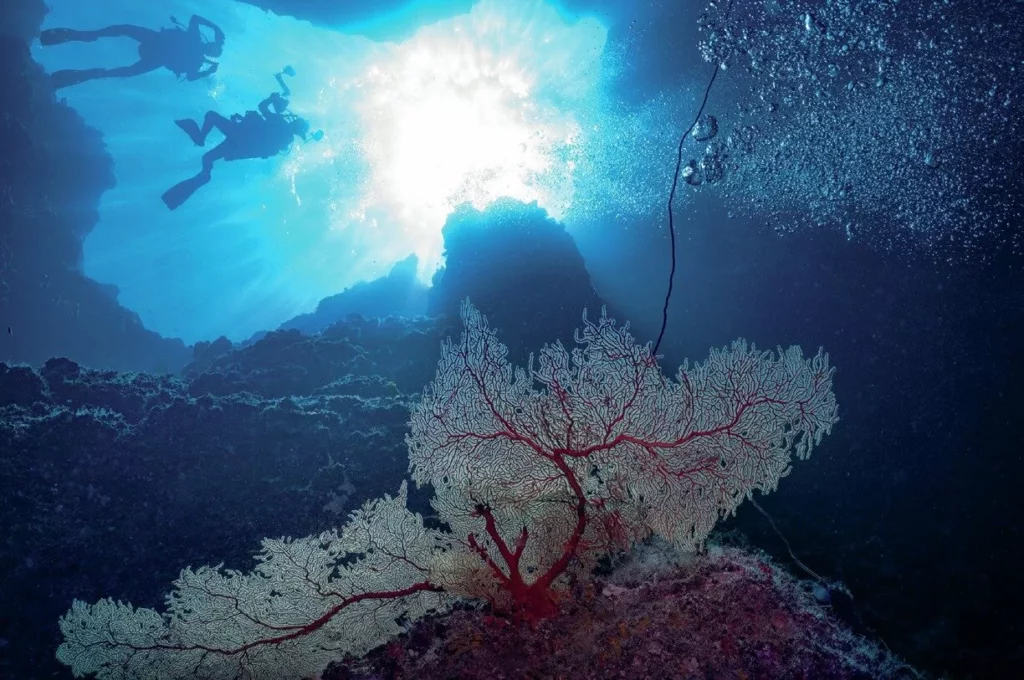
With blue light rays casting gorgeous light beams down into a deep cavern, the Blue Holes were any underwater photographer’s dream landscape. To me, this was a truly spectacular dive site, and while there wasn’t a crazy amount of fish to see, we did catch some sleepy sharks under a rock, lots of pretty sea fans, electric clams and even a little nudibranch in the cavern.
Ulong Channel and Palau’s Iconic Drift Dives
The coral gardens in the Ulong Channel are famous for good reason. While drifting down the channel, we spotted sharks, rays, and a whole variety of reef fish. The highlight though was the picturesque corals, including a gigantic Montipora coral we encountered at the end of the channel. Aside from being attacked by a territorial triggerfish, this was a very fun dive for our group.
Why Palau Is a Global Leader in Marine Conservation
I probably wouldn’t have visited Palau if not for work. Now, it’s one of my top destinations (perhaps even my very top one) that I recommend to divers! Here, we experienced wildlife in its most-pristine conditions, in some of the best dives I have ever done. To me, the effects of the marine sanctuary were very evident. Palau’s approach to marine conservation serves as an example for other nations to follow, and shows how protecting our seas can contribute not only to rehabilitating marine life, but also to food security, economic growth and resilience to climate change. Do I miss it? Every damn day. Did I consider picking up my life and moving over there? Perhaps. Will I be back? Absolutely.


Did you know?
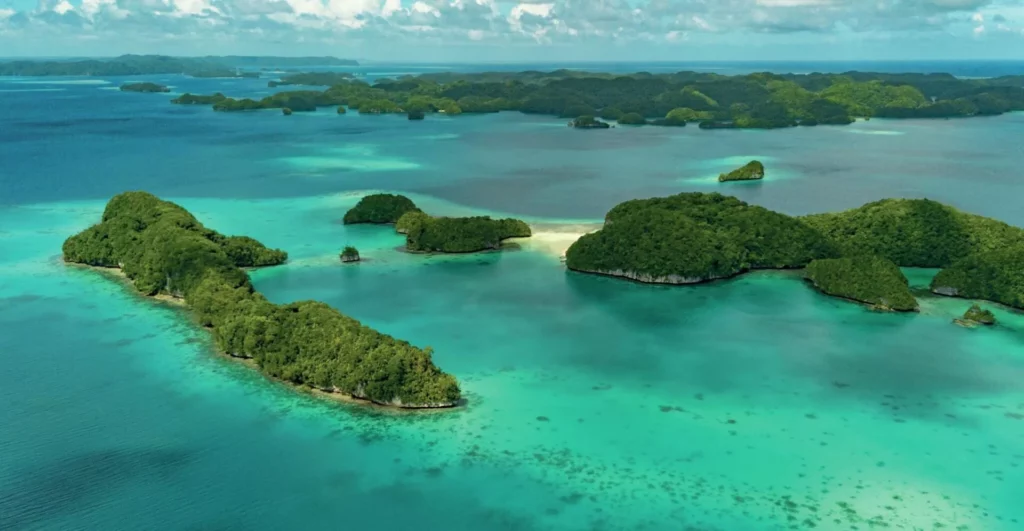
Palau is a small island nation in the western Pacific Ocean, known for its stunning natural beauty, including white sand beaches and dense jungles. It consists of over 340 islands, both volcanic and coral, and is recognized for its unique marine ecosystem, including the famous Jellyfish Lake.
Underwater Photography Setup for Palau Diving
On this trip, I was shooting with Sony A7C, 28-60mm kit lens and wide-angle dome. I brought along my 90mm macro lens, but only ended up using it for the one night dive that we did. I was also testing out a new strobe – the Backscatter Hybrid Flash HF-1 from Underwater Australasia. Having shot primarily video in the past, it was actually my first time using a strobe. Without wanting to give up on videos, I personally loved this strobe because of its capability to do both! The light was easy to set up, and the batteries lasted me for three dives every day, so I only needed to charge them at night. I definitely felt that my photos leveled up with this new addition to my underwater set-up.
Frequently Asked Questions
Is Palau good for scuba diving?
Yes. Palau is considered one of the world’s top dive destinations, offering strong currents, pristine reefs, large pelagics and exceptional biodiversity.
Why is the Palau Marine Sanctuary special?
Palau protects 80% of its waters from fishing, making it one of the largest marine sanctuaries in the world and a global model for ocean conservation.
What marine life can you see diving in Palau?
Divers regularly see manta rays, reef sharks, turtles, barracuda, snapper spawning events, healthy coral reefs and WWII shipwrecks.
When is the best time to dive in Palau?
Diving is excellent year-round, but spawning events often occur around full and new moons, making timing especially important for wildlife encounters.
Do you need experience to dive Palau?
Some sites, such as Blue Corner and German Channel, involve strong currents and are best suited to intermediate or advanced divers.
This article was originally published in Scuba Diver Magazine
Subscribe today with promo code DIVE1 — enjoy 12 months for just £1!
