
Jayne Jenkins waxes lyrical about the White’s seahorse population that can be found in Chowder Bay, in Sydney Harbour, and how an ambitious captive-rearing programme is paying dividends.
Chowder Bay – A Hidden Seahorse Haven
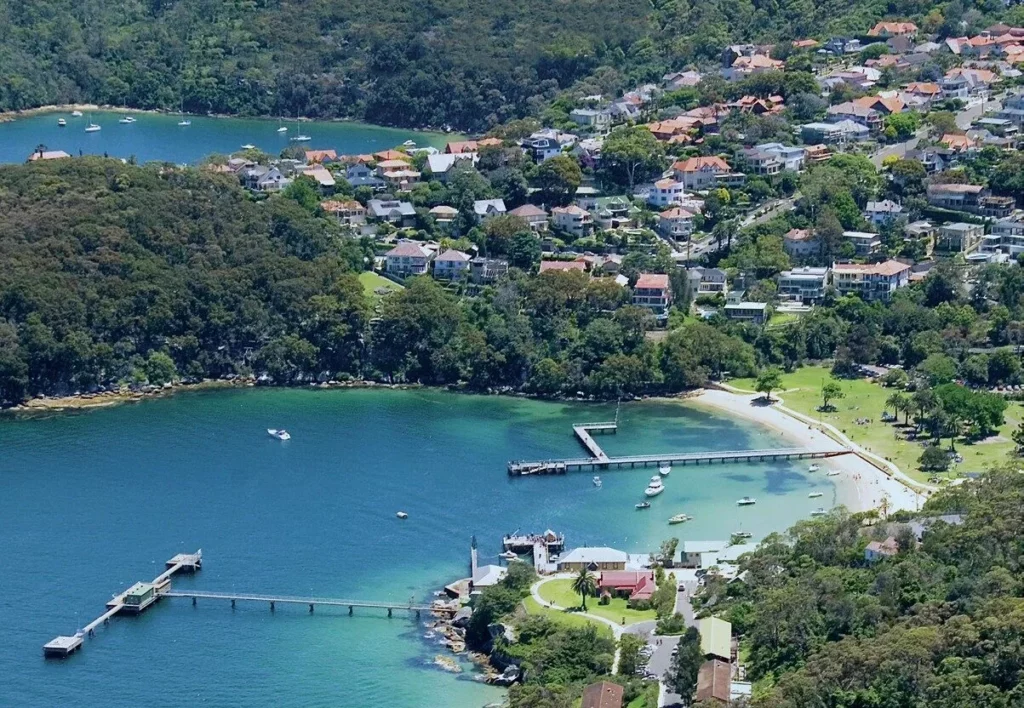
Located eight kilometres NE from the city of Sydney, Chowder Bay is part of Sydney Harbour National Park. With a pretty beach, swimming enclosure, jetty, park, coffee shop, restaurant, and home to Sydney Institute of Marine Science building, it all looks very much like a normal Sydney Harbour beach, but what lies below the surface and jetty is what is the greatest surprise.
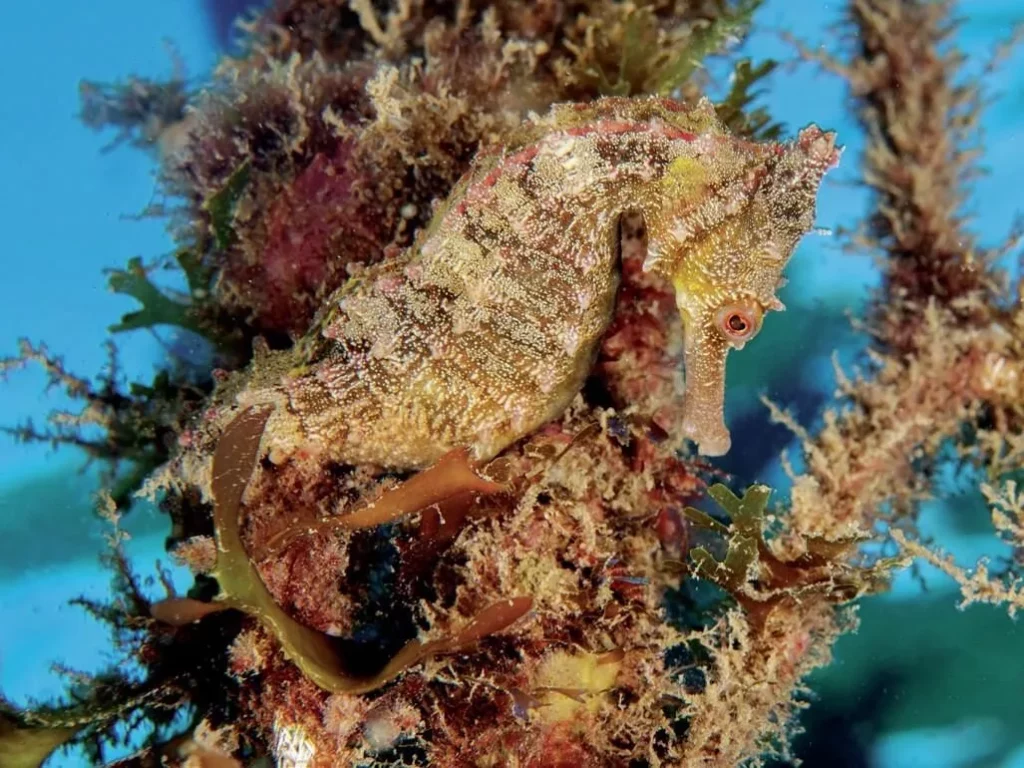
White’s seahorses are endemic to the east coast of Australia, with the largest population being in Sydney harbour, which is why they are sometimes known as the Sydney seahorse. Seahorses are unique and captivating marine creatures known for their upright posture, curled tails, and horse-like heads. Despite their gentle appearance and effective camouflage, seahorses face various threats in their natural habitats, particularly from predators.
Natural Predators and Survival Strategies
Understanding the predators of seahorses is essential for marine biology studies. Seahorses primarily inhabit shallow coastal waters, seagrass beds, coral reefs, and mangroves, where they use their prehensile tails to anchor themselves to vegetation or coral. This camouflage helps them avoid common predators, including crabs, large fish, rays, octopus, cuttlefish and frogfish.
The Importance of Swimming Nets and Jetties
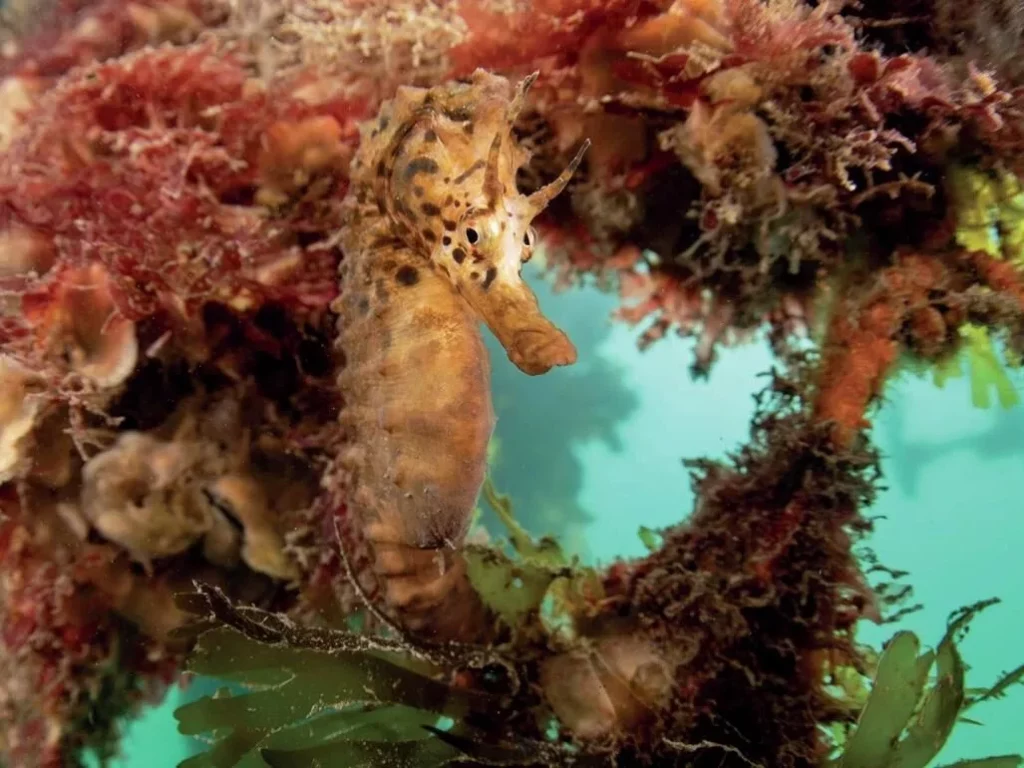
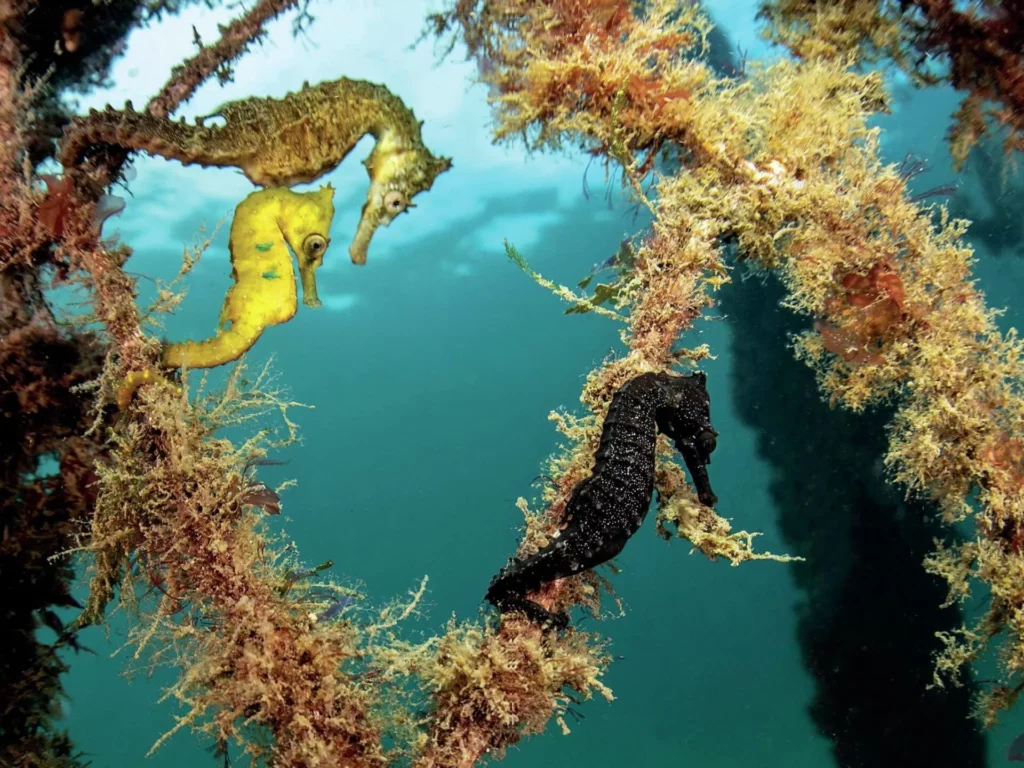
The protective swimming enclosure nets are one of the highlights of the site as they are home to many White’s seahorses (Hippocampus whitei). These swimming nets provide a perfect habitat for the White’s seahorse, and to a lesser extent, the pot belly seahorse (Hippocampus abdominalis), as marine growth on the nets, such as sponges, algae and kelp, provides habitat for the seahorses to hide among.
Populations of seahorses on the nets have been monitored at various sites in Sydney Harbour since the early 2000s. Dr David Harasti did his PhD research on the population of the Manly swimming net in 2007-08 and found that over 300 White’s seahorses called this net home!
Decline and Endangered Status
However, numbers on the Manly net dramatically declined around 2012, like declines seen in other White’s seahorse populations across NSW. Very few seahorses are now found on the Manly nets.
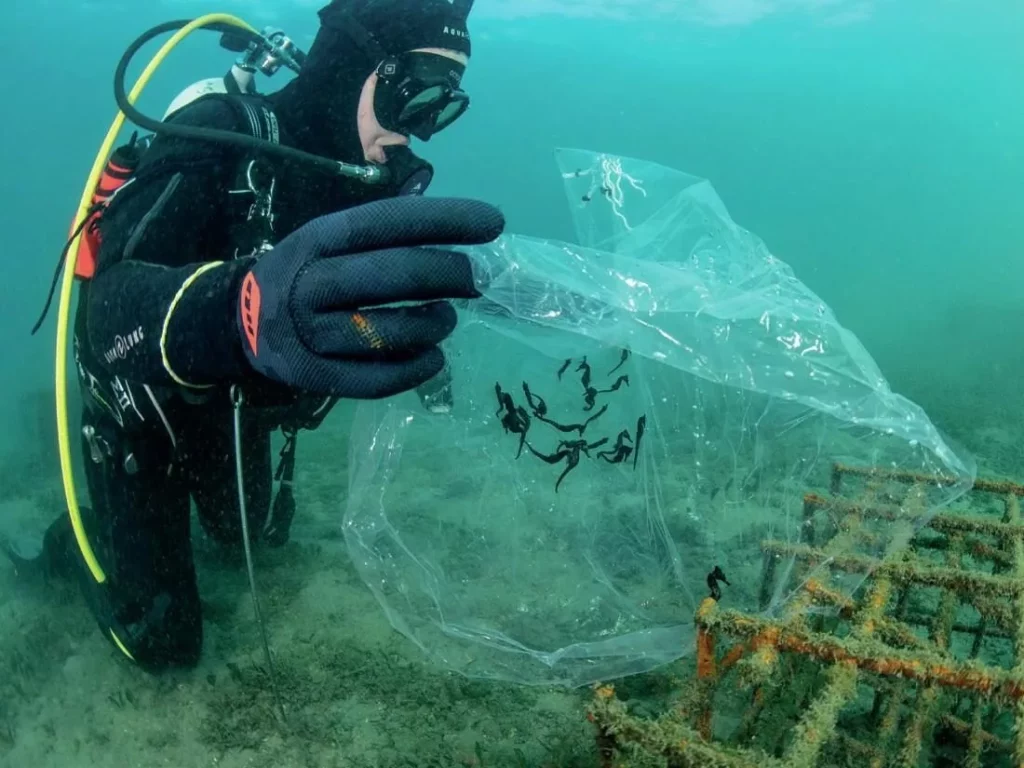
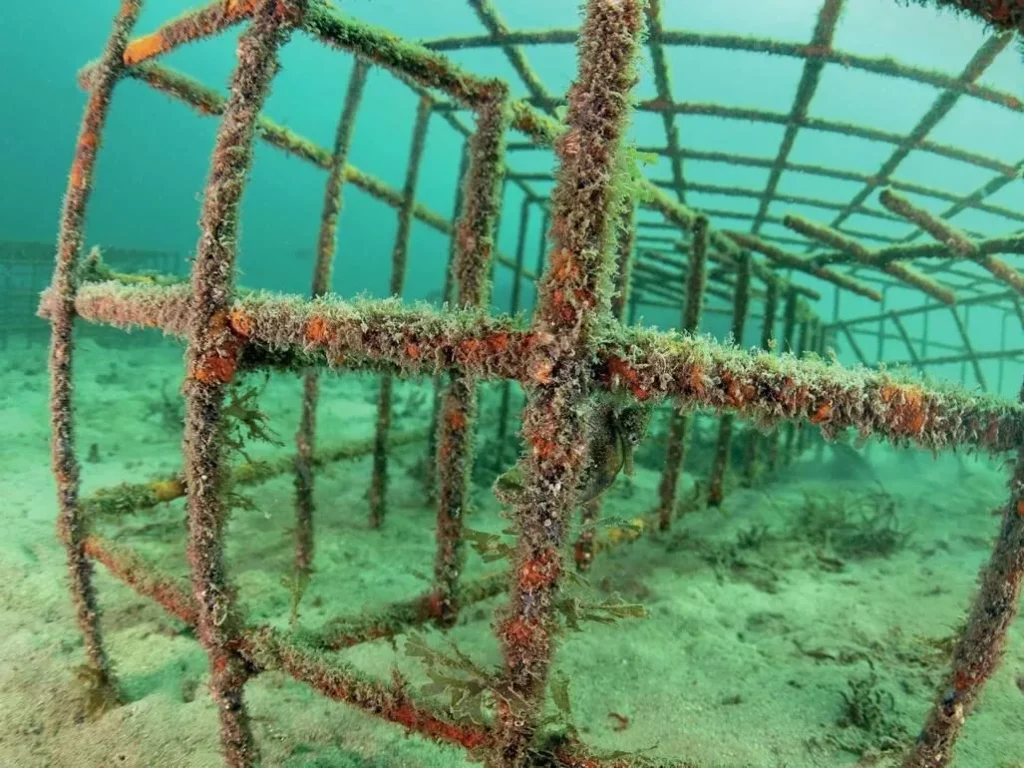
White’s seahorses are now protected, having been classified as endangered due to recent declines. To help the population to survive, marine scientists have forged ahead and released aquarium-bred seahorses at Seahorse Hotels in Chowder Bay. The one stronghold location for the White’s seahorse in Sydney Harbour is the protective swimming net at Clifton Gardens, within Chowder Bay. Seahorse abundance on this net has been monitored since 2003, and while population numbers fluctuate, there is a stable population at this location. Hence, this is a good spot for implementing conservation actions for the White’s seahorse, such as releasing captive-bred seahorses and the installation of artificial habitats.
Captive Breeding and the Seahorse Hotels
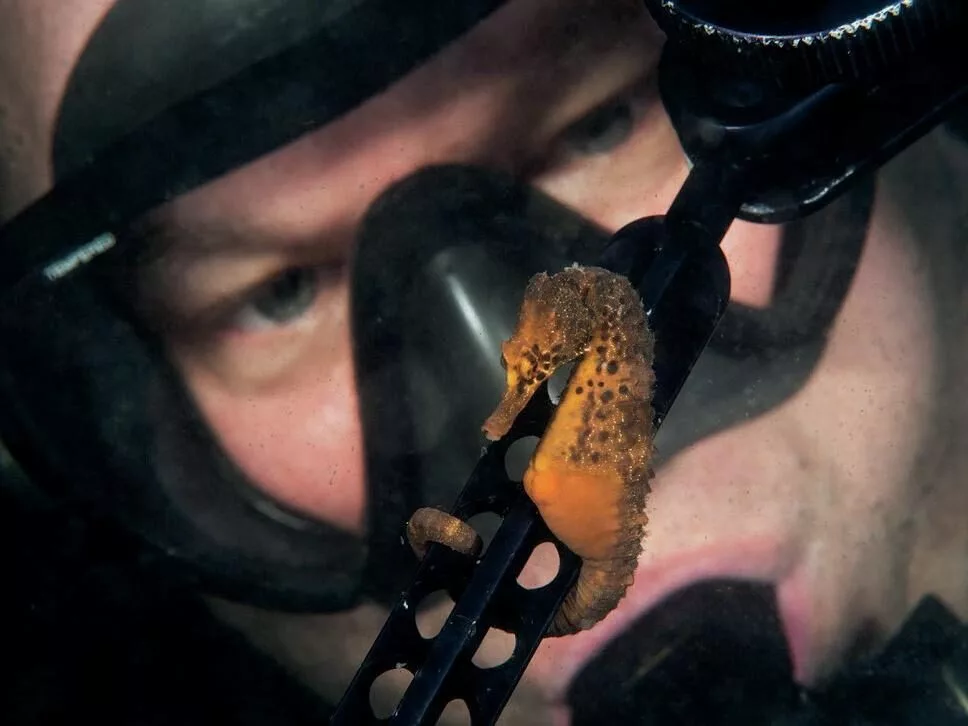
Dr Harasti commenced a breeding programme with SEALIFE Sydney Aquarium in 2020, with 100-plus captive-bred seahorses tagged with an elastomer so scientists could monitor the survival and movements of the newly released seahorses. Over the past five years, the Clifton Gardens site has been stocked annually by Fisheries NSW, Sealife Sydney aquarium and more recently, the Sydney Institute of Marine Science and it’s been the one location in the Sydney region where released captive-bred seahorses seem to survive and thrive. The seahorses are reared under special conditions involving around-the-clock care to improve their growth rates before their release into the wild. Mitch Brennan, PhD candidate, has spent numerous hours caring for the seahorses as they can be quite difficult to look after in the captive environment. They can be quite sensitive as seahorses don’t have a stomach, so they must be constantly fed.
The seahorses also have tags, each seahorse will be tagged using a visual implant elastomer tag, enabling researchers to monitor their survival, growth, and reproductive success in the wild. The elastomer is injected as a liquid beneath the tissue that cures into a pliable and bio-compatible solid, creating a fluorescent ‘tattoo’. The seahorses will be tagged with different colours that correspond to experimental treatments, visible on the specimens when exposed to UV light so the scientists involved in the project can monitor them in the wild over the next 12 months.
Did you know?
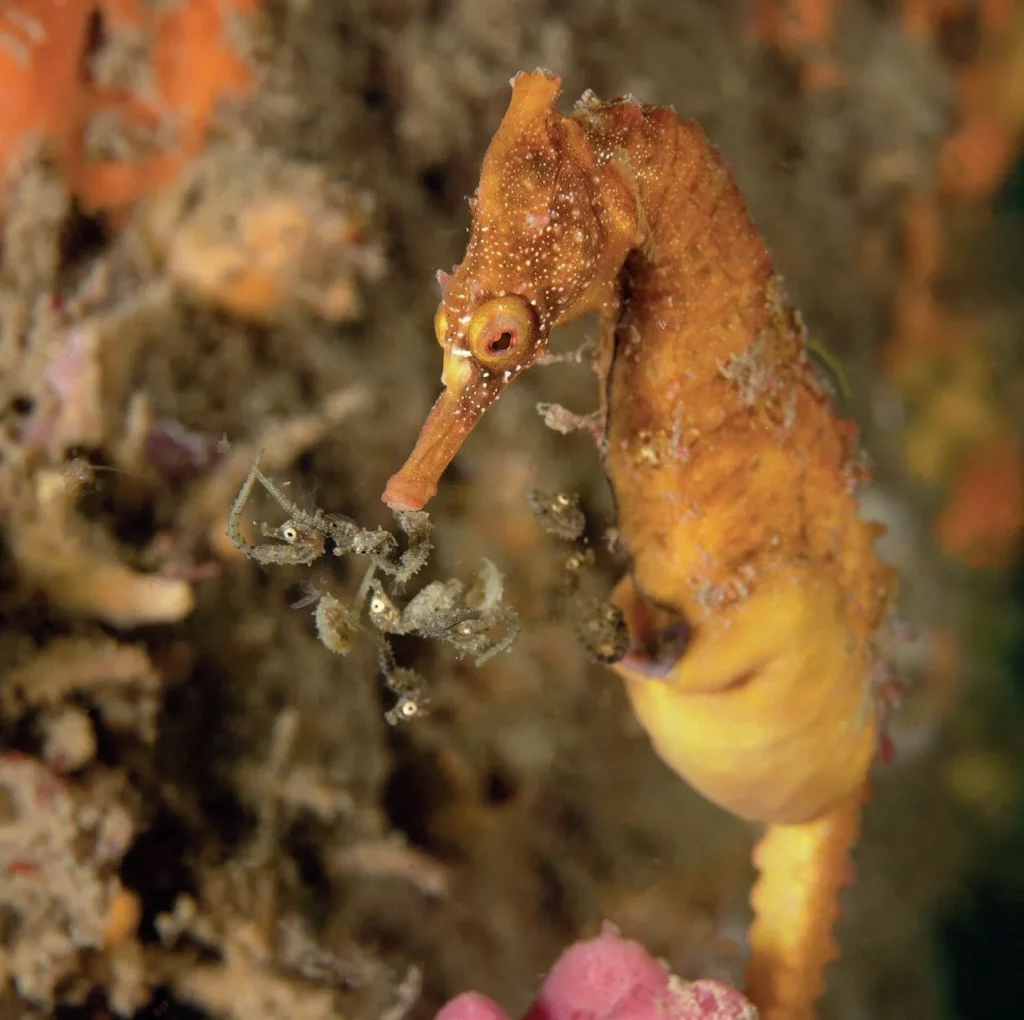
White’s seahorses are typically pale, often white, which helps them camouflage in their seagrass and sponge habitats around eastern Australia. They are named after John White, the Surgeon General to the First Fleet.
Life, Love and Behaviour of Seahorses
Part of the great successes of the programme was how many seahorse babies survived the breeding process, as the White’s seahorse usually had a survival rate of 1 per cent, but they managed to achieve 90 per cent by setting the temperature above 23 degrees C and feeding them brine shrimp. There are high expectations that the animals will thrive as there are plans for future releases to further boost the population.
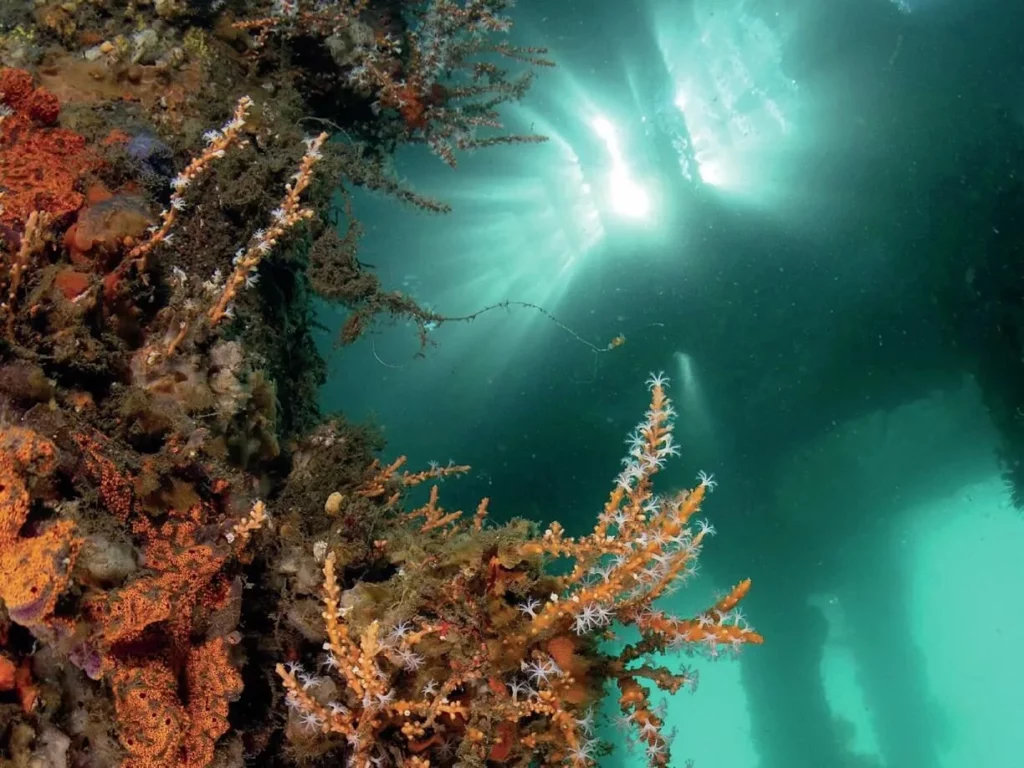
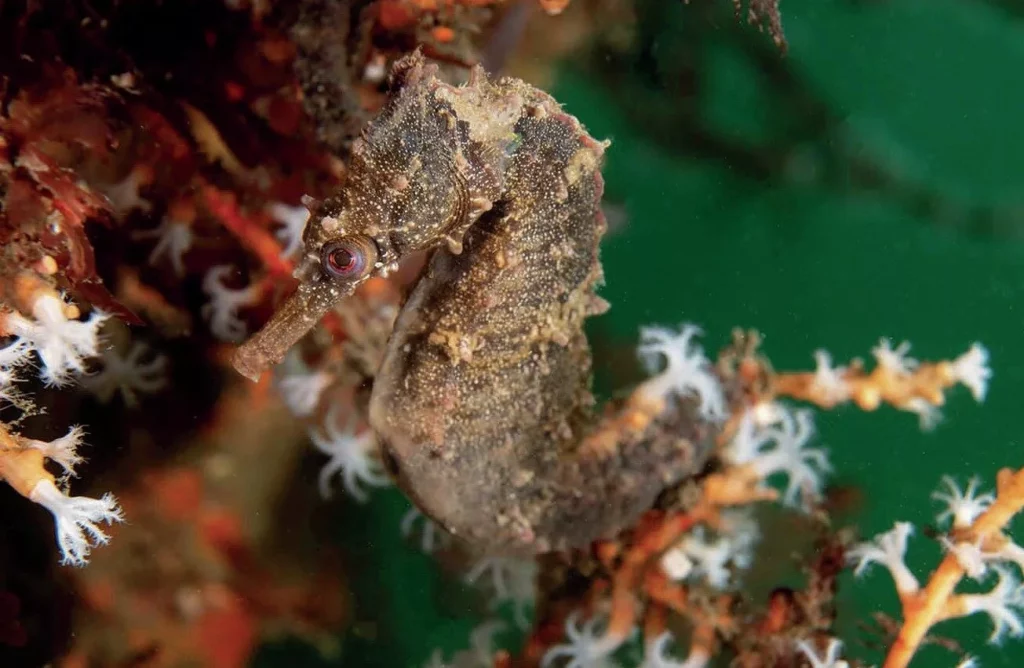
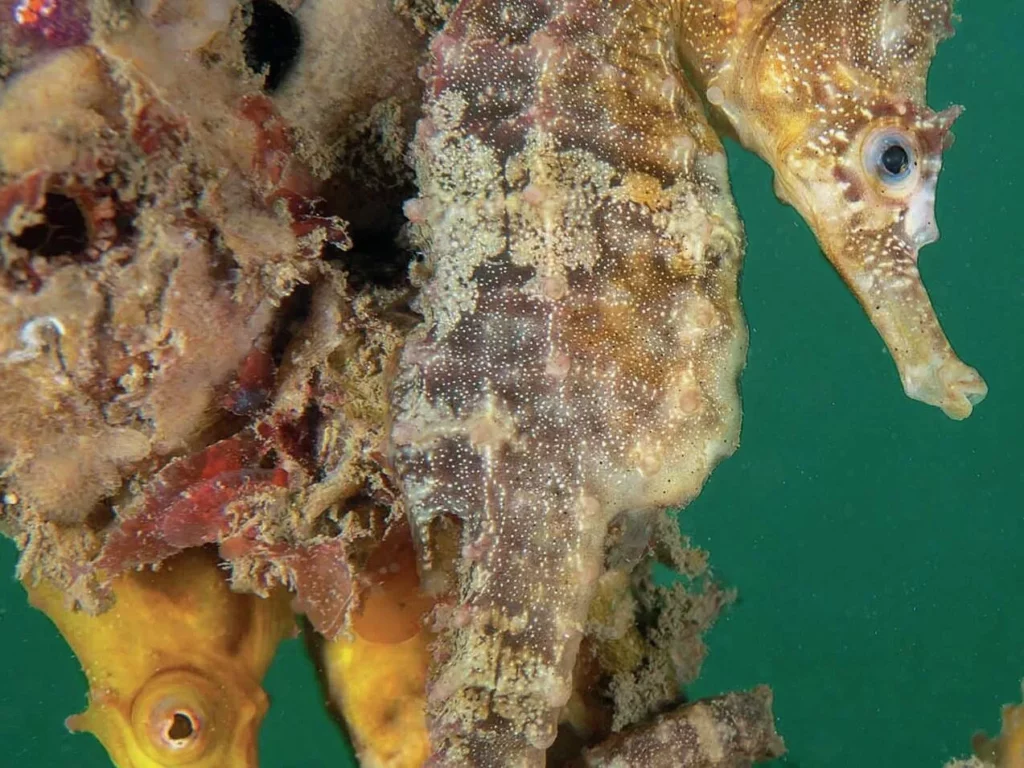
It is always a thrill when diving seeing a tagged seahorse knowing that they have survived. One of my biggest highlights while diving is witnessing seahorses giving birth in the wild – to watch the male huff and puff, shooting out hundreds of perfectly formed baby seahorses is a humbling experience. Although they are called White’s seahorses, they come in a variety of colours generally blending in with their background. The seahorses are also found on the pylons under the jetty not just the nets, attaching themselves to the sponges and feeding on the tiny crustaceans floating in the water columns. Seahorses are constant feeders and very fast when sucking in their prey from as far as 3cm away. They also mate for life and have a wonderful relationship where the male gives birth.
Rare Visitors and Unexpected Encounters
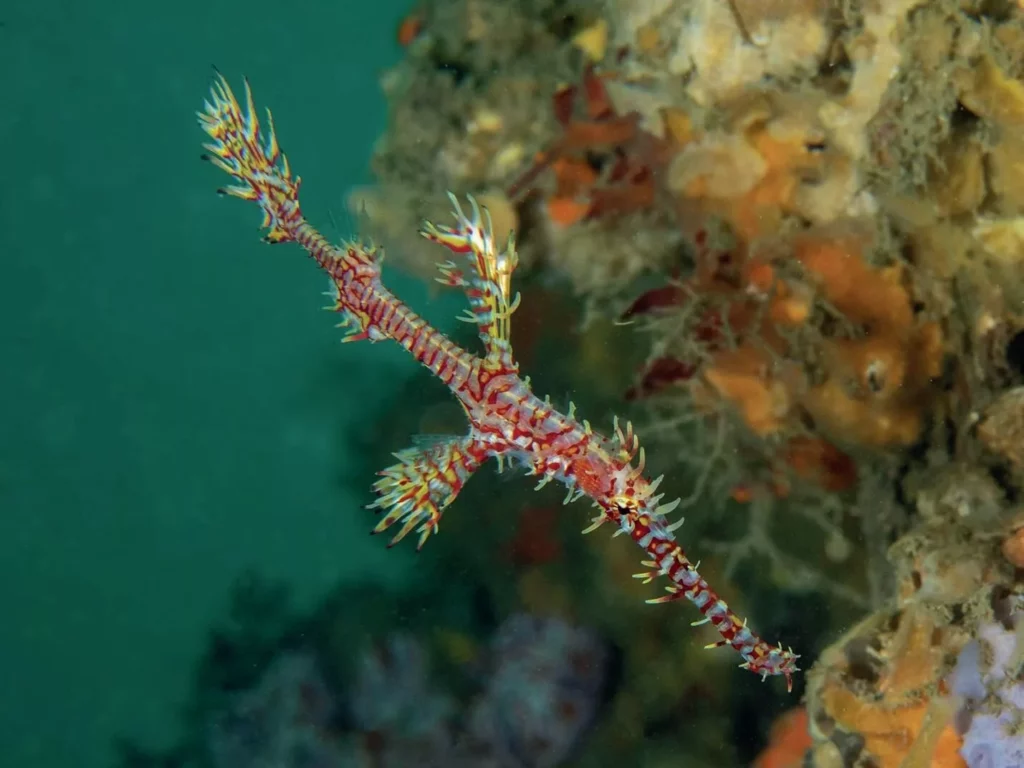
Other rare and warm water visitors to Chowder Bay are the ornate and robust ghost pipefish. They drift in when the water is warmer (about 21 degrees C) on the EAC. They generally come in pairs, and we have witnessed them with eggs, and it is the larger female that carries them as they are not part of the seahorse family, they belong to the Solenostomidae while seahorses are the Sygnathidae. Chowder Bay is home to so many surprises.
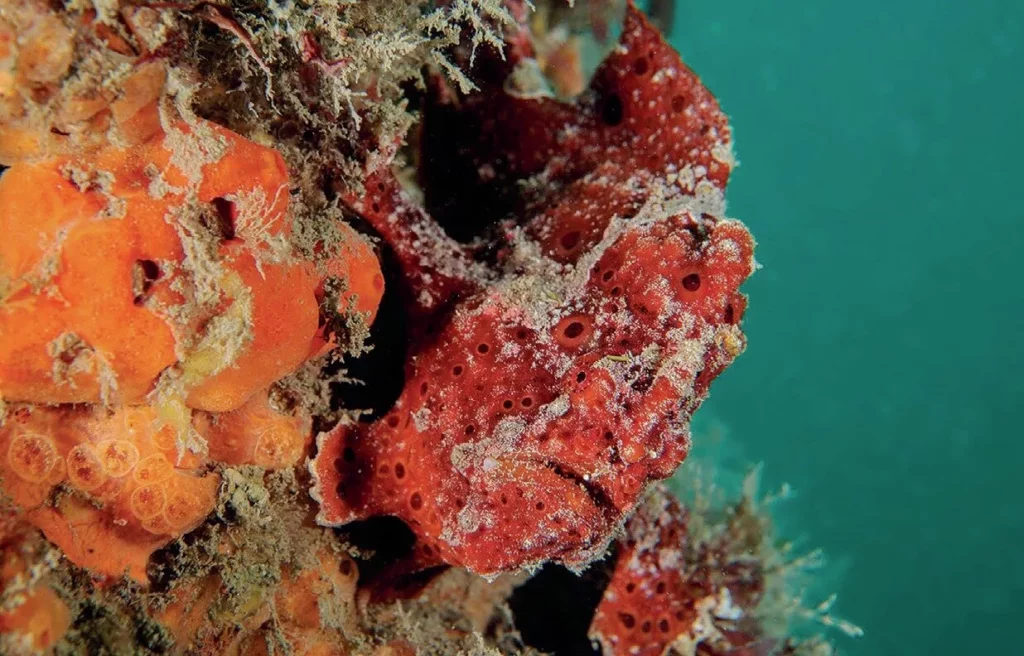
Other tropical visitors in the past have been batfish, mantis and coral banded shrimps, you never know what you are going to see on a dive. Another of my favourites is the frogfish that frequent the bay varying in all sizes and colours. To see such beautiful marine life on your own doorstep is amazing.
How Divers Can Help Protect Sydney’s Seahorses
Having a positive contribution to such an incredible species is amazing and hopefully we see them out there for years to come, reproducing and adding to populations. There is an exciting citizen science aspect where local scuba divers and snorkellers are encouraged to participate in monitoring of the seahorses by submitting photographs of seahorses taken in Chowder Bay. This valuable information will assist researchers to have more eyes on the seahorse babies as they settle into their new home!
Seahorses released in July 2023 are still being seen and photographed by citizen-scientist divers currently diving in Chowder Bay.
Submit your images!
Images can be submitted to the Sydney Seahorse Project on the iNaturalist website: www.inaturalist.org/projects/sydney-seahorse-project
Frequently Asked Questions
Where can White’s seahorses be found in Sydney Harbour?
The strongest remaining population is found at Chowder Bay, particularly on the protective swimming nets and jetty pylons at Clifton Gardens.
Why are White’s seahorses endangered?
Populations declined due to habitat loss, environmental change and human impact, leading to their endangered classification in NSW.
What is the Sydney Seahorse Project?
It is a conservation programme involving captive breeding, habitat enhancement and citizen science monitoring of White’s seahorses.
Can divers help with seahorse conservation?
Yes. Divers and snorkellers can submit photographs to the Sydney Seahorse Project via iNaturalist to assist monitoring.
What other marine life can be seen at Chowder Bay?
Ghost pipefish, frogfish, batfish, shrimp species and other tropical visitors appear seasonally.
This article was originally published in Scuba Diver Magazine
Subscribe today with promo code DIVE1 — enjoy 12 months for just £1!
