
Open-heel scuba fins have been the go-to choice for serious divers since they first emerged in the early days of recreational diving. Unlike sleek closed-heel fins, favoured for warmer waters and travelling, open-heel fins are made to pair with boots, This tends to bring more warmth, versatility, and serious propulsion, whether you’re crawling along a wreck or chasing a tech trim in cold water.
Line Up Your Fins
Open-heel fins (well, in fact all fins) come in various constructions. Some have soft rubber paddle blades, others are rigid rubber tech models. Straps can be spring or bungee strap systems and even manufacturer specific straps and clips… but they all share one thing: they deliver power without sacrificing control.
In this line up, we’re showcasing 10 current models across a range of prices (with pricing in both GBP and USD), from affordable recreational stalwarts to specialised tech-diving powerhouses. We’re keeping the focus on key factors: blade material and stiffness, buckling system, comfort with boots, and balance between thrust and fatigue. A few tech favourites get a nod for divers who might dabble in wrecks and caves, but most choices here are for capable rec divers eyeing their next pair of fins – or their first “real” set. Strap in (literally), and see what’s on offer.
Dynamic Nord RF-40 Open-Heel Fin – £127 / $170
Dynamic Nord’s RF-40 is a versatile recreational fin that blends sporty performance with user-friendly features. Made with a lightweight yet durable polymer, the RF-40 has angled water channels that channel thrust efficiently, offering strong propulsion without punishing your legs. The wide foot pocket accommodates thick wetsuit or drysuit boots, and the elastic bungee strap means quick and easy donning and doffing, even with gloves on.

German-engineered for precision, the RF-40 offers smooth performance across flutter, frog, and helicopter kicks. It’s available in multiple colors for those who want both performance and a dash of personality. Mid-range pricing makes it accessible, yet it feels like a premium product in the water. If you’re looking for a fin that can handle warm-water reef holidays but won’t shy away from colder, heavier diving, the RF-40 is a strong contender for divers upgrading from entry-level fins.
Pros:
Efficient propulsion
Tool-free strap adjustment
Comfortable pocket
Cons:
Slightly heavy for frequent travel
Stiff blade may tire legs
Cressi Origin LD Open-Heel Fin – £150 / $190
The Origin LD is Cressi’s modern homage to their iconic 1950s Commando fin, rebuilt with contemporary materials and ergonomics. Constructed in slightly buoyant rubber, the LD (low density) version is aimed more at wetsuit divers, offering near-neutral buoyancy that helps maintain trim and reduce leg drag (a HD version is also available for dry suit divers). Its blade is a straightforward paddle design, prioritising predictable thrust over modern pivots or splits.

The generous foot pocket is built for booties, with stainless spring straps fitted for quick adjustments. While it doesn’t boast the most futuristic look (and it’s not meant to!), the Origin LD has all the hallmarks of a workhorse fin: reliability, sturdiness, and a forgiving blade that won’t destroy your calves over a long dive day. It’s a great option for divers who prefer tried-and-tested designs, and the HD is a solid fin for cold water divers.
Pros:
Durable rubber
Comfortable trim
Classic feel
Cons:
Heavier than polymer models
Basic design lacks advanced features
Scubapro Seawing Supernova – £215 / $299
Scubapro’s Seawing Supernova is the evolution of their award-winning Seawing Nova design, taking pivot-blade technology to a new level. The hallmark feature is its “Power Pivot Control” hinge, which allows the blade to flex dynamically, optimising thrust with each kick while reducing strain on the ankles. This creates an exceptionally efficient fin that delivers both speed and maneuverability, making it ideal for divers who cover large areas or need fast response in current.

The Supernova also includes modular construction: the blade detaches for compact travel and easy replacement, extending the fin’s lifespan. Scubapro’s boot pocket, paired with marine-grade bungee straps, makes this fin both luxurious and practical. While its price tag puts it at the high end of the market, the performance justifies the spend for many divers who want efficiency without compromise. With the separately sold full foot pocket, you can also switch to warm water with a few clicks.
Pros:
Exceptional propulsion
Modular design
Travel-friendly
Cons:
High cost
Stiff feel for beginners.
Oceanic Viper 2 – £85 / $105
The Oceanic Viper is a long-standing favorite among entry-level and budget-minded divers, offering reliable performance at a wallet-friendly price and the Viper 2 is the latest iteration. Its flexible thermoplastic blade features side rails that help channel water efficiently, providing decent thrust without requiring body-builder legs. The adjustable strap system makes it compatible with various boot thicknesses, and the soft foot pocket ensures all-day comfort, whether you’re snorkeling a reef or completing multiple boat dives.

While it won’t compete with high-end tech fins for power or precision, the Viper is a dependable option for divers who just want a solid, easy-to-use fin without fuss. Many dive schools and rental fleets choose the Viper for exactly this reason: it performs consistently, lasts for years, and is forgiving for newcomers. If you’re on a tight budget or simply need a backup pair of fins, the Viper is hard to beat.
Pros:
Affordable
Easy to use
Comfortable pocket
Cons:
Less thrust for advanced divers
Basic strap system
Atomic Aquatics Split Fin OH – from £230 / $250
Atomic Aquatics’ Split Fin takes a very different approach to propulsion by literally splitting the blade in two. This design reduces drag while allowing a more natural flutter kick, delivering thrust with significantly less effort. For divers prone to calf fatigue or cramping, this makes a world of difference, particularly on long drift dives or multi-day trips. The fin’s composite materials give it excellent snap, while the soft foot pocket and spring strap keep comfort high.

Unusually for fins, splits are very much like Marmite. Critics will argue that split fins don’t offer the same precision for frog kicks or reverse maneuvers, but for recreational diving, they’re smooth and efficient. They’re also favored among divers with knee or hip issues who need propulsion without punishment. Stylish, premium, and engineered for efficiency, the Split Fin is a top choice for divers who prioritise comfort and ease over brute power.
Pros:
Reduces leg fatigue
Very efficient flutter kick
Comfortable fit
Cons:
Limited precision for tech and frog kicks
Expensive
Mares Avanti Quattro 4X – £197 / $298
The Quattro range is legendary and the 4X continues to win fans for its balance of power and versatility. Made from three different materials, its four-channel blade design maximizes water flow, giving excellent propulsion across multiple kick styles. Divers often praise the Quattro’s ability to generate speed without excessive strain, while still allowing controlled maneuvers like frog kicks and the new evolution is no different.

The soft thermoplastic foot pocket is generous, making it compatible with various boot sizes, and the elastic bungee strap ensures a snug fit with a large loop for easy on and off in any gear. The Quattro 4X tends to appeal to recreational divers looking for a fin that will grow with their skill level. It’s equally at home on a casual reef dive as it is in stronger current. Proven over decades of use, the Quattro remains one of the most trusted fins in the scuba community.
Pros:
Balanced thrust
Versatile performance
Durable build
Cons:
Quite heavy and bulky
A little pricey
Dynamic Nord TF-80 Tech Fin – £169 / $225
The TF-80 is Dynamic Nord’s answer to the demands of technical divers, combining rugged natural rubber construction with advanced design details. Its runner blade delivers powerful thrust, allowing you to push through strong currents or control complex kicks while carrying stage bottles and a drysuit rig. The reinforced sole insert helps transfer energy directly from foot to blade, while the integrated bungee strap system ensures reliable ease of use, even with dry gloves.
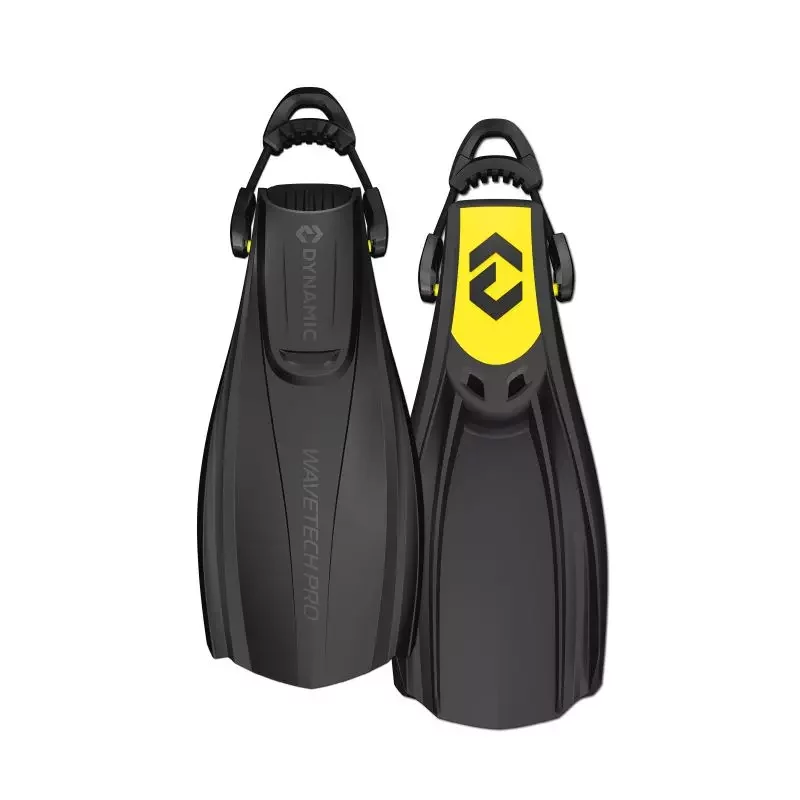
Designed with trim and stability in mind, the TF-80 works equally well for flutter and frog kicks, with just enough flex to keep comfort in check. It’s a fin built for technical environments like wreck penetration, caves, or long decompression dives. Priced competitively against other tech fins, the TF-80 is fast becoming a favourite in Europe and beyond.
Pros:
Durable natural rubber
Great with tech gear
Glove-friendly strap
Cons:
Heavier than recreational fins
Not ideal for casual travel diving
Fourth Element Tech Fin – £169 / $204
Fourth Element’s Tech Fin is built for divers who demand uncompromising control and durability in the harshest environments. Crafted from recycled rubber compounds, the fin is stiff, rugged, and eco-friendly, making it a sustainable choice that doesn’t compromise on performance. The blade design provides immense thrust for drysuit and technical diving, while its slightly negative buoyancy helps offset floaty feet, keeping divers perfectly trimmed in horizontal position.

The foot pocket is ergonomically sculpted, distributing pressure evenly across the foot for comfort on long dives, and stainless-steel spring straps make donning and doffing easy, even with dry gloves. While it’s perhaps a little heavy and bulky for most tropical dive holidays, it thrives in cold water, caves, and wreck penetration scenarios where precision matters most. Combining environmental responsibility with serious diving pedigree, the Tech Fin is a pro-level tool for demanding divers.
Pros:
Stiff and powerful
Eco-conscious materials
Excellent for drysuit trim
Cons:
Heavy and bulky
Probably overkill for casual recreational diving
Aqualung Storm – £95 / $119
Aqualung’s Storm is a lightweight all-rounder made from a single Monprene (TPV) compound, striking a rare balance between durability and featherweight packing ease. Unusually for open heel, the fin is designed to be used without boots and the ergonomic barefoot-style pocket cuts down on fatigue and feels more natural than slab-hard rubber. Add a silicone bungee strap with heel pad and a snag-free grip on deck, and you’ve got a travel diver’s dream.

A handy blade access hole makes storage and carrying easier, while the compact size doesn’t compromise thrust. Particularly popular with warm-water resort travellers, the Storm excels on leisure dives and liveaboards, offering excellent propulsion without drama or too much worry with baggage fees.
Pros:
Ultralight
Travel-friendly
No boots required
Cons:
Blade may flex too much in current for some
Not ideal for cold or heavy tech diving
Hollis F1 – £200 / $205
The Hollis F1 is a benchmark for power and precision, forged from heavy-duty rubber to deliver serious thrust with minimal effort. Its design includes a vented blade that optimises water flow for powerful kicks, and angled strap mounts that enhance energy transfer. The generous foot pocket, paired with glove-friendly spring heel straps and multiple mounting positions, ensures both comfort and a tailored fit.

Weighing in noticeably heavier than many fins, the F1 has a slight negative buoyancy which is a feature many drysuit divers will appreciate for maintaining trim. This fin fin excels in strong currents and technical settings where precision really matters.
Pros:
Full-throttle thrust
Durable build
Excellent control across kick styles
Cons:
Heavy and bulky
More fin than most leisure divers need
Summary – Standout Picks
- Best overall 2025: Dynamic Nord RF-40 – Quite simply a balanced blend of propulsion, comfort, and value.
- Best for tech diving: Hollis F1 – Not a surprise that a company built around a love of tech takes this one. Built for cooler environments and with great maneuverability and power.
- Best for travel: Aqualung Storm – What you compromise in power you gain in size, weight, and balance. The fact you don’t need to pack your boots also helps.
- Best for power-hungry divers: Scubapro Seawing Supernova – The seawings already have a reputation for easily overcoming current and the modular build and updates just push it ahead of the field.
- Best budget choice: Oceanic Viper 2 – When you want a simple fin that will suit most environments but want to keep the spend down, it’s hard to beat the Viper 2, and if you own a dive school, they’re a solid choice.
Final Word
Choosing the right open-heel fin is like choosing a dance partner. Too loose and you’ll falter, too stiff and you’ll tire out. Make sure the blade matches your kicking style (flutter or frog, and if you need tech maneuverability), the strap works well with your boots, and the material balances comfort with efficiency.
As most fins are built to last, taking care of fins doesn’t require too much. That said, rinse with fresh water after dives, check straps for wear, and store flat to prevent warping and you should get years of use from them. A well-chosen, well-maintained set of fins can carry you across decades of dives, currents, and coral, plus they will keep your diving as smooth as a summer lake.
Frequently Asked Questions
Open-heel fins seem more expensive so why choose them over closed-heel?
Open-heel fins offer boot compatibility, arguably better control with varied conditions, and can fit multiple divers. This makes them versatile and durable, though generally less suited for travel or rental use.
What difference does fin buoyancy (LD vs HD) make?
LD (low density) fins float, or are neutral and so are better with wetsuits; HD (high density) are slightly negative, ideal for dry suits or heavy gear, helping maintain trim and reducing leg sag.
Are bungee straps better than spring or buckle straps?
Bungees are simple, tool-free, adjust on the go, and great with gloves, plus they’re fast to don and doff. Springs offer instant fit and long life, but add weight. Then buckles, which are secure and adjustable, but sometimes proprietary, and can be slower with cold hands. All in all, it’s horses for courses.

When learning….you’re not sure what to buy and at the mercy of a shop and or instructor.
My recommendation… don’t buy anything except.. except mask and snorkel….rent everything else if possible. Try and rent the same items 2. Kept a list of what you rented. Rent perhaps…5 different manufacturer’s…
What works for your friend who swears it’s the best…might not be for you.