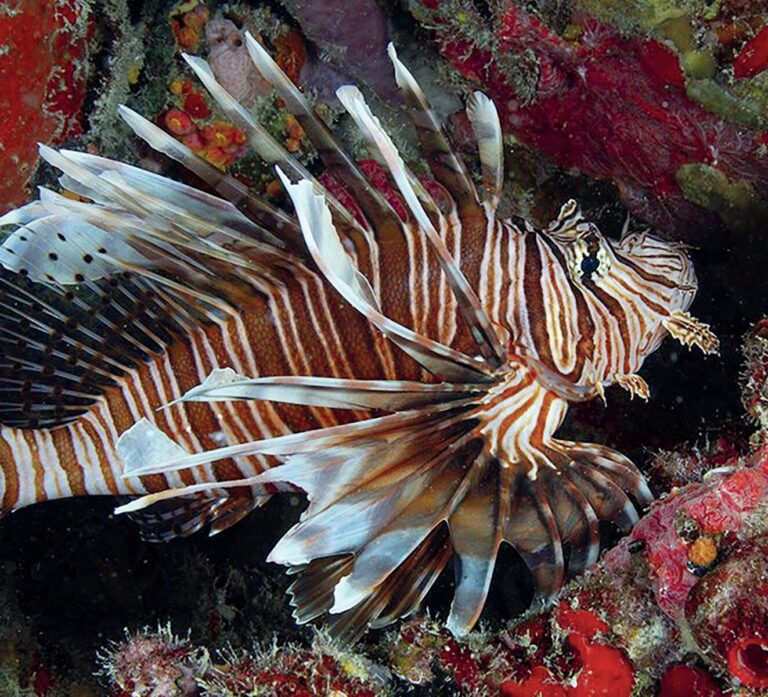
Lionfish are well known to divers for being beautiful, invasive, docile, delicious, destructive of reef ecosystems, and capable of delivering painful stings – here is some practical advice for dealing with lionfish stings
Photography by Stephen Frink
Understanding Lionfish Stings and Venom
Lionfish have 17-18 rays or spines along their dorsal, pelvic, and anal fins. When the ray of a fin penetrates the victim’s skin, venom flows into the wound. Most lionfish-related incidents occur because of careless handling, usually during spearfishing or while preparing them for consumption. Even though most stings are benign, some require urgent medical treatment.
Symptoms of a Lionfish Sting
Puncture wounds by lionfish spines can cause pain lasting for several hours, rapid swelling, and bruising. Swelling typically clears in two to three days, while the tissue discolouration can last up to five days. In some cases, swelling can become so severe that blood flow is compromised, possibly leading to tissue death, which is a particular concern in fingertips. A secondary complication is wound infections.
Envenomations are rare even in areas where lionfish are common, but avoidance or careful interaction is important to prevent injuries. The most common symptoms are pain, redness, swelling, local warmth, blisters, dead tissue, nausea, vomiting, difficulty breathing, fever and muscular weakness. Limb paralysis and cardiac failure have been reported, but lionfish venom is not lethal to healthy humans, and we are not aware of any published reports of death.

In recent years the number of lionfish envenomation victims seeking medical assistance has decreased, likely because people are now more familiar with lionfish and proper first aid for stings. Informed divers can reduce contact with lionfish and better manage injuries when they occur.
First Aid Treatment for Lionfish Stings
- Clean the wound by thoroughly washing the area with soap and fresh water. Remove any foreign material and control bleeding.
- Control the pain by immersing the affected area in the hottest water tolerable without causing injury — the upper limit is 113°F — for 30 to 90 minutes. Have someone test the water on the same area as the injury to ensure it is not too hot, as intense pain may impair one’s ability to discriminate between hot and scalding. Repeat as needed.
- Apply cold packs or ice later to reduce swelling and help with pain.
- Take pain control medication, if needed.
- Apply a topical antibiotic, if available.
When to Seek Medical Help
- If unsure, seek a professional medical evaluation; medical management may include sedatives, a tetanus vaccination, and antibiotics.
- If severe symptoms are present, call 911 or your local emergency medical services number.
- Call the DAN Emergency Hotline at +1-919-684-9111.
For an extensive range of diving health and safety information and downloadable resources, research studies, incident summaries, and free e-Learning courses, take the time to explore the DAN website.
Frequently Asked Questions
Are lionfish stings dangerous?
Lionfish stings are usually not life-threatening but can cause severe pain, swelling and, in rare cases, serious complications requiring medical care.
What causes pain from a lionfish sting?
Pain occurs when venom is injected through the sharp spines on the lionfish’s dorsal, pelvic or anal fins.
What is the best first aid for a lionfish sting?
Immersing the affected area in hot (not scalding) water for 30–90 minutes is the most effective way to neutralise the venom and reduce pain.
How long do lionfish sting symptoms last?
Pain may last several hours, swelling usually resolves within two to three days, and bruising can persist for up to five days.
When should I seek medical help for a lionfish sting?
Seek medical care if pain is severe, swelling restricts circulation, signs of infection appear, or systemic symptoms such as breathing difficulty occur.
This article was originally published in Scuba Diver Magazine
Subscribe today with promo code DIVE1 — enjoy 12 months for just £1!
