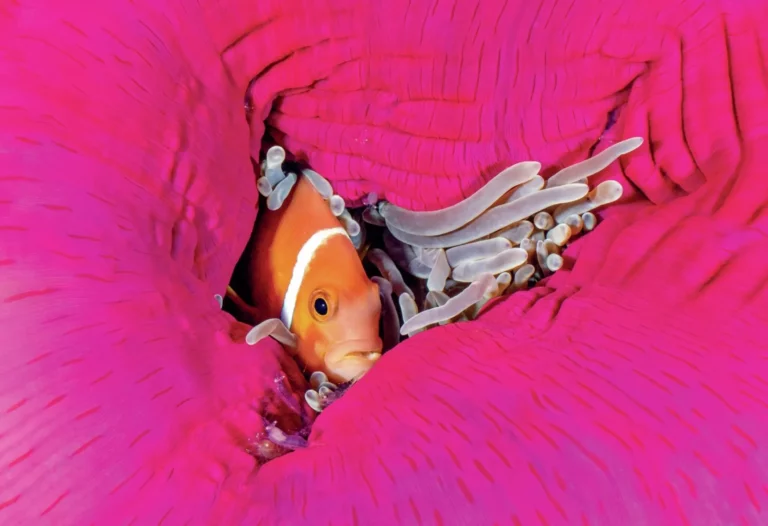

Confused by underwater photography autofocus? Alex Mustard explains how to choose the right AF modes for sharper, more consistent results.
Underwater photography advice is often pleasingly black and white. The challenges of taking photos through a murky, colour-absorbing medium means simply that the correct technique is rewarded with sharp, clear and colourful pictures. And for those that wander from the righteous path, they quickly see the error of their ways with dull, blotchy and hazy pictures.
As a teacher I pass on my dos and don’ts for all the different types of underwater pictures and see students rewarded with instant improvements. This method will make your shots better, this will improve your keeper-rate, this will avoid that problem, and so on. But things get more complicated in the world of autofocus.
Why Underwater Photography Autofocus Is More Complicated
All cameras have autofocus, but importantly, autofocus is not one entity. AF, to use the abbreviation, works in different ways and with different abilities across different models of camera. In addition, most cameras don’t have just one focusing mode, but many options of focus areas, focus tracking, focusing styles and focus activation. The reason that cameras have so many options is that different subjects/ shots can require different options and also different photographers have their favourite modes that work perfectly with the way they shoot. Oh, and to make matters even more confusing, the camera companies all have their own names for the different AF options they offer! This means that AF advice is both camera specific and photographer specific! Remember AF was invented to make photography easier, to free you to focus on more artistic considerations like composition or lighting. If the mode you use works for you then it is the right mode, even if others don’t use it. But if you struggle with AF, or find yourself distracted by it, or that you are overthinking AF, then maybe it is time to try something new. And despite the specificity of advice, there are plenty of principles that are reasonably universal.

Understanding AF-S vs AF-C for Underwater Shooting
The best way to share my AF tips is to tell you what I do and why, so you can decided what to copy and what not to. I will cover both my current Sony mirrorless camera and my previous Nikon SLR camera, so you can see the similarities despite the different tech and hopefully apply them to your own system. The Nikon D850 is widely regarded as the best SLR camera ever, combining a fantastic image sensor with a top-tier AF system. Before we get into details there are a couple of over-arching AF decisions to make. The first choice is AF mode, choosing between the options AF-S and AF-C, which are single-servo and continuous-servo, AF respectively. The difference is the first focuses once, then stops, letting you shoot only when focus is confirmed, while the latter keeps focusing all the time, letting you shoot at any point. I always use AF-C because as an underwater photographer floating in the motion of the ocean I know that neither the subject or me will be totally still and it is better to always have the AF running.
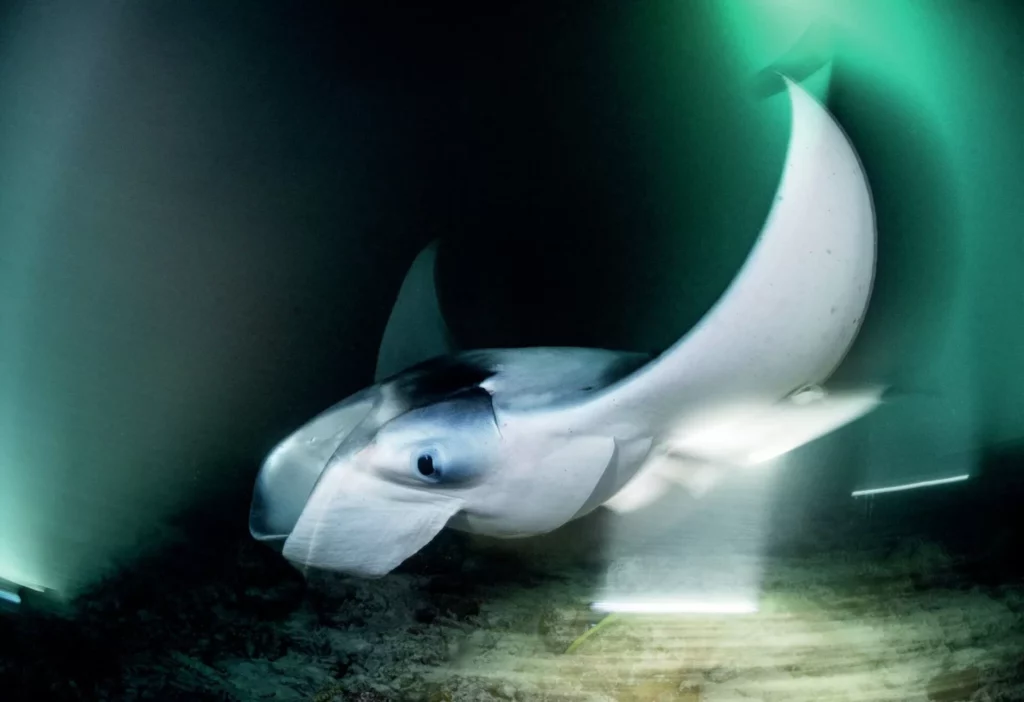
Back Button Autofocus: When It Helps, and When It Doesn’t
The next option is how to activate the AF. Many underwater photographers swear by back button AF, which is where we disable AF from the shutter release and the AF only comes on when we press the AF ON button on the back of the camera (this is set via custom setting a8 on the D850). I do use back button AF, but only for specific types of shoots, such as split levels, dark caves or supermacro – all times when the D850 AF will struggle. Personally, I prefer to do all my focusing the normal way by just half pressing the shutter release – arguing why press two buttons when I just need to press one. I should mention quickly that my approach on my Sony is almost identical, but the superior AF performance means I rarely use back button for supermacro, but do use it with adapted lenses as they can be a bit hunty.
Autofocus Settings for Underwater Photography
Wide Angle
Back to the Nikon D850, I use different AF-area modes for wide angle and macro. The area modes are the choices between which AF sensors are active. AF should always deal easily with wide angle scenes and I set the AF-area to AUTO, which basically turns on the whole AF sensor and the camera focuses on closest main feature in the frame, which 999 times out of 1,000 is exactly you want. This makes wide angle point-and-shoot simple. On the rare occasions it struggles, I don’t change AF-area but switch to back button AF and then set it and shoot.
Macro and Supermacro
For macro I use AF-area mode 3D Tracking, which prioritises just a single AF point, which you can move around. But in this dynamic mode, once the camera has grabbed the subject, the AF point will track it around the frame if it moves. This is beneficial underwater where both the subject (or the camera/diver) might move slightly, but this mode is also valuable when you decide to recompose, as the AF point will continue to track the key feature (such as the eye) as you change composition. Finally, if I am shooting very static macro subjects, such as when muck diving, I might switch to using Single Point AF, which is similar to 3D-Tracking but without the dynamic movement, so it doesn’t jump around.

DSLR vs Mirrorless Autofocus Underwater
My current squeeze is the Sony A1 Mirrorless camera. The top-line mirrorless cameras of the last couple of years are the first generation of mirrorless cameras that significantly exceed the AF performance of the best SLRs. They are particularly impressive in tracking subjects and also have intelligent subject recognition AF, meaning the camera knows what it is shooting and can focus in exactly the right place. Although currently no camera has yet been programmed to specifically recognise underwater subjects. I shoot wide angle with the Sony using WIDE focus area, although if there is a situation where the camera is struggling, I will switch to ZONE, which is similar, but smaller. For macro I use several. If the subjects are easy to detect, such as a fish swimming against open water, I will stay with WIDE and let the camera pick the subject.
Otherwise, I will go to Tracking and use either SMALL SPOT or EXPAND SPOT modes. These are similar, but more advanced than the D850’s 3D Tracking, with the same advantages. I find subject recognition works about half the time, so I often use it, but have a quick lever to deactivate it, if it starts to pick the wrong part of the subject, like the eye-spot on a butterflyfish or the nostrils of a moray, both of which it can confuse with the real eyes.
Final Thoughts: Finding the Autofocus Mode That Works for You
Despite the different technology and Nikon’s and Sony’s different naming, I hope you see there plenty of similarities that you can adopt with your camera, but only make a change if you are unhappy with how your AF is currently performing.
Frequently Asked Questions
What is the best autofocus mode for underwater photography?
There isn’t one best mode. The ideal autofocus setting depends on subject movement, shooting style, and camera system.
Should I use AF-S or AF-C underwater?
AF-C (continuous autofocus) is usually better underwater because both the diver and subject are constantly moving.
Is back button autofocus better for underwater photography?
Back button AF can be useful in difficult situations like supermacro or low light, but it’s not essential for all shooting.
Which autofocus mode is best for macro photography underwater?
Tracking-based modes like 3D Tracking or Small Spot Tracking are ideal for macro subjects that move slightly.
Do mirrorless cameras autofocus better underwater than DSLRs?
Modern mirrorless cameras generally outperform DSLRs, especially in subject tracking and recognition.
This article was originally published in Scuba Diver Magazine
Subscribe today with promo code DIVE1 — enjoy 12 months for just £1!
