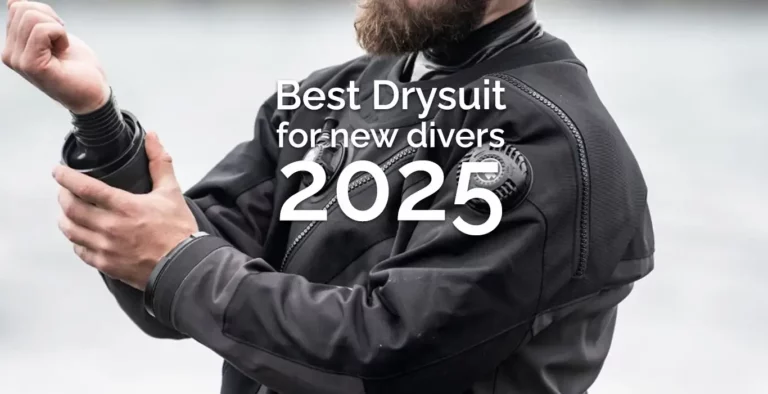
For divers stepping beyond warm tropical waters, for those earning extra certifications, or for anyone tired of feeling like an icicle, a drysuit isn’t just a luxury, it becomes essential. The good news is that divers no longer have to put up with heavy, stiff materials and basic latex gaskets. Modern drysuits offer much better mobility, better thermal control, more reliable sealing systems, pockets, and boots engineered for both comfort and ruggedness. But which is the best drysuit for new divers?
What Makes The Best Drysuit?
There are two major design branches to consider: neoprene drysuits (which act more like thick wetsuits but sealed to keep you dry), and membrane / trilaminate / breathable fabric drysuits (lighter, less insulating by themselves, needing undergarments but often better for warm-ups, travel, and flexibility). Then there are hybrid kinds (neoprene with reinforced panels, etc.). Key features you’ll want to scrutinise include:
- Seal types: latex vs silicone vs neoprene, how replaceable they are, comfort vs stiffness.
- Zipper type & location (back zip, cross-shoulder, shoulder-to-hip etc.): this will dictate the ease of entry/exit and how much help you will need.
- Boot style: built‐in boots, socks + rock boots, hard sole vs soft sole; and fin strap compatibility.
- Pockets & storage: thigh or leg pockets, internal bungee retention, D-rings etc., especially useful when doing advanced training or photography.
- Durability: reinforced high wear areas (knees, seat), ripstop or Cordura panels, robust materials.
- Comfort & fit: telescopic torso or adjustable suspender systems, sizes/tall/short/custom options; how easy it is to manage trim and buoyancy with undergarments.
- Valves/inflation/relief: good dump/exhaust valves, reliable inflation, possibly upgrade path (e.g. heated undergarments).
There’s plenty to consider when considering which is the best drysuit for new divers and so in the list below we cover 10 current drysuits from a range of manufacturers. The price range runs from “high but reasonable for a first premium drysuit” up to near top-tier “this is going to last me decades.” We’ll focus more on performance, features, durability, and long-term value than budget bargains.
Dynamic Nord DG-351 Advanced Drysuit – £1,402 / US$1,750
The Dynamic Nord DG-351 (and its sibling for ladies the DG-352) is a rugged trilaminate drysuit designed for divers stepping up into cooler, more challenging waters. Built from 350 g/m² ripstop trilaminate, it offers a balance of durability and flexibility, with reinforced panels in high-wear areas to withstand abrasion from wrecks, rocks, and long training sessions. The suit uses latex wrist seals and a neoprene neck seal, with a robust front-entry zipper from shoulder to hip, protected by an external flap, making self-donning manageable even for new divers.
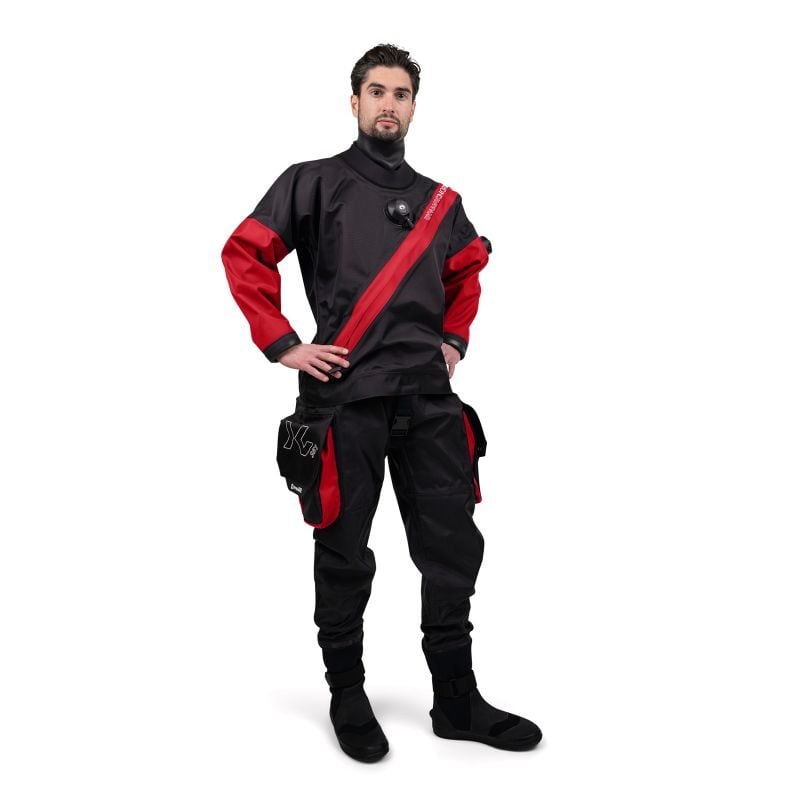
A telescopic torso system ensures a better fit across body shapes, while integrated suspenders add comfort during surface intervals. Large thigh pockets with bungee loops provide secure storage for spools, wetnotes, or backup gear. Rugged 3mm neoprene boots with fin strap stoppers round out the package. The DG-351 is an ideal first drysuit for divers who want something tough, serviceable, and ready for both recreational and technical training.
Pros:
Rugged build
Self-donning friendly
Excellent storage pockets
Cons:
Latex seals require upkeep
Heavier than membrane alternatives
Cressi Desert Drysuit – £999.99 / US$1,299.95
The Cressi Desert Drysuit is a high-density, pre-compressed neoprene suit built to keep divers warm and dry in colder environments. Available in male and female cuts it’s made from 4 mm neoprene (pre-compressed from 7mm), it provides excellent thermal insulation without requiring overly bulky undergarments, making it especially attractive for those transitioning from wetsuits. Reinforced panels on the knees, chest, and shoulders, and seat boost durability where it’s needed most, while the glued and blind-stitched seams with ‘Liquid Seal Technology’ reduce the risk of leaks.
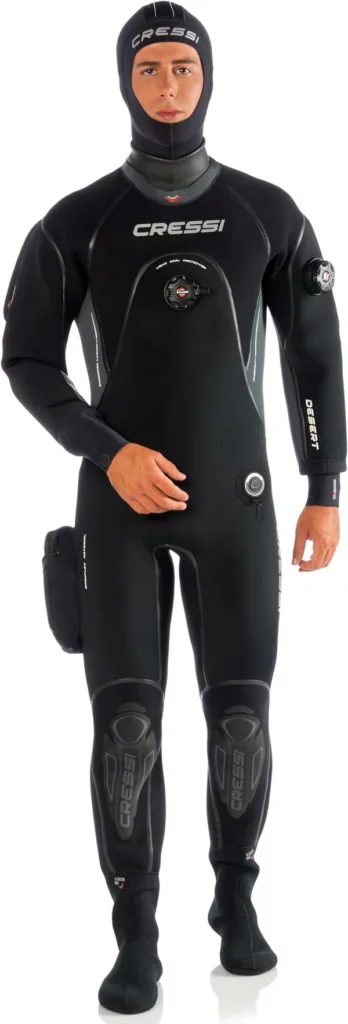
The suit features a neoprene neck (2.5mm) and wrist (3.5mm) seals for comfort, plus an anatomical hood and integrated suspenders for improved fit and freedom of movement. A spacious thigh pocket allows for storage of essentials, and its streamlined profile helps maintain trim in the water. The Desert is a great option for divers who want the warmth and simplicity of neoprene while still benefiting from drysuit protection in colder seas or lakes.
Pros:
Warm and simple
Reinforced construction
Includes hood and suspenders
Cons:
Bulkier than membrane suits
Requires more weight for buoyancy control
Waterproof D10 PRO ISS – £1,980 / US$2,945
The Waterproof D10 PRO ISS is a professional-grade neoprene drysuit that blends warmth, comfort, and reliability for cold-water divers. Constructed from 3.5 mm high-density neoprene, it offers inherent insulation while still maintaining flexibility in the water. The standout feature is its Integrated Silicone Seal system (hence the ISS), which allows divers to easily replace wrist and neck seals without specialised tools. This is a major benefit for anyone diving in remote locations or on liveaboards.
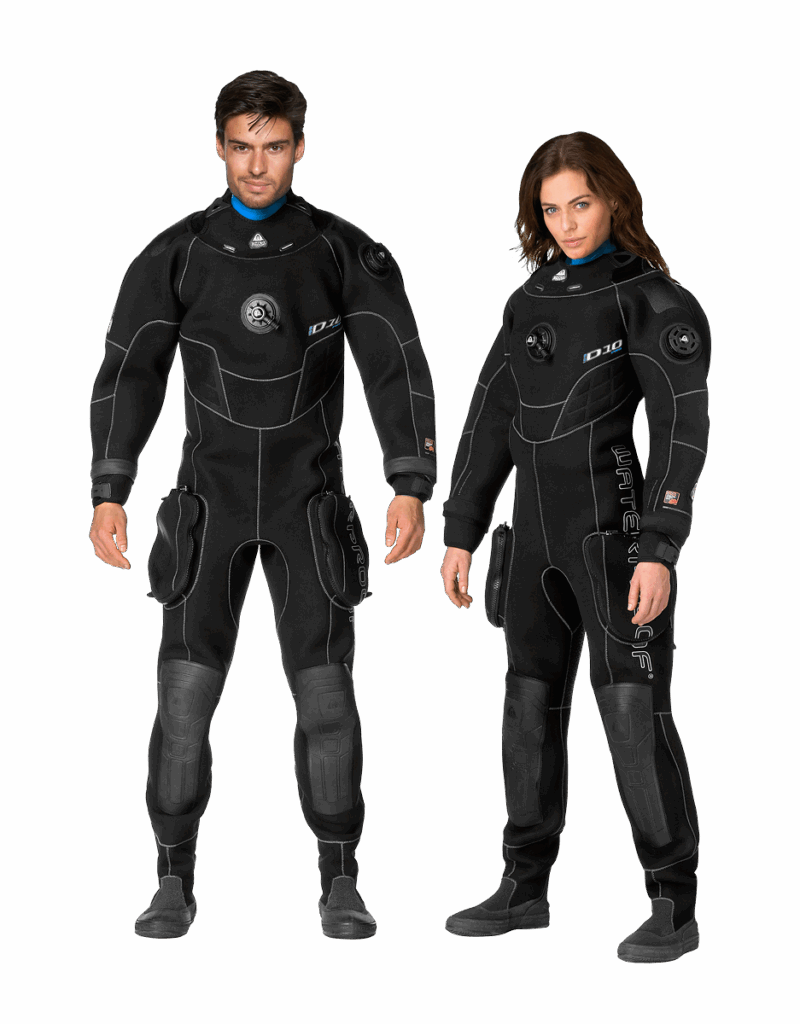
Heavy-duty Kevlar reinforced boots, reinforced knees, and a tough outer zipper guard make this suit extremely durable in demanding environments. Dual thigh pockets provide ample storage for accessories, while the warm neck collar and included hood add comfort in colder conditions. The D10 PRO ISS is a superb choice for new divers who want a premium suit that’s built to last and will handle advanced training, cold quarries, and icy open seas with equal reliability.
Pros:
Replaceable ISS seals
Excellent insulation
Very rugged
Cons:
Heavy for travel
High price point for new divers
Apeks ThermiQ Dry Advanced – £1,848 / US$3,100
The Apeks ThermiQ Dry Advanced is a high-performance trilaminate drysuit tailored for divers who want durability and flexibility in one package. Its breathable trilaminate fabric reduces internal condensation and improves comfort over long dives, especially when paired with proper undergarments. Cordura reinforcement panels cover high-wear zones like knees, shoulders, and seat, extending its lifespan during wreck or training dives.
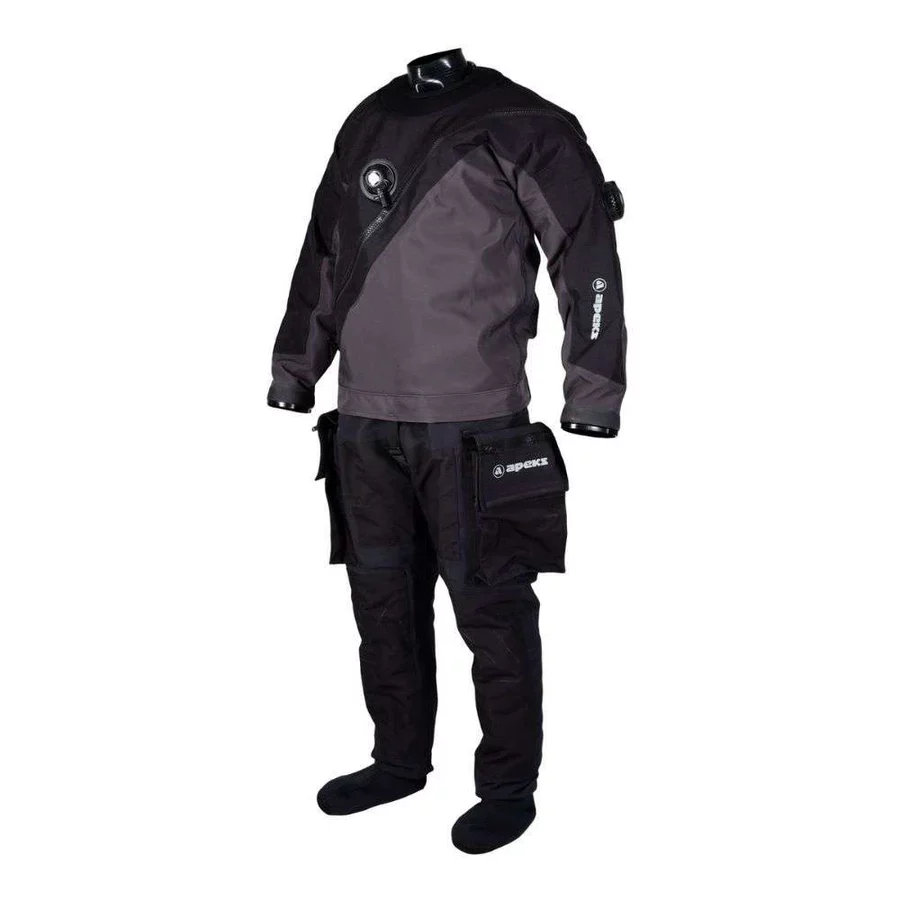
The suit includes large Velcro-secured thigh pockets with internal loops, Apeks inflation and exhaust valves for reliable gas management, and neoprene socks designed for pairing with rock boots. A replaceable neck ring and wrist system allow divers to swap seals quickly, saving dives if damage occurs. With a front-entry YKK Aquaseal zipper and internal suspenders, it’s both self-donning friendly and comfortable topside. For new divers investing in a long-term suit, the ThermiQ offers features normally seen in high-end technical gear, making it a future-proof option.
Pros:
Breathable trilaminate
Replaceable seals
Highly durable
Cons:
High price point for new divers
Requires quality undergarments for warmth
Otter Classic 4/5mm Neoprene Drysuit – from £919.58 / US$1,245
The Otter Classic 4/5mm Neoprene Drysuit is a tried-and-tested workhorse built for divers who want warmth, reliability, and simplicity in colder waters. Constructed from high-quality 4/5mm neoprene, it offers excellent insulation, reducing the need for bulky undergarments, while still providing enough flexibility for comfortable movement. Reinforced knee and seat panels extend the suit’s durability, making it suitable for training dives and rugged entry points.
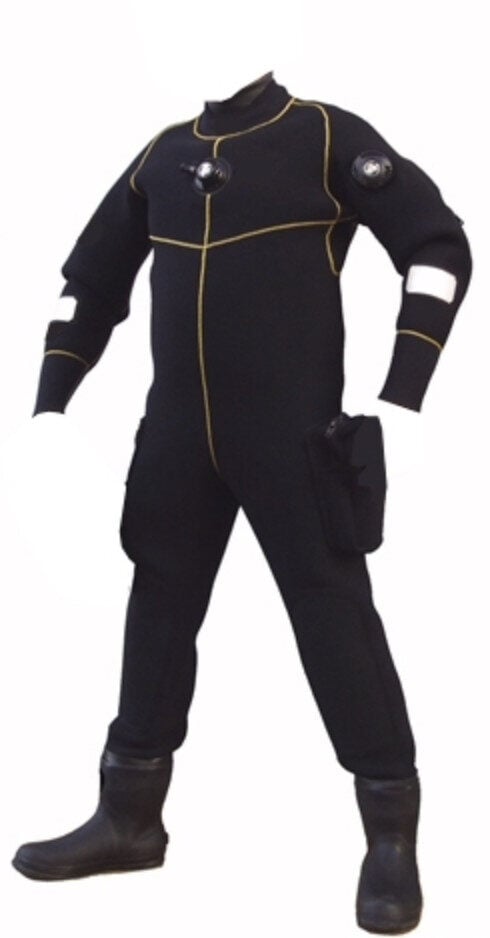
The heavy-duty zipper, combined with a choice of neck and seal options will ensure solid protection against leaks and the built in braces provide added comfort during and between dives. Integrated boots keep feet warm and secure, and you can even choose the type you want and optional thigh pockets allow you to add storage as needed. For anyone looking for a straightforward, robust neoprene suit that doesn’t compromise on warmth, the Otter Classic remains a dependable choice and a popular entry point into drysuit diving.
Pros:
Very warm
Durable build
Great custom options
Cons:
Not easy to source worldwide
Bulkier for travel
Scubapro Everdry 4 – £1,165 / US$1,686
The Scubapro Everdry 4 is a compressed neoprene drysuit designed for divers who want the warmth of neoprene with a streamlined fit. Constructed from 4mm pre-compressed neoprene, it minimises buoyancy changes at depth while still offering significant insulation. Its design features include Si-Tech valves, and built-in neoprene socks for added durability and warmth.
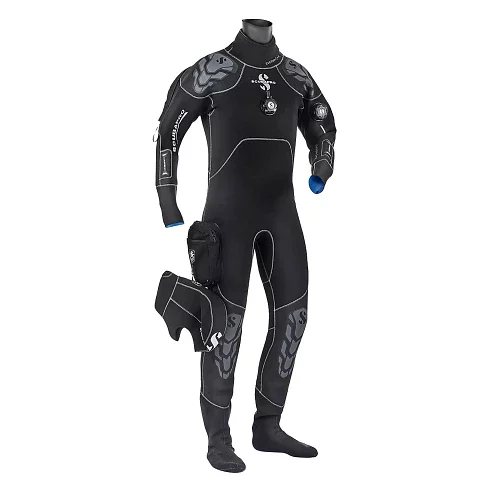
The Everdry 4 has a close-fitting cut that feels more like a wetsuit than a bulky drysuit, giving newer divers a more familiar experience when transitioning. Reinforced shoulders, seat, and knees add resilience, while a spacious thigh pocket provides practical storage. With its balance of price, durability, and comfort, the Everdry 4 is a strong entry-level option for divers looking to tackle cooler water without breaking the bank on their first drysuit.
Pros:
Streamlined fit
Warm neoprene build
Good value for money
Cons:
Less flexible than trilaminate
Rear shoulder zipper generally requires assistance
Bare X-Mission Evolution – £2,259.95 / US$3,709.95
The Bare X-Mission Evolution is a top-end trilaminate suit developed with technical divers in mind but accessible enough for ambitious recreational divers. It uses a lightweight but durable Cordura-reinforced trilaminate material, which offers flexibility without compromising abrasion resistance. The telescopic torso and suspenders system improve fit and mobility, while the low-profile front-entry zipper makes donning straightforward. The suit comes equipped with two large tech-style thigh pockets, low profile valves, and tech boots.

Designed with input from cave and expedition divers, the X-Mission Evolution is built for tough conditions but works equally well for newer divers who want a premium suit that will last. Its lightweight fabric makes it easier to transport, and the wide size range ensures a good fit. For divers planning to expand into advanced training, this suit provides reliability and long-term value.
Pros:
Lightweight and durable
Front-entry
Excellent mobility
Cons:
Premium price
Undergarments required for warmth.
Fourth Element Argonaut 3.0 – from £2,390 / US$3,560
The Fourth Element Argonaut 3.0 has been around for a few years now and it is a firm favourite already. It’s is a fully customisable trilaminate suit that allows divers to tailor material, fit, and seal systems to their preferences. Buyers can choose between the Flex fabric (lightweight and flexible) or Stealth fabric (heavier and more abrasion-resistant), making it adaptable for both travel and rugged diving. Its BIOMAP fitting system ensures precise measurements, offering one of the best fits available off the rack.

Key features include a front-entry shoulder to hip zipper, internal suspenders, plus a staggering choice of valves, pockets, boots/socks, wrist and neck seals, and p-valves. For new divers, the Argonaut 3.0 provides a professional-level suit that can evolve with their diving ambitions, whether that’s wrecks, caves, or cold UK quarries. The ability to configure and customise ensures divers get exactly what they need, reducing the compromise often found in off-the-shelf suits.
Pros:
Highly customisable
Excellent fit
Versatile fabrics
Cons:
Expensive
More cost for undergarments
Santi E.Motion Plus Drysuit – from £2,610 / US$3,190
The Santi E.Motion Plus is a premium but versatile trilaminate suit aimed at divers who want ruggedness without the bulk of fully top-end expedition suits. Built with Santi’s Smart Seals® system, it allows for fast, easy seal exchanges (neck & wrist) and allows a choice of various seal types (latex, neoprene, silicone), which is great for newer divers worried about leaks or needing repairs. The zipper is a YKK Aquaseal plastic zip (less weight, lower maintenance than metal ones), arranged from the right shoulder to left hip to optimize the position of the outlet valve and improve mobility.
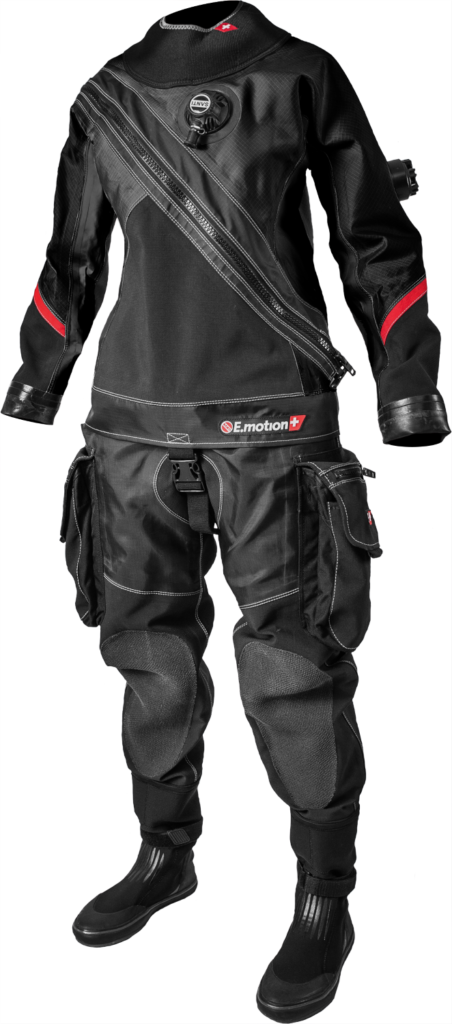
Two large cargo pockets with bungee loops plus additional zipped sub-pockets make gear storage simple. The suit includes Flexsole boots (good grip, comfort), a neoprene thermal collar and offers a broad size range for both men and women. Overall, the E.Motion Plus delivers a nice balance: durable, decent warmth, many features of premium gear, without being overkill for someone stepping up.
Pros:
Smart Seals ease maintenance
Excellent pockets & size variety
Lighter zipper & layout improve comfort
Cons:
More expensive than bare-bones suits
Less innate warmth than thick neoprene so requires good undergarments.
OThree Port 10 Neoprene Drysuit – from £1,045 / US$1,400
The OThree Port 10 is theoretically positioned as an entry-level neoprene drysuit. But, it has a solid spec off the shelf and is fully customisable. This means it’s great for newer divers wanting warmth and durability without a premium price, but for those wanting more you can add pocket, boot, p-valve, gloves and more as required. It uses 4.5mm dive-grade neoprene, externally Armatex-lined for abrasion resistance, with a heavy-duty BDM zip and external zip guard to protect the most vulnerable part.

As standard, the Cargo-25 thigh pocket gives practical storage, and boots are heavy-duty 6 mm neoprene dry boots so feet stay warm. Seals are neoprene wrist pressure-fit, and the neck features a super-supple neoprene seal, which is more comfortable than traditional latex for some divers. Standard valves are Apeks low profile auto dump / swivel inlet, reliable and well-known. Given its features, warm material, and solid build, the Port 10 is a great way for a newer diver to get into serious cold-water, more frequent dives without spending on “expedition-plus” gear if you don’t want to.
Pros:
Good insulation and warmth
Robust build
Solid value at this tier
Cons:
Bulkier in water
Heavier and more cumbersome for travel.
Summary
Overall best drysuit for new divers – Otter Classic 4/5mm Neoprene Drysuit: Dry suits are not cheap, that’s just a fact, but among the competition, the Otter Classic offers great bang for the buck. Compressed neoprene means built-in warmth, the fit feels familiar for those moving up from wetsuits. Personalised fittings plus the amount of customisation that’s possible also mean that if you’ve been renting for a while, you can add the goodies that you like without breaking the bank.
Best for Travel – Fourth Element Argonaut 3.0: The Argonaut’s Flex fabric option is lightweight and packs down smaller than most neoprene or heavy trilaminates, making it practical for flights or liveaboard trips. The customisation system ensures a proper fit, which reduces the bulkiness and buoyancy issues many divers struggle with. Great choice for the diver expecting to travel regularly.
Best for Warmth – Waterproof D10 PRO ISS: We know undergarments will change the game somewhat, BUT, nothing beats compressed neoprene when it comes to ‘built-in’ insulation. The D10 PRO ISS keeps divers warm without piling on thick undergarments, and its integrated silicone seal system is a bonus for maintenance. If your local waters are consistently cold (think UK quarries, Scandinavian seas, Canadian lakes), this is the “stay warm at all costs” choice.
Best for Flexibility – Not an easy one this, but with a low base price the OThree Port 10 Neoprene Drysuit is hard to beat. It requires no extra garments for warmth and does the job out of the box, but if you want to upgrade, customise for specific use, or just add all the bells and whistles because you can, then the Port 10 is a great option.
Best Value – OThree Port 10 Neoprene Drysuit: Yes, there are better spec’d suits. Yes, neoprene is bulky if you’re planning to travel. But we are looking at new divers here and though there is some strong competition, when you’re a new diver you might not want to spend a few months salary on a suit that protects you from an environment that you decide is not your favourite. The Port 10 hit all the right markers. Build quality is excellent, it will keep you warm without undergarments, and it’s great value for money!
Final Word On The Best Drysuit For New Divers
Deciding on your first drysuit is a completely different game to most other items in your scuba gear. Choosing your first real drysuit is one of the decisions that can define how much you enjoy cold water diving, how often you dive, and how comfortable you’ll be during training and beyond. A poor fit, seals that leak, or a suit that’s too cold (or too bulky to adjust buoyancy well) will lead to frustration, wasted money, and possibly safety risks. Spend time trying on different suits if possible, get measured properly (including torso length, boot size, reach), think ahead about cold exposure, and always factor in what you’ll need in terms of undergarments and the extra weight you’ll carry.
Also, maintenance is often under-emphasized: seals (latex or silicone) degrade, zippers can suffer from salt and misalignment, protection panels wear down. So, after-dive rinse, dry properly, store with care. Repairs can be expensive, so choose a suit with good parts availability and warranty support where you dive.
If you’re just beginning but serious about becoming a cold water diver, spend more on fit, seals, and material than on flashy extras: a drysuit that keeps water out and heat in is worth more than 10 thigh pockets if those pockets leak or the zipper fails. After all, you don’t just want the best drysuit for new divers, you want the best drysuit for YOU.
Frequently Asked Questions
Do I need latex or silicone seals, or neoprene?
There’s no real right or wrong answer here. Latex is traditional and often cheaper; it’s also very well understood. But it’s less comfy, needs more care, and can degrade more quickly in sun/salt so keeping replacement parts is essential. Silicone seals tend to last longer and are more skin- friendly (especially around joints), but cost more. Neoprene seals (on neoprene suits) feel more like wetsuit material – warmer perhaps, more forgiving, but less tight, more bulky, possibly more water intrusion (but overall warmth often compensates).
How much undergarment insulation do I need?
That depends on water temperatures. If you’re diving in near freezing or very cold water (under 8-10°C), thick undergarments (thermal fleece, multiple layers) are essential. Neoprene suits ease this requirement somewhat. For membrane/trilaminate, always plan for layering. And consider how drysuit squeezes (compression) will reduce the insulating power of undergarments. Always test in shallower, safe conditions first.
Back-zip vs cross-shoulder / shoulder-to-hip zip: which is easier?
Entry zippers at the back are more common traditionally, but they can be hard to reach, and require assistance to close. They also put more strain on the zippers themselves. Cross-shoulder or shoulder-to-hip zips are more ergonomic (especially for entry/exit), allow more movement, and sometimes better entry. But they may cost more, and the durability / seal of zip must be good. Evaluate the zipper brand & maintenance, not just position.