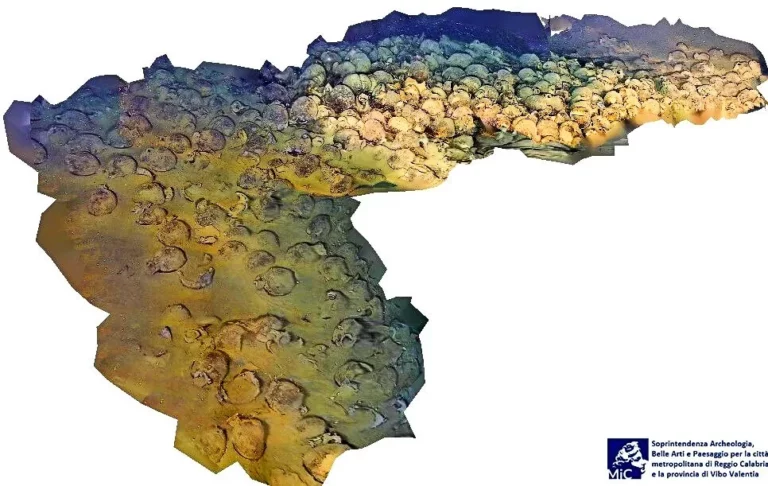
A commercial survey for an offshore wind-farm carried out in deep waters off southern Italy has revealed an ancient Greek merchant shipwreck said to offer a rare opportunity to study trade routes of the time.
The vessel sank off Italy sometime between the 5th and 4th centuries BC with more than 300 amphoras onboard. Relatively few Classical Greek merchant ships from this period have been found with such a large, intact cargo.
The project could reveal where wine or olive oil was produced, how such commodities were transported and the maritime routes that linked Magna Graecia, the network of Greek colonies that occupied much of southern Italy and Sicily centuries before Roman domination, with the wider Mediterranean.
Preventive archaeology
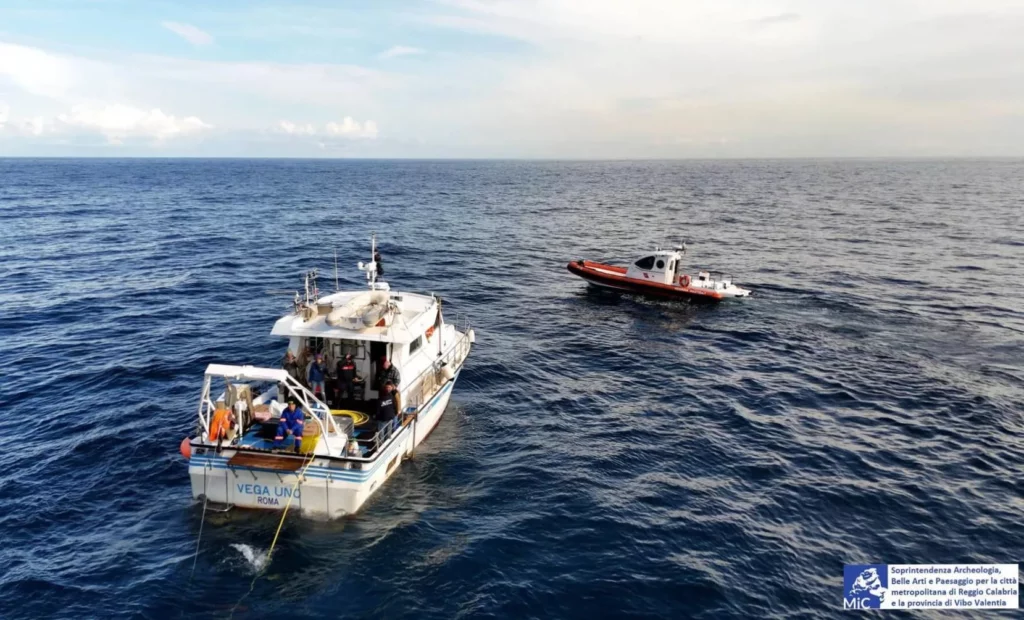
The vessel was discovered at a depth of about 730m in the Ionian Sea about 22km off Monasterace on Calabria’s eastern coast in 2023, although it has only recently been made public by the Italian authorities.
Renewable energy company Acciona Energia had been using an ROV to map the seabed when it identified the archaeological site.
The company was carrying out feasibility studies for an offshore wind project in co-ordination with a team of marine archaeologists, geologists and marine biologists from the Superintendency of Archaeology, Fine Arts & Landscape for Reggio Calabria and Vibo Valentia (SABAP-RC-VV).
“Preventive archaeology is a fundamental tool to enable the development of new infrastructure while protecting historical and cultural heritage,” says Acciona Energia.
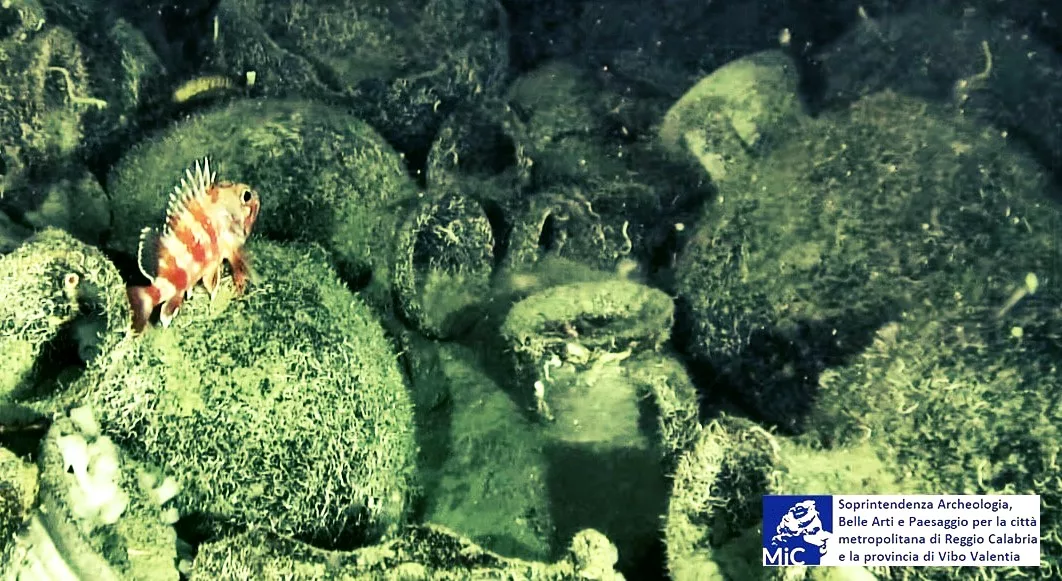
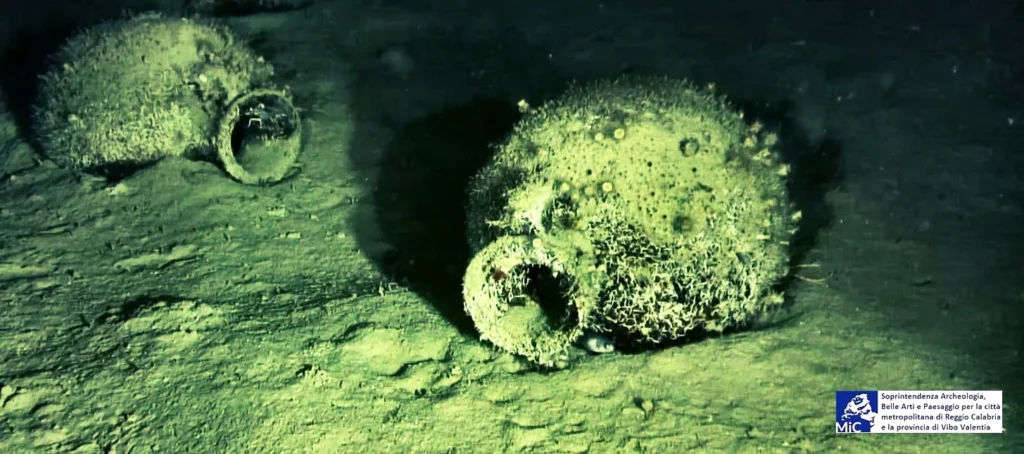
The cargo appears remarkably well preserved, with many of the amphoras still clustered together on the seabed. They lie in two groups about 10m apart, thought to have been separated in recent years by fish-trawling, but the clustering has made it easier to reconstruct how the cargo was loaded, says the team.
The containers were almost certainly used for transporting wine or olive oil, but the researchers hope that residue analysis can identify their original contents beyond doubt.
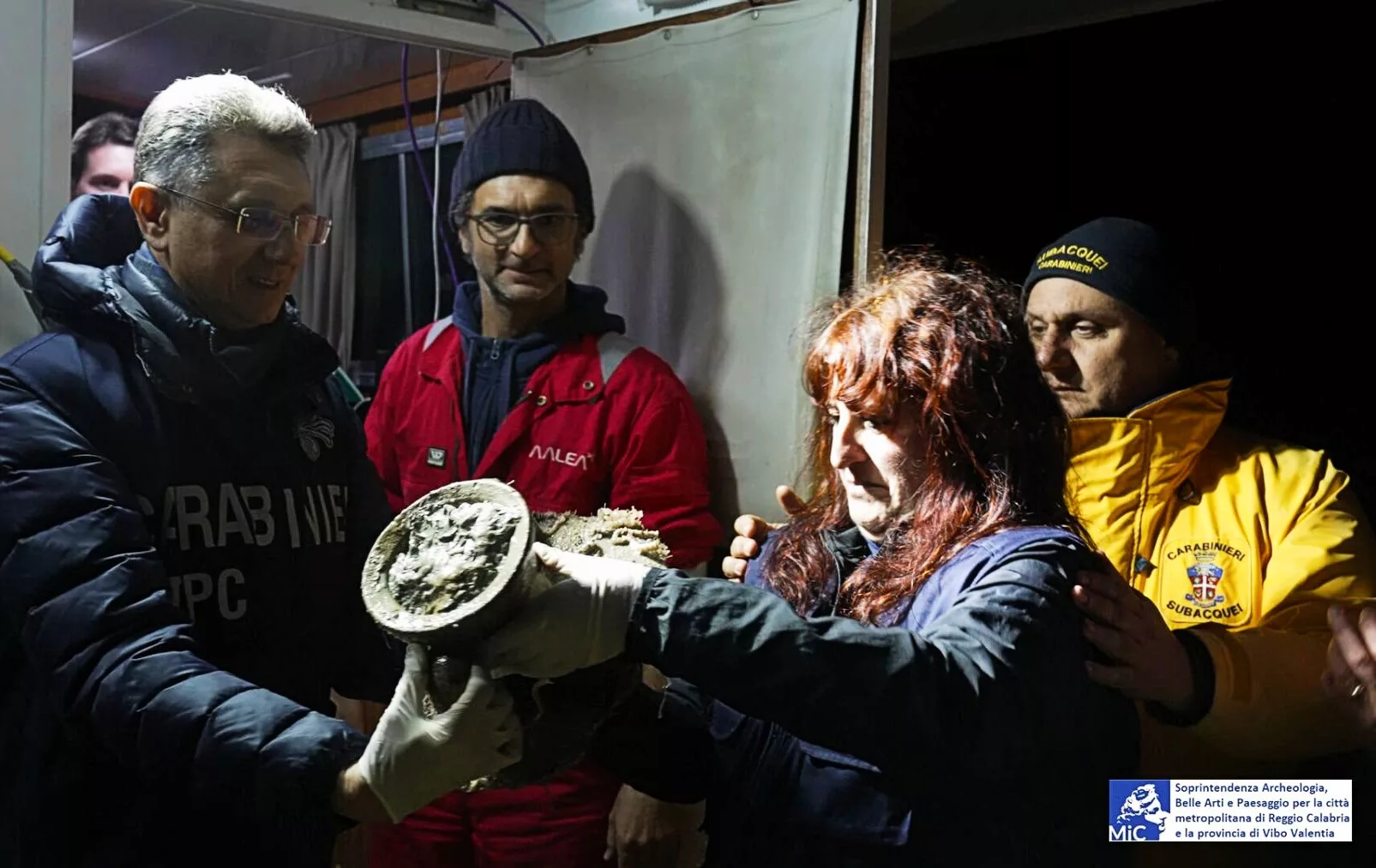
According to Francesco Tiboni, one of the marine archaeologists on the Ministry of Culture / SABAP team, traces of ancient wine might have survived inside some of the still-sealed vessels. The design of the amphoras appears consistent with types produced in Magna Graecia.
Bomber wreck
While the proposed windfarm will now be built away from the archaeological site, last year SABAP-RC-VV launched a project to study, recover, conserve and enhance the shipwreck and its cargo, funded by Italy’s Ministry of Culture.
In an interview with The Times, Tiboni said that the same offshore survey had also identified a second wreck laden with amphoras, at the same depth and not far from the first one. He said that archaeologists intended to investigate that site once work on the initial wreck was further advanced.
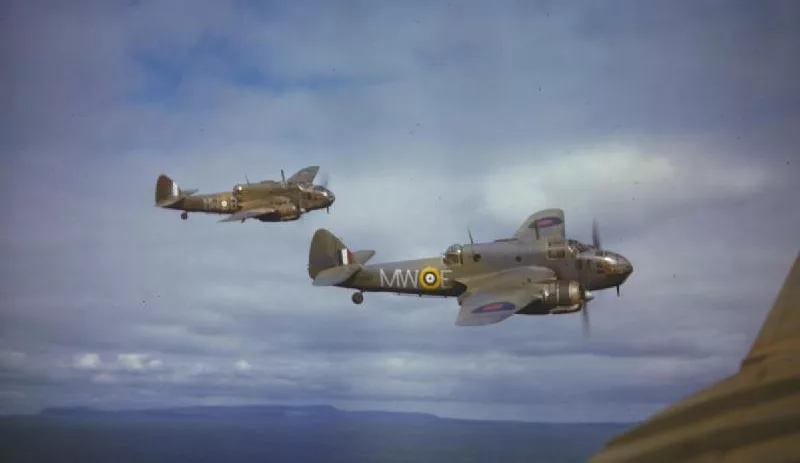
He also mentioned a third discovery, not expected to require archaeological intervention, of a well-preserved RAF Bristol Beaufort torpedo-bomber.
According to Tiboni the aircraft had taken off from Malta in August 1942. It was part of a force of 12 Beauforts sent to attack an Italian tanker carrying fuel to Axis forces in North Africa.
Italian fighters escorting the convoy had intercepted the bombers and shot down the Beaufort. The crew had managed to ditch the aircraft into the sea, explaining its good condition, but they were all picked up by Italian forces and spent the rest of the war in German prison camps.
Tiboni said that ROV footage showed the aircraft largely intact on the seabed, with the RAF roundel still clearly visible on the fuselage and looking “like a snapshot of history”.
Also on Divernet: 80 years sunk: Another Beaufort bomber traced