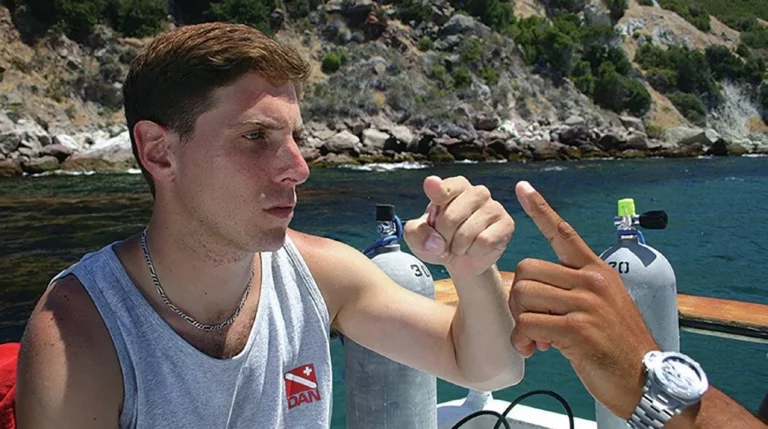
Would you recognise if your buddy was experiencing neurological decompression sickness (DCS)? Learn to recognise the signs of one of the most-serious types of decompression sickness and brush up on your knowledge before your next dive. It might just make all the difference.
Cases of decompression sickness with neurological symptoms are thankfully rare. Knowing how to respond correctly can make all the difference for an injured diver. While articles are no replacement for training, they’re a great starting point. Read on, seek training, and learn what you can do in an emergency because effective treatment of a diver with neurological DCS depends on rapid recognition and response.
Recognising the Symptoms of Neurological Decompression Sickness
In any case involving a suspected dive injury, you should respond as if it were the worst-case scenario — a speedy emergency response can only help an injured diver’s condition. If a symptom could potentially be linked to neurological DCS and lacks an obvious exclusionary explanation, assume the symptoms are a result of DCS and proceed accordingly. At times, it can be very difficult to discern whether a diver is experiencing DCS or an unrelated medical condition, but being familiar with typical symptoms can give you enough direction to respond effectively. Here’s a list of classic DCS symptoms to look out for:
- Confusion
- Paraesthesia (a ‘pins and needles’ sensation)
- Muscle weakness
- Numbness
- Difficulty walking
- Problems with physical coordination or bladder control
- Dizziness or vertigo
- Nausea or vomiting
- A dry cough or difficulty breathing
- Assess, Identify, Respond
Immediate Response to a Suspected Neurological Dive Injury
Once you have recognised that there is a problem, the next step is to identify the type and severity of symptoms. When responding, your priorities are to quickly determine whether an injury has occurred, activate your emergency-response plan and local emergency services, quickly assess the severity of the injury (and the level of urgency required), and (if appropriate) begin conducting a neurological exam.
Conducting a Basic Neurological Assessment
Neurological examinations begin as conversations and progress to a series of cognitive tests. Injured divers with serious cases of DCS can be wholly unaware of their own symptoms, and you may have to identify their symptoms for them with careful examination. An on-site assessment guide is a useful tool to have when conducting these neurological examinations. When you begin, ask the injured diver how they are feeling and note when each symptom began. Go through a checklist of possible symptoms, but avoid listing them aloud or posing questions in a way that might suggest symptoms that do not exist.
As you conduct your assessment, be sure to write down pertinent medical history, the dive profile/s, gas breathed, time of onset, and any reported symptoms. These are critical pieces of information for healthcare providers, and proper documentation can improve both the quality and speed of care once an injured diver reaches a hospital.
Next, you’ll want to assess the diver’s mental awareness and physical condition. Determine whether they are alert and oriented; if they have an impaired level of consciousness, your priorities may shift to basic life support and airway management. If the diver is alert and oriented, ask a simple question like ‘Do you know where we are?’ These will help you identify possible confusion.
Why Early Recognition Saves Lives
It is vital that you, as a diver, can recognise the symptoms of a dive injury and activate an emergency-response plan. Skills beyond that are highly recommended and could very well save a life, but the ability to identify and respond to major emergencies is something that should be expected of all divers. Your training may not equip you to do more than call emergency services and comfort an injured diver, but your response could very well improve the outcome for an injured buddy all the same.
For an extensive range of diving health and safety information and downloadable resources, research studies, incident summaries, and free e-Learning courses, take the time to explore the DAN website.
Frequently Asked Questions
What is neurological decompression sickness (DCS)?
Neurological DCS is a serious form of decompression sickness where gas bubbles affect the brain, spinal cord or nervous system.
How quickly can neurological DCS symptoms appear?
Symptoms can appear immediately after a dive or may be delayed for several hours, sometimes worsening over time.
What are the most common symptoms of neurological DCS?
Confusion, numbness, tingling, muscle weakness, coordination problems, dizziness, nausea and breathing difficulties.
What should I do if I suspect neurological DCS?
Treat it as an emergency: activate emergency services, administer oxygen if available, document symptoms and contact DAN.
Can neurological DCS be mistaken for other medical conditions?
Yes. Stroke, inner-ear issues or dehydration can mimic DCS, which is why suspected cases should always be treated as DCS until ruled out.
This article was originally published in Scuba Diver Magazine
Subscribe today with promo code DIVE1 — enjoy 12 months for just £1!
