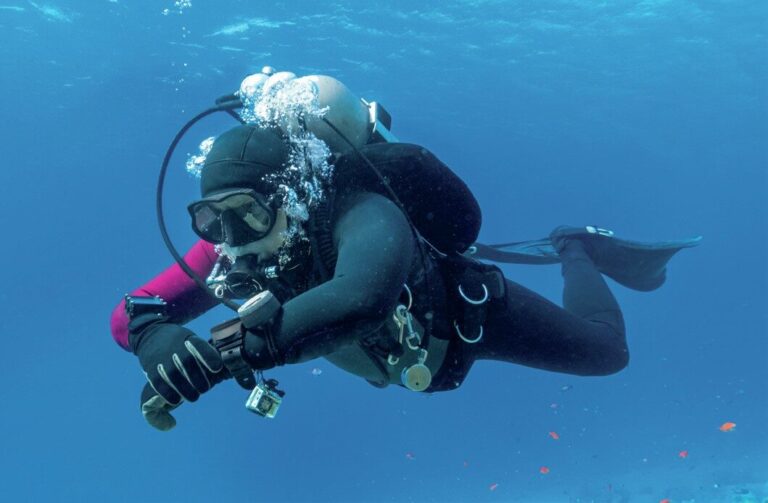
A Sudden Pain at Depth
The onset of pain in my left ear was sudden and excruciating. I knew something was wrong, so I gripped the anchor line and stopped ascending. My buddy saw me stop, and I communicated via hand signals that something was not right with my ear and that I needed to pause our ascent. I waited for a few seconds and thought the pain was subsiding, so we started up once more. The pain immediately hit me again.
Recognising the Reverse Block
I signalled to my buddy that something was wrong and that I needed to descend again. My brain kicked into emergency mode, and time seemed to slow down. I could feel the adrenaline surge and my heart rate increase. The pain subsided when we dropped down a metre. At this point I knew from my training that I was dealing with a reverse block.

As with most potentially dangerous situations, the first step toward safety is to take stock of the circumstances. I signalled to my buddy that I was going to level off and spend a few minutes on the anchor line.
I closed my eyes momentarily, concentrating on my breathing. As my heart rate slowed, I began to think through the dive. Nothing unusual had occurred. It was the end of our last dive of the weekend, and we made it very relaxed, even calling it shorter than normal because we were satisfied with the trip and our dives on this wreck.
We had planned our dive for the depth, conditions, equipment, and individual surface air consumption (SAC) rates and adjusted maximum dive time based on our previous dives that weekend, leaving a generous safety margin in our tanks.
Slow Ascent, Clear Thinking
After a couple of minutes, I began to slowly make my way up the anchor line. The pressure in my ear would periodically begin again, and each time I paused long enough for it to clear. That ascent felt like an eternity, but I watched my gauges and knew I was in good shape. Eventually, I reached the hang line and leveled off again at 4.5m. We had not pushed ourselves into a decompression dive, but as a matter of habit we performed a precautionary safety stop before ascending the rest of the way.
I was grateful for my training. This dive could have ended with me experiencing severe barotrauma and potentially rupturing my eardrum (or worse) had we not accounted for our SAC rates as well as contingency reserves.
Medical Follow-Up and Recovery
When I got back on the boat and removed my gear, I gingerly touched the inside of my ear with my pinky and saw a drop of blood. I was happy to be back on the surface but still worried about a potential injury, so I saw my physician the next morning. He inspected my exterior ear canal and was concerned because he could not see my eardrum, so he referred me to an ear, nose, and throat doctor (ENT) for further evaluation.
The ENT confirmed that my eardrum was fine and the issue was a haemangioma in my exterior ear canal. There was also a slight abrasion from a piece of sand or grit that had swollen and blocked most of my outer ear canal. When my regular physician had first evaluated me less than 24 hours post-dive, the canal was about 95% blocked, so he could not see past the dried blood and thought my eardrum had ruptured. My ear healed within a couple of weeks with proper care, and I was cleared for diving once my ear had completely healed.
Lessons Divers Can Take Forward
• When presented with an unexpected situation, stay calm, and don’t panic.
• Know your limits, and plan for contingencies.
• Calculating your SAC rate is a skill every diver should know and practice.
Being sure how long I could safely do so without running out of air lessened my stress, so I could focus on working through the problem and ending the dive safely.
For an extensive range of diving health and safety information and downloadable resources, research studies, incident summaries, and free e-Learning courses, take the time to explore the DAN website.
Frequently Asked Questions
What is a reverse block in diving?
A reverse block happens when expanding air can’t escape during ascent, causing painful pressure in the ears or sinuses and forcing the diver to stop ascending.
What should you do if you experience ear pain during ascent?
Stop, hold onto a line if available, descend slightly until the pain eases, and ascend slowly in stages. Never push through severe pressure.
Can a reverse block rupture your eardrum?
Yes. Forcing an ascent while the ear can’t equalise can lead to barotrauma or even eardrum rupture. Controlled ascents greatly reduce the risk.
Why is knowing your SAC rate important in emergencies?
Understanding your SAC rate tells you how long your gas will last, giving you the confidence to slow down, stay calm and address problems safely.
When should a diver see a doctor after ear pain or bleeding?
Any ear bleeding, persistent pain, hearing changes or suspected barotrauma should be checked by a GP or ENT specialist as soon as possible.
This article was originally published in Scuba Diver Magazine
Subscribe today with promo code DIVE1 — enjoy 12 months for just £1!
