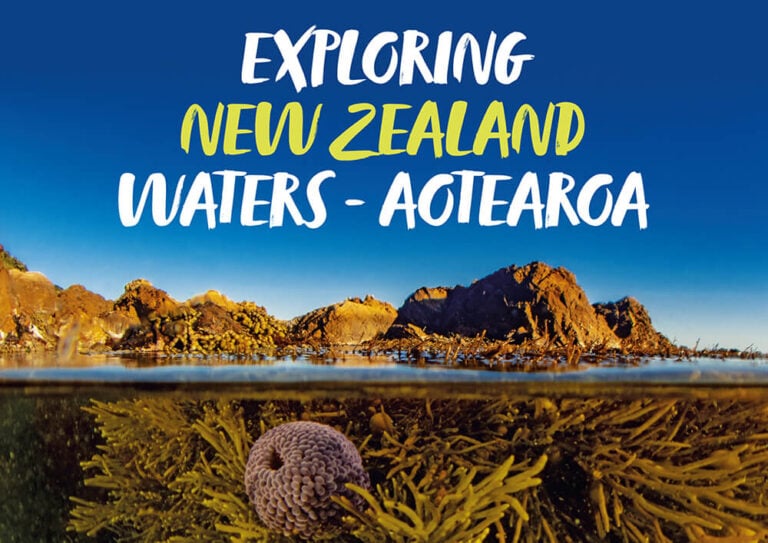
In this two-part series, Judy Ormandy talks about diving New Zealand, highlighting the rich and varied opportunities that can be found in Aotearoa.
The Land of the Long White Cloud, Aotearoa New Zealand may be better known for its dramatic ‘Lord of the Rings’ landscapes, snow-capped mountains, active geothermal regions and lush forests. The spectacular scenes continue underwater, and those diving into the temperate waters can experience vibrant marine life, subtropical reefs, historical shipwrecks and volcanic topography.
North Island Dive Sites: Legends, Reefs and Wrecks
The North Island, Te Ika – a-Māui – the fish of Māui is so named as Māori legend recounts how the warrior Māui fished up the North Island. Looking carefully at a map, what is now Wellington is the fish’s head, the East Cape and Taranaki the fish’s fins and Northland its tail. It is fitting that Te Ika – a-Māui – The North Island – is home to a diverse variety of dive sites, with the temperate water becoming cooler as you move south.
Historic Wreck Diving: Rainbow Warrior and HMNZS Canterbury
The Rainbow Warrior was a Greenpeace flagship sunk by covert French Secret Service agents in Auckland harbour in 1985. Her final resting place is in the Cavalli Islands, off the coast of Matauri Bay, north of the Bay of Islands. The Rainbow Warrior lies in 18m-27m of water and diving her allows a poignant blend of history and marine life. The wreck is an artificial reef, festooned in anemones and soft corals, and home to schooling fish.
The captivating Cavalli Islands offer steep drop-offs, alive with kelp forests, moray eels and swirling schools of fish. Bay of Island dive operators run day trips up to here.

The Bay of Islands
Located in the subtropical ‘winterless north’ of the North Island, the Bay of Islands boast stunning scenery, bountiful sea creatures, good visibility and an array of dive sites ranging from relaxed recreational dives to advanced technical sites. Divers can experience colourful reefs, caverns and swim-throughs while sea critters include five different species of moray eels and huge scorpionfish glaring at you. Water temperature ranges from 22 degrees C in late summer to 15 degrees C in winter. Between and after dives, you can see seals lounging on rocks, prolific bird life and dolphins dancing in the waves.
For wreck enthusiasts, the decommissioned HMNZS Canterbury is a Leander-class frigate deliberately scuttled in Deep Water Cove in the Bay of Islands in 2007. She lies upright in about 40m of water and is an iconic wreck dive. Assisted by a rāhui (a no-take zone), she is now a vibrant artificial reef, home to schooling fish, marching pack crays and colonies of anemones decorating the railings. You can explore meandering corridors, a laundry and an engine room, with numerous access points for penetration dives. Recreational divers can visit shallower areas, including the bridge or search for the elusive crested weedfish found on the radar tower.
The jewel anemones spawn annually for about 30 minutes and local dive operators can often predict the timing. This is a bucket list dive, when you can admire the females plump with their orange eggs cascading into the water and the boy anemones releasing clouds of sperm.


Poor Knights Islands: New Zealand’s Premier Marine Reserve
The Poor Knights Islands are arguably New Zealand’s most well-known dive sites. Lying 23km off the Tutukaka coast, they have been a fully protected marine reserve since 1998. The warm East Auckland current brings nutrient-rich water from the tropics, contributing to the incredible biodiversity underwater. The islands are remnants of a group of ancient volcanoes, contributing to the dramatic scenery and arches and tunnels above and below water. They can be dived as a day trip from Tutukaka, or if you wish to enjoy the spectacular sunsets and sunrises or have the opportunity to do a night dive, Northland Dive runs liveaboard trips.
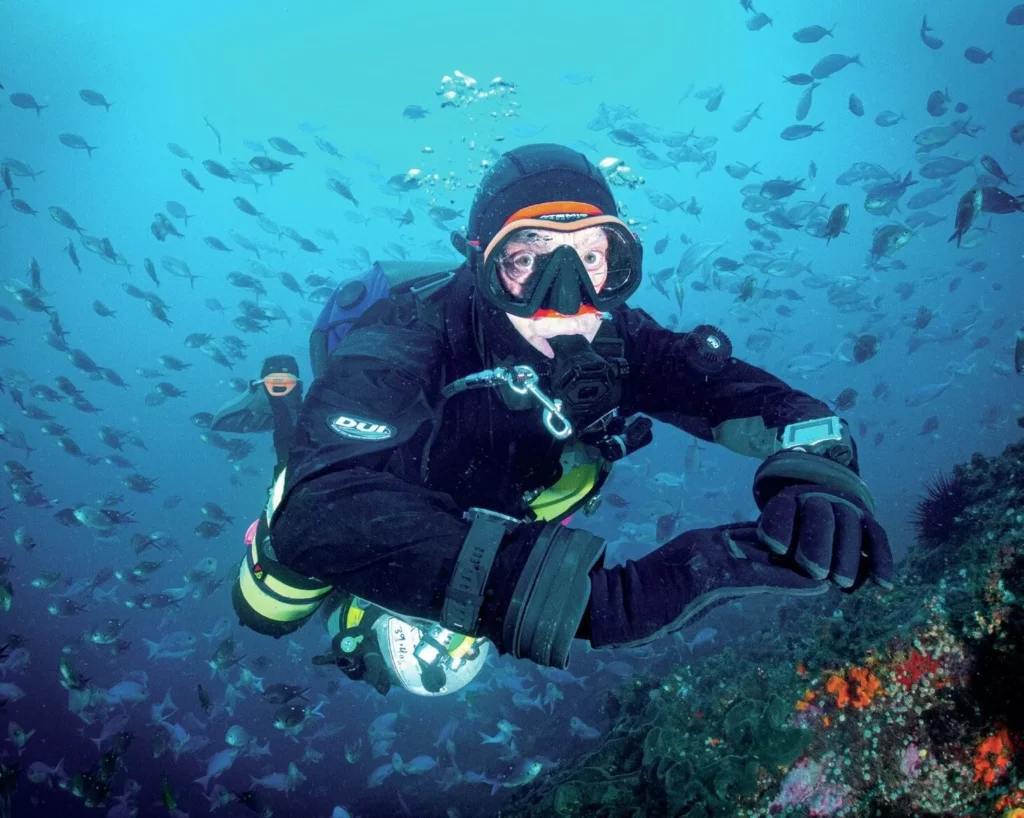
The dive sites are teeming with life in a kaleidoscope of colours. Kelp forests are home to schools of fish, and macro lovers can hunt for numerous nudibranchs in the nooks and crannies.
Famous dive sites include Blue Maomao Arch, with dense schools of blue Maomao shimmering in the sunlight, and Northern Arch, with stacking stingrays and incredible encrusting wall life.


Rikoriko Cave is the world’s largest sea cave by volume. Between dives, your skipper may take the boat inside – and it is also large enough to be an overnight anchorage for liveaboards when conditions permit. A dive in Rikoriko Cave will reveal sponges and hydroids lining the walls, unique nudibranchs and even whale bones in the far recesses of the cave. Kelp is only found in the entrance due to the lack of consistent sunlight.
South of the main Poor Knights Islands lie the Pinnacles, a rocky outcrop only accessible in calmer conditions. Tie Dye Arch dive site is named for the bright patchwork of colours adorning the walls. The Arch is home to shoals of fish, marauding kingfish and if you are lucky, bronze whaler sharks. The encrusted walls are a macro photographer’s dream.
Freshwater Diving in Lake Taupō
For a change of pace, Lake Taupō offers a variety of freshwater dive sites. Taupō is New Zealand’s largest lake and at 357 metres above sea level, is classified as an altitude dive. Currently, there are no local dive operators, but shore dives are easily accessible. The unusual topography with layered terraces and sheer cliff faces is a consequence of the area’s geothermal nature. You will see freshwater crayfish, koura, scuttling along the lakebed freshwater sponges and fish. At shallower depths, rays of sunlight create shimmering reflections in the clear water.
A drift dive along the Waikato River from Cherry Island to Reid’s farm is a unique experience. The current, flow and river depth varies by nearby hydroelectric dam levels so do check the conditions prior to your dive or snorkel. During the exhilarating drift dive, you will dodge eddies,submerged tree trunks and possibly the odd shopping trolley. There are nearby geothermal hot pools to soak in following your dive.
Volcanic and Geothermal Diving at White Island
New Zealand’s most-active marine volcano lies 48km off the coast of Whakatāne in the Bay of Plenty. You can no longer land on the Island and access has become more challenging since the 2019 eruption. The active geothermal environment has created unique underwater landscapes with hydrothermal vents and fumaroles and you can see and feel warm water bubbling through vents. The diverse terrain includes sandy plateaus, kelp forests and submerged pinnacles. Nearby Vokner Rocks are three rocky pinnacles that rise above sea level. Large schools of pelagic and reef fish are found in this protected marine area. The visibility is fantastic, but caution is required in the strong currents. Laison’s Reef, halfway between Volkner Rocks and White Island, is a submerged reef home to abundant stingrays and schooling fish. The reef emerges from 150m of water to 13m at its shallowest point – both depths and current need to be monitored when diving this high-voltage dive site.

Wellington: New Zealand’s Best Shore Diving
Te Whanganui a Tara – Wellington – offers potentially the best shore diving in Aotearoa. Moving south the water is cooler, with sea temperatures of 16 degrees C in summer dropping to a chilly 10 degrees C in the depths of winter. The multiple coastlines mean that there is usually somewhere you can shelter from the prevailing winds.
The Taputeranga Marine Reserve was established on the rugged South Coast in 2008. The flourishing marine life is a testament to the value of marine reserves and this unique is in a built up urban setting. Shore divers can explore rocky channels and swim throughs and admire colourful sponges, curious octopuses and sparkling anemones. Favourite shore dive sites include Mermaid’s Kitchen opposite Dive Wellington, the more sheltered ‘Snorkel Trail’ and Elsdon Pipe. Local dive operators offer guided dives and if you are more confident you can seek advice from the local shops and head out with your buddy.


The F69 Wellington is a Leander frigate that was scuttled in 2005 and lies 400 metres offshore in the marine reserve. She has broken into three pieces, but remains a popular dive site with the wreck home to schools of moki and covered in sponges and nudibranchs. This dive requires a boat to access and Dive Wellington runs charters here.

If Wellington’s notorious southerly winds are battering the south coast, you can retreat to Wellington Harbour. At night the harbour comes alive with seahorse, pipefish and reef squid found in the shallow waters.
Frequently Asked Questions
Is New Zealand good for scuba diving?
Yes. New Zealand offers diverse diving including wrecks, marine reserves, kelp forests, volcanic reefs and freshwater sites.
What are the best dive sites in New Zealand?
It’s a very subjective question, but top sites include the Poor Knights Islands, Rainbow Warrior wreck, Bay of Islands, Wellington’s Taputeranga Reserve and White Island.
What water temperatures can divers expect in New Zealand?
Temperatures range from around 22°C in northern summer to 10–15°C in winter and southern regions.
Are there famous shipwreck dives in New Zealand?
Yes. The Rainbow Warrior, HMNZS Canterbury and F69 Wellington are iconic wreck dives rich in marine life and history.
Is diving suitable year-round in New Zealand?
Yes, though conditions vary by region. Dry suits or thicker wetsuits are recommended in cooler months.
This article was originally published in Scuba Diver Magazine
Subscribe today with promo code DIVE1 — enjoy 12 months for just £1!
