
Adrian Stacey finally gets to explore legendary dive sites aboard a Galapagos liveaboard and finds that they more than live up to the hype.
Read Part 1 of Adrian’s Glorious Galapagos
A Long-Awaited Visit to the Galapagos
In 2014, my wife and I were within touching distance of the Galapagos. Well, not quite touching, but very close. We were travelling through South America and made it as far as Peru before events conspired against us, and the opportunity to dive into these amazing islands evaporated.
Eleven years later, the chance to finally visit this elusive archipelago arrived, and in March of this year, we found ourselves excitedly packing for the trip of a lifetime. Getting to the Galapagos from Australia is an adventure in itself! To travel non-stop from Australia is a gruelling 40 hours, with stops in Auckland, Santiago and Guayaquil along the way. However, as we were not keen on a ten-hour stopover at Santiago airport, we decided to stay the night. Santiago is a charming city, and we could easily have stayed a few extra days.
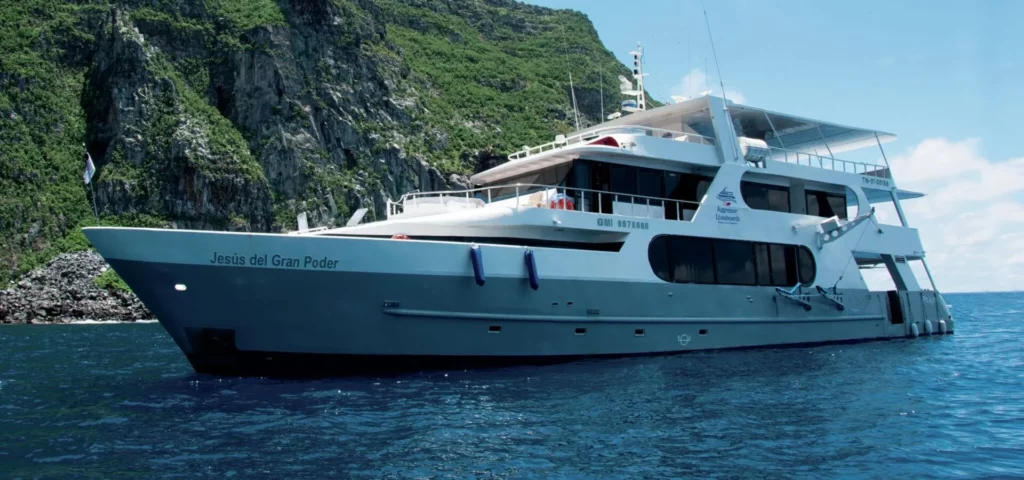
On the recommendation of Aggressor Adventures, with whom we were diving, we also had a night stopover in Guayaquil. One night is enough in this port town, but it is well worth the stopover to avoid any flight delay-related stress! The final leg of the journey is a short flight from Guayaquil to the island of Baltra. The Galapagos Aggressor III was moored a short bus ride way from the airport in the Itabaca Channel, which separates Baltra from the island of Santa Cruz.
Did you know?
Flights to the Galapagos originate in Ecuador at José Joaquín de Olmedo International Airport in Guayaquil or Mariscal Sucre International Airport in Quito and continue to Isla San Cristobal or Isla Baltra (Seymour).
Life Onboard the Galapagos Aggressor III
Once on board our home for the week, we had the obligatory briefings, which included a tutorial on how to use the Nautilus homing beacons we were provided with. The fact that these devices are standard issues is, in my book, a good sign – so long as we didn’t have to use them, that is! It implies strong currents, which I usually associate with abundant marine life.
After the briefings, we conducted a check dive in the channel to ensure all our equipment was functioning correctly. The rest of the day was spent exploring the boat and getting to know the crew and other divers. The Galapagos Aggressor III has been purpose-built to ply these waters; it is sturdy, spacious, and well-equipped, with even a jacuzzi onboard. The crew are very experienced, friendly and extremely good at their respective jobs. The food was plentiful and excellent. The guides were knowledgeable and passionate about the Galapagos and were always on hand to discuss these unique islands.
It is also worth mentioning that only nine liveaboards are permitted to dive in the Galapagos, and they must submit their itinerary for departure, meaning we were guaranteed every dive site to ourselves. Dive briefings were eagerly anticipated, as each dive site promised some unusual or spectacular animal encounter.
First Galapagos Liveaboard Dives and Early Encounters
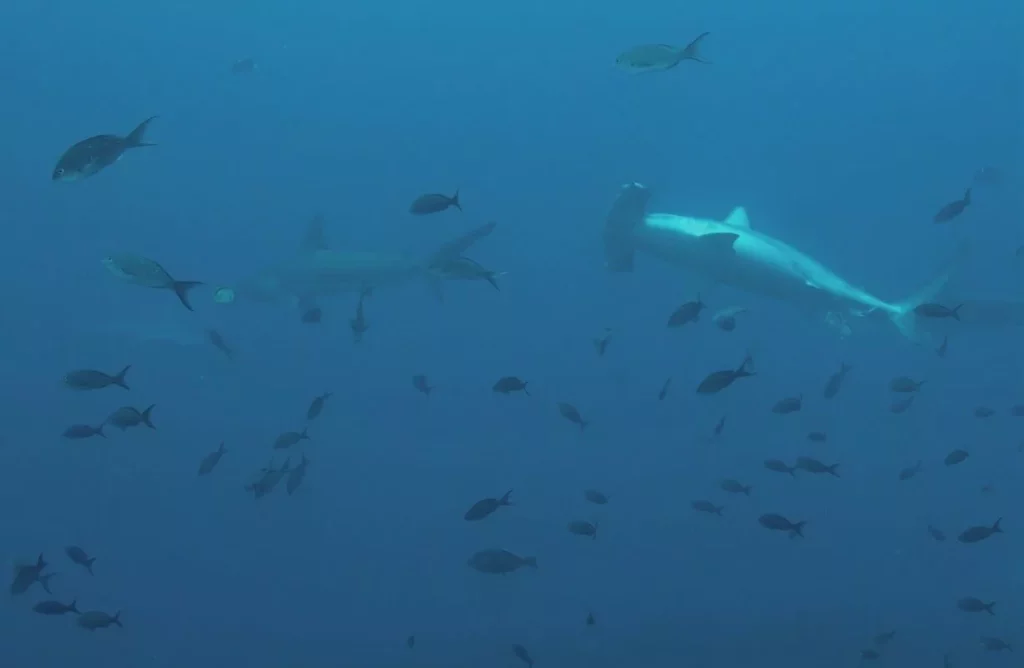
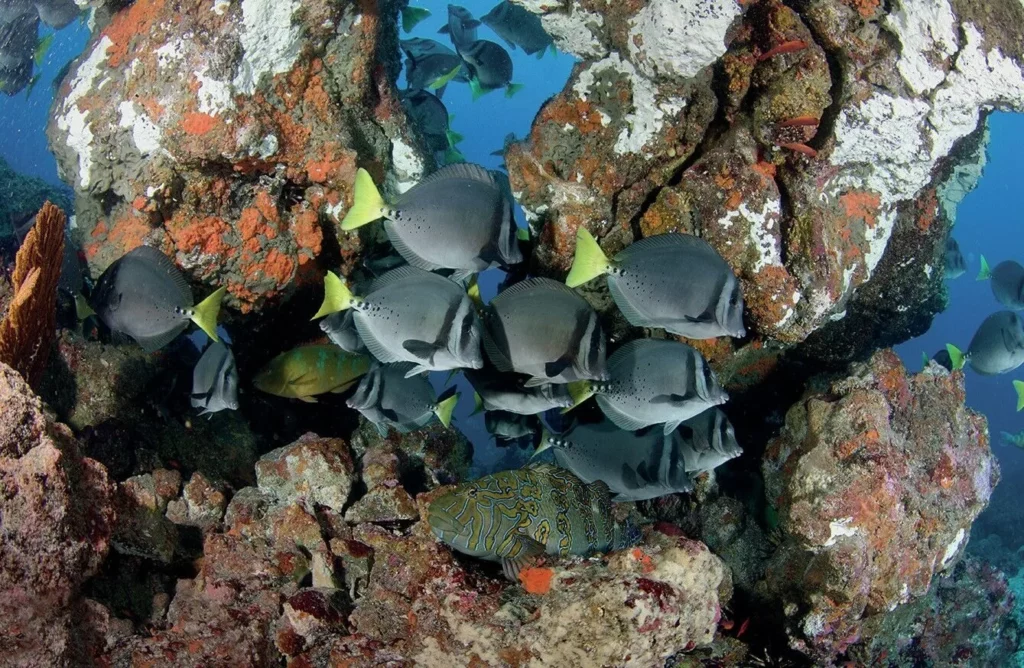
On our first full day, we had two dives scheduled, both of which were around the corner from the mooring at a site called Punta Carrion. A steep, rocky slope drops into the depths and is a regular haunt of mola mola; although we did not see any on this occasion, we did encounter hammerhead sharks, turtles, eagle rays, golden cow-nose rays, mobulas, and several massive tuna. In the shallows, surgeonfish bustle from boulder to boulder, feeding on algae. We also found some strange-looking blue nudibranchs. Not a bad start to the trip!
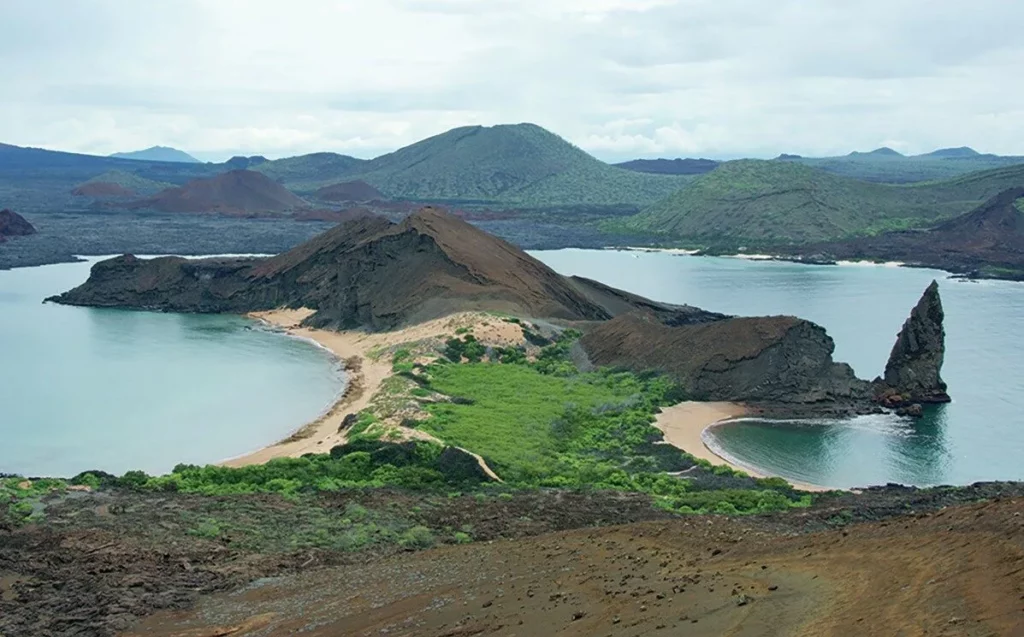
The afternoon was spent visiting Bartolome Island. A short hike to the summit of the island provided us with one of the Galapagos’ iconic vistas. After our land-based excursion, we were back in the water to snorkel with one of the island’s many unique marine creatures, the Galapagos penguin. That evening, as the sun set and we cruised to our next adventure, the chef prepared a no-holds-barred BBQ on the sundeck, featuring as much meat and fish as anyone could possibly eat.
Did you know?
While diving in Galapagos is generally suitable for all levels, it’s recommended to be comfortable in the water and familiar with your equipment. Many liveaboards require a minimum of PADI Advanced certification and 50 logged dives.
Roca Blanca – Where Sea Lions Meet Mantas
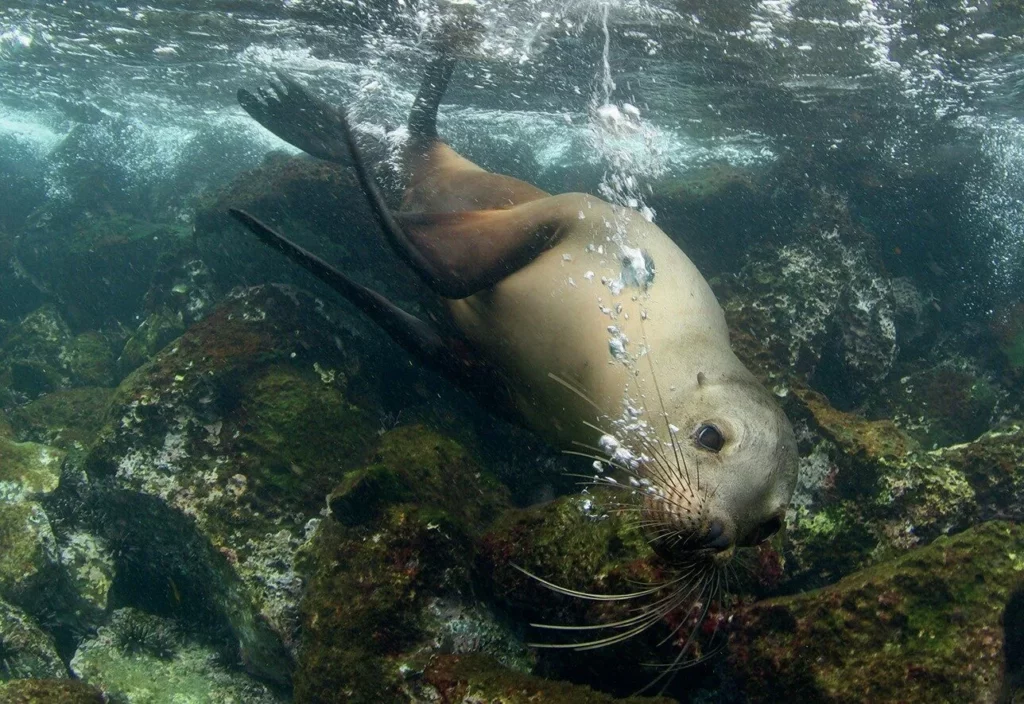
The following day, we had a taste of what makes diving in the Galapagos so special at a dive site called Roca Blanca. This exceptional location now sits firmly in my top five favourite dive sites in the world. The reason for this is the unlikely combination of marine life that frequents this intriguing rock. Our excellent guide, Richard, informed us that we could expect to dive with both sea lions and mantas. Sure enough, soon after dropping in the water, we were surrounded by sea lions; after a few minutes of interacting with these playful pinnipeds, a giant manta ray glided past. The sea lions, a little miffed that the manta had taken our attention away from them, harried the manta, nipping at its tail.
At either end of the site were cleaning stations, where we found plenty more mantas and attention-hungry sea lions. It was non-stop action, which made it difficult to know where to look. At one of the cleaning stations, we also found several white-tip reef sharks resting on the volcanic terraces that formed the stunning backdrop to this excellent dive. Mantas and sealions, an unusual combination that is every bit as good as it sounds.


We did two dives at Punta Blanca and then moved to Cowley Island. This dive was in the partially collapsed crater of an extinct volcano, and the underwater topography was as dramatic as you would expect. Here we saw another manta, more white-tip reef sharks and turtles. However, the stars of this dive were the million or more black-striped salema. We stayed inside this massive school, which enveloped the whole group for most of the dive.
Northern Legends – Darwin and Wolf Islands
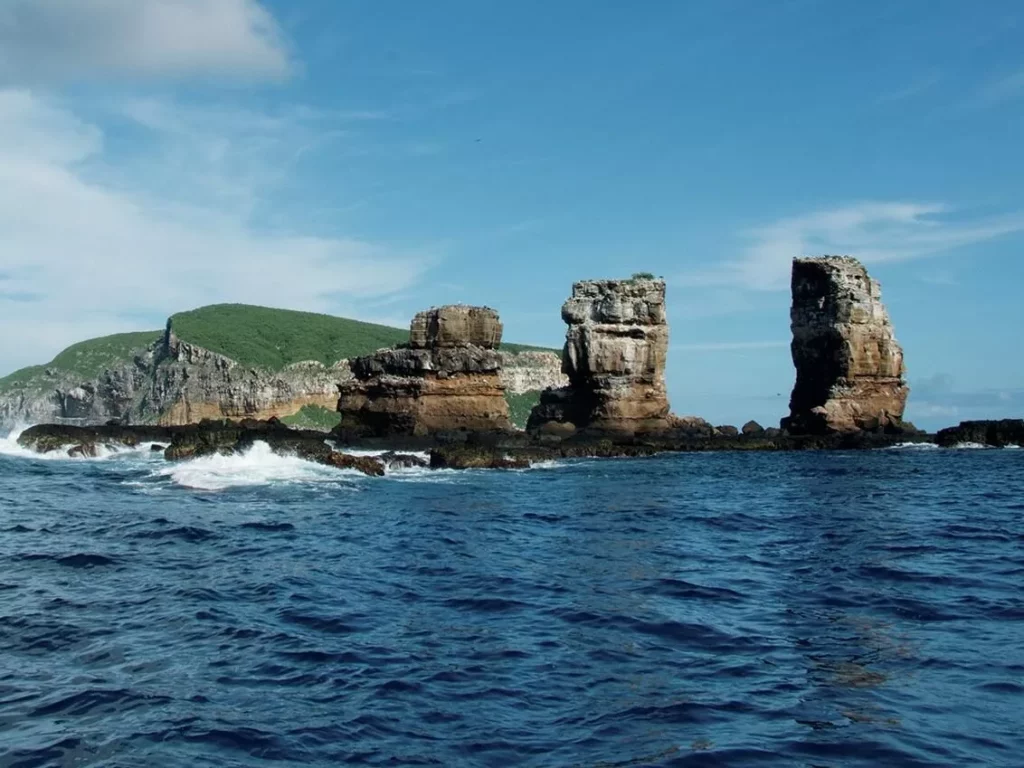
Days four and five were spent in the northern reaches of the marine park at the legendary Darwin and Wolf islands, and although we were not here at the right time of year for the whale sharks, we did see plenty of other marine life. We conducted six dives on various sites on Wolf, and on each dive, we encountered hammerheads.
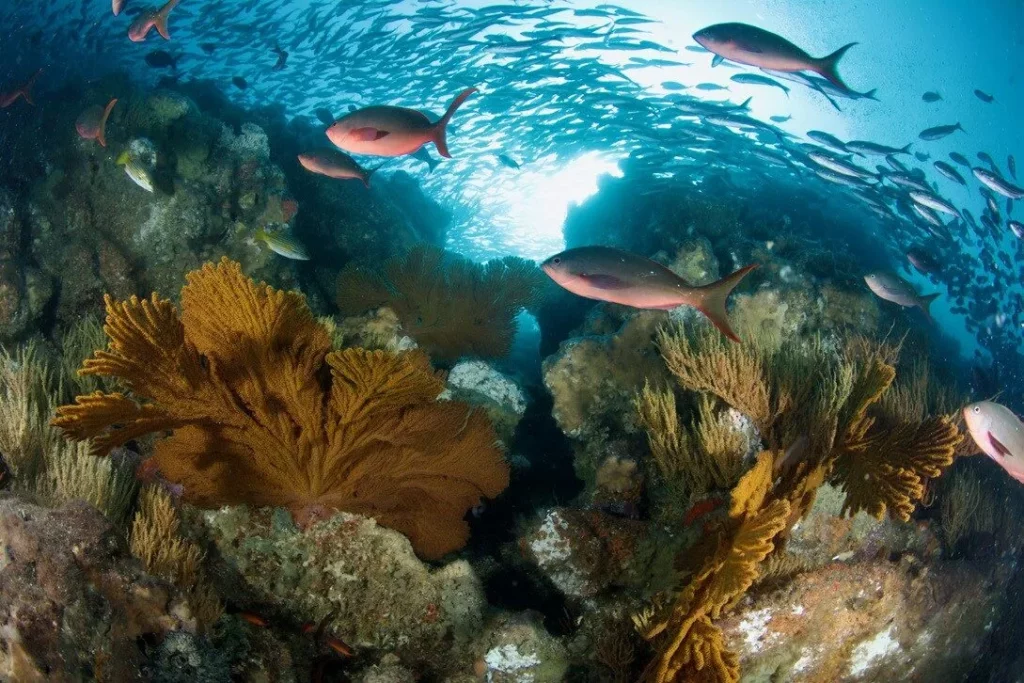
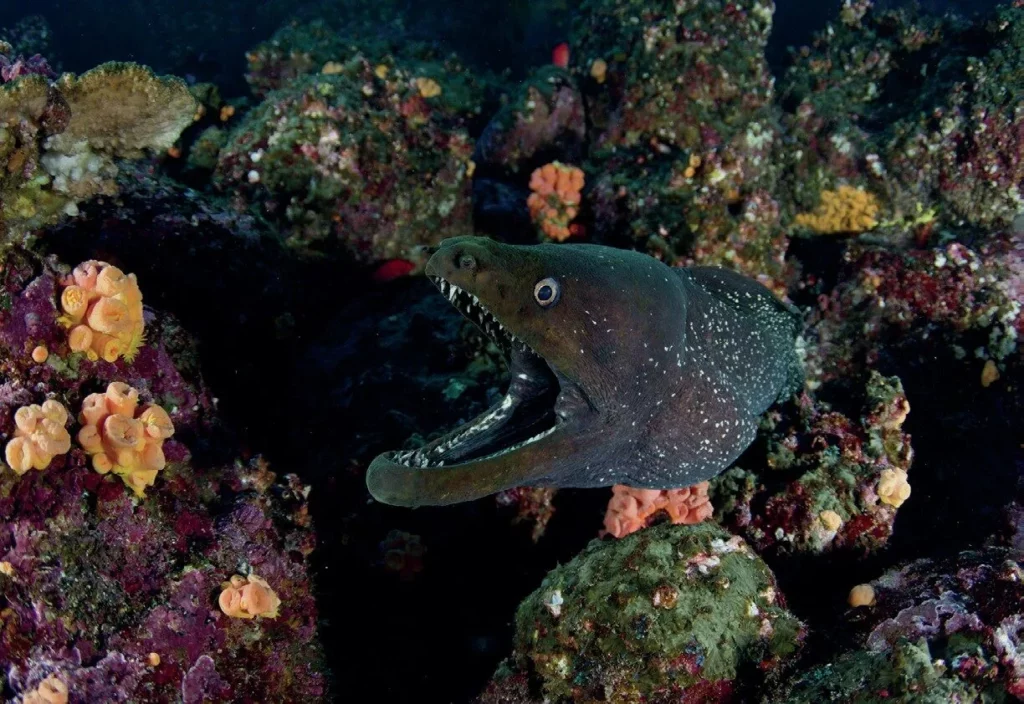
Sometimes, solitary individuals would cruise past in the blue, while on other occasions, schools of up to 20 would come in close to the reef, swarming around the boulder-strewn topography. As always, sea lions made an appearance at various times during the dives, along with turtles, black-tip reef sharks, schools of Pacific creole fish, jacks, rainbow runners, finely spotted morays, and red-tail triggerfish. At Darwin, we dived beneath the iconic Darwin’s Arch, although since its collapse, it is known as Darwin’s Pillars. There were more hammerheads, schools of bonito tuna, and barracuda. On a shallow plateau among huge boulders, large schools of goatfish congregated. These islands also house a myriad of bird species that inhabit the sheer towering cliffs that loom above the water.
Endemic Encounters and Evolution in Action
Our penultimate day was spent visiting some of the archipelago’s more unique marine life. At Fernandina Island, at a site called Cape Douglas, we went hunting for the endemic flying gurnards and the strange-looking red-lipped batfish. These creatures hide among the black volcanic sand, which is strewn with rocky outcrops and stunted but colourful sea fans.
Next up was another of my favourite dives! In the shallow waters of a secluded bay, algae and seaweed-covered rocks are frequented by one of the Galapagos’ evolutionary masterpieces, the marine iguana. It was fascinating to watch as they clung onto the slippery rocks and grazed as the strong surge threatened to sweep them away. The surge also made the iguanas a challenging subject to photograph! Flightless cormorants also dive-bomb these waters, and we saw several turtles and sea lions.
From Fernandina, we moved to Isabela Island to dive at Punta Vincente Roca. Our dive started on a plateau at around 5m; from here, we dropped onto a wall that was covered in a patchwork of beautiful orange, brown and yellow Gorgonian sea fans. A massive school of black-striped salemas that disappeared into the distance wrapped around the reef, the occasional sea lion tore through their ranks, and an irritable bull was not happy with our incursion into his territory.


Just off the reef in the blue, we encountered a couple of mola mola, a school of Peruvian grunts and lots of Pacific Creole fish (nicknamed gringos because you find them everywhere). Back on the reef, the school of salema just kept going until. Eventually, the wall gave way to a shallower, boulder-covered topography, where longtail and bull sharks resided alongside Galapagos bullhead sharks, Mexican hogfish, and even a seahorse. On the final day, we dived Cousins Rock, which offers incredible volcanic topography, plenty of white-tip reef sharks, eagle rays, giant marble rays, turtles, and copious amounts of schooling fish. With the diving finished for the trip, we headed into the highlands of Santa Cruz to see the famous giant tortoises. These incredible creatures are huge. From here, we explored some of the massive lava tubes that tunnel through the island and then onto the main town of Puerto Ayora for dinner.
After our final night onboard the Galapagos Aggressor III, we bid farewell to the fantastic crew and headed back to Puerto Ayora, where we spent a couple of nights. This charming little town boasts some great bars and restaurants, where sea lions and iguanas mingle with the locals on the streets. Our flights home departed from San Cristobal, so we caught a fast ferry and had another couple of nights in the town of Puerto Baquerizo Moreno, where hundreds of sea lions occupied the main beach, streets and shop doorways like a bunch of noisy vagrants. The experience is quite surreal. I was glad we had an extra few days after the trip to experience the local life of the islands.
Low Season vs High Season Diving
We visited the Galapagos in what is considered the low season for diving, and this has its pros and cons! The high season runs from August to November, while the low season spans from January to May. First, the cons: during the low season, the currents are not as strong, so the marine life is less concentrated. This is not the time of year to see the enormous whale sharks that arrive between June and November, and there is less chance of seeing the massive aggregations of hammerheads.
Pros, the oceans are much calmer, so if you easily get seasick, the low season is for you. The water is much clearer and warmer, plus the weather tends to be better, with less rain. This period also offers the chance to spend more time enjoying some of the more unique animal encounters the island has to offer as more time is spent exploring different dive sites, and less time is spent on the renowned Wolf and Darwin, which are more action-packed in the high season.


A Place Like No Other on Earth
However, whatever time of year you visit the Galapagos, they are incredible. The topside scenery is both dramatic and stunning, and simply cruising between these volcanic islands, which are in various stages of evolution, from active to dormant, is worth the visit on its own. Diving with such a variety of creatures is an experience unique to the Galapagos. Diving on some of the sites featured in the Blue Planet documentaries, with David Attenborough’s soothing tones in my head, was a surreal experience that I will never forget. The Galapagos are, without a doubt, a place like no other on the planet.
Frequently Asked Questions
What is the best way to dive the Galapagos Islands?
A liveaboard is the best option, giving access to remote sites like Darwin and Wolf that day boats can’t reach.
How experienced do you need to be to dive the Galapagos?
Most liveaboards require Advanced Open Water certification and around 50 logged dives due to currents.
What marine life can you expect in the Galapagos?
Hammerheads, manta rays, sea lions, mola mola, turtles, marine iguanas and vast schools of fish.
When is the best season for Galapagos diving?
High season (August–November) offers peak shark action; low season (January–May) has calmer seas and warmer water.
Are whale sharks guaranteed in the Galapagos?
No, but sightings are most likely between June and November, especially at Darwin and Wolf
This article was originally published in Scuba Diver Magazine
Subscribe today with promo code DIVE1 — enjoy 12 months for just £1!
