
Since Nicolas and Lena Remy relocated from France to Sydney a few years ago, they have been eager to explore what sort of diving the South Pacific region had to offer. They had heard lots of praise about Fiji, so when the pandemic eased out, they decided it would their first Pacific country to visit
Photographs by Nicolas and Lena Remy
As we researched our trip, we realized Fiji had quite a diverse diving scene: one liveaboard, a few cruise ships offering dives, and lots of dive oriented resorts, spread over a dozen islands or groups of islands, with different attractions.
Some places are reputed for manta dives, others for turtles, scenic coral dives and others for sharks.
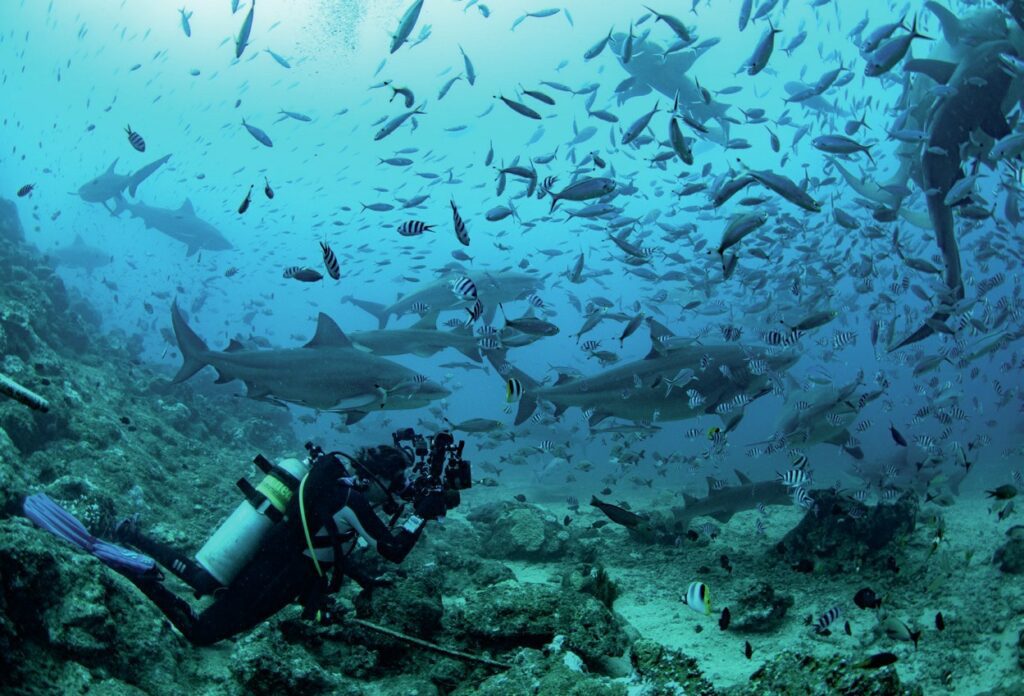
We were intrigued by the many close-up shark photos that we saw, and all appeared to be taken in one place called Beqa Lagoon (pronounced ‘Benga’), and this is where we decided to go.
Beqa Lagoon is located at the southern tip of Viti Levu, Fiji’s main island, which has flights to Australia and New Zealand. We flew direct from Sydney to Nadi, and a couple of hours car transfer later, we had arrived at our hotel in Pacific Harbour.
Dive logistics
The shark dives take place in a Marine Protected Area, situated between Pacific Harbour and Beqa Island, which is 13km offshore from the mainland.
It is possible to stay on either side, but there are more dive centres operating from Pacific Harbour, including Aqua-Trek, who we dove with for six da s in a row. We stayed in The Pearl Hotel, which is where Aqua-Trek’s dive centre is located, and went every day for a double-tank morning dive.
Aqua-Trek sometimes operates afternoon dives, but this is subject to having sufficient guests and suitable weather. Unfortunately, during our stay (mid-October), the afternoon winds didn’t allow for these extra boat dives, and there was no shore-diving near Pacific Harbour, due to the proximity of river estuaries, which impacts water clarity.
About shark feeding
As we have all learnt when getting certified, divers are meant to minimize interactions with marine life, take only photos and leave only bubbles, so there is some controversy around shark-feeding activities.
Did you know?
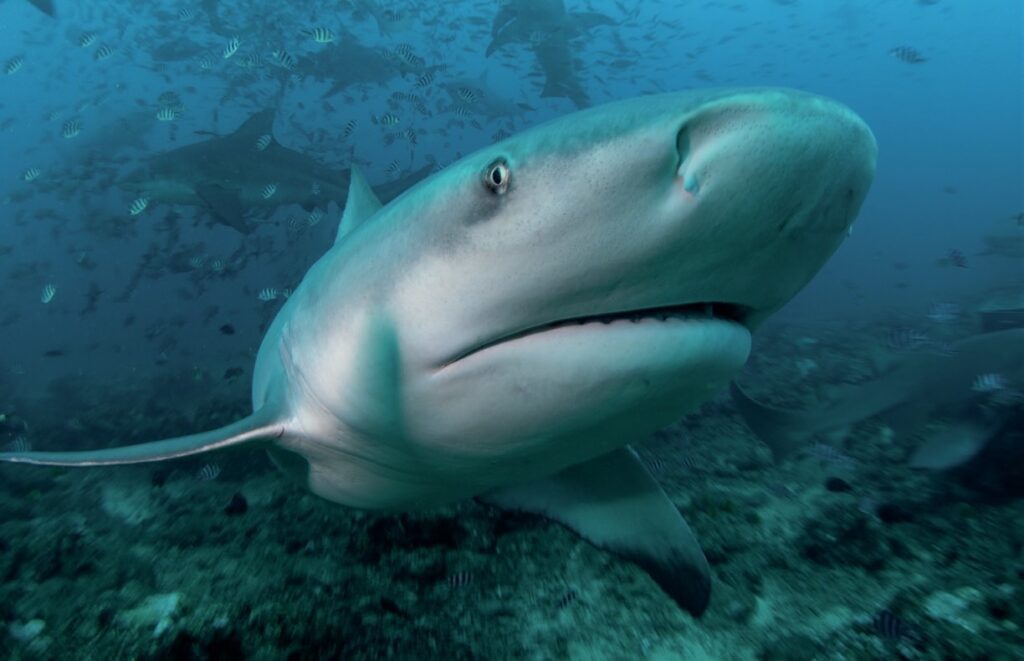
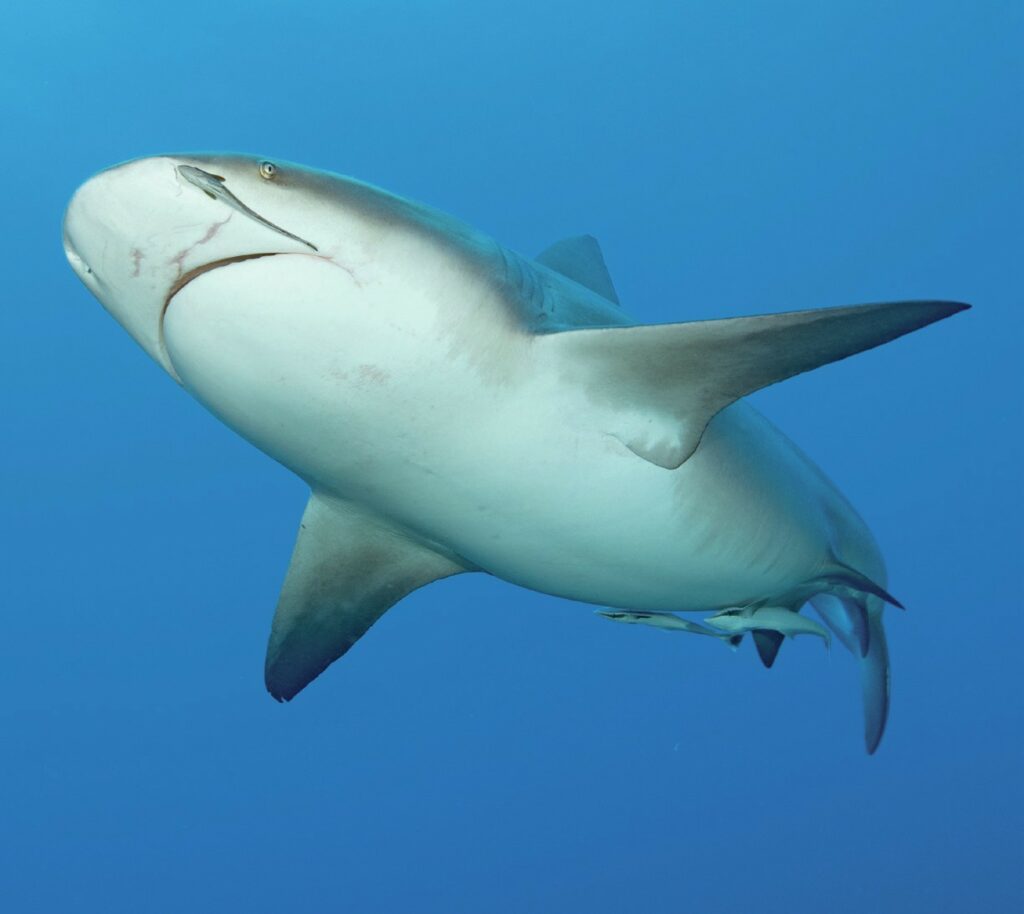
Bull sharks are easily recognised with a dark grey back and white underbelly, thick bulky body, and short snout. They can be seen throughout the islands of Fiji, but your best chances for a close encounter are during fed and baited dives in Beqa Lagoon and in the Yasawa Islands.
However, the global shark population is collapsing dramatically due to over-targeted fishing (including the cruel practice of shark finning), with other 100 million kills a year, threatening the health of our oceans.
Shark tourism creates awareness, grows support for these beautiful predators and, ultimately, can make sharks worth more alive than dead. Besides, in Beqa Lagoon, each diver pays a levy to visit the Marine Protected Area, which funds local education programmes and community improvements.
Besides, the dive centre assured us that the sharks did not rely solely on the feeding, and this was proven by location tagging. Finally, there was no increase in local shark attacks since the feeding dives first started in 1999.
We’ll let the reader make their own mind on shark feeding, but for ourselves, we decided this was enough justification for us to support this type of diving.
The shark dives
Beqa Lagoon’s shark-dive operators have their own feeding dive sites, and Aqua-Trek’s is called The Bistro, where they run double-tank dive trips.
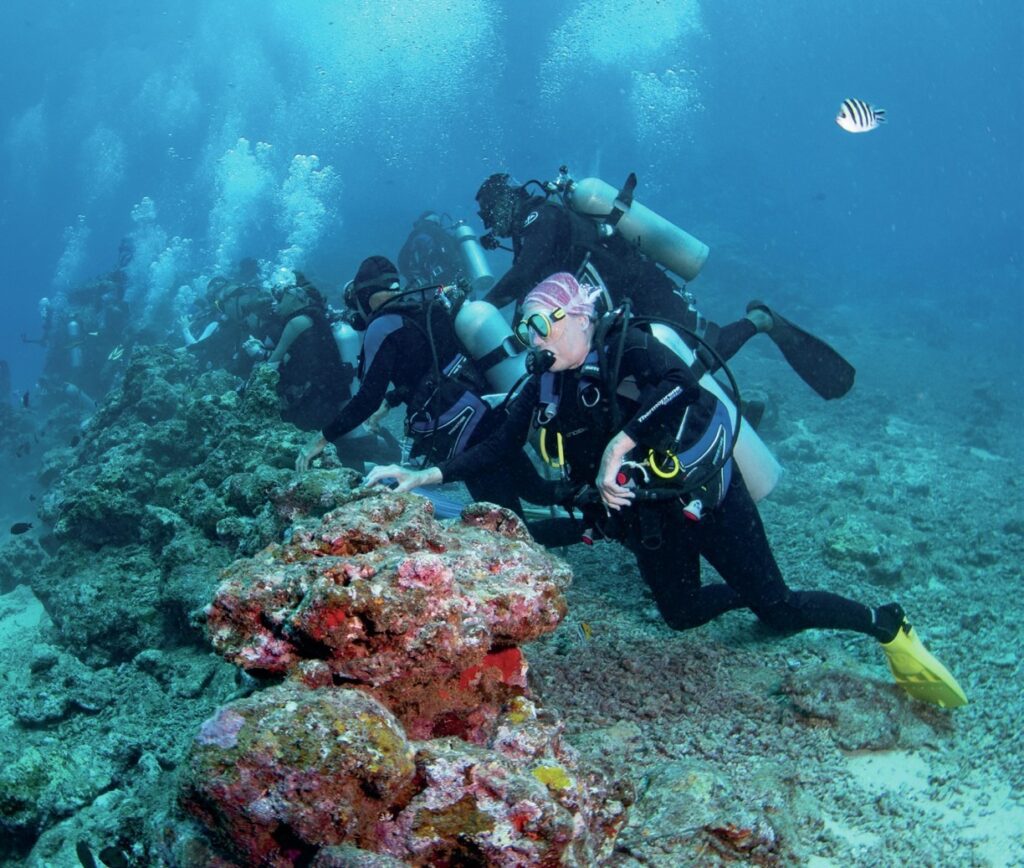
The boat moors on an underwater pinnacle which starts at 5m depth, and divers descend to a plateau at around 18m, bordered by a small coral wall, behind which they kneeldown to watch the show (be sure to wear a full-body wetsuit).
On the other side of that front wall, the reef slopes down to about 25m, and this is where the feeding takes place.
Aqua-Trek Beqa
Aqua-Trek Beqa is located in Pacific Harbour, just two and a half hours drive from Fiji’s International airport. Aqua-Trek pioneered shark diving in Fiji over 30 years ago. And since then, they’ve maintained an impeccable safety record, allowing people to experience and appreciate the majesty of multiple species of shark in their natural environment. Multi-hued soft coral dives compliment this world-famous dive, and the professional instructors can offer courses up to Divemaster level.
A wheelie-bin full of fish pieces is brought in mid-water with a pulley system, and kept closed while sharks are attracted by the smell. At that time the sharks swim leisurely around the site, a few metres from the bin, sometimes passing close to divers.
The excitement goes up when the bin finally gets opened: sharks suddenly accelerate, gathering close to the bin, to feed. Once the bin is emptied, the excitement goes down, sharks start dispersing and if the conditions feel right, dive guides escort their guests beneath the wall, for a chance to see a few extra sharks.
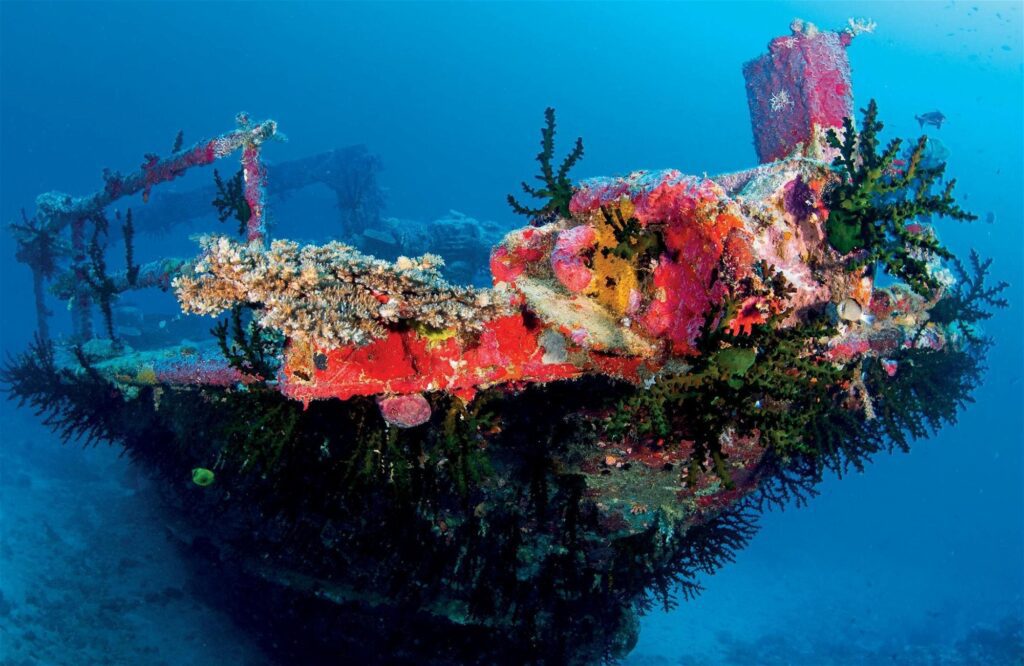
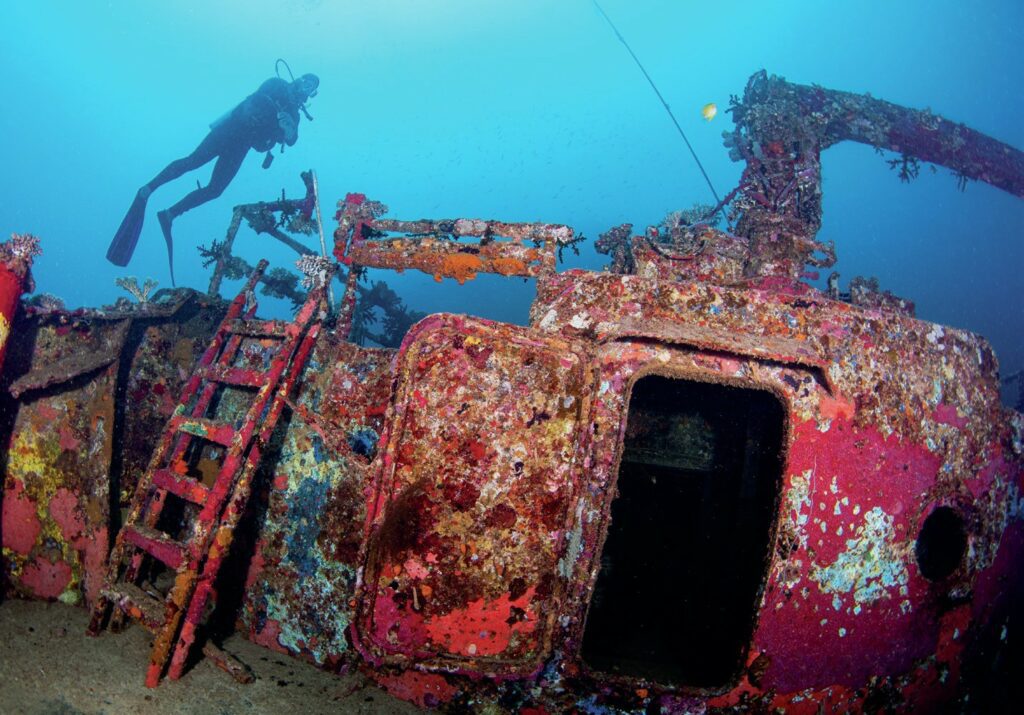
After about 20 minutes of bottom time, divers start ascending around the pinnacle, where they can swim near two purpose-sunk wrecks, and reach the mooring line for a safety stop. Tropical reef fish inhabit the pinnacle and we also saw them grazing on the upside-down wreck, where there was some algae growth.
The other wreck is quite photogenic and I feel it would be worth a dive on its own. The top of the pinnacle has healthy corals and makes for enjoyable safety stops.
At times we were joined by a few remoras in mid-water, perhaps waiting for the next shark to hitchhike onto, but we saw two of them sticking themselves to the wheelie bin instead! The total dive time is around 50 minutes, depending on individual air consumption.
Lena is frustratingly better on air than I am, but I dive a Horizon rebreather, so we certainly made the most of each dive!
At all times during the feed, Fijian dive-guides stand near the guests, holding long sticks which are used to push sharks away, should one get a little too close. Experienced photographers are sometimes allowed to go in front of the wall while the bin is still there.
We and a few other divers had that privilege, which made for (even) closer encounters, better photos and a few adrenalin spikes! Overall, we felt very safe, in the good care of our guides. I would be quite stressed if I had their job, but they all were comfortable doing this every week.
Perhaps this is because our guides were all locals of the Beqa Lagoon area, where traditional legends place the Shark God Dakuwaka as a protector of Fijians at sea.
In terms of shark species, up to eight of them can be seen on these dives. While we weren’t lucky enough to see a tiger shark, at times we had more than 20 bull sharks in sight and nearly as many tawny nurse sharks.
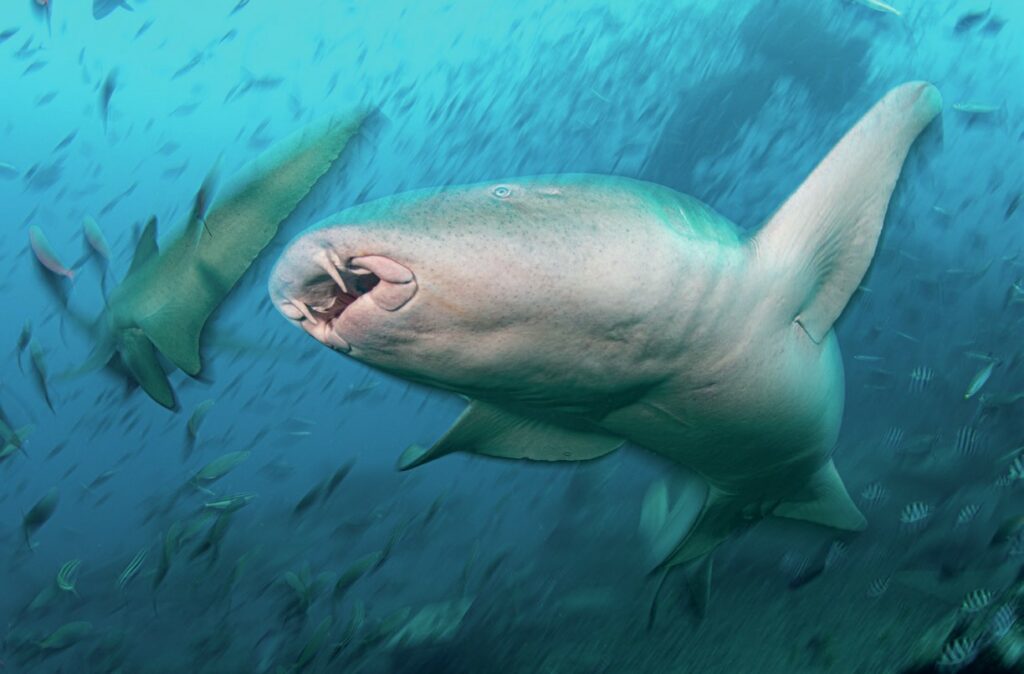
We also saw silvertips, grey reef sharks and on occasions lemon sharks. Besides sharks, a large Queensland grouper sometimes joined the party, as well as several jacks and smaller fish species.
At that time of the year (mid-October), the water temperature was a balmy 27 degrees Celsius and had nearly 30 metre visibility at the beginning of our stay, down to 15 metres towards the end.
The coral dives
Fiji is sometimes referred to as the ‘Soft Coral Capital of the World’, with specific places like Taveuni Island coming to mind for their famous soft coral walls.
We did not know what to expect from Beqa Lagoon on that front, but we were out for a reef dive every second day, and have been pleasantly surprised. Whilst the fish life wasn’t particularly abundant, on every dive we found patches of reef with some beautiful gorgonians and soft corals.
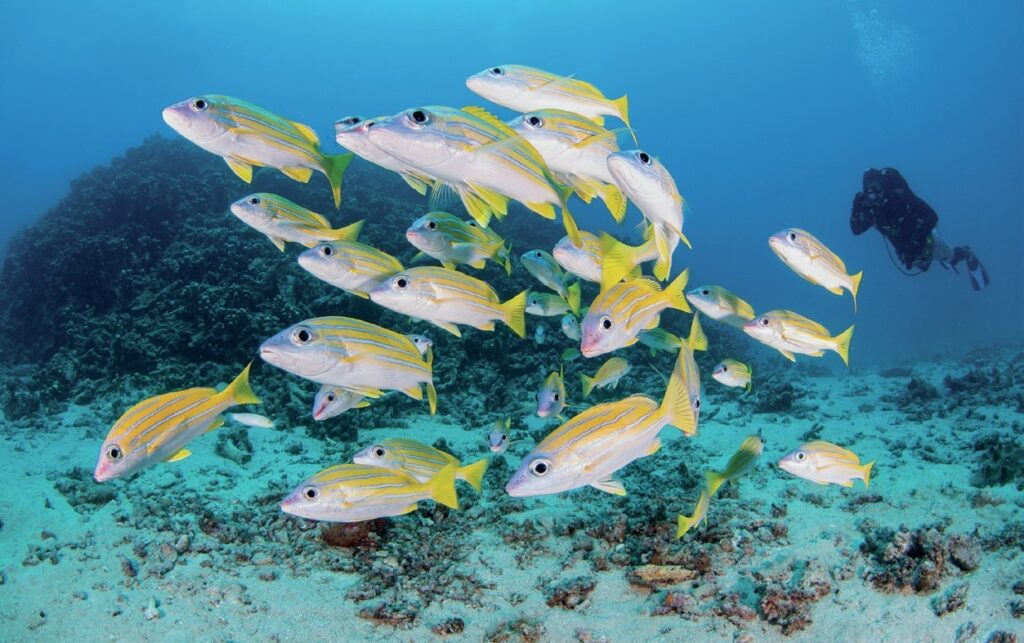
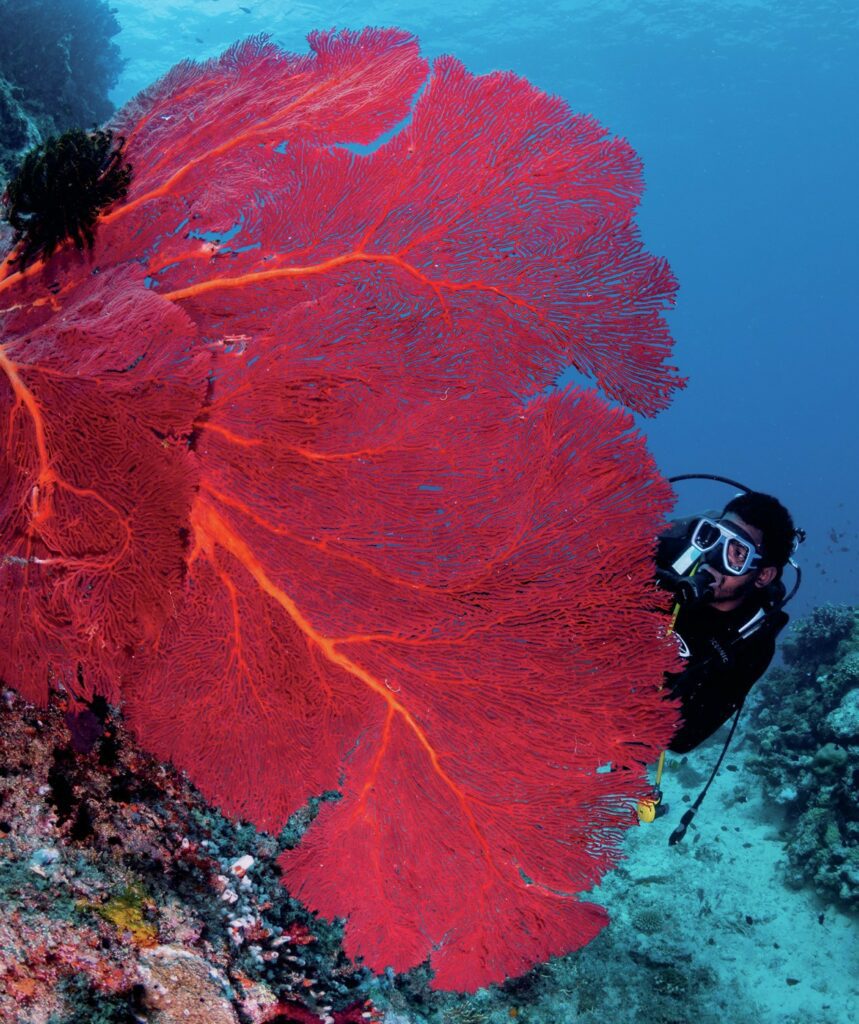
I enjoyed diving Three Nuns, a site with three isolated pinnacles, which all featured some massive and vibrant red gorgonians, plus beautiful patches of soft corals. Near the mooring, there were a school of yellow snapper which clearly had enjoyed some feeding at some point, making them very obliging photo subjects.
On Fantasy, we dived around a large reef which featured ledges and overhangs with their own set of lovely soft corals, and again a few of these vibrant red gorgonians. At the top of the reef, healthy hard corals were teeming with small tropical fish, a pleasant end of dive.
The cherry on the cake was The Aquarium, a truly memorable dive, with a very large swim-through cave, with its ceiling and walls covered in a mix of soft corals and gorgonians.
We had to time our photos so that there were not too many divers in the frame, but fortunately a stunning canyon was called for exploration behind the walls of that cave, featuring photogenic gorgonians.
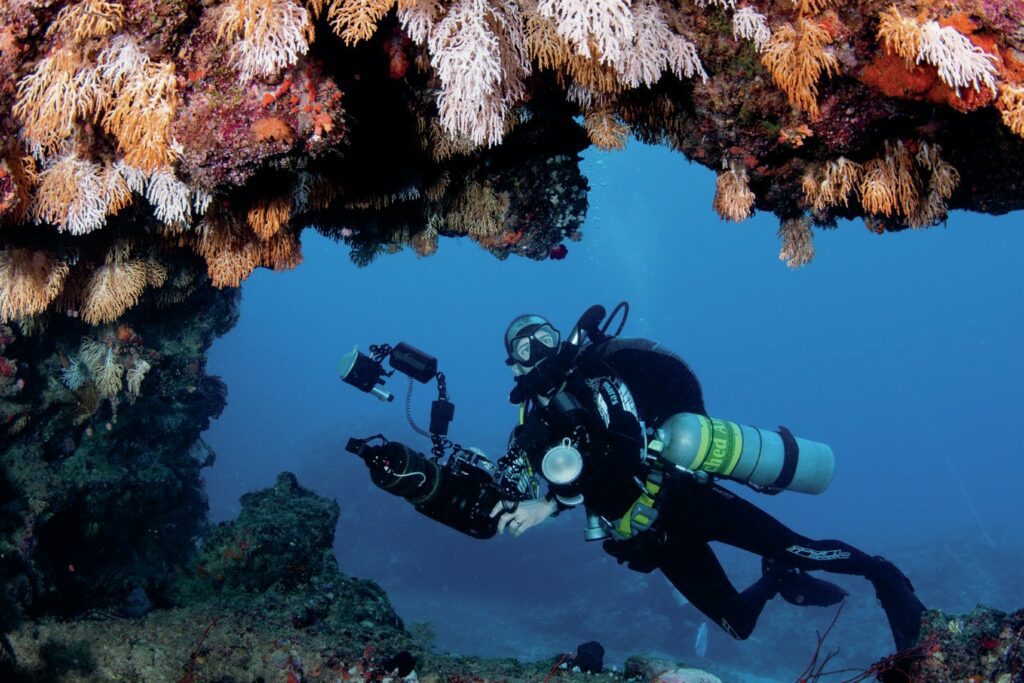
Such a coral growth can only be sustained by heavy currents, but we dived The Aquarium at the right time: the water wasn’t moving and we had a relaxed, contemplative dive there.
Topside activities and final words
Pacific Harbour is known as Fiji’s Adventure Capital. It sits on the wetter half of Viti Levu, nearby the Navua River, where half-day trips or even full day-trips allow exploring inland.
There are whitewater rafting and kayaking trips, and rainforest zip lining and waterfall hikes. We spent a fantastic Sunday leisurely descending the river on tubes, with some fun rapids at times, a waterfall swim and a tasty picnic on the river banks.
I couldn’t conclude this article without mentioning the warm welcome we received in Fiji. It starts with the ‘Bula!’ greeting – which also means ‘welcome’ – and goes on with the kindness of, well really everyone we spoke with. We made friends there, and I can’t wait to travel to Fiji again.
Nicolas and Lena Remy
For more images from Nicolas and Lena Remy, visit their website or follow them on Instagram and Facebook @nicolaslenaremy. Keen to learn Underwater Photography? Check their courses: TheUnderwaterClub.com
www.nicolaslenaremy.com
FAQ: Beqa Lagoon Diving
Q: Why is Beqa Lagoon famous for diving?
A: Beqa Lagoon, located off Fiji’s Viti Levu, is world-renowned for its shark dives where up to eight shark species—including bull and nurse sharks—can be seen in one dive.
Q: What dive operator is recommended for Beqa Lagoon shark dives?
A: Aqua-Trek Beqa, based in Pacific Harbour, pioneered shark diving in Fiji and has maintained a flawless safety record for over 30 years.
Q: Is shark feeding safe and ethical in Beqa Lagoon?
A: Shark feeding remains debated, but in Beqa Lagoon, divers pay a levy funding local education and conservation, and studies show no increase in local shark attacks since feeding began in 1999.
Q: What other marine life can divers expect at Beqa Lagoon?
A: Besides sharks, divers may encounter groupers, jacks, silvertips, grey reef sharks, lemon sharks, and vibrant coral reefs with gorgonians and soft corals.
Q: What are some recommended coral dive sites in Beqa Lagoon?
A: Sites like Three Nuns, Fantasy, and The Aquarium feature striking red gorgonians, soft coral walls, and dramatic swim-through caves.
Q: What is the best time of year to dive Beqa Lagoon?
A: October offers warm 27°C water with visibility ranging from 15–30m, though conditions vary by season.
Q: Are there activities to enjoy in Pacific Harbour besides diving?
A: Yes, Pacific Harbour is Fiji’s “Adventure Capital” with river tubing, kayaking, whitewater rafting, zip-lining, and rainforest waterfall hikes.
This article was originally published in Scuba Diver Magazine
Subscribe today with promo code DIVE1 — enjoy 12 months for just £1!

Awesome photos and great to see your experience detailed so well. If you are ever back in the area, consider checking out Coral Coast Divers. Their version of the Fiji Shark Dive is more likely to feature the tiger sharks you guys missed on your dive, and also is a shallower dive, allowing for you to stay longer. Beqa Lagoon is a testament to what good conservation does to an eco system. All of the operators here have done a great job of working with the local community and bringing this area back to a vibrant healthy ecosystem over the past 25 years or so. Bula!
What a shame you didn’t take the time to review Beqa Lagoon’s several shark operations fully. You missed out on prolific tiger shark encounters with Beqa Lagoon Resort and BAD (Badilli Adventure Divers) shark encounters as well. Each has a unique operation featuring a different mix of shark specie encounters., This leads me to ask the question did Aqua-Trek sponsor your trip? nothing wrong with that but if they did I would have expected this to be disclosed because your review does taste and feel more like an advertorial.