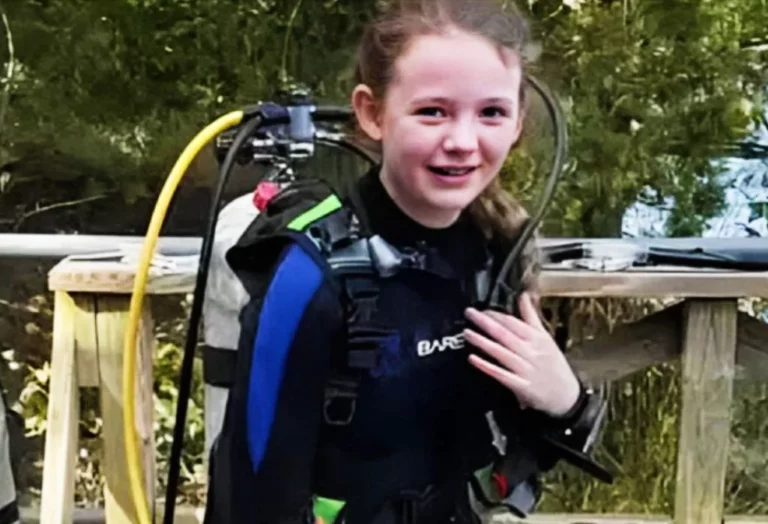
Diver Alert Network (DAN) has filed a federal action in the USA, seeking to clarify its obligations to defend and, if necessary, indemnify parties named in a civil lawsuit arising from the death of 12-year-old trainee diver Dylan Harrison in a Texas lake last summer.
The defendants in question include William Armstrong, the instructor in charge of Dylan’s course and also the subject of separate criminal proceedings; certified divemaster Jonathan Roussel; ScubaToys owner Joe Johnson and NAUI course director Gregory Knauer, also of ScubaToys, the dive-school through which the course was conducted; The Scuba Ranch, operator of the inland dive-site; and certification agencies PADI and NAUI.
Dylan died during an entry-level training course at the Scuba Ranch in Terrell on 16 August, 2025. The incident has been reported in a number of Divernet posts.
Dylan’s parents filed the wrongful-death lawsuit earlier this year. In it they allege extensive failures involving instructor supervision, student-to-instructor ratios, diver weighting, emergency response, training practices and oversight by organisations involved in the certification process.
Resolving disputes
The step taken by DAN is a common procedure in the USA known as a “federal declaratory judgment action”, often used to resolve insurance disputes.
It enables an insurer to continue defending insured parties under a “reservation of rights”, while at the same time asking a court to determine the extent of its contractual obligations.

The federal court is not being asked to determine who caused Dylan’s death, because such questions remain for the underlying wrongful-death proceedings. Its role is to provide judicial clarification of the interpretation of policy wording, exclusions, conditions precedent, whether alleged conduct falls inside or outside policy cover, and both defence and indemnity obligations.
Determining which parties qualify as ‘insureds’ under professional liability policies could become complicated where instructors, dive-centres, training agencies and independent contractors are all involved.
DAN responds
Yesterday (26 June), apparently concerned about uninformed speculation on the nature of its legal action, DAN issued a statement to clarify its position.
“Questions concerning liability in the underlying lawsuit and questions concerning insurance coverage are separate legal matters and will be addressed through the appropriate judicial processes,” it stated. “Moreover, the filing of the declaratory judgment action should not be interpreted as a statement by DAN regarding the fault of any organisation or individual.
“It also should not be interpreted as a statement by DAN regarding the quality, adequacy, validity or effectiveness of any training organisation’s programs, educational materials, standards, certification processes or instructional systems.
“The decision to seek judicial guidance on insurance coverage obligations of the DAN Risk Retention Group is separate from any assessment of training standards, educational content, agency governance or professional conduct.
“The DAN organisation remains committed to working with training organisations, dive professionals, dive businesses and industry partners to advance diver safety, responsible risk management and informed decision-making throughout the diving community.”
While declaratory judgment actions are not unusual, DAN‘s could have industry-wide implications because of the breadth of defendants in the Harrison litigation.
Depending on how the federal court interprets DAN’s professional liability policies, its decision could influence instructor professional liability insurance, dive-shop insurance, agency-affiliated instructors, and the future underwriting of scuba-training activities involving minors.