
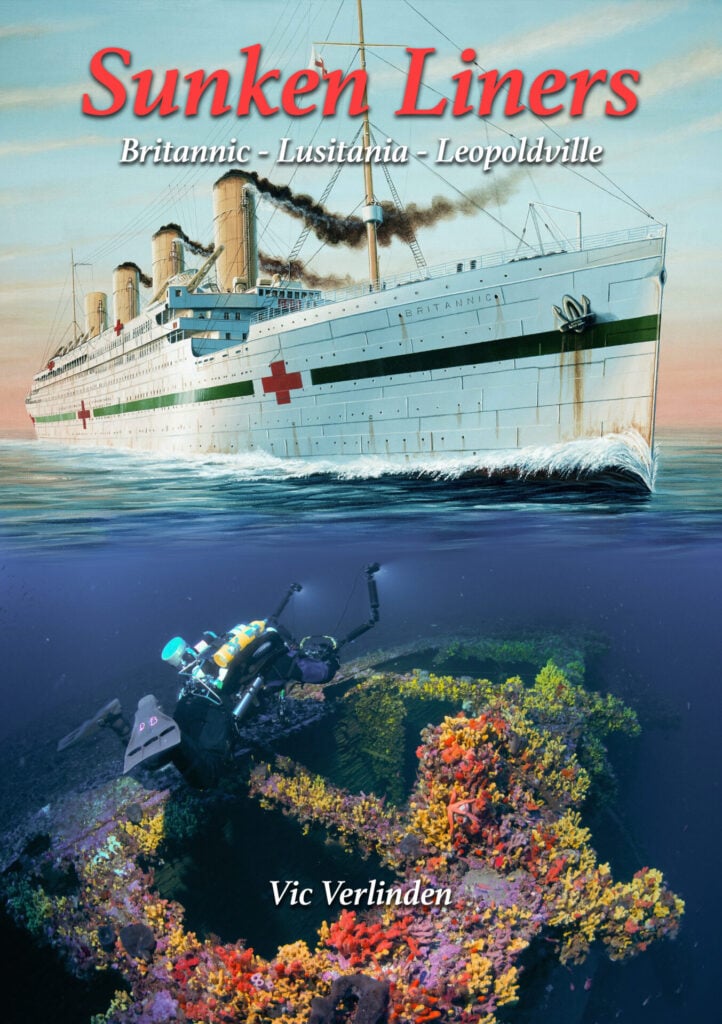
Belgian explorer and technical diver Vic Verlinden has released his sixth book, Sunken Liners, which tells the story of three extremely important wrecks in world history.
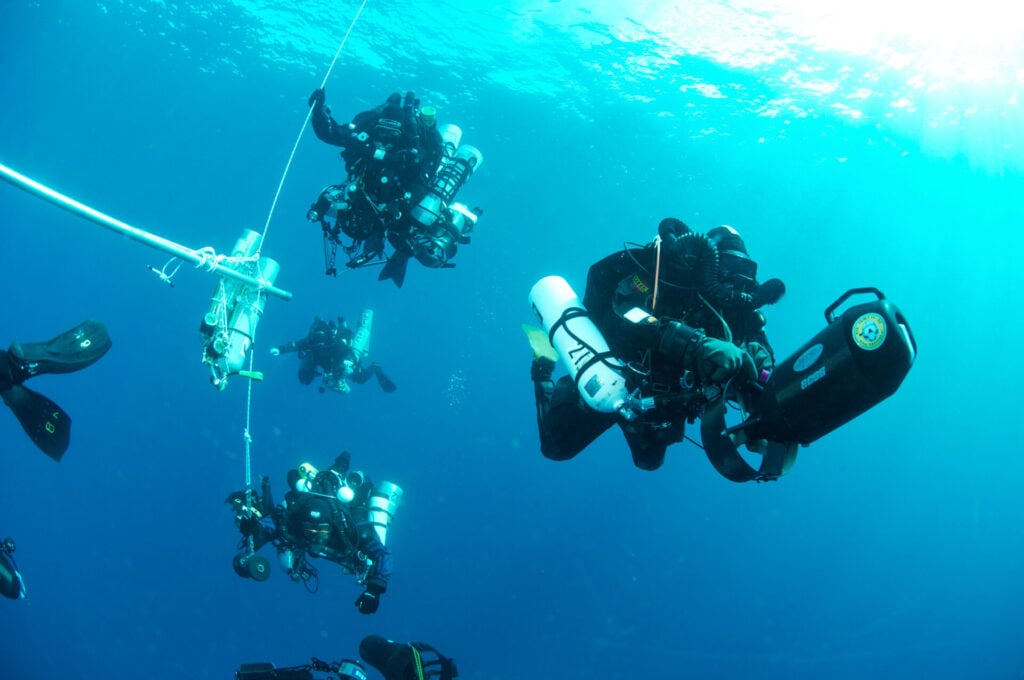
The book took Vic more than two years to complete, and the first underwater photographs were taken 20 years ago. The wrecks are located at depths far beyond the recreational zone and can only be dived with the necessary permits. Diving and photographing at these depths can only be done with a team that has the required experience and expertise.
Vic enlisted the help of divers and researchers from various countries to compile the book. More than 400 photographs and illustrations were collected for the book, and the result is a 200-page work printed on glossy paper. The A4 format and four-colour printing show the photographs and illustrations to their best advantage, providing a unique historical document of three shipwrecks that will disappear in the long term.
Britannic
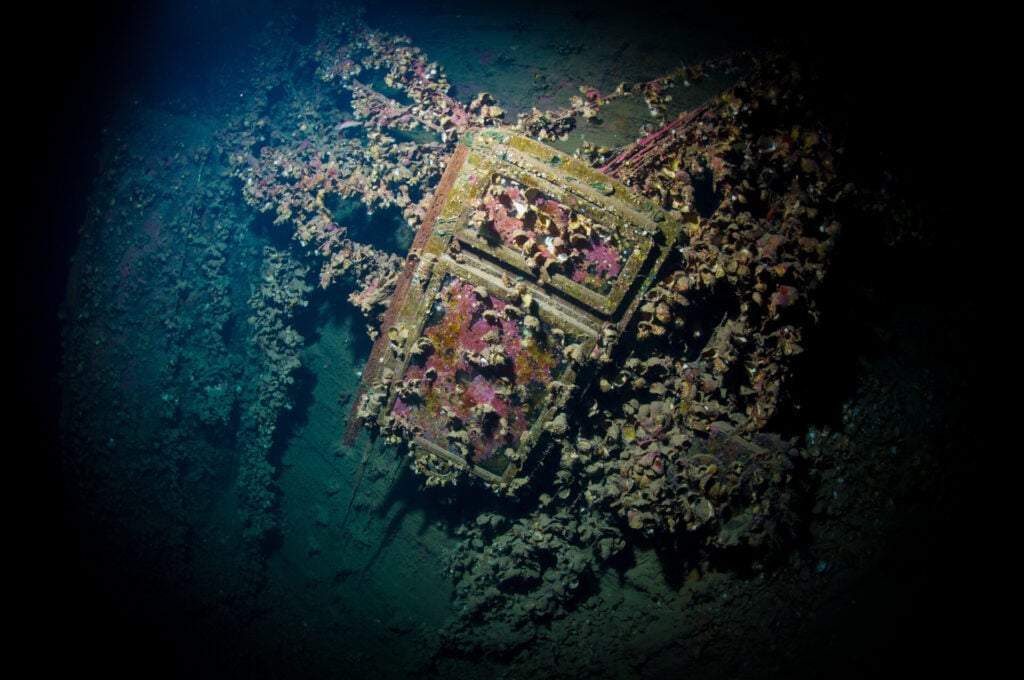
The Britannic is a sister ship of the Titanic and sank during World War Two (1916) when it struck a mine near the island of Kea in Greece. The wreck of the hospital ship was discovered by Cousteau in 1975. Vic’s expedition, organized by Pim Van Der Horst, took place 100 years later in 2016. After years of preparation and obtaining the necessary permits, the expedition could finally go ahead.
During this expedition, Vic made four dives on the wreck. The chapter on the Britannic also features a contribution from Richie Kohler, who organized expeditions to the wreck with his various teams over several years. In his contribution, he also describes, among other things, the fatal accident of Carl Spencer.

Lusitania
Following Vic’s previous book, Lusitania – The Underwater Collection, this is the next chapter with many photographs of the diving expeditions that took place in 2023 and 2024 on this historically important wreck. During these expeditions, new fascinating discoveries were made and parts were photographed for the first time.
The condition of the Lusitania wreck deteriorates every year, which is clearly visible in the photographs of the hull taken over eight different years. This story also describes further exploration of the boiler rooms. For Vic, the expeditions to the Lusitania remain the most-important project of his long career as a professional explorer.

Leopoldville
This ship, owned by the Belgian shipping company Compagnie Maritime Belge, was torpedoed off the French coast on Christmas Eve 1944. On board were more than 2,000 American troops who were being transported as reinforcements for the battle in the Belgian Ardennes. Due to poor communication and language problems, more than 700 young soldiers fell victim to this torpedoing. This happened despite the fact that the ship was only five miles from the harbour.
The sinking was the largest American loss in a single action during World War Two, and the incident was never officially announced during the war in order to keep troop morale high.
The wreck returned to the news when American author Clive Cussler wanted to dive on it (1984). However, this was prohibited by the French government. Vic’s small team was able to dive on it for the first time in 2005 through a collaboration with the French army club (Asam). After this trip, Vic visited the wreck twice more over the years. This chapter also contains unique historical photographs taken during a cruise in the 1930s.
To order your copy of this limited-edition book, priced at €40, email: vic.verlinden@skynet.be
