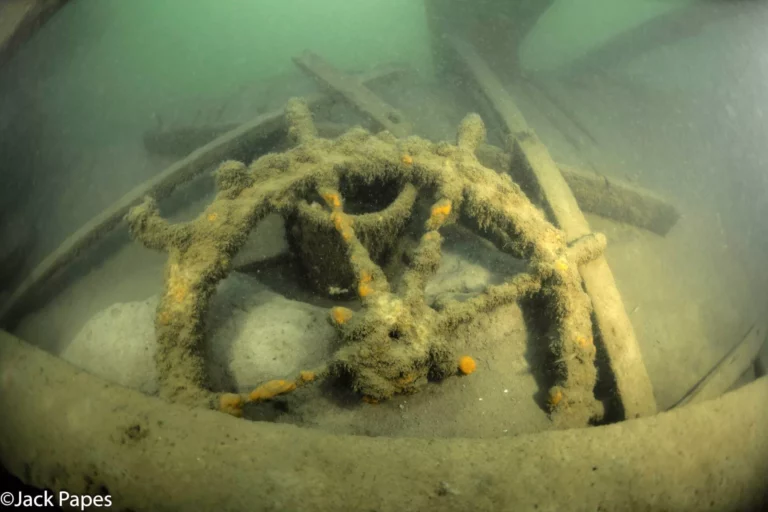
David VanZandt died in June 2024 while scuba diving to identify a newly discovered Lake Erie wreck, and now the formal confirmation that it was the 19th-century bark 𝘊𝘭𝘰𝘶𝘨𝘩 has been made in tribute to the diver’s dedication to maritime archaeology.
The positive ID was announced by the National Museum of the Great Lakes (NMGL) in collaboration with Cleveland Underwater Explorers (CLUE), the group VanZandt founded in 2001. The two bodies had worked together on a number of wreck projects over the past 20 years.
VanZandt started diving in 1995 and became a mixed-gas diver and qualified maritime archaeologist. He began searching for shipwrecks from his boat the same year he started CLUE with others who shared his passion for nautical history.
He was 70 when he dived what turned out to be the Clough site. His failure to return to the boat prompted a major search operation, with local divers finding his body some four hours later, as reported at the time on Divernet.
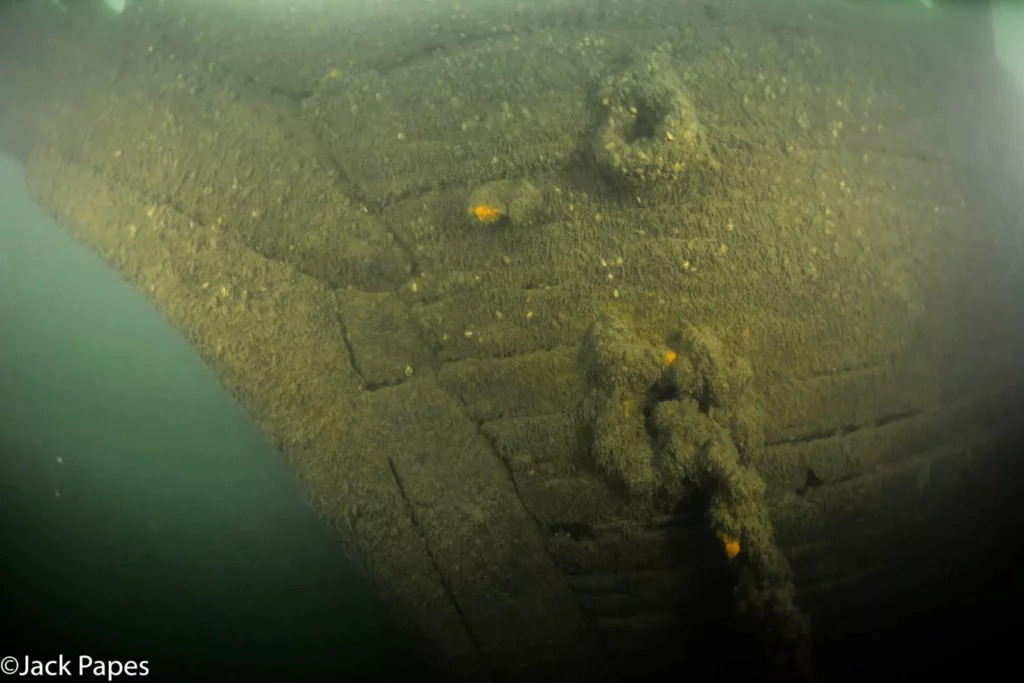
In the months after his death the NMGL and CLUE “committed to completing the identification process with care, accuracy and respect through collaborative research and documentation”, says the museum. This had involved continuing to dive to create a detailed site-map, alongside extensive historical research.
Built in Lorain, Ohio in 1867, the stone-hauling sailing vessel Clough belonged to quarry-owner Baxter Clough. It was 37m long with an 8m beam and classified as a bark because it had three masts with the foremast square-rigged and schooner sails on the main and mizzen masts.
The boat sank a year after its launch on 15 September, 1868 with the loss of seven lives. “This discovery represents both a significant chapter in Great Lakes maritime history and a meaningful continuation of David VanZandt’s legacy,” said NMGL archaeology & research director Carrie Sowden.
The Toledo-based museum is running a free ‘micro’ exhibition highlighting the Clough and the process behind its identification until mid-April.
Biggest Canadian ship in 1913
Meanwhile another wreck-research group has announced the positive identification in Lake Huron of what had been the biggest Canadian-built ship in 1913 – which was also the year of its sinking.
The Underwater Research Associates (URA), made up of volunteer divers, historians and wreck enthusiasts, say they found the James Carruthers during a sonar survey last May.
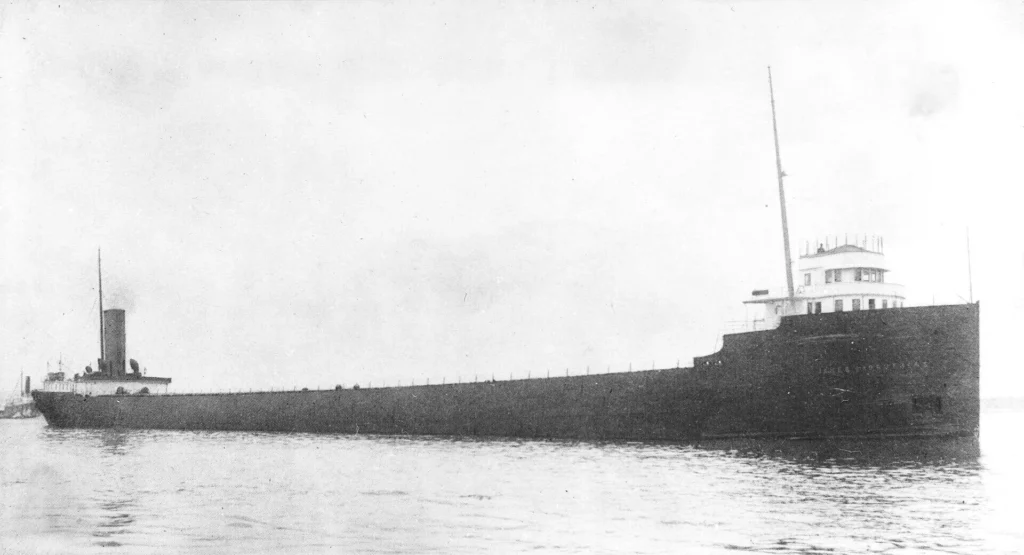
The steel cargo ship, built in Ontario with state-of-the-art communications and safety equipment, was lost with all 22 crew and rests 60m deep in US waters off the Michigan shore. It had previously been thought to lie much further north in Canadian waters.
The 165m wreck was spotted on side-scan sonar area some 40km off Port Sanilac and, from its size and profile, the team felt that it could only be the Carruthers, the last missing victim of the 1913 “Great White Hurricane” that claimed some 250 lives.
When technical divers and ROVs later examined the site, they found the hull largely intact but partially embedded in mud. Notable features include a four-bladed propeller and deeply buried anchor pockets, although both anchors were absent. Some of the stern cabin structure was visible.
The Carruthers still holds much of its 375,000-bushel (about 10 tonnes) cargo of wheat – and the team reported that the rotting grain had created a distinctive golden pall around the hull.
The location of the wreck has prompted reassessment of the James Carruthers‘ final voyage. Records suggest that the ship was bound for Port Colborne, Ontario, rather than previously assumed destinations, and might have lost steering or propulsion control in the storm. URA plans further expeditions to explore and document the wreck.
The formal announcements of the Clough and Carruthers wreck IDs coincide with that of the Lac La Belle, the Lake Michigan passenger steamer that sank in 1872 and was reported on Divernet on 17 February.