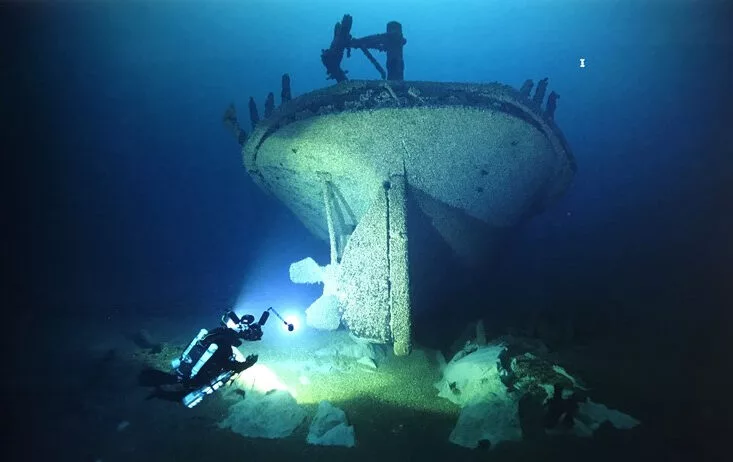
The Lac La Belle, a once-popular Lake Michigan passenger steamer that sank in 1872 to become one of the most sought-after Great Lakes shipwrecks, has been located and dived.
Veteran Illinois shipwreck-hunter and scuba-diver Paul Ehorn says the ship had been high on his list of targets for more than 60 years.
The 80-year-old says he first succeeded in sonar-scanning the upright, intact hull in 2022, almost 150 years to the day after the steamer sank. It was another two years before the wreck could be dived – and only now has the discovery been announced through Shipwreck World, a group that works to locate historic wrecks,
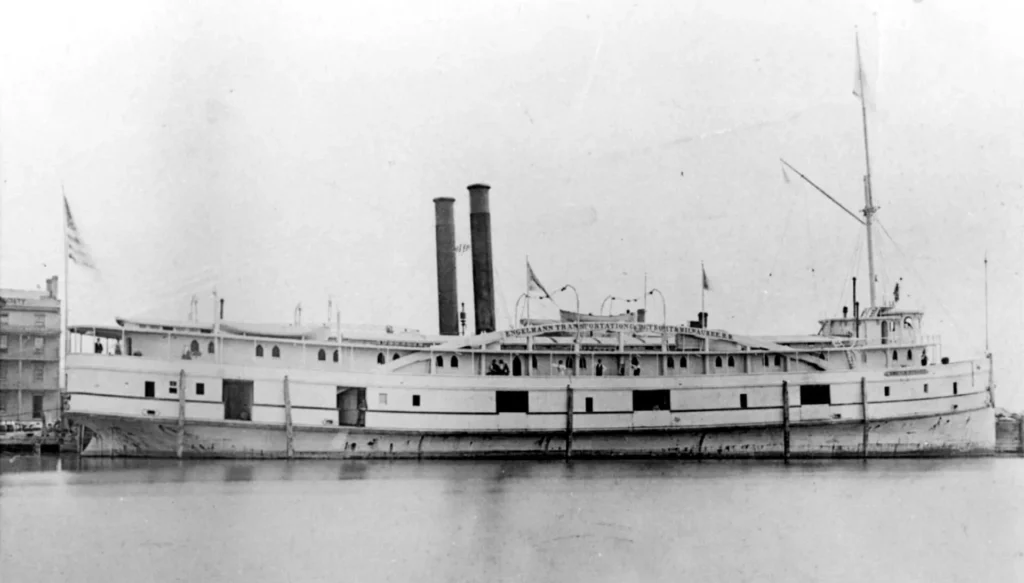
The 65m Lac La Belle was built in 1864 at Cleveland, Ohio, from where she would run to Lake Superior until an 1866 collision left her wrecked in shallow water in the St Clair River.
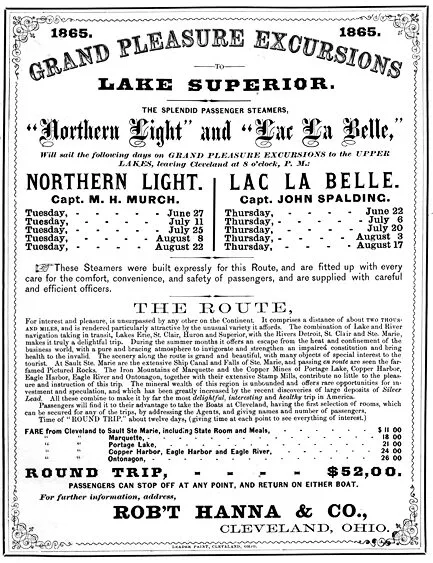
In 1869 she was raised, reconditioned and sold to the Englemann Transportation Company to operate between Milwaukee in Wisconsin and Grand Haven, Michigan.
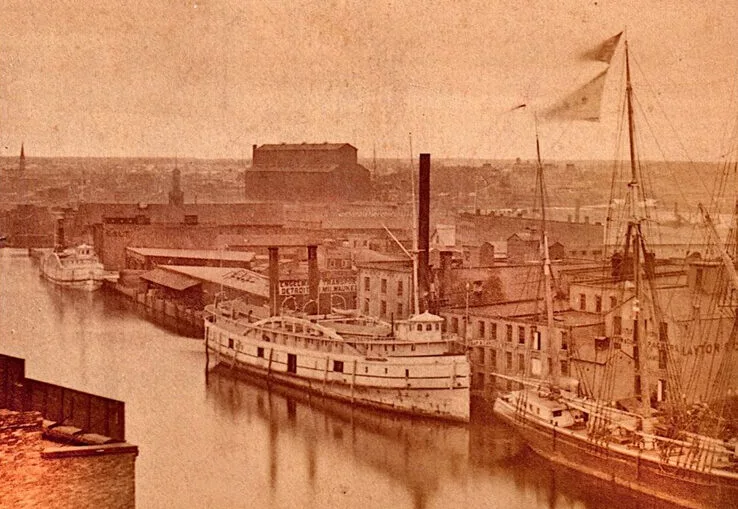
The steamer left Milwaukee in a moderate gale the night before her sinking, 13 October, with 53 passengers and crew and a cargo of barley and barrels of flour, pork and whiskey.
She sprang an uncontrollable leak about two hours into the trip and the captain turned back, but as the weather deteriorated huge waves extinguished the boiler fires.
Driven south by the gale, the passengers and crew were eventually ordered into the lifeboats at around 5am and watched the Lac La Belle sink by the stern, though her position at the time was only vaguely recalled afterwards. Eight people died when one lifeboat capsized but the others made it to safety.
The long search
Ehorn, who qualified as a scuba diver in 1960 when he was 15, was searching for wrecks including the famous Lac La Belle on a regular basis by the time he was 20.
An estimated 6-10,000 shipwrecks lie in the Great Lakes, most of them still undiscovered, and Ehorn is credited with finding some 15 of them, including the large steel car-carrier Senator in 2005.
As a woodworker, he says he particularly appreciated the hand-craftsmanship that went into the construction of early Great Lakes vessels. “The Lac La Belle was close to home for me and is a wreck that’s always been on my radar,” he says.
In 2022 maritime historian Ross Richardson found an unspecified historical clue that was said to have narrowed the search area significantly. Ehorn and wreck-hunting partner Bruce Bittner were only two hours into their search and on their second sidescan-sonar pass when they saw a large anomaly.
Returning over the site to view it at higher resolution provided “a moment of real jubilation”, says Ehorn. “We knew we had done it.”
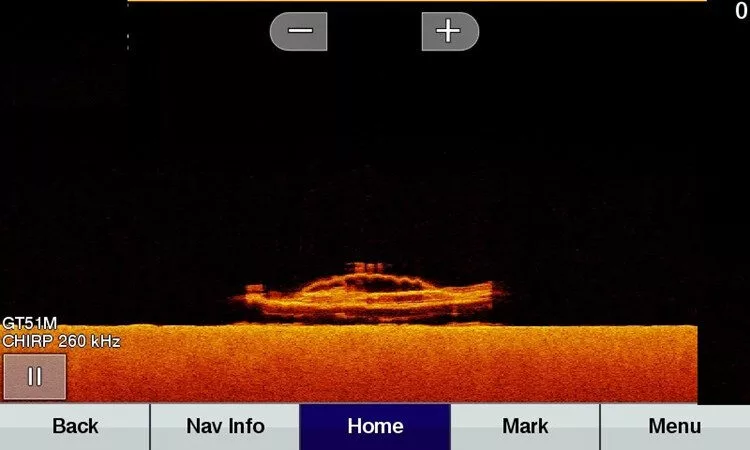
A giveaway were Lac La Belle’s prominent “hogging arches”, beams used to counteract the upward bending of a ship’s midsection when the bow and stern but not the mid-section are supported by waves.
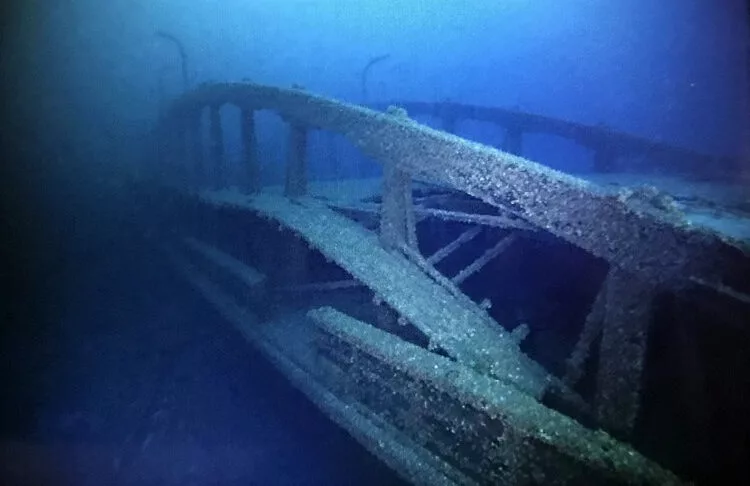
Hogging arches were commonly used on 19th-century vessels such as the Lac La Belle, on which heavy machinery and long wooden hulls were prone to hogging.
First scuba dives
The site is remote, lying 32km offshore between Racine and Kenosha, Wisconsin, and poor weather kept Ehorn from examining it until 2024, when he asked scuba divers John Janzen and John Scoles to visit and record the wreck in detail.
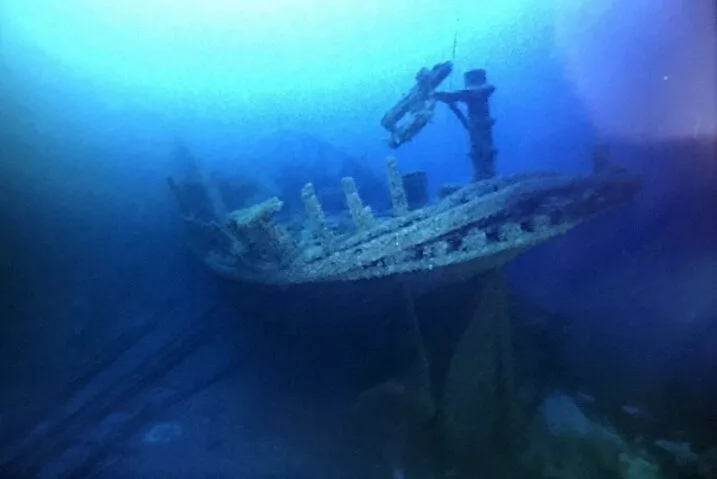
The wreck lies 18-20m deep and most of the upper cabins and deck structures are gone, likely destroyed during the storm or by lake currents. Some oak framing and woodwork from the interior remain preserved, benefiting from the cold, fresh lake conditions that slow decay.
Quagga mussels cover many of the exterior surfaces, a common feature of shallow-to-mid-depth Great Lakes shipwrecks.
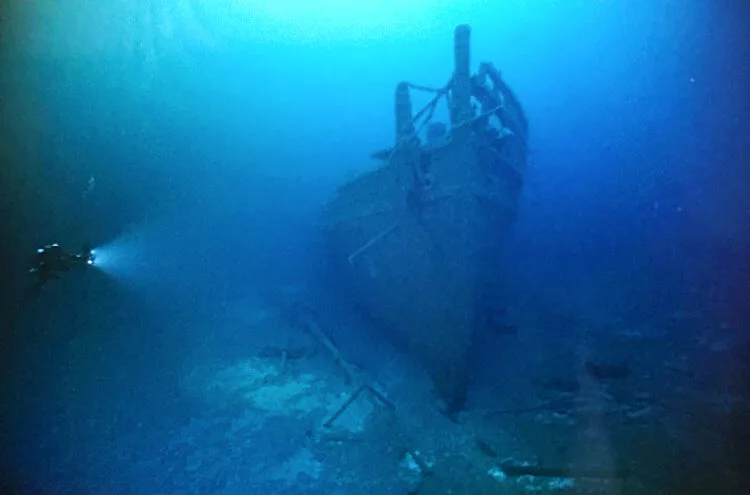
“Although her superstructure is blown off, you can see all of her wooden framing and some of her cargo is visible,” stated Ehorn, who is currently working to complete a 3D photogrammetric model before releasing the location of the Lac La Belle.
He is set to deliver a presentation on the discovery at the 2026 Ghost Ships Festival in Manitowoc, Wisconsin on 7 March.
Also on Divernet: King ‘ghost ship’ another coup for lake wreck-hunters