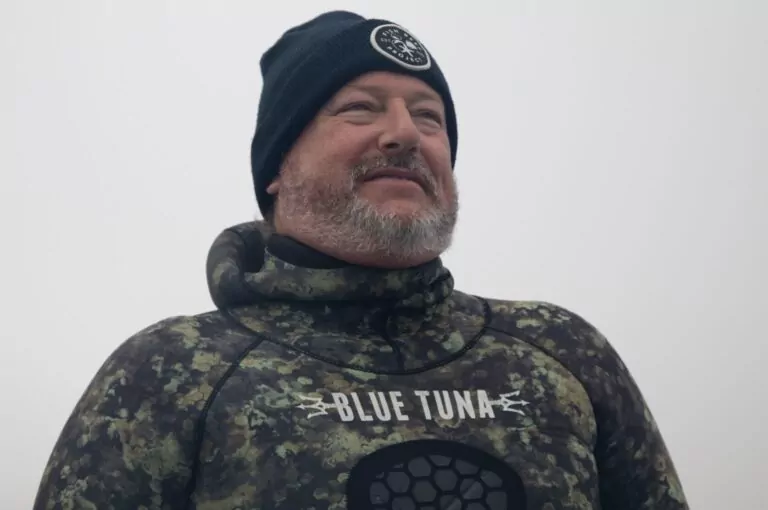
“It really is the scuba-diving story of the decade,” says Chris Goldblatt, founder and CEO of the Fish Reef Project, with pride. “Everywhere I go, people ask: ‘Why haven’t I heard of this?’ Well, I’m trying my best!
“The reefs are a little bit remote, a little hard to find, but if more and more divers start to see this with their own eyes, I think that’ll change.”
Chris is at home in Santa Barbara before a Zoom background of giant kelp and garibaldifish. He’s just back from a trip out to San Clemente in California’s Channel Islands to size up its abalone population: “I’ve watched it over the past 40 years and it’s recovered quite well out there,” he says.
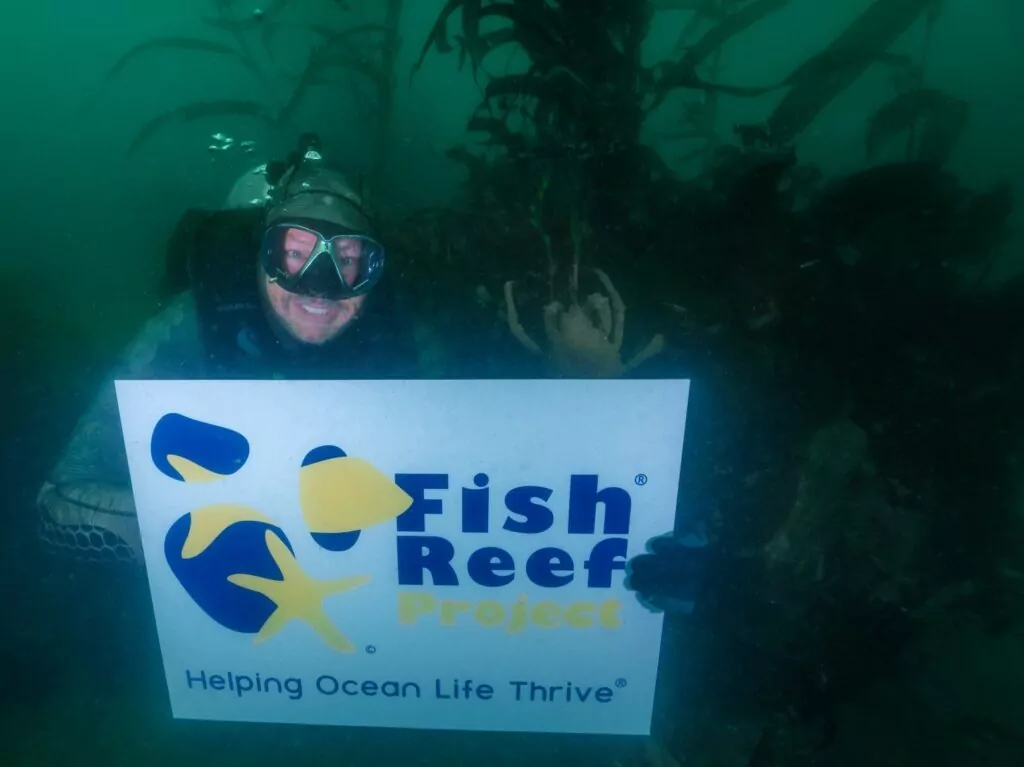
The Fish Reef Project has the sort of name that might suggest just another small-scale, marine-life habitat venture.
Then you discover the scale of its ambition – including reversal of the drastic loss of the eastern Pacific’s once luxuriant kelp forests, and the fact that Chris has already sunk what he reckons is a million dollars of his own money into getting the project to its current impressive level.
It’s all based around a turtle-shaped concrete marine-life magnet called a Sea Cave, and a pledge made in extremis.
“In 2003 I got in a horrible boating accident,” explains Chris. “Five friends and I got T-boned by a fuel-tanker and sank in the middle of the Channel.
“As I’m out there bleeding to death, treading water 20 miles out in the middle of the night in my boxers – well, you make a lot of deals with your maker when you’re in that kind of situation.
“Mine was that if I could survive, I would spend the rest of my life putting more life into the ocean than I’d taken out of it – and I had taken out a lot. I’ve fished hard in my life and I’m not ashamed of it, both as a spearfisher and when I pioneered the sustainable seafood movement in the ’90s as a seafood trader.”
Scuba summer camp
Chris Goldblatt had grown up in Malibu: “A humble community in those days, and if you wanted something good to eat, you had to go catch it”.
He was freediving by the age of eight and, when he was 13, his mother sent him to scuba summer camp on Catalina, which could certify someone of his age.
He bought his first boat around the same time “and started diving like a madman in the one place I could access, which was Santa Monica Bay – all mud and sand punctuated by a few rocks and some man-made structures.
“It really burned it into my head what happens if you’re able to enhance this limited habitat – you go from a desert to an oasis.”
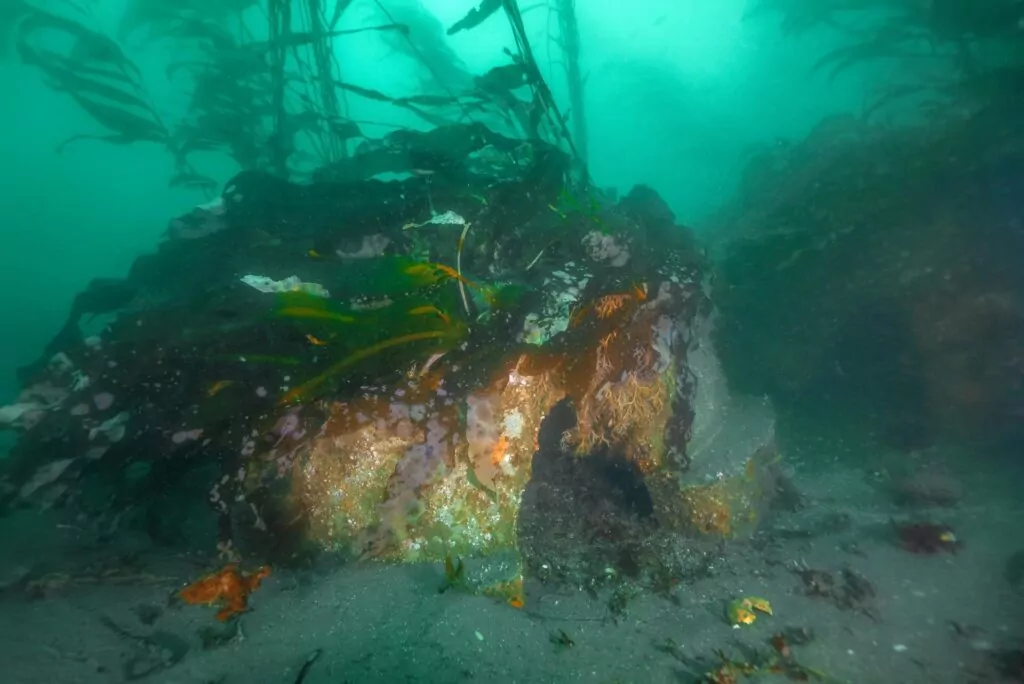
And that is what Chris’s Fish Reef Project now does. It has the power to transform seabed wastelands into thriving biogenic marine ecosystems able to support kelp, coral, marine mammals, fish, crustaceans and seabirds, reducing fishing pressure on existing natural reefs and creating welcome attractions for scuba divers.
These reefs do more than attract marine life, they grow it, creating so much that it overflows into surrounding areas, says Chris – just as we’re promised can happen in Marine Protected Areas (MPAs) when they are actually enforced.
Anatomy of a Sea Cave
“I felt the need to create an organisation that made not just artificial reefs but something that we could call a biogenic reef, performing the function of a natural reef but when grown-over looking natural to the human eye,” says Chris. No scrapped boats or old tyres for him.
When starting the project in 2010 he initially turned to the familiar “reef-ball” design but, apart from preferring a new approach “for intellectual property reasons”, it became apparent that reef-balls were much better suited to coral propagation than to kelp.
The solution was to develop Sea Caves. These are made of marine concrete, using a blend of cement that matches the concrete’s pH value to that of sea water and gives off no gas. Marine life colonising the units is reckoned to remove more carbon than is released in the concrete-making process.
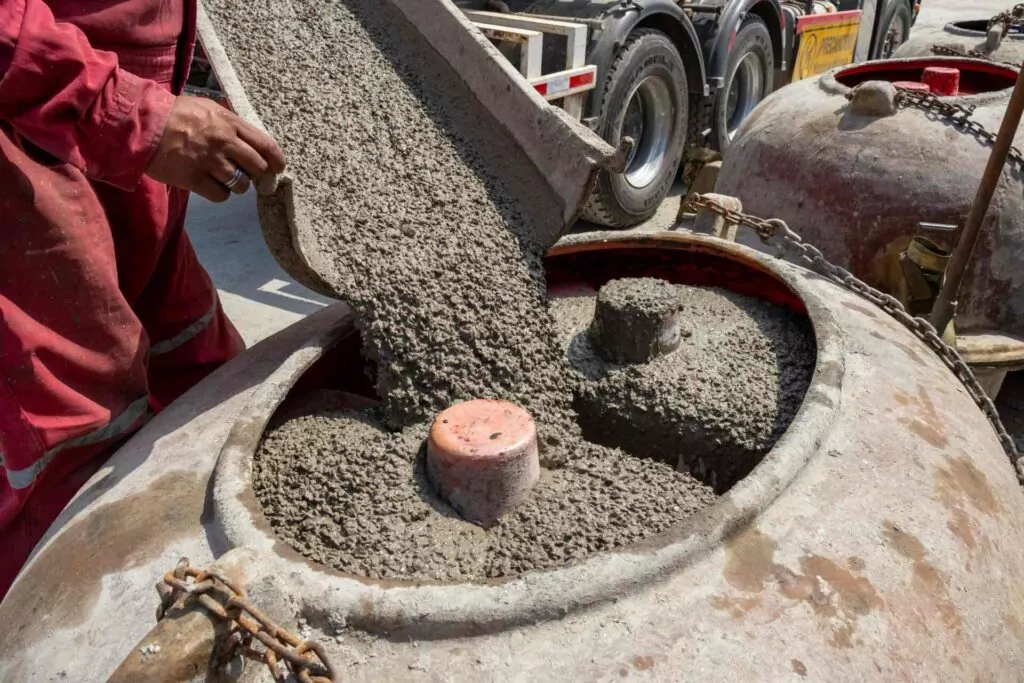
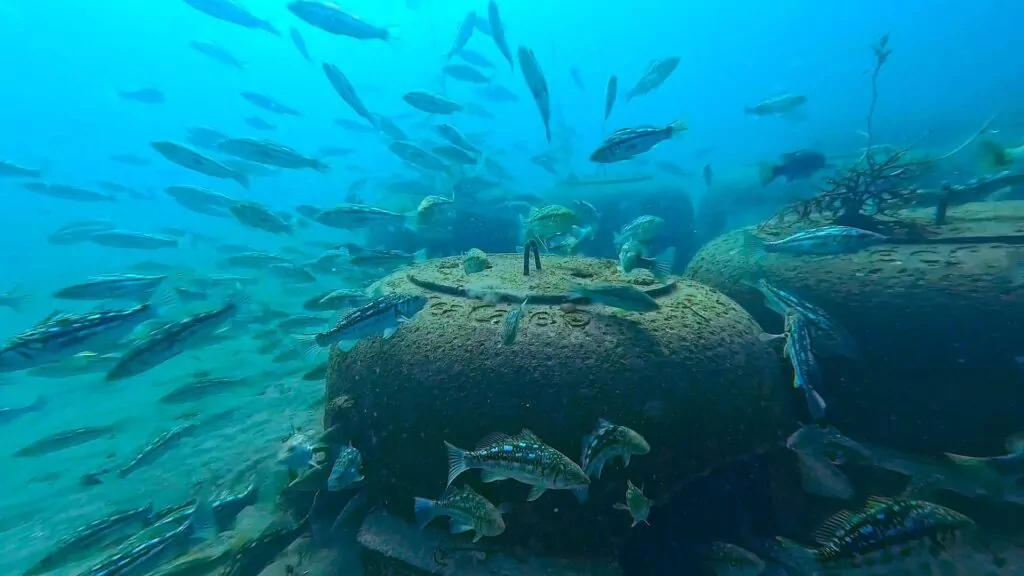
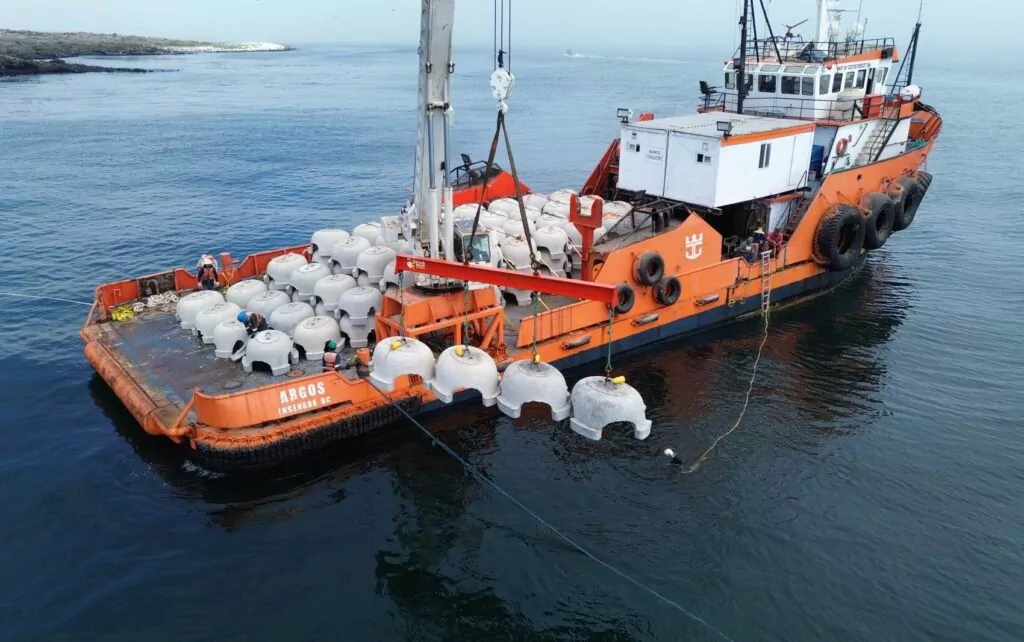
Weighing 1,280kg and with a surface area of 8sq m, the units are shaped to resist sinking into the sand, and won’t shift even in hurricane-force conditions, says Chris. Their flat areas encourage large kelp holdfasts to get a grip, while the cavities tempt breeding fish and other creatures to move in.
Locating each unit for maximum benefit has become something of an art, but Sea Caves are generally installed in the 6-20m range, where the sea is clear and unpolluted.
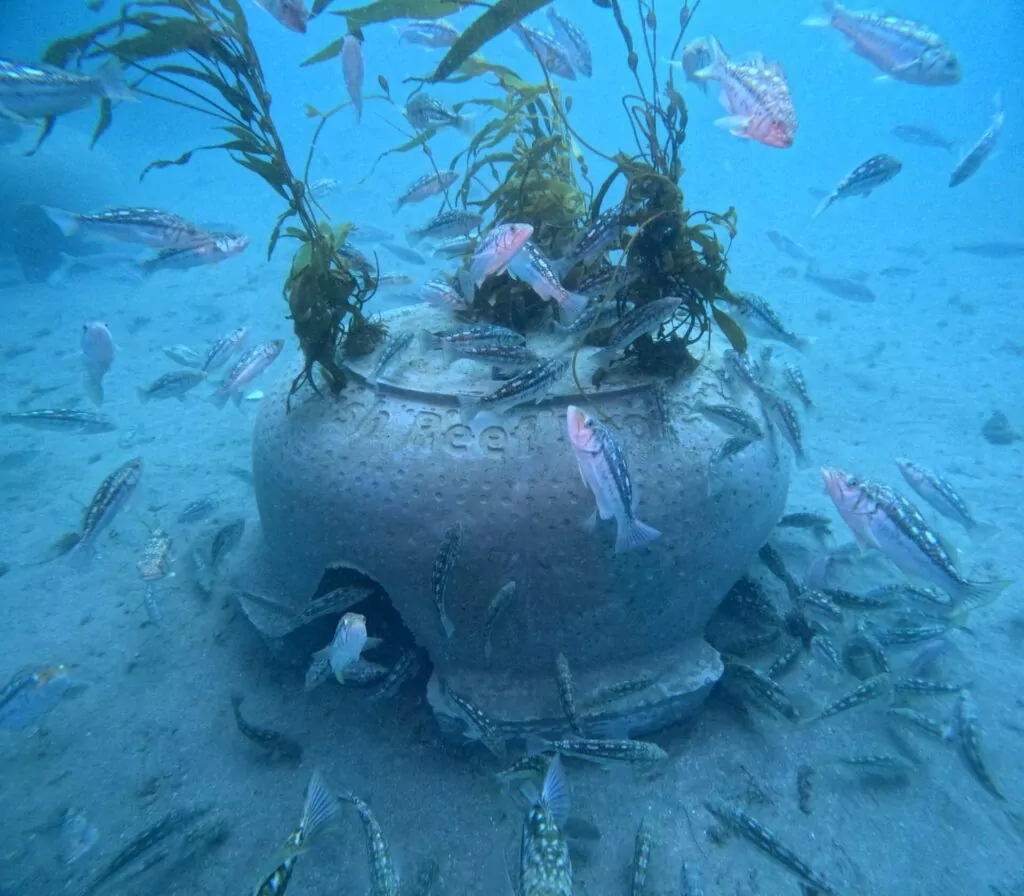
Their design gives rise to an upwelling effect, diverting cooler, nutrient-rich water from the seabed up into the water column. They can be customised to suit specific target species that prefer certain depths and environments, and have a claimed lifespan of 500 years.
Sea Caves are said to produce a denser kelp canopy equipped to withstand storm surges. Importantly, they can also be mass-produced with no degradation in quality, says Chris. Where rival systems could take anywhere from two hours to two weeks to make, “we invented a system that you can make in one minute!”
“When you make kelp, you need to make it at a size and scope at which the kelp can defend itself,” he says. “So it has to be a large kelp forest and if you want to export marine life and not be an attraction reef, that all means scale. You need a high-efficiency unit that you can stamp out.”
California: The big challenge
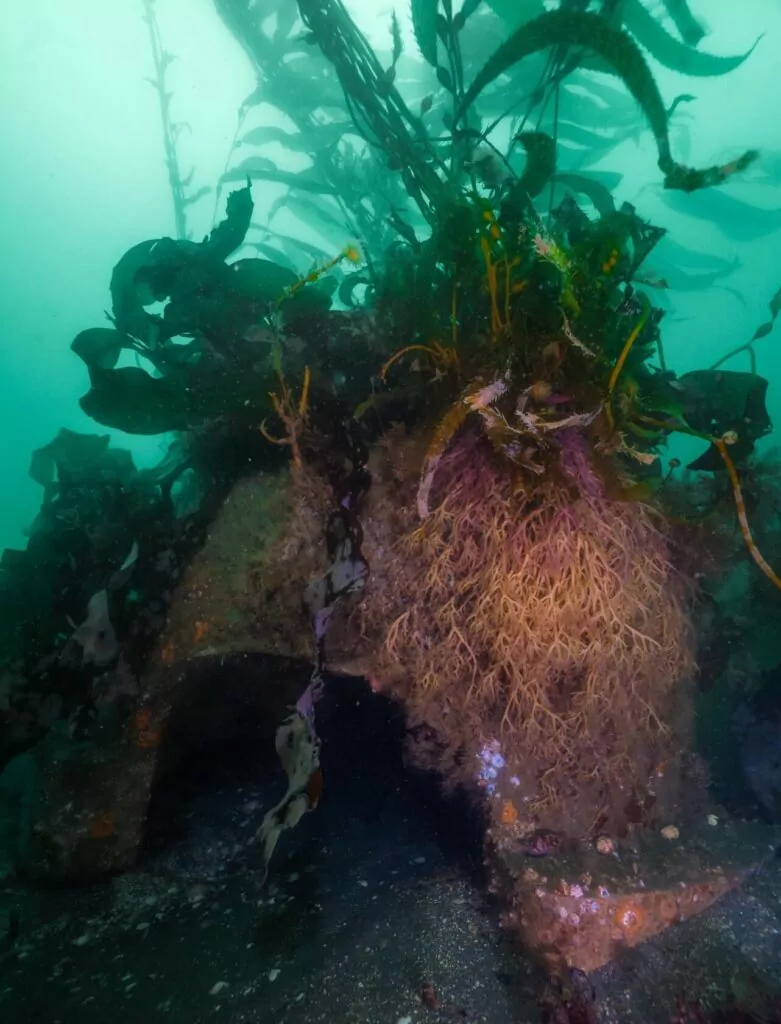
Chris had a fisheries and business degree and had run three successful businesses, including seafood trading and an organic dietary supplement company, when he set out to tackle California’s vanishing kelp problem. But he could hardly have chosen a bigger challenge than to establish his non-profit in his home state.
“There is no state-sponsored reefing programme in either California or Baja California, as there is in the rest of the country and the rest of Mexico,” he explains. “Having the longest coastline in the union, and given the quantifiable and known benefits, that is quite curious, but there are political reasons for that. There is actually money for it, but it doesn’t go to reefing.”
He soon learnt that he would need to go through no fewer than 11 state and federal agencies to obtain the necessary permits and this process, as it turned out, would take him 10 years. He likens the task to running for governor, battling to win support from everyone from academia to the political parties, environmental groups and fishing interests.
“In Florida there is just an artificial reef permit but in California you essentially have to go through the same process as if you were Exxon putting in an oil rig. There’s no saving grace because you’re restoring the kelp forest!”
The first Sea Caves in fact appeared on the east coast off South Carolina, purchased as a one-off by the Department of Natural Resources: “There are giant snapper and grouper, lobster and amberjack all over those now,” says Chris.
It would be six years before his first major reef was created, and that was in faraway Papua New Guinea (PNG). The first eastern Pacific installation was in Mexico, covering 26 hectares of seabed off San Quintin, where the existing 730 units are soon to be increased to 1,000. Three more locations in Baja California are in Chris’s sights.
California was the long-haul campaign. A pilot project at Goleta off Santa Barbara, where the historic giant kelp forest had been washed away in the 1983 El Nino, involved 16 Sea Caves and succeeded in demonstrating to the various licensing agencies how effective they could be.
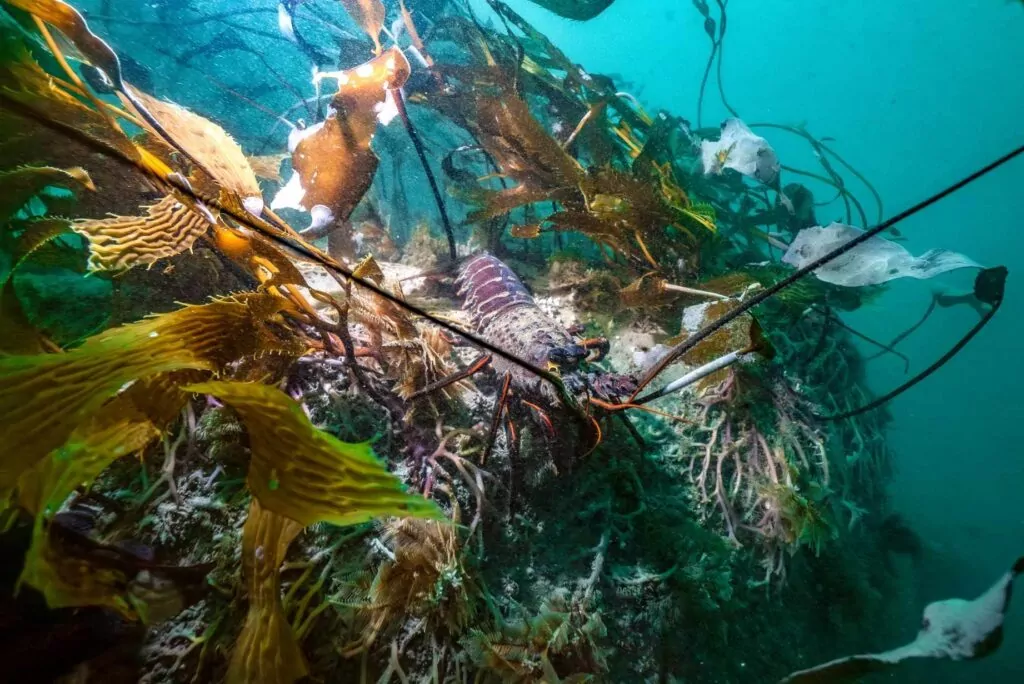
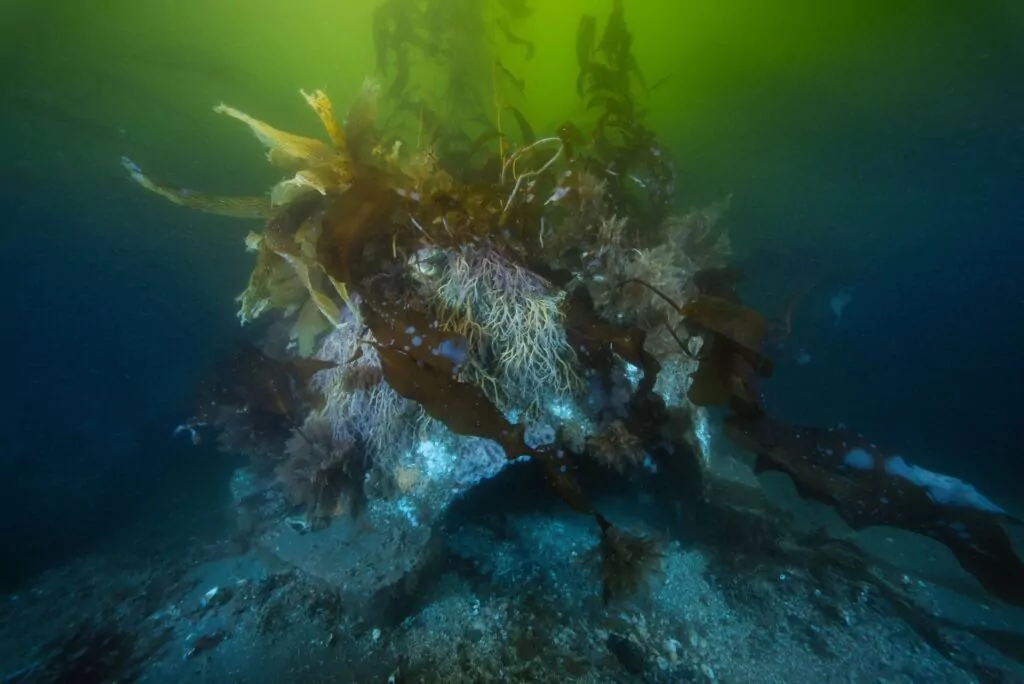
“The results are just astounding,” says Chris. “There’s kelp to the surface and small rockfish and scallops, lobsters and everything you could ever want.”
Creating a Sea Cave reef covering two hectares typically has a price tag of $10 million, and the Fish Reef Project is still seeking the funding to complete the three sites that form the backbone of its Californian biogenic reef system: at Goleta, at a site off Malibu and another off San Diego. Chris also has his eye on Point Conception at Santa Barbara.

Money and fishing
Some half of the funding for the Fish Reef Project has come from Chris Goldblatt’s life-savings – “and I’m not really a wealthy man” – and the rest from donations.
“Even though we’re in one of the wealthiest parts of the world, we still have not had a million-dollar donor step up,” he says ruefully. “I’ve had to take a monastic approach, living a very austere lifestyle for 15 years and foregoing all the accoutrements I was used to as a businessman.”
He pays emotional tribute to SpongeBob SquarePants creator Stephen Hillenburg, a fellow-graduate from California’s Humboldt university, who provided seed capital.
“Steve was our very first donor in 2010 and sent us a cheque for $10,000. He was dying at the time, he had cancer, and it was one of the last things he did in this world. That got us going.”
The clue is in the name Fish Reef Project, but at its core is Chris’s fundamental belief in working with, and never against, the fishing community – an attitude that does not always sit well with conservationists.
“Small-scale fishermen are your best allies,” he insists. “For instance, in Mexico we worked with the co-operatives, which are known for being highly sustainable in their practices. Reinforcing their ability to feed themselves gives us access to the entire Baja peninsula.
“The same is true in Africa and in Papua New Guinea, where we made its very first reefs.” Fish Reef Project signed an agreement with tribal elders in PNG whereby it would create a reef in exchange for voluntary cessation of dynamite-fishing.
“Six years later there’s been no dynamite-fishing on the reef – because we gave them ownership of that reef.” In Mexico, a similar deal was made over destructive gill-netting.
“Now we have groups lobbying us to come and make a reef, and we’re able to raise more money from folks in Senegal or Kenya or PNG to do that than from folks right here in Santa Barbara and Malibu.
“That’s quite ironic, but those communities understand the benefits to fishing and also to ecotourism and diving. So now everybody’s on board we have carte blanche to operate in a way that other organisations don’t.”
The hard core
As a diver, Chris relishes the fact that each Sea Cave ends up being “its own reef”, with its own distinctive cast of characters, multiplying the scuba opportunities. How much time does he spend visiting the sites himself?
“I really got into freediving for 25 years and now I’m back to scuba diving, not only because of the scientific component of what we do but the underwater-photography component. But when we’re building the reefs I’m down there as a foreman, saying: ‘Move that a little to the left!’.”

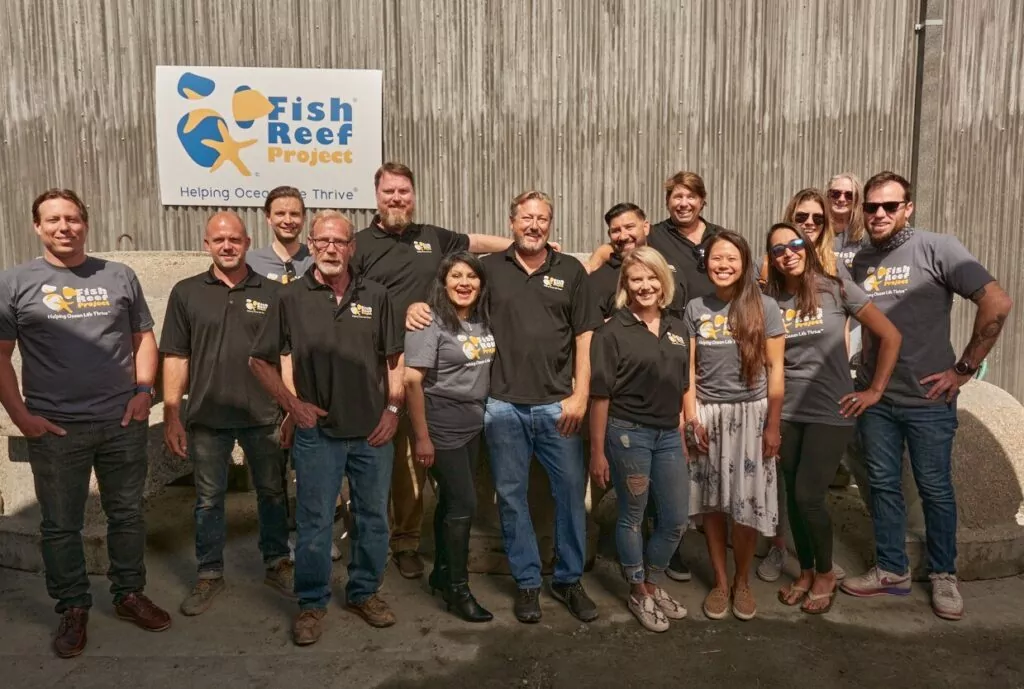
Chris relies on the hardcore volunteers who have stood by him over the years – the five directors of the board, including staunch supporter from the start, its secretary Lonnie Nelson. Some later problematic experiences with people he felt wanted to hijack the high-stakes project left him a little “gun-shy” of those he doesn’t know well.
On each project a semi-permanent precast concrete facility has to be set up and a project director put in charge of local operations, including organising the necessary tugs and barges, with Chris and the board rotating in and out to help manage the local paid labour force.
Fish Reef Project has permanent observer status with the UN International Seabed Authority (ISA), most associated recently with pressures to commence deep-sea mining. “It gives you the same privileges and access as a national delegate,” says Chris, “so we can ask for meetings all over the world with presidents, prime ministers and finance ministers.
“We’re very respectful of this privilege. I had wanted to be plugged into the top-tier ministries in the various countries that would welcome us, and it was a good strategy.”
The Fish Reef Project was indeed warmly welcomed by PNG, Kenya and Senegal, though suffered from false starts in nations such as Ghana and Bangladesh.
“When you get invited to a country to meet everybody, it can go one of two ways,” explains Chris. “Sometimes folks misunderstand and think we’re showing up with a bag of money, and then it can go off the rails.
“Or they understand that they have a stake in the project and need to participate in raising the funds.” Funding mechanisms, from bilateral relationships to blue carbon banking, then have to be explored, which can take time.
“Our mega-projects are in Senegal and Kenya with what we call the Great African Food Reef, because it’s a way of feeding a large portion of Africa – converting high-impact, high-bycatch fisheries to low-impact ones, like catching lobsters by diving, using handline hooks to catch high-value snapper, grouper or lobster, and enhancing the dive-tourism industry.
“The Maldives has reached out too, so success does beget success, but each project is a multi-year pipeline thing.”
Educated guesses
“In the early days there were so many unknowns,” reflects Chris. “Everything came down to educated guesses, including the engineering of the Sea Cave itself.
“We’d show up in these places with everybody thinking we must have all the money in the world because it looked a very expensive operation – but it was literally all of our capital for that one operation, with no salaries for the US staff or anything of that nature.
“I’ve been in that situation where we’ve paid the deposit on our barges, the whole team is ready and I’m looking at sketchy weather, knowing that the reef-site is 90 miles from the loading site – is everybody going to die if I say go?
“Making these decisions, then floating around on my back yelling to a bunch of guys who don’t speak English about where to deploy – you can imagine the stress levels. But now I know just what we can do, we’re moving into – dare I say it? – the pleasurable realm!” Find out more about the Fish Reef Project.
Also on Divernet: SHARKS’ SPIKY MEALS COULD BE SALVATION FOR KELP, WHY WE ATTACH SEAWEED SPORES TO USED SCALLOP SHELLS, THE UNSUNG REEF, DIVERS INSTALL FIRST ‘MINTER HOTEL’ OFF SUSSEX