
Michael Salvarezza and Christopher P Weaver present an essential introduction to iceberg diving in Greenland, recounting their experiences on an expedition to some of the world’s most frigid waters.
Have you ever dreamed of diving beneath an iceberg? Have you ever wondered what it’s like, and if it’s safe? Have you ever wanted to experience the thrill and adventure of swimming alongside these massive and beautiful objects?
Well, icebergs are beautiful. And they are exciting. And they are unique. But they also can be dangerous, even deadly. As we prepare to explore these fascinating drifters of the sea, let’s take a look at the proper safety protocols and procedures for exploring icebergs under the water. As you will see, diving alongside and beneath icebergs can be made safer… but never completely without risk. Before you can begin planning to dive an iceberg, you need to understand some basic information about these fascinating objects.
What Is an Iceberg and How Are They Formed?
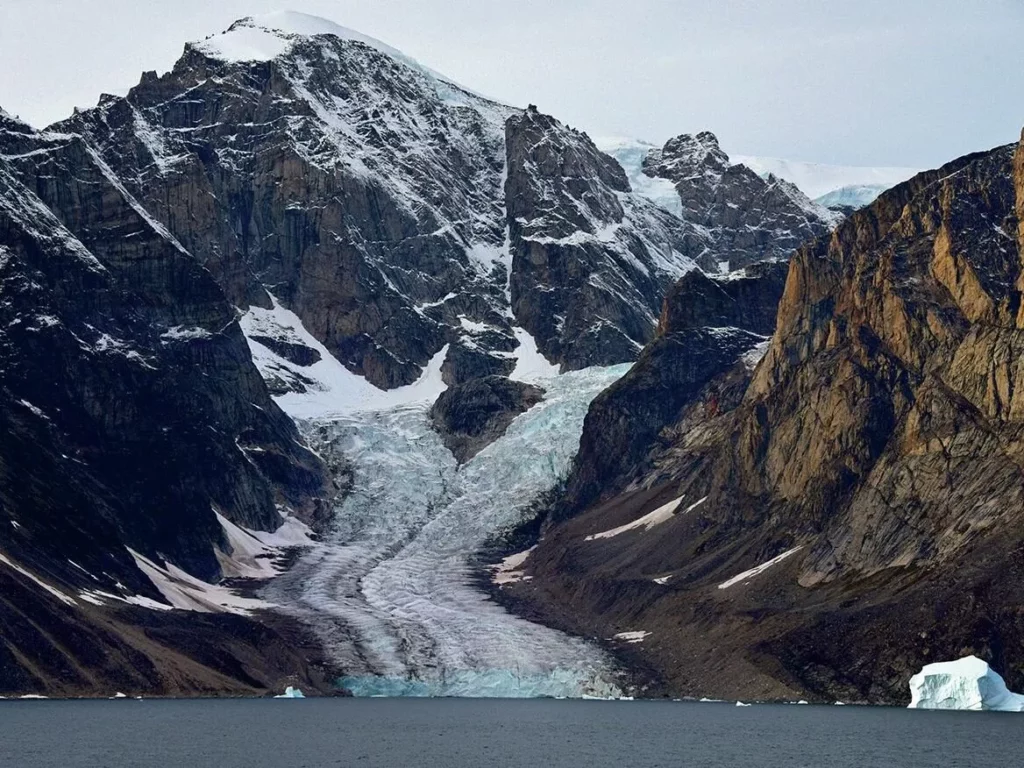
Icebergs come in all shapes and sizes. They are created when chunks of ice break off from the face of a glacier as it meets the end of its long journey on land and encounters the sea. Glaciers form on land when snow accumulates over thousands of years. As these layers compress, glacier ice begins to form, which then transforms into rivers of frozen water that slide ever so slowly over the land in an inexorable march towards sea level. Of course, this means icebergs are usually formed in the polar regions of the Arctic and Antarctic, but they don’t necessarily stay there. Icebergs can drift north from Antarctica and south from the Arctic and cover long distances before they eventually melt in warmer waters.
Climate Change and the Future of Iceberg Diving
Because of rapid changes to the Earth’s climate, warming temperatures in the polar regions is melting glaciers at an unprecedented rate. In some cases, this is creating more icebergs, including some that are massively large as the glacier ice becomes more unstable. In other areas, the glaciers have vanished, drying up the source of icebergs. Future generations may no longer have the opportunity to see and explore these great ice structures, so today’s divers have an additional imperative to plan an iceberg dive.
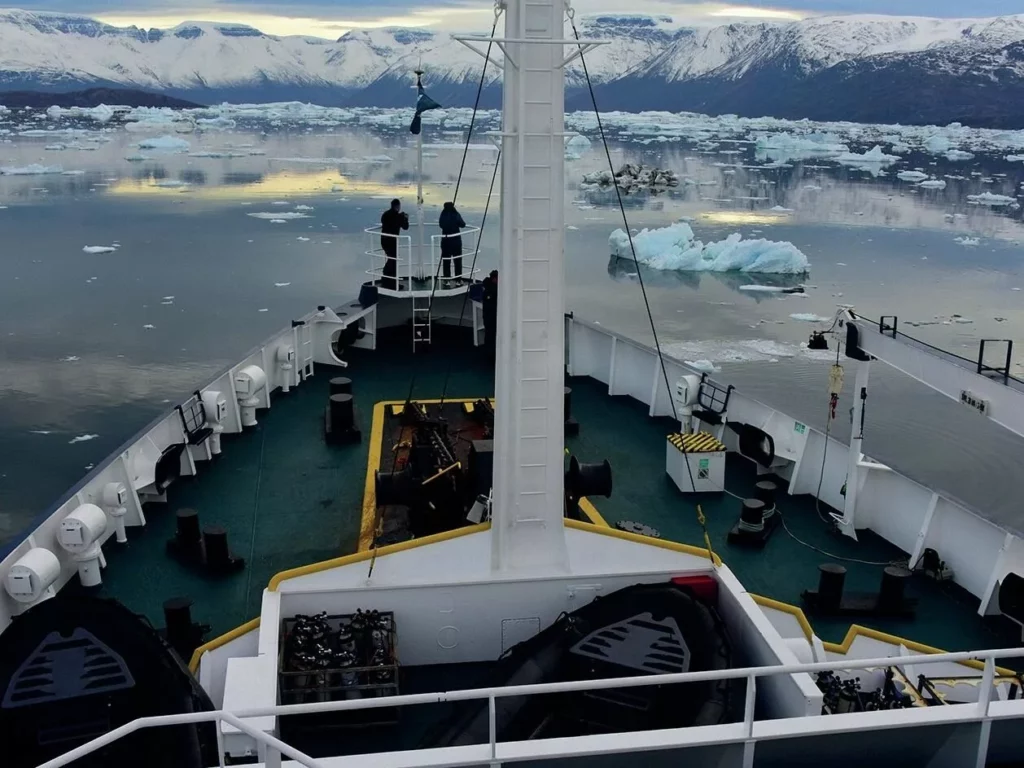
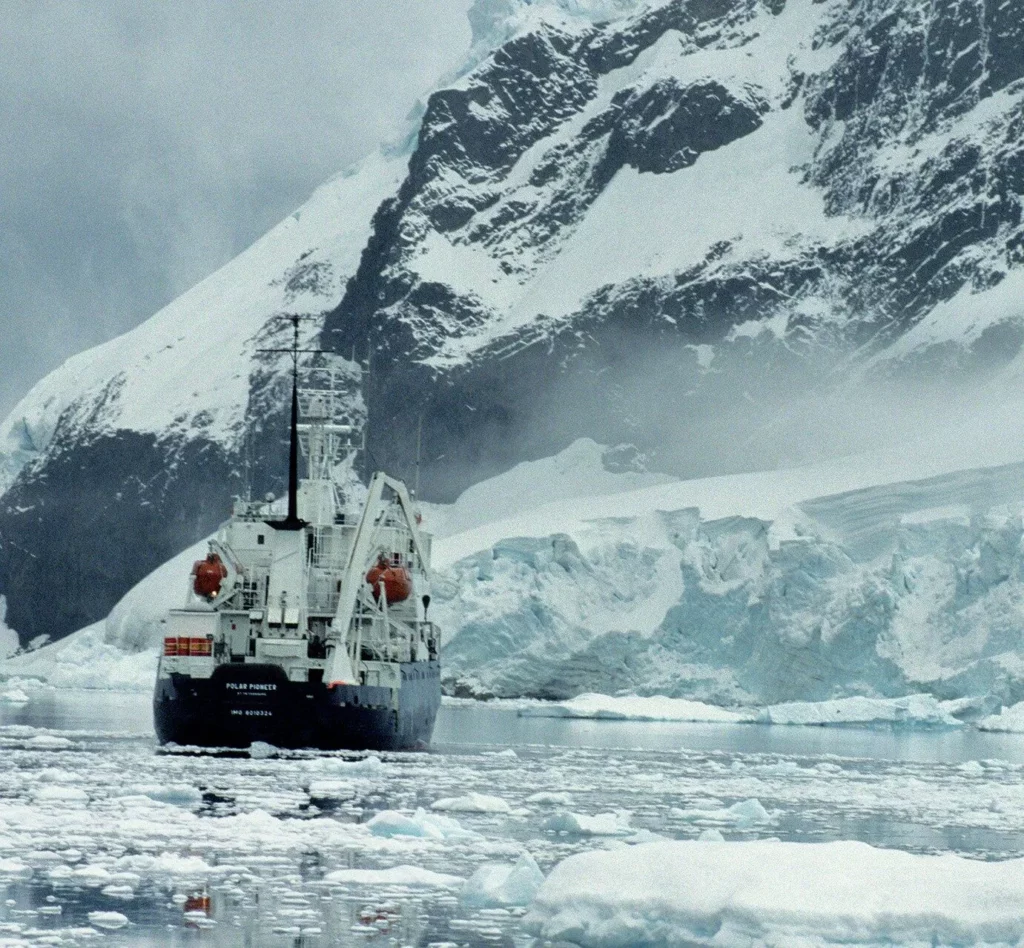
As you explore the face of a glacier, you will periodically hear the sounds of icebergs calving off and falling into the water. It sounds like a loud crack of thunder and is both mesmerizing and arresting. Observers will often witness the sight of the iceberg dropping off the face of the glacier and crashing into the sea. Depending on the size of the ice chunk, massive temporary swells may be created and these waves, along with the possibility of actually getting hit with ice, is why it is prudent to keep your boat a safe distance from the face of the glacier. Icebergs can be as small as chunks a metre or so in size or as large as the size of a house, or even the size of a sports stadium. Some icebergs are truly massive, with one recent iceberg measuring roughly the size of the state of Massachusetts.
Because of the relative density of ice, which is made of fresh water, compared to the surrounding sea water, all icebergs float. And they drift. Roughly three quarters of the iceberg lies below the surface, which makes approaching an iceberg potentially dangerous for boats. Sharp protrusions and hidden ice blocks below the surface can damage a boat and quickly sink it. Think Titanic.
Although icebergs float and drift at the mercy of ocean currents, they do occasionally ‘run aground’ when they encounter water shallower than their maximum depth. Icebergs that are wedged on the ocean floor will cause an ice scour in the bottom substrate and may remain grounded for days, weeks or years. Only when enough of the iceberg has melted, or when the ocean currents change direction, will a grounded iceberg dislodge from the bottom. Besides variations on shape and size, icebergs also come in different colours. Frozen fresh water is generally clear unless it is clouded with sediments.
Did you know?
Diving around icebergs is challenging and require specialized cold-water diving skills and equipment due to the low water temperatures and the unpredictable nature of icebergs. Divers must be prepared for potential hazards like shifting ice, strong currents, and the physical impact of the cold water.
Why Icebergs Are White, Blue… or Completely Clear
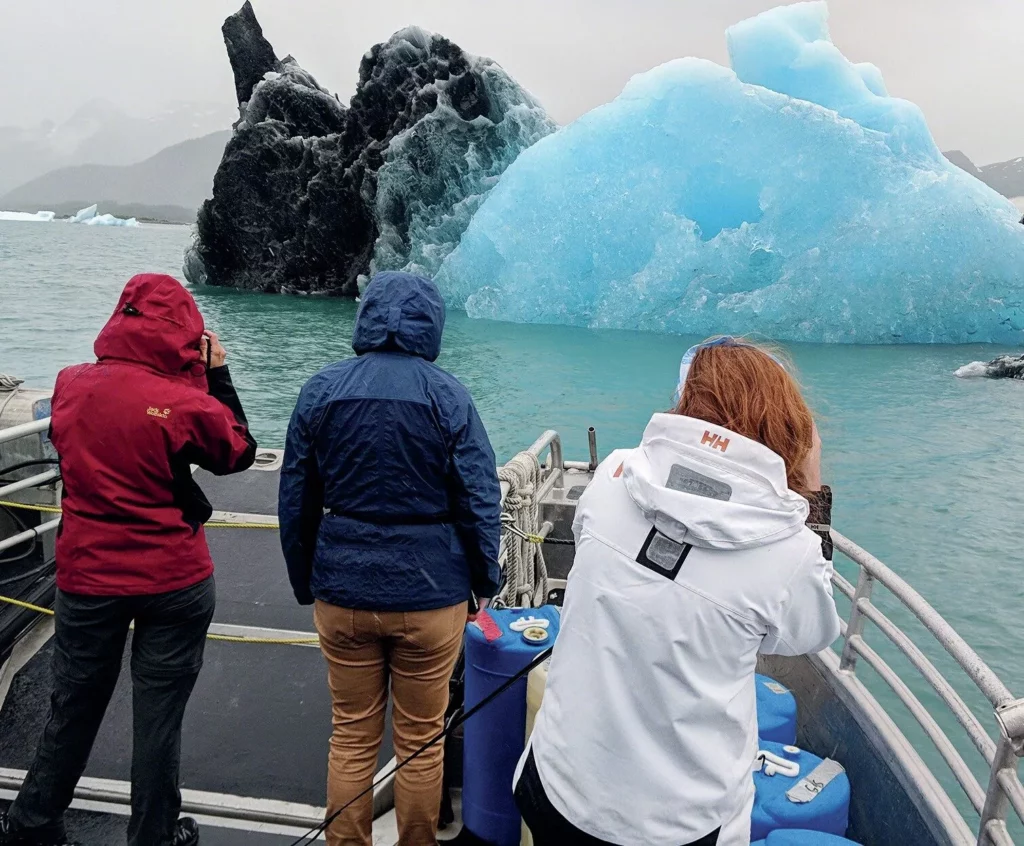
Most icebergs appear to be white, while others sport a deep indigo blue colour. Some appear turquoise. And some are dirty with sediment while others appear to be pristine. Icebergs that appear white have ice that is filled with air bubbles, much like an ice cube in your favourite drink.
They appear white because these trapped air bubbles are scattering all wavelengths of light. These icebergs are borne of ice that lies closer to the surface of the glacier.
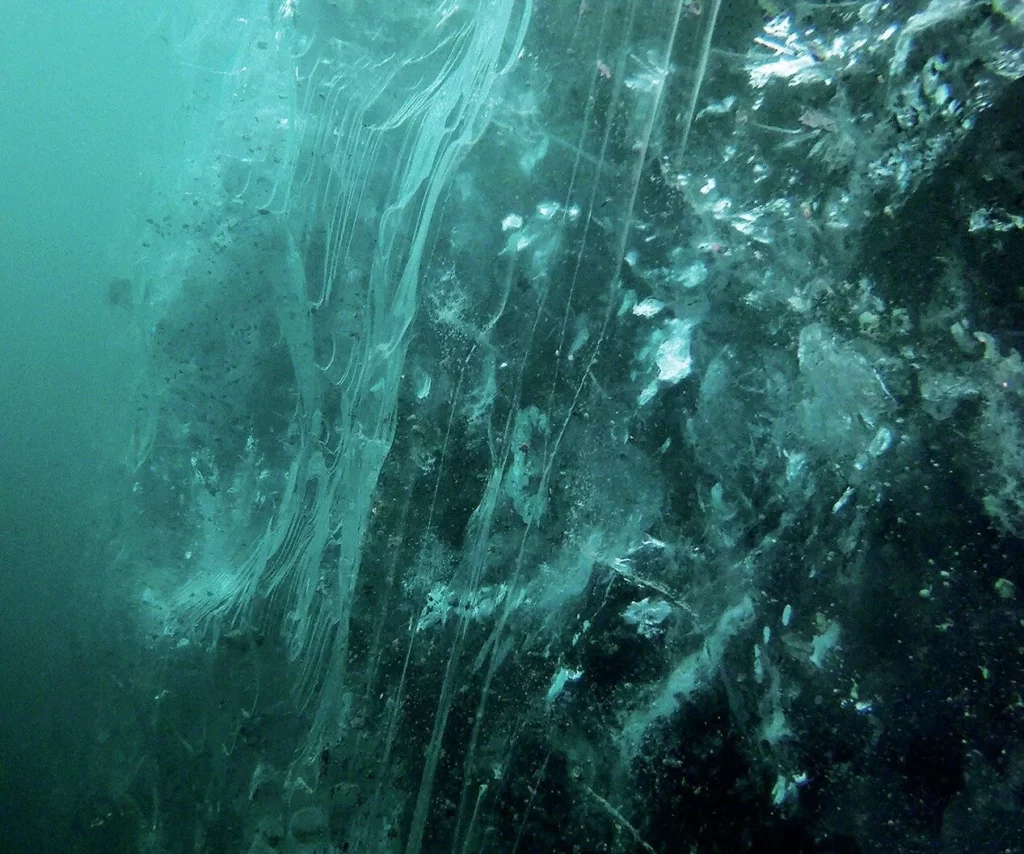
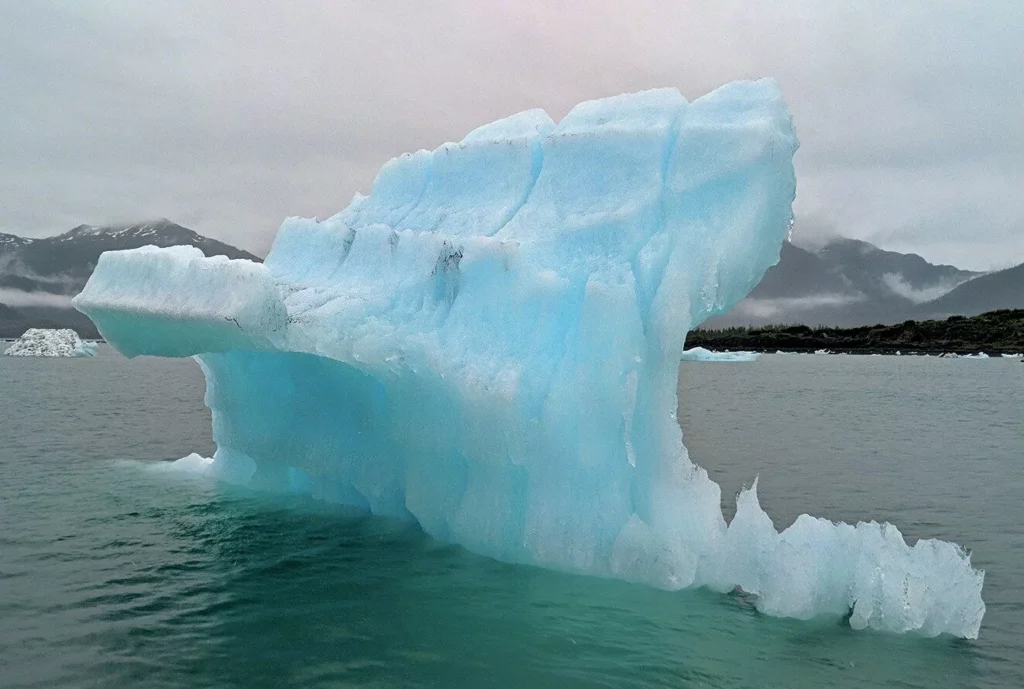
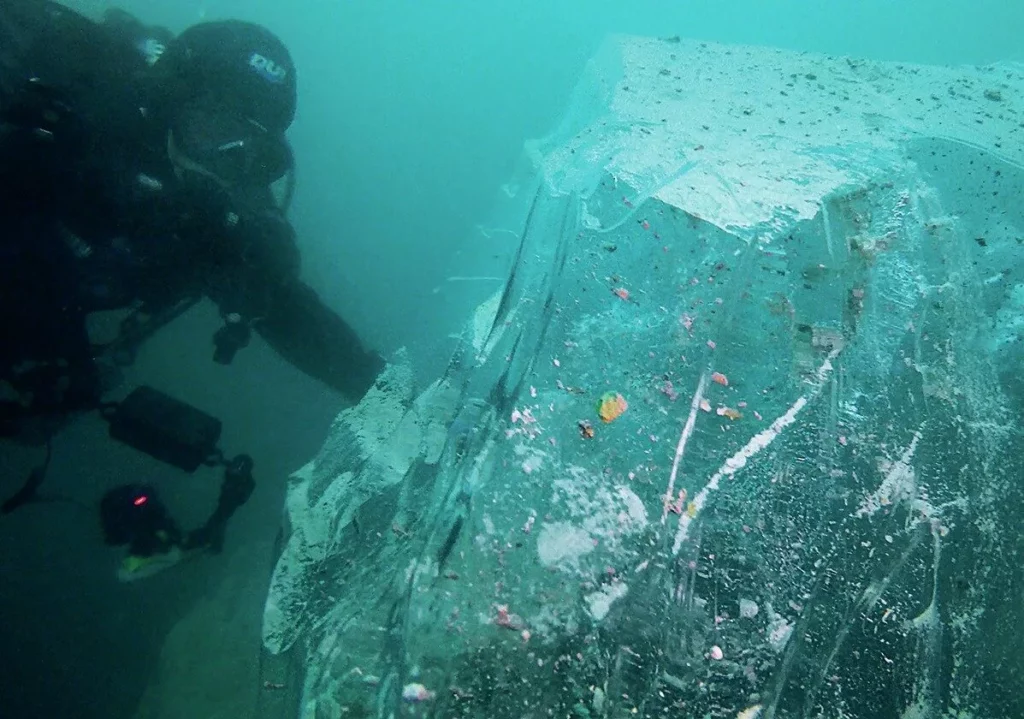
However, through the millennia, the heavy pressure of ice weighing millions of tons crushes the ice closer to the bottom of the glacier and squeezes any dissolved air that may have existed in the ice. Icebergs that sport shades of blue colour, the colour of pure glacier ice, are the result of pressure compressing most of the air out of the deeper layers of ice, which causes some ice crystals to absorb long wavelengths of light and, at the same time, reflect the blue colours of the light spectrum. This is why we see blue. Icebergs that are blue in colour are generally considered much older than white ice. On very rare occasions, divers may encounter an iceberg that is actually transparent. This ice has been subject to extreme pressure and all the air has been pushed out, resulting in ice that resembles glass. We explored one such iceberg on an expedition to Greenland.
Diving the Crystal Icebergs of Greenland
Early one afternoon with the Arctic sun peeking in and out of high clouds, we were searching for a stable iceberg to explore among the multitude of icebergs in the Rype fjord area, which is located in Scoresby Sund, in the northeast of Greenland. After some time, we came across a fairly nondescript iceberg, one that almost had a dirty appearance on the surface. It seemed to have been stained with rocks and soil on its exposed side. We assessed the stability of this iceberg and began our dive alongside this ‘dirty iceberg’.
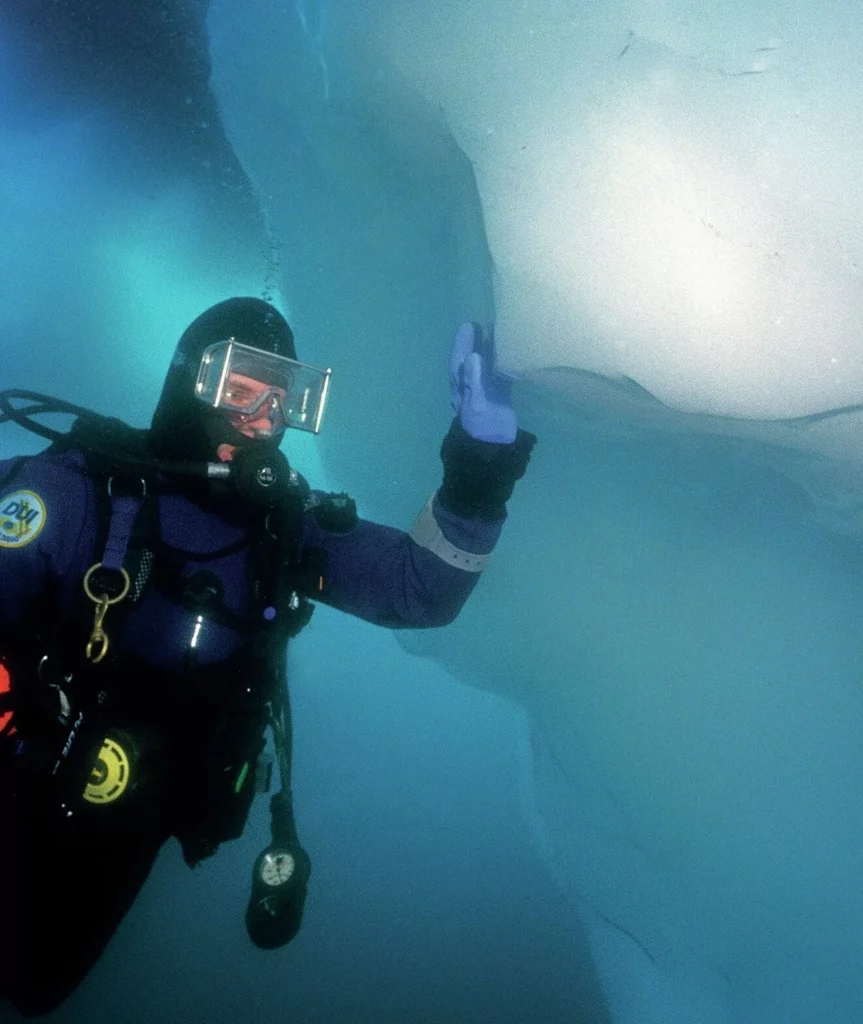
Initially, we encountered water that was murky and it took a moment to focus our eyes as we searched for the underside of the iceberg. Slowly at first, and then more abruptly, the stunning image of this iceberg’s underside came into view. We were instantly captivated. This particular remnant of a nearby glacier drifting in the waters of Rype fjord emerged from the murky water and appeared as a crystal palace underwater. The ice was clear as glass everywhere we looked!
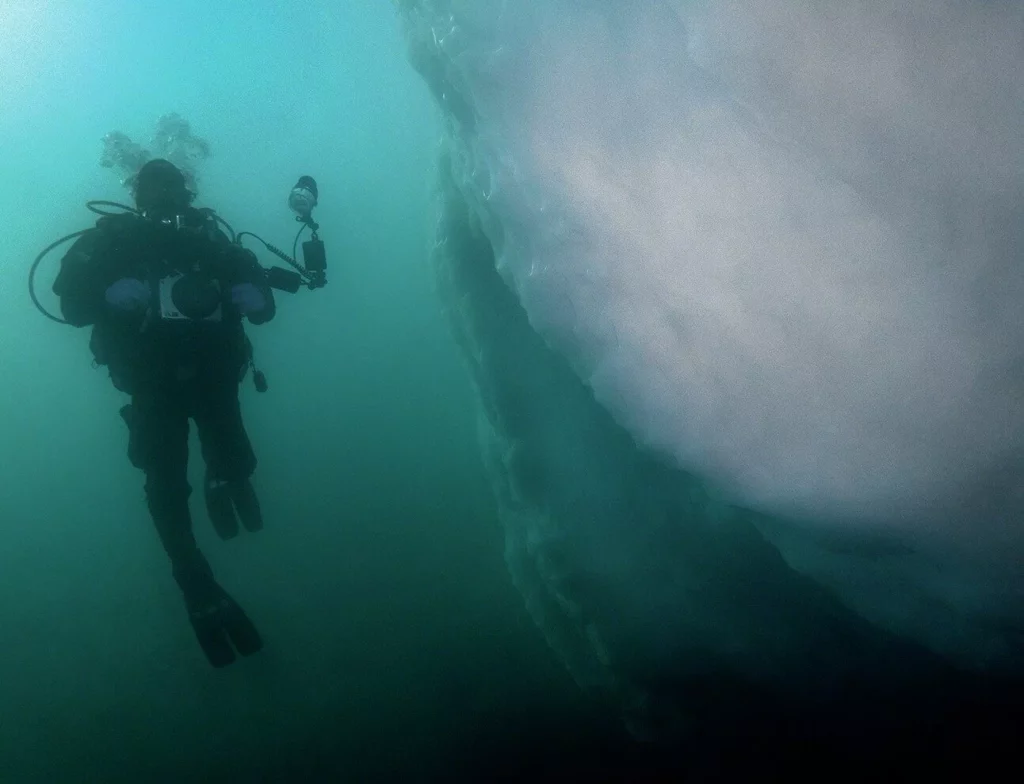
Like peering through a window, the transparent ice gave us amazing views into the inside of the iceberg itself. Trapped deep inside the crystalline glass were rocks, silt and sediment obviously caught in the glacier’s traverse across Greenland. There were shelves of glassy ice with piles of rock and stones resting on them as if they were part of an elaborate table setting, a time capsule freezing a period of time for future divers to gaze at in awe. And, as the ice slowly melted in the surrounding salt water, waterfalls of silt could be seen cascading down the interior walls of the glass palace iceberg. In some places, shards of glassy ice jutted out from the main body of the iceberg, and it was both beautiful and scary to see the wavy images of divers on the other sides of these glass walls. We had never seen anything remotely like this and we were transfixed by the infinitely beautiful shapes and textures of this Arctic wonder.
Iceberg Diving Safety: Assessing Stability
The first step in diving on an iceberg is to find one that is relatively safe. Icebergs in the sea are continually melting. This is the primary reason for the safety protocols that must be in place when planning to dive on an iceberg. The most-important rule is to always remember that because the iceberg is melting, it is inherently unstable. At any given moment, whole sections of the iceberg can break off and fall into the water. Divers unfortunate enough to be underwater where a large chunk of ice has fallen can be struck by the block of ice and seriously injured.
How can you assess the stability of an iceberg? One clue is the shape of the visible section of the iceberg. Icebergs that have protruding shelfs, overhangs, or jagged pieces of ice along their edges are not suitable for diving. These are all evidence of areas of the iceberg that can easily break off and harm an unsuspecting diver.
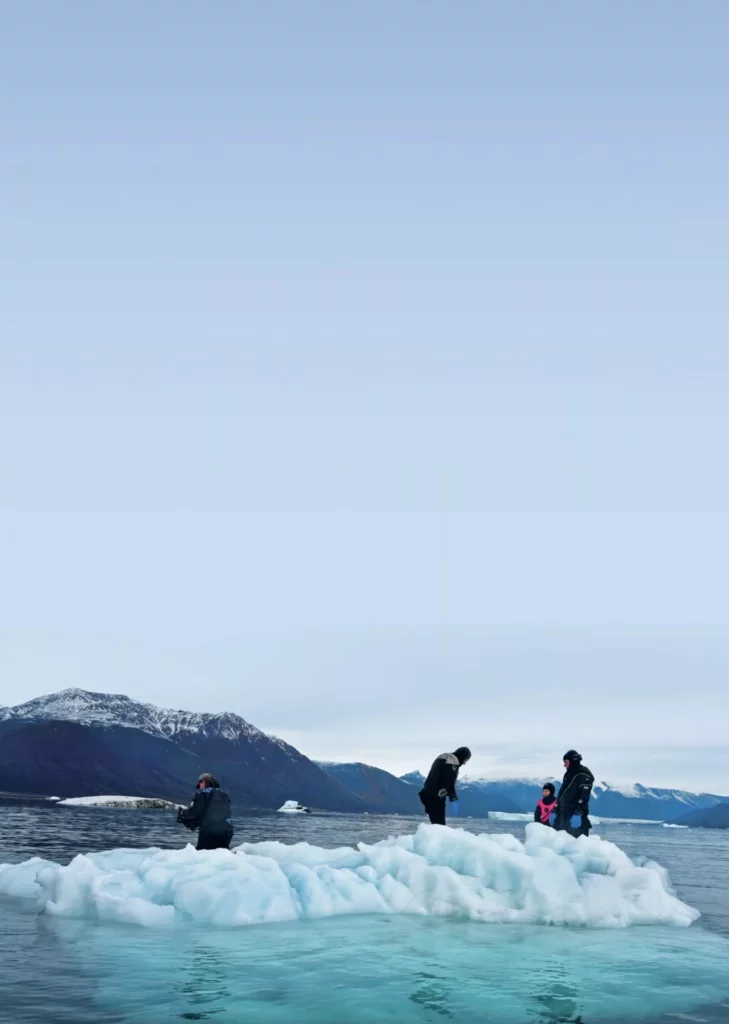
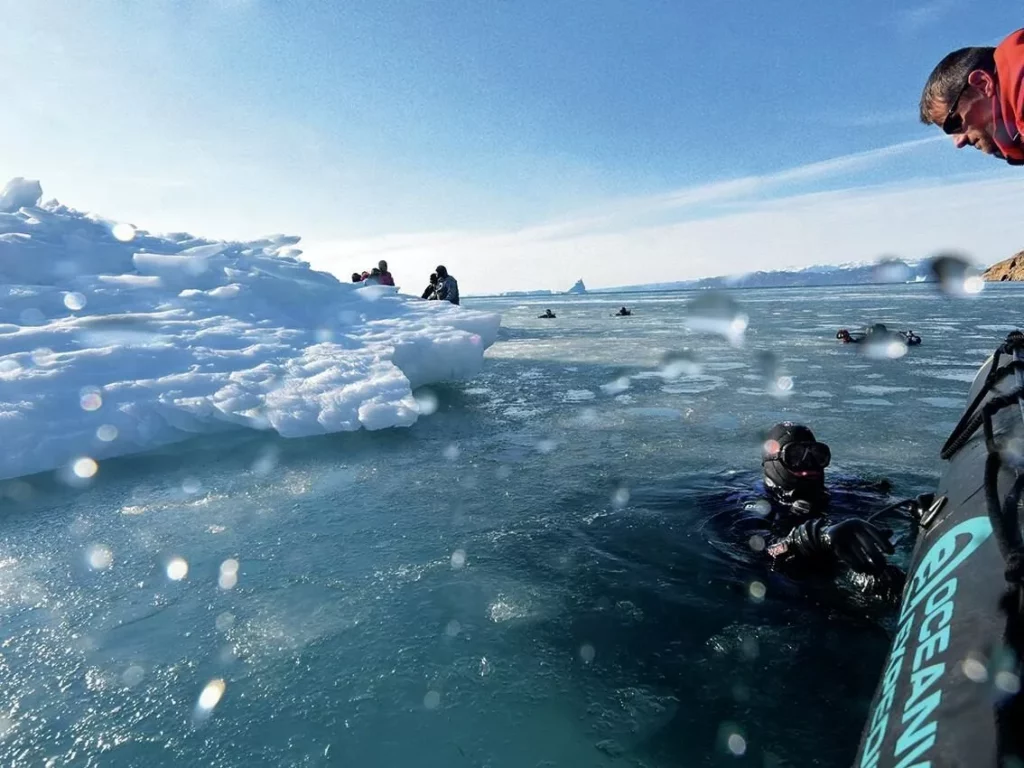
Icebergs that are towering in height are also off-limits. These icebergs present real danger to divers. Remember that since the iceberg is melting, its centre of gravity could shift unexpectedly and without notice, the entire iceberg may roll over, exposing its underside to the air. On the surface this is a very dramatic scene. But divers who happen to be under an iceberg when such an event happens could become trapped in ice, seriously hurt by impact with the moving ice, or crushed beneath the weight of the iceberg. If you spend enough time in a sea choked with icebergs, you will undoubtedly witness this roll over phenomenon, and you’ll learn to appreciate how dangerous this can be.
Essential Equipment for Iceberg Diving
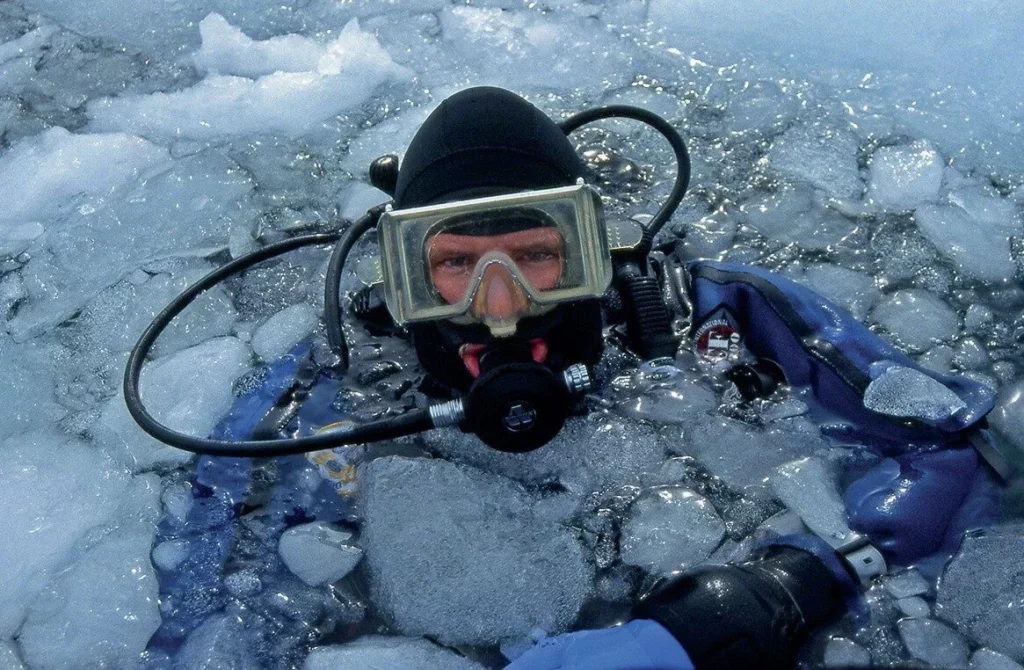
The best candidate icebergs for diving are ones that are relatively flat or tabular, are of modest size and are not drifting close to shallow water. While these may be more visually boring, these are the ones less likely to roll over, less likely to calve apart and less likely to run aground. Once a safe iceberg has been identified, it is time to prepare to dive. Diving on icebergs takes place in very cold water. Suitable or specialized ice diving regulators that are designed to operate in these extreme cold conditions and reduce the threat of freeflowing, along with proper exposure protection, are absolute necessities. Drysuits are the norm along with environmentally sealed regulators.
Divers should enter the water fairly close to the iceberg but not directly alongside of it. Entering the water a short distance away and then swimming to the iceberg reduces the risk of hitting submerged ice when you roll into the water. It also gives you a chance to adjust your gear and acclimate yourself to the conditions before approaching the iceberg.
Buoyancy, Haloclines and Cold-Water Challenges
Divers who approach the iceberg will notice that the nature of the water changes as you close in on the iceberg. Salt water changes to fresh water in the vicinity of the iceberg because all that ice is actively melting. Your vision will briefly become blurry as you encounter the mixing zone of fresh and salt water. This is known as a halocline. Your buoyancy will change and as you draw closer you will begin to sink in the fresh water. Be sure you adjust your buoyancy with your BCD as this is happening and don’t allow yourself to sink in an uncontrolled manner.
As you explore the iceberg, you may notice how smooth the submerged ice is. Running your hands along the ice will feel like you are touching Teflon. This is both beautiful and deceivingly dangerous.
There is nothing to really hold onto and if you find yourself sinking, or drifting in a current, grabbing onto the ice may not be a viable option. It is critical that you are stay in control of your buoyancy and your movements.
Sometimes the iceberg will have cracks and fissures under the water. Some divers may even encounter ice caves. While it may be tempting to enter these caves, safe iceberg diving protocol strictly forbids this. Divers can easily get trapped in such a cave, especially if the ice shifts, compresses or the entire iceberg rolls while the diver is inside. Enjoy the iceberg from the outside and never venture inside.
Occasionally, divers exploring the underside of an iceberg may discover that it has actually run aground. Never explore close to where the iceberg is touching the bottom and retreat to open water and away from the underside of the iceberg immediately. An iceberg grounded may suddenly shift its weight. A diver is no match for millions of tons of ice crashing into the sea floor.
Safety extends right through to the very end of the dive. As with all dives, you should make a safety stop before surfacing, but there will most likely not be an upline and the bottom may be very deep below you. This can be tricky because, as we mentioned earlier, buoyancy control near to the iceberg can become difficult to control. The safest place to do a safety stop is some distance away from the iceberg but perhaps within sight, so it serves as a point of reference. Deploy your SMB if necessary, and make sure you don’t surface too early. Iceberg diving typically takes place in very remote regions and decompression accidents requiring urgent care can be very dangerous when help is very far away. Dive conservatively and always make your safety stops. Many divers opt to extend these safety stops as an extra measure of precaution.
To complete the dive, you will need to make your way back to the dive boat or RIB and exit the water. You may be heavier than normal because of extra weights needed in these waters and to counteract the buoyancy of your drysuit, so don’t hesitate to pass your gear to your surface support if necessary. Once on the boat, relax and realize that you have successfully explored an iceberg underwater.
Respecting the Ice: Final Thoughts on Iceberg Diving
Diving on icebergs can be incredibly beautiful, emotionally moving and even life-changing. The stunning vistas of the sides of a massive chunk of ice can be breathtaking. When conducted safely, dives on icebergs become lifelong memories. But divers must always respect the iceberg and the danger it hides. All icebergs can be dangerous. No iceberg is entirely safe to dive on. Don’t gamble with your life by ignoring the safety rules of iceberg diving. The secret sauce of successfully diving on an iceberg lies entirely in these safety precautions. Now, it’s time to go find an iceberg to dive on… n
Frequently Asked Questions
Is iceberg diving safe?
Iceberg diving can be conducted safely only with specialist training, cold-water equipment and strict adherence to safety protocols. It is never risk-free.
Where is iceberg diving most commonly done?
Iceberg diving is typically conducted in polar regions such as Greenland, Antarctica and parts of Alaska where calved glacier ice drifts into the sea.
Why are icebergs dangerous for divers?
Icebergs are unstable and constantly melting. They can calve, roll over, shift position or release falling ice without warning.
What equipment is required for iceberg diving?
Divers need drysuits, environmentally sealed cold-water regulators, redundant systems, surface support and strong buoyancy control skills.
Why does visibility change near an iceberg?
Melting fresh water mixes with salt water near the iceberg, creating a halocline that temporarily blurs vision and alters buoyancy.
This article was originally published in Scuba Diver Magazine
Subscribe today with promo code DIVE1 — enjoy 12 months for just £1!
