The resort town on Florida’s Atlantic coast offers treats aplenty for divers, says JOHN CHRISTOPHER FINE – but first, a little history…
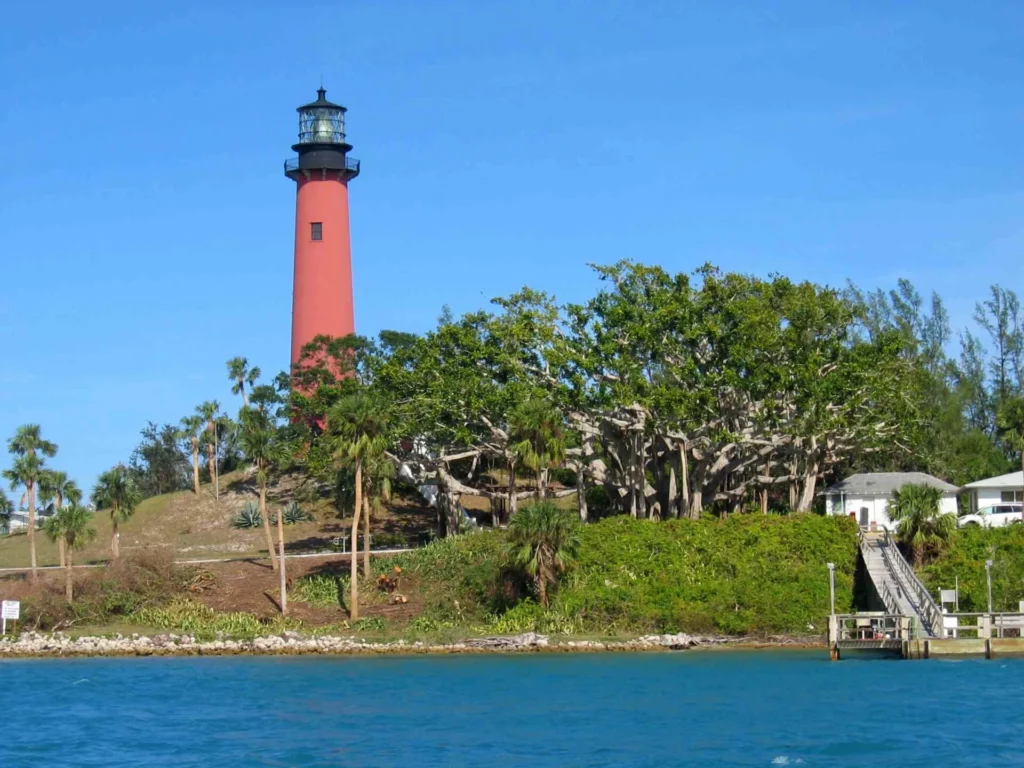
Jupiter’s lighthouse dominates the area. The 33m red-brick tower was first lit on 10 July, 1860, on a spot along the Loxahatchee river.
The American Civil War began as burning embers and ignited when Confederate forces fired on Fort Sumpter in Charleston harbour on 12 April, 1861.
While history was not foretold as the bricks were being laid for the lighthouse, it is worthy of note that it was Lt-Colonel Robert E Lee of the US Army Corps of Engineers who had surveyed the Florida coast in 1849 to choose lighthouse sites, including the one at Jupiter.
Lt George Meade of the Corps’ topographical engineers had designed and sited the lighthouse. These two army officers, both graduates of the US Military Academy at West Point, in 1863 became leaders of opposing forces during the momentous battle of Gettysburg: Lee a Confederate, Meade for the Union.
The battle changed the tide of the war while the lighthouse remained dark, disabled by its Confederate keeper Augustus Lang. Southern blockade runners would secretly enter the river from the sea carrying war supplies.
Today the Jupiter Lighthouse is a tourist attraction, with visits to its tower where a First Order Fresnel lens still aids navigation. It is also a landmark for dive-boats heading out of the Jupiter Inlet to Atlantic offshore sites.
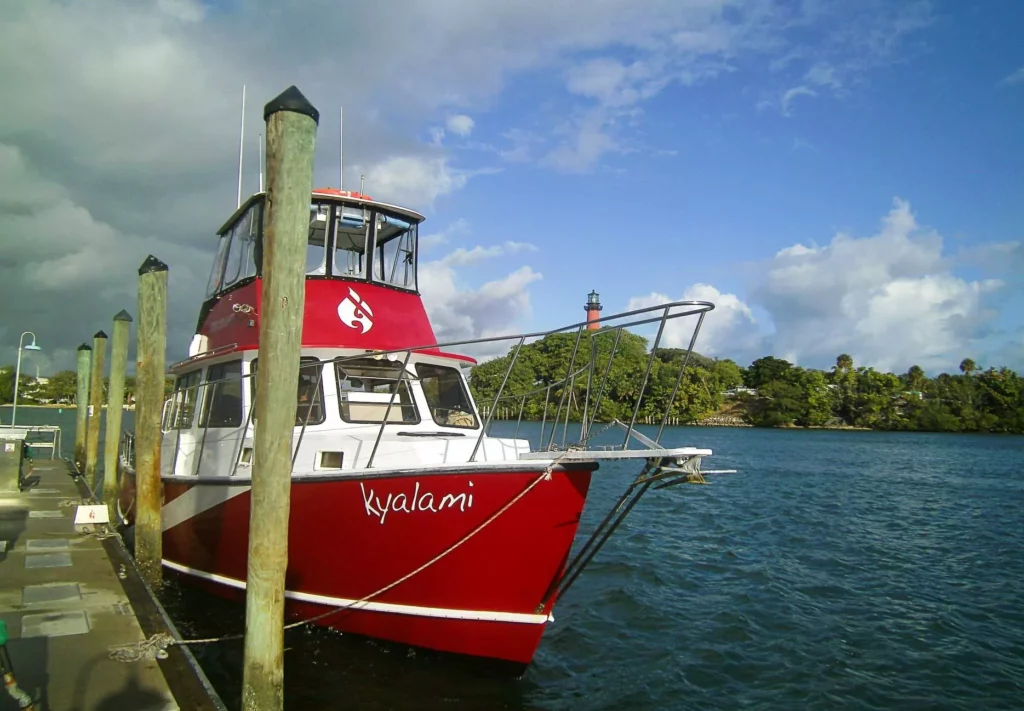
In keeping with the red tower Kyalami, a red-painted dive vessel, operates out of the Square Grouper Marina across from the lighthouse on the south side of the Loxahatchee river, with only a short run out to the Atlantic.
Located some 135km north of Miami, Jupiter is typical of Florida in that it has developed to keep pace with huge population growth.
Among the area’s hidden secrets are its offshore reefs. A Spanish shipwreck was discovered in shallow water just off the public bathing beach south of the inlet, and a 1975 book by historian Bessie Wilson DuBois called Shipwrecks In The Vicinity Of Jupiter Inlet offers insights into many wreckings off the coast.
Sawfish sighting
The divers were excited, because there had been a sighting of an endangered and elusive sawfish a 45-minute boat-ride north of the Jupiter Inlet.
Kyalami Captain Zack Zubeck couldn’t promise that sawfish would still be found off the rocky ledge at about 30m but the consensus was to give it a try. The dive-site, Loran Tower, lay off a beaconed tower on shore.
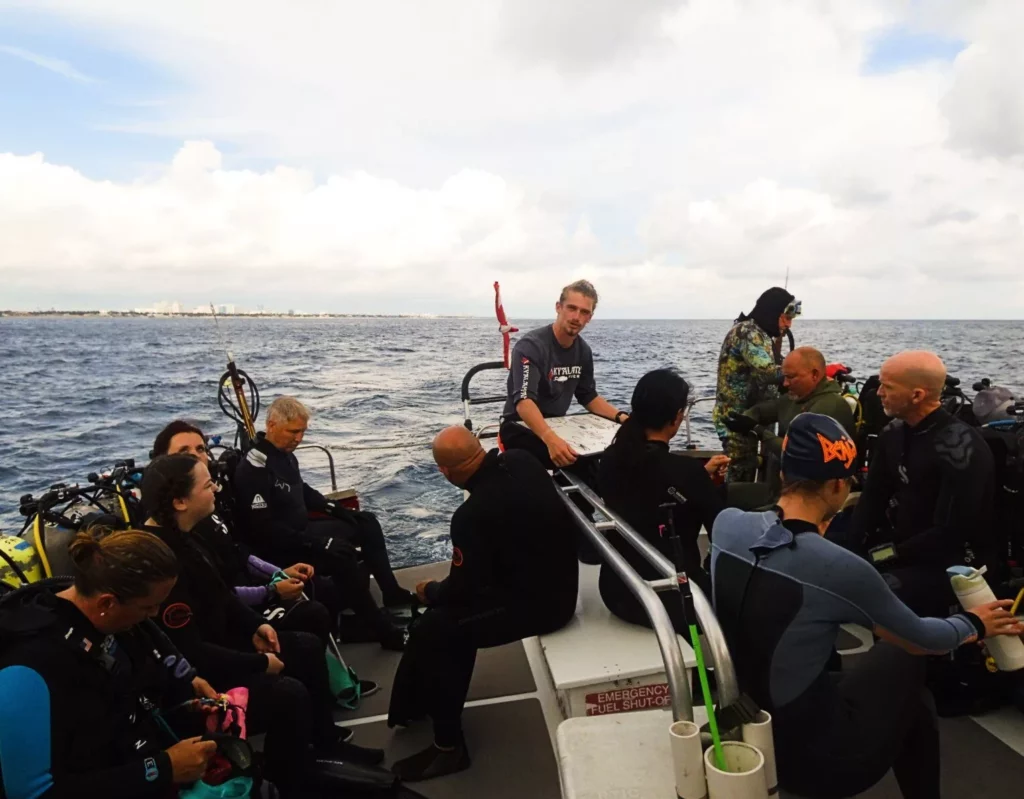
Once north of the Jupiter Inlet, Florida’s reefs change. Visibility is not always clear and the rocky ledges are often silted over. Captain Zack briefed the divers, advising them not to fin over these ledges because it would raise silt and limit the visibility.
The ocean temperature was 24°C this January and the sea was fairly calm, with no appreciable current below. Visibility was about 10m.
Because the air temperature was cold a front was moving through South Florida, and many native Floridians tend to shun diving until it is hot and sunny. So Kyalami, rated for 20 divers, was carrying only six stalwarts to look for sawfish.
We swam along a rocky ledge that rose some 3m off the sandy bottom. This was virgin territory for lobsters. Divers pulled big bugs out of their holes, testament to the adage that the further north you go, the bigger the lobsters.
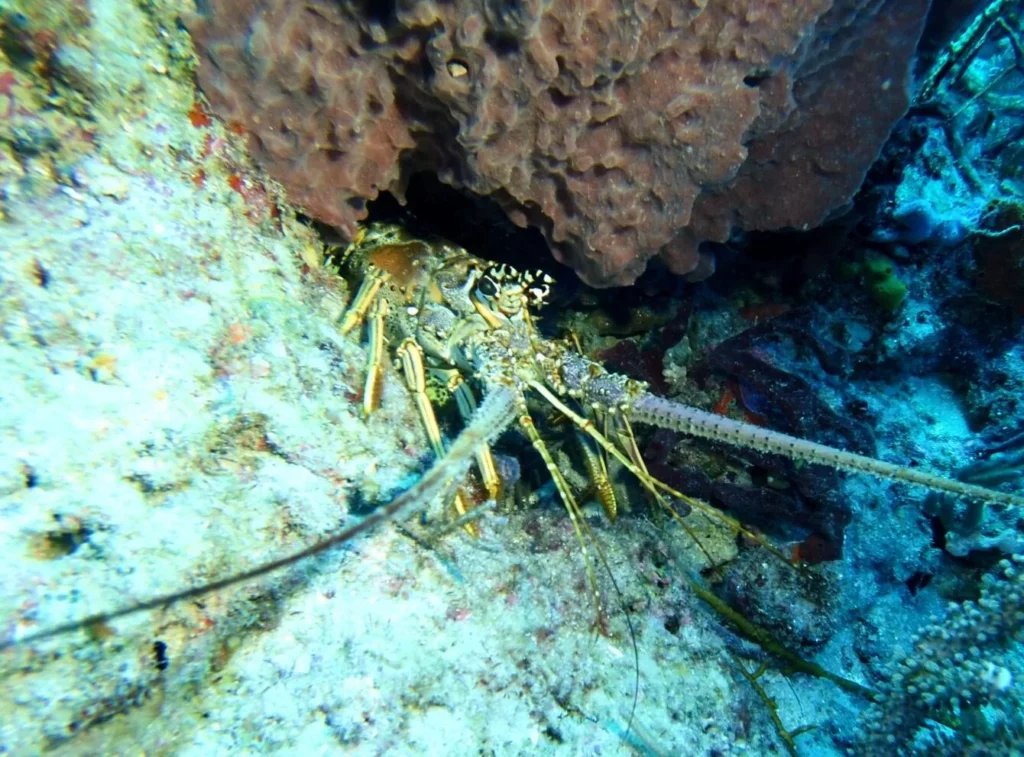
Swimming off the ledge out onto the sand to look for sawfish might have been part of the adventure, but unfortunately none was spotted on the dive. The bug-hunters were happy, however.
Lemon diversion
Zack asked the divers to choose: dive again at the Loran Tower site or head south to a spot where three ships had been sunk as artificial reefs. The inducement was that lemon sharks were in, and likely in large numbers around these wrecks.
South we went, to be dropped almost in front of the Jupiter Inlet, the lighthouse a dominant marker. Visibility here was better, although the current was swifter.
The Gulf Stream meanders along Florida’s coast, mainly northward in its flow, sometimes eddying as it strikes ocean water of differing temperatures, occasionally turning back south.
Captain Zack and Kyalami divemaster Spencer Edwards drew a map on a whiteboard showing the configuration of the wrecks. The first was Zion, where Spencer would tie off his flag-line attached to a surface buoy.
He had a metal tube with ball-bearings inside and told us that when he decided to move on to the next wreck, an open barge-like structure called Jenny, he would shake it. From Jenny we would head 15 kicks to the Bonaire.
In we went off the stern, down quickly to avoid getting pushed north off the site by the current. It was a perfect drop because that current carried us right onto Zion. As Captain Zack had said, the visibility was good, about 15m horizontal, and the sharks were swimming around.
A dive operation had been feeding the sharks there, far enough offshore to be outside Florida’s territorial waters, in which feeding marine life is prohibited.
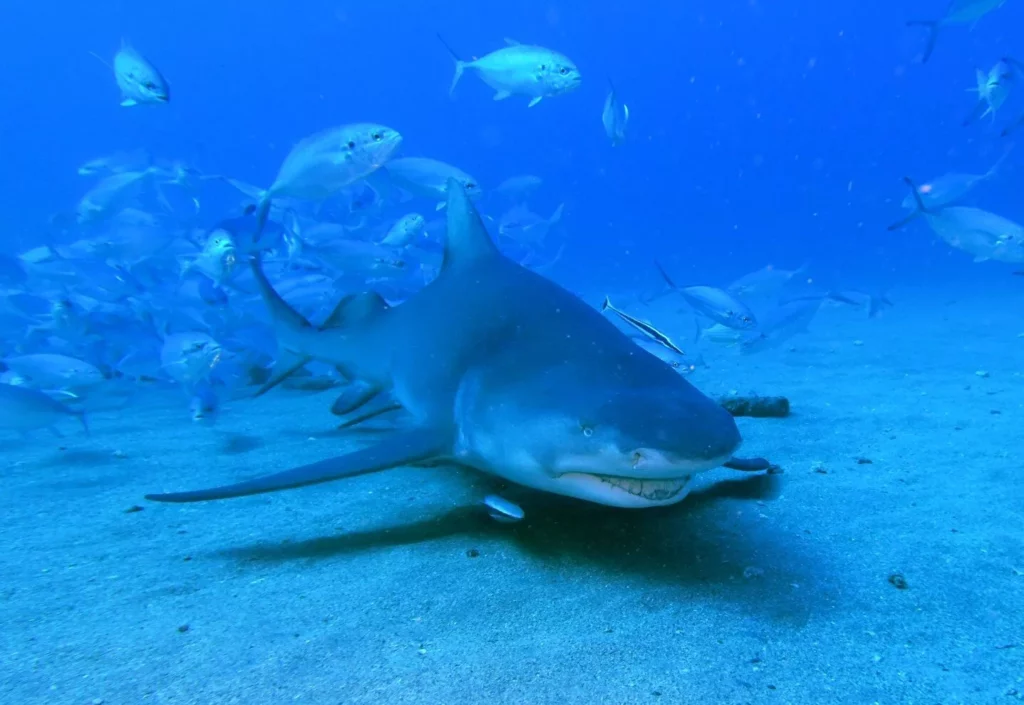
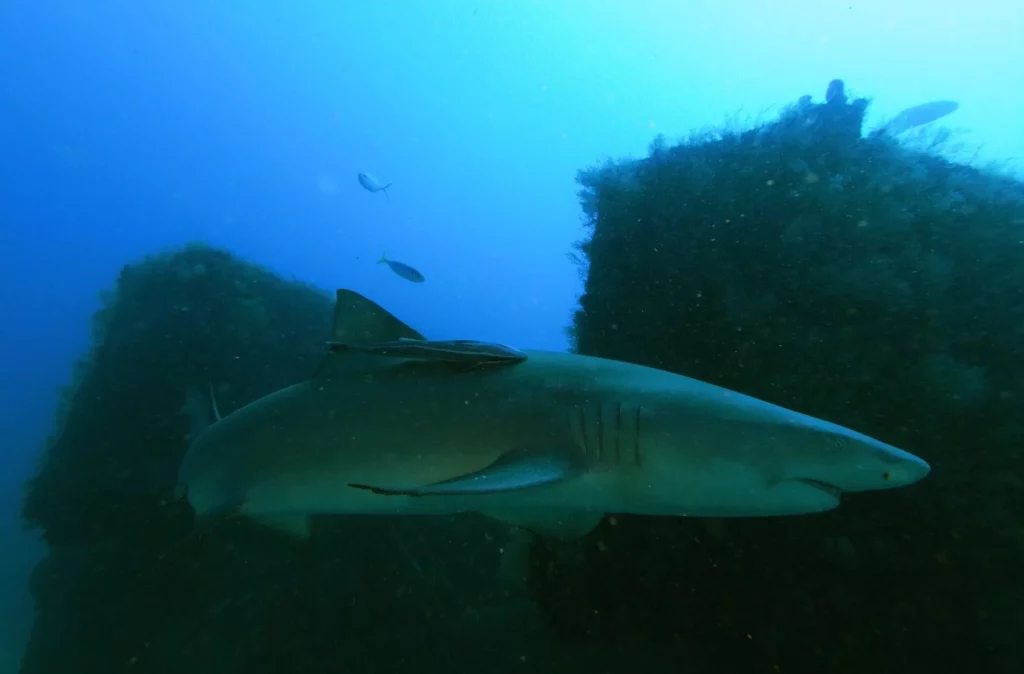
Pavlov had it right. Nurse and lemon sharks were used to divers giving them handouts, so were not wary. They swam close to provide exciting encounters.
Spencer signalled and we drifted on to Jenny to watch the lemon sharks for a bit before moving on to Bonaire. Some divers sat on the wreck’s stern to watch the action, their fins hanging over the side. Sharks cruised by to check them out.
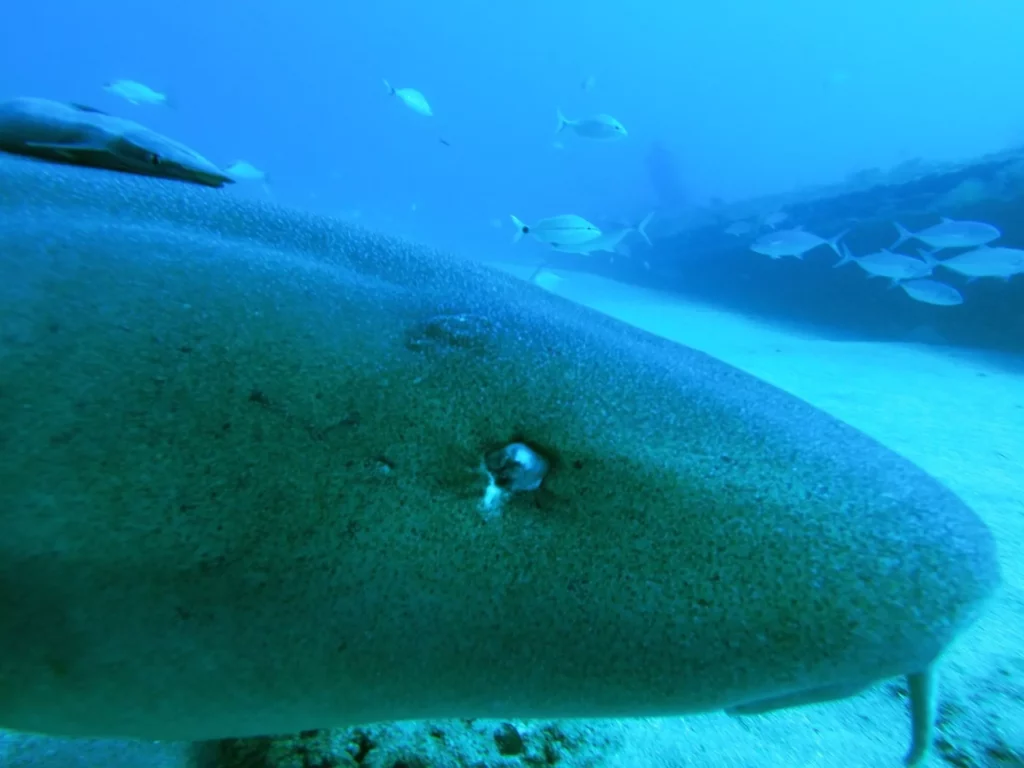
On the sand below at almost 30m a shark show unfolded. Bold nurse sharks pushed their snouts onto camera lenses for amazing close-ups before yielding to the lemon sharks that cruised past, bottom jaws exposing rows of teeth.
Lemon sharks are large, graceful and sleek in the water. They came close, head on, swerved away at the last moment, and swam along the bottom and up along the shipwreck.
Two of them, one nearly 4m and the other 3m, seemed perfectly at ease checking out the customers and pleasing the photographers among them.
Monkey Ledge
A favourite reef-site for Jupiter divers is Monkey Ledge in 24-27m. A 2-knot northward current scooted us along. Lots of lionfish presented themselves to hunters with pole spears.
This drew in a small nurse shark that behaved like a puppy. It swam directly under me, pushing me up as I took a picture of it swimming away and hung around looking for lionfish handouts.
When none were offered, because the white flesh of this invasive species is prized by divers with culinary skills, the shark grabbed a catch-bag from a hunter and swam off with it.
Another diver got hold of the catch-bag and played tug-of-war with the shark, finally wrestling the bag out of its mouth and returning it to the hunter. A small tear in the mesh was evidence of the struggle but the lionfish were intact and ready for that evening’s meal.
Sadly, even at this deeper reef-site there was evidence of coral tissue wasting disease, which has taken its toll on hard corals all over the world. The saving graces off Florida’s Atlantic coast are the Gulf Stream, reef depth and cooler water in summer.
Captain Zack chose Bonnie’s Reef for the second dive. Current was less, lionfish abounded and the reef was healthy, with little evidence of coral bleaching or disease. No algae pollution was evident. Divers picked up line that was lying over the reef to take to the surface for disposal.
The 18m reef is a relaxing dive known to dive-boat operators but not often dived.
Big Wheels
Big Wheels is a popular dive-site south of the inlet, a 27m dive with visibility usually of 15m or more, depending on the Gulf Stream. Some coral-bleaching is evident but the reef structure for hard and soft corals is excellent.
Hunters have been actively controlling the lionfish there, although many of these colourful predators are still seen on every dive. Turtles come in to cavort during a mating season that can begin during the winter months and last well into summer, when the females lay their eggs on local beaches.

Gary’s Reef nearby is another 27m dive. Lionfish abound, offering both hunters and underwater photographers opportunities.
Depending on the day there is usually a current to give divers a bit of a sleigh ride. Visibility is often greater than 15m, and Captain Zack said he had been able to see his divers on the reef below.
Jupiter’s Area 51 is an 18m reef-dive featuring small reef sharks unafraid of divers, possibly the result of divers pushing lionfish off their spears to feed them. Visibility is usually 15m here and there are frequent turtle sightings.
Area 51 is usually followed with a dive on Captain Kurl, another 18m reef dive and favourite for turtle sightings, with mature male and female loggerheads abounding during mating season. Hawksbills, now considered rare and, like all marine turtles, endangered, are frequent visitors.
Depending on a turtle’s past experiences with divers – and, yes, there are still those who violate the law and etiquette by touching turtles under water – most remain friendly and allow photographers to approach, often appearing to actually pose for pictures.
Reptiles can be friendly and inquisitive, and as long as divers look and don’t touch, interacting with them at Captain Kurl can be exciting.

Goliath at Scarface
Scarface is a 21m dive south of the inlet where friendly loggerheads can be found. Lobster-hunters like the site, despite its sometimes 2-knot current. Current depends on the Gulf Stream, which varies as the main stream meanders offshore and eddies come in close.
Ledges at Scarface make diving attractive to colourful reef fish and marine life. The Lighthouse site lies just out from the red tower.
A Goliath grouper hangs out on his reef and is not at all shy about posing for photographs. Nurse sharks are often seen resting in crevices in the reef.

Jupiter Ledges offers myriad reef life, with turtles accustomed to divers and sightings of greens and loggerheads a frequent reward for the patient.
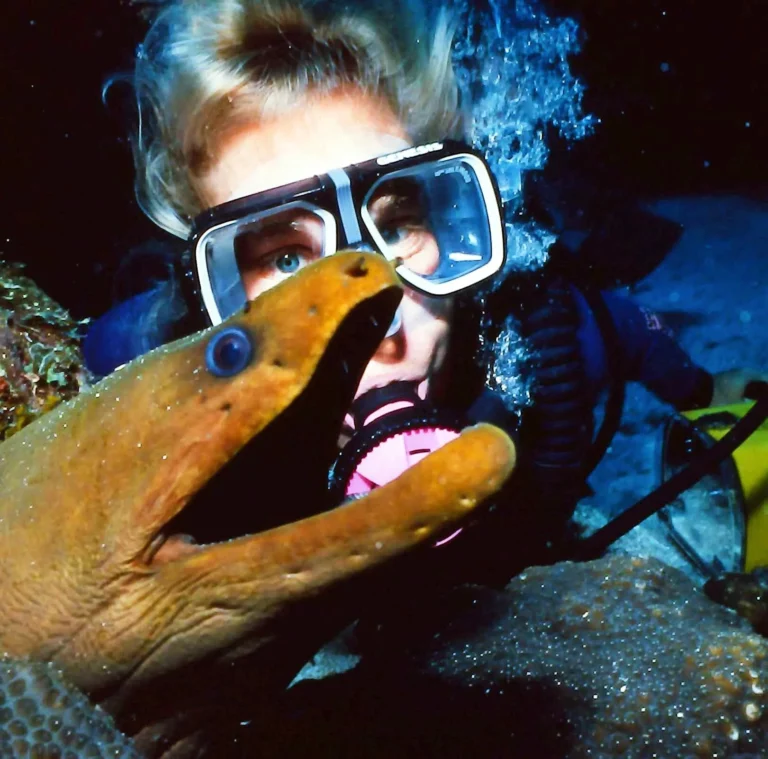
Again the inside reef structure is in about 18m, with a defined structure that gives moray eels and brightly coloured tropical fish ample niches. This is an understandably popular dive-site.
Jupiter diving is exciting. Reefs are deeper than those further south and chance encounters with large ocean-dwellers more frequent.

Shark-feeding dive-operators must go beyond Florida’s three-mile limit to be legal, which means that for other dive-operators some sites such as Bonaire are often frequented by sharks expecting to be fed.
Caution and prudence is always advised, and spearfishing in these areas is not considered safe.
Kyalami dives
Kyalami dives are always led by certified instructors or divemasters. Divers are not required to follow the in-water guide although, for those unfamiliar with the reefs, guided dives offer better chances to see all that a site offers.
More experienced divers can dive with their buddies, although Captain Zack insists that hunters dive separately from non-spearfishing divers.
Kyalami Scuba Club at Jupiter has a store on Northlake Boulevard that can provide rental gear and tanks. A safety surface marker is provided along with weights. It’s a concierge service from a diver’s car to the boat and back again after the dive-trip – pretty soft, for someone like me used to lugging my own gear and tanks.
A hot shower and snacks with soft drinks, ice-chests for diver’s convenience and a very clean marine toilet adds to this comfortable Jupiter onboard experience. For more information or to book dives, check out www.thescubaclub.com.
Thanks John very interesting. Nice photos. Exciting venture for you.