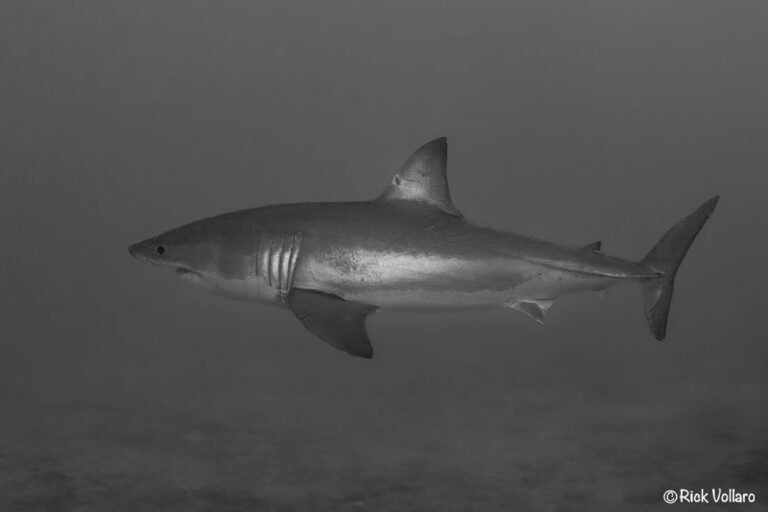
Story and Photos by Rick Vollaro
Living in Palm Beach, Florida, where the Gulf Stream brushes closer to the shore than anywhere else in North America, divers learn to expect the unexpected. Recently, that has meant encounters with the ocean’s most legendary apex predator: the Great White Shark. While these sightings are often dismissed as mere dockside legends, they become undeniable when a diver returns with the high-resolution proof to back them up.
Last December, local instructor and photographer Rick Vollaro did exactly that. Leading a group from the South Florida Underwater Photography Society (SFUPS) out of Jupiter, Rick set out on a day that promised the “usual suspects”—lemon, bull, and perhaps a stray tiger shark. Instead, he found the holy grail of the Atlantic.
Rick recounts the experience in his own words:
My obsession with sharks began as far back as I can remember, with the Great White sitting firmly at the top of my bucket list. While these majestic predators migrate through South Florida’s warmer winter waters, the mathematical probability of actually meeting one sub-surface is infinitesimally low. But the beauty of scuba diving lies in its unpredictability. Out in the blue, anything can happen on any given day.
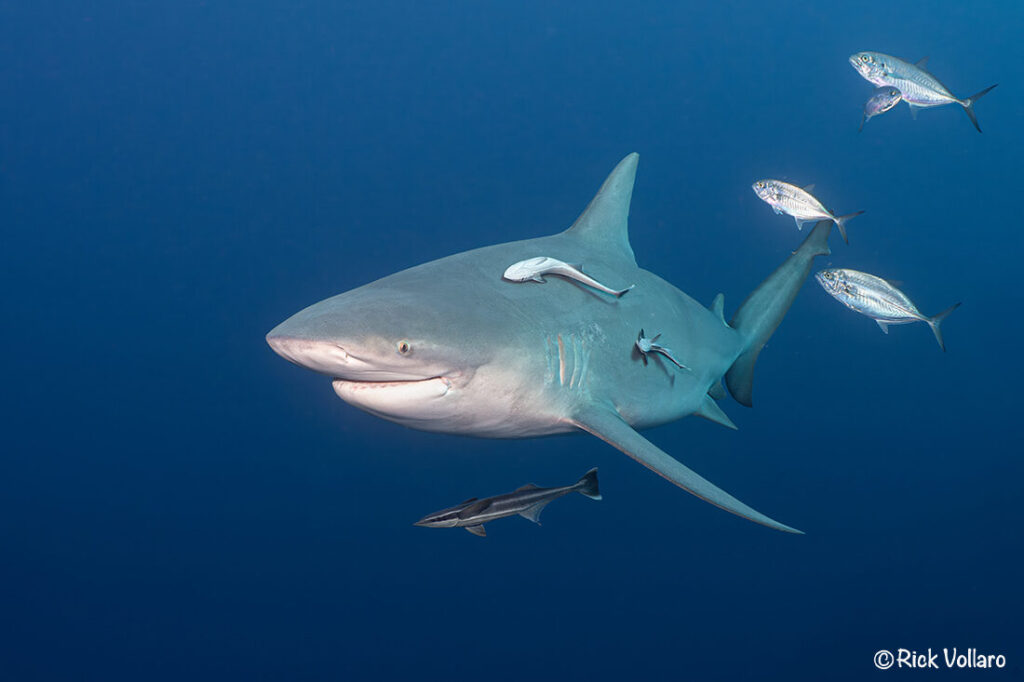
On December 6, 2025, I was guiding a photography trip in Jupiter, one of the “sharkiest” places on the planet. Our first dive focused on the deep ledges, where we spent eighty-foot-visibility minutes with methodical, curious bull sharks. It was a successful morning, but the real magic was waiting at our second location: the wreck of the Esso Bonaire III.
The Esso Bonaire is a 146-foot freighter resting in ninety feet of water. As we descended, a tiger shark cruised momentarily over the wreck before vanishing into the haze. We settled into the sand flats, surrounded by swirling baitfish, massive goliath groupers, and a steady parade of lemon sharks. It was a high-activity dive, perfect for wide-angle photography.
About thirty minutes in, our group prepared to begin a slow ascent, our toothy lemon shark companions trailing us in hopes of a final snack. Suddenly, a diver near the bottom signaled frantically toward the wreck.
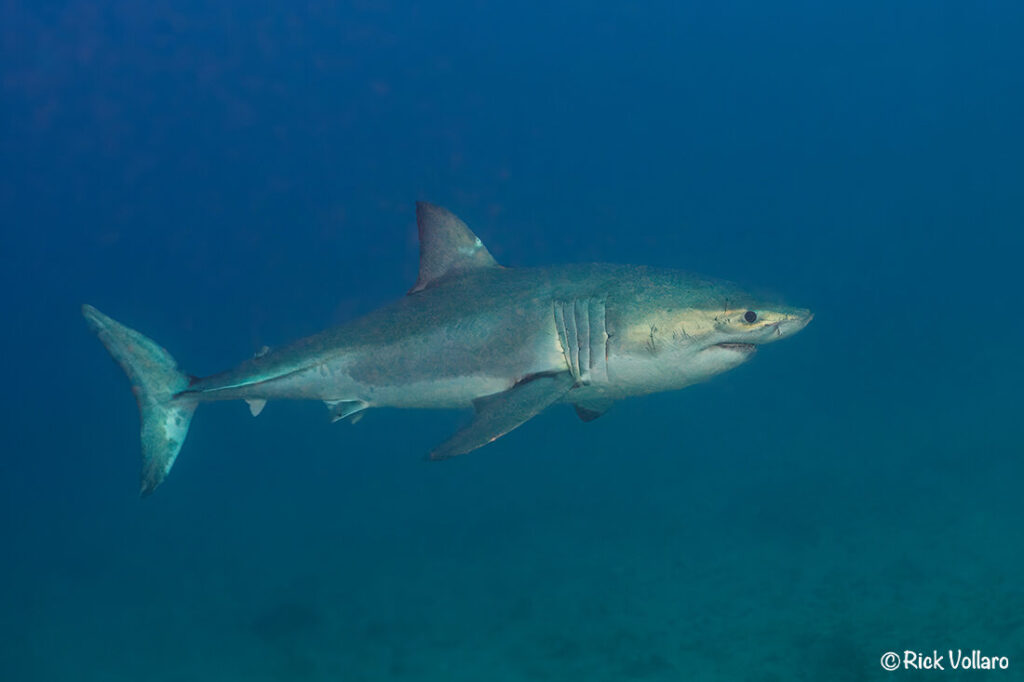
A shadow emerged from the distance. Even from afar, the silhouette was different—heavy and powerful. As it drew closer, the features became unmistakable: a robust, torpedo-shaped body, a large black eye, and a tail fin swept into a perfect crescent moon. It was a Great White.
She was a stunning juvenile female, approximately ten feet long. She swam with a grace that contradicted every “monster” narrative in popular media, circling our group with a sense of cautious curiosity. I felt no apprehension, only a profound sense of exhilaration. My brain was split in two: one half focused on the technical settings of my camera, while the other pleaded with me to simply be present and enjoy the fulfillment of a childhood dream.
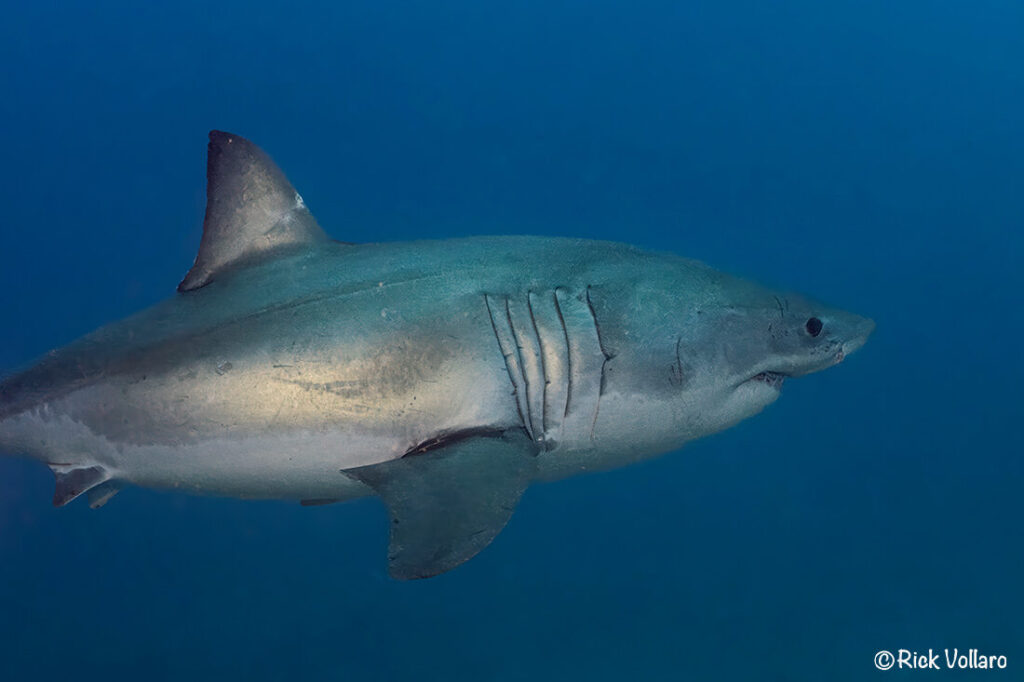
For fifteen minutes, she graced us with her presence, retreating into the blue only to circle back for another look. As our dive computers began ticking toward mandatory decompression limits, the shark made one final pass and disappeared into the Atlantic gloom. The group stood stunned for a moment before the silence was broken by the sound of muffled cheering and screaming through regulators.
We spent the rest of the day basking in the glow of that interaction. While we didn’t see her again on the third dive, it didn’t matter. That extraordinary moment was burned into our memories for a lifetime. For me, it was more than a checkmark on a bucket list; it was a surreal, almost spiritual connection with the sea. It serves as a reminder to keep chasing the improbable—because in the ocean, as in life, the most powerful dreams can manifest when you least expect them.
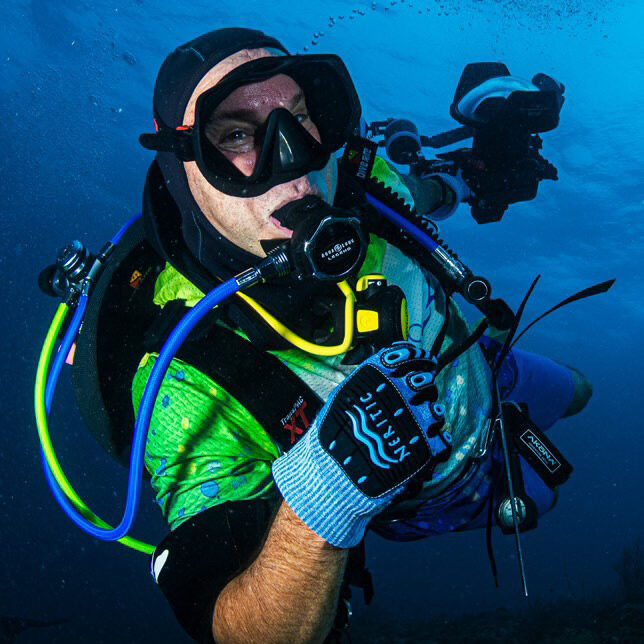
About the Author: Rick Vollaro is a PADI Instructor and underwater photographer based in Jupiter, Florida. A former money manager and CPA, Rick now spends his time guiding divers through the vibrant waters of Palm Beach. You can follow his work on Instagram @rickvollaro.
