
William Gladstone discusses ways in which divers can assist marine life that has been injured or become ensnared in fishing equipment
Photographs courtesy of William Gladstone
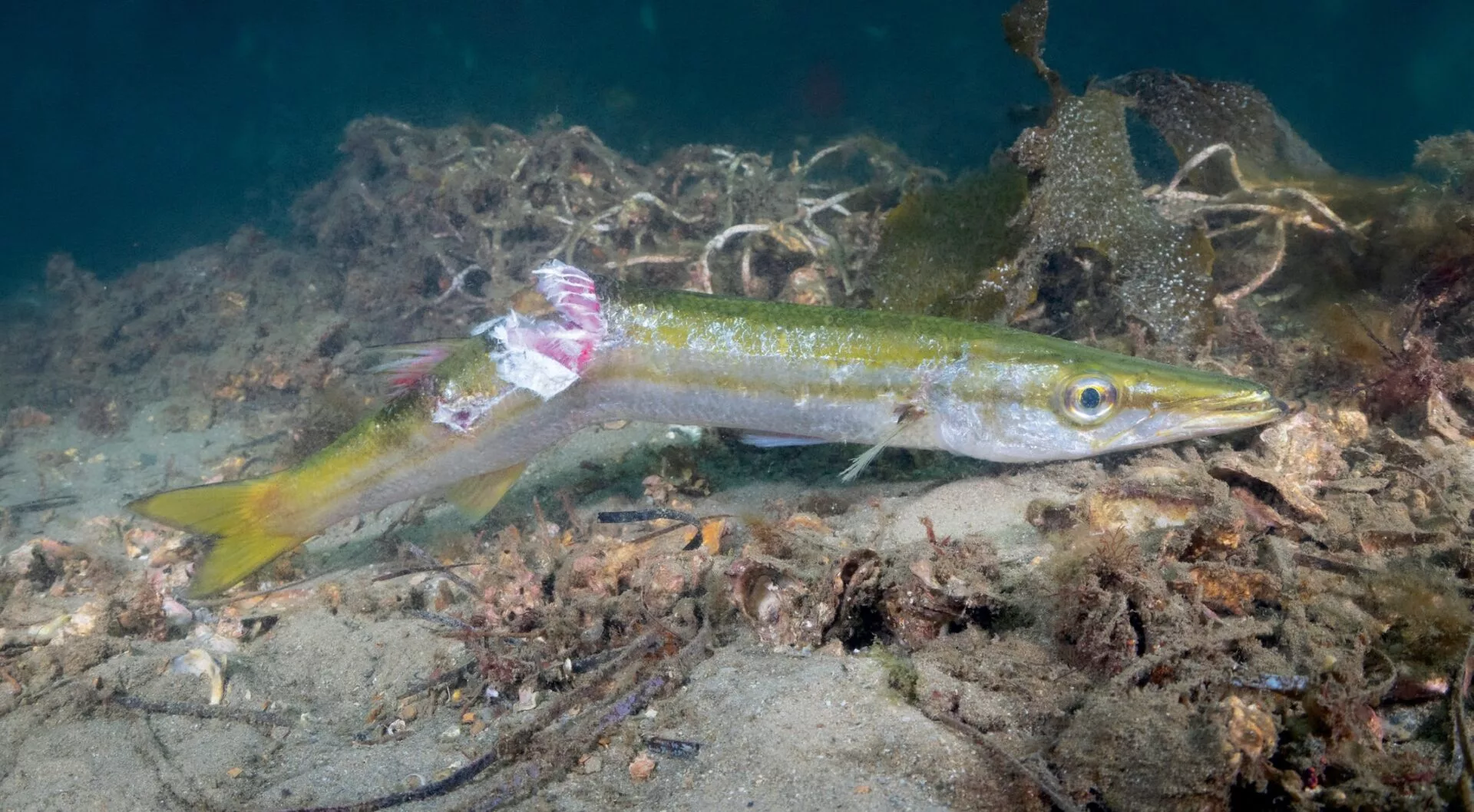
The long-finned pike was struggling helplessly on the bottom of Chowder Bay in Sydney, one of my regular dive sites. Its back was broken, almost severed by what looked like an unsuccessful attack by a predator. Its flesh was torn and its breathing was laboured. It looked like it was suffering.
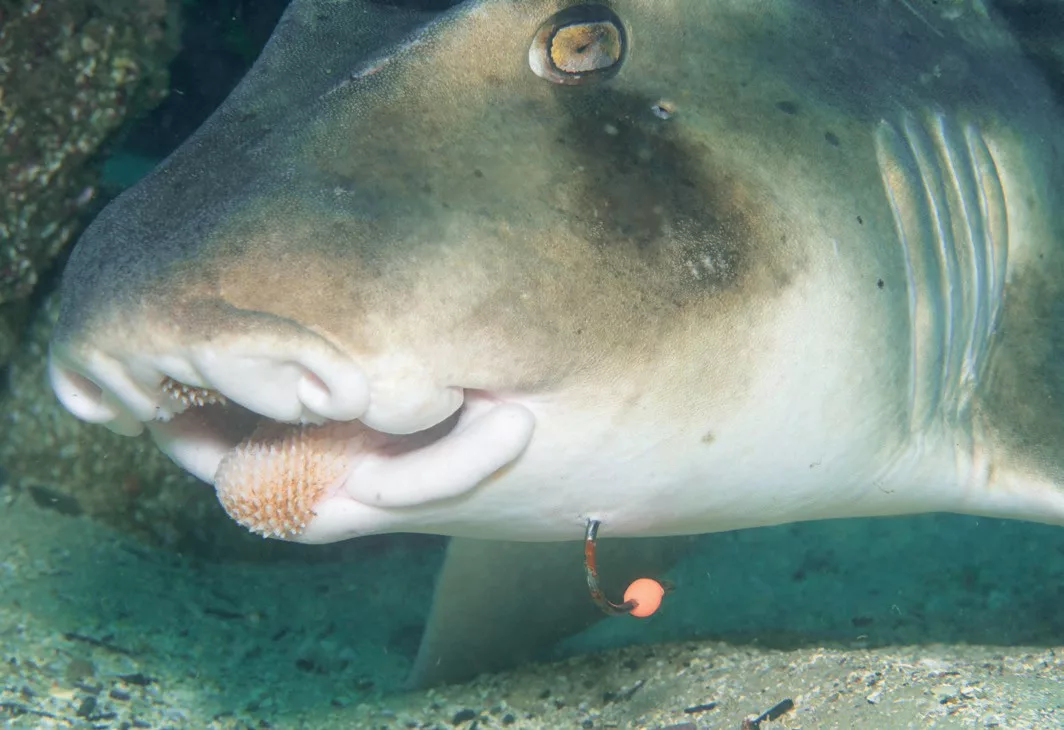
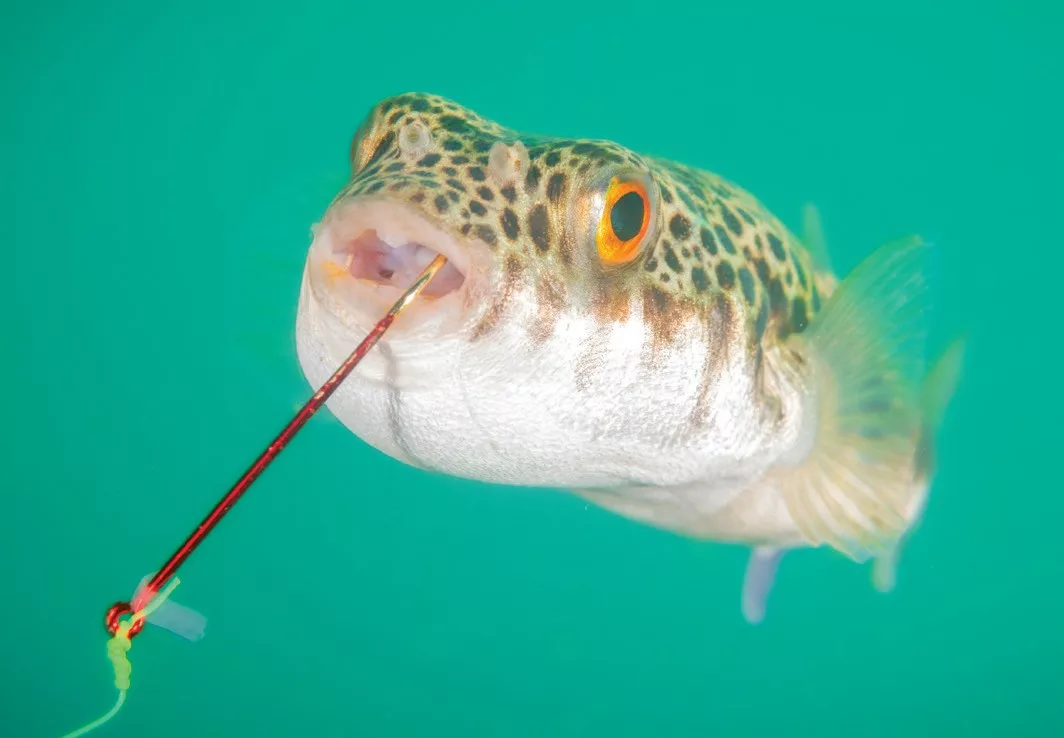
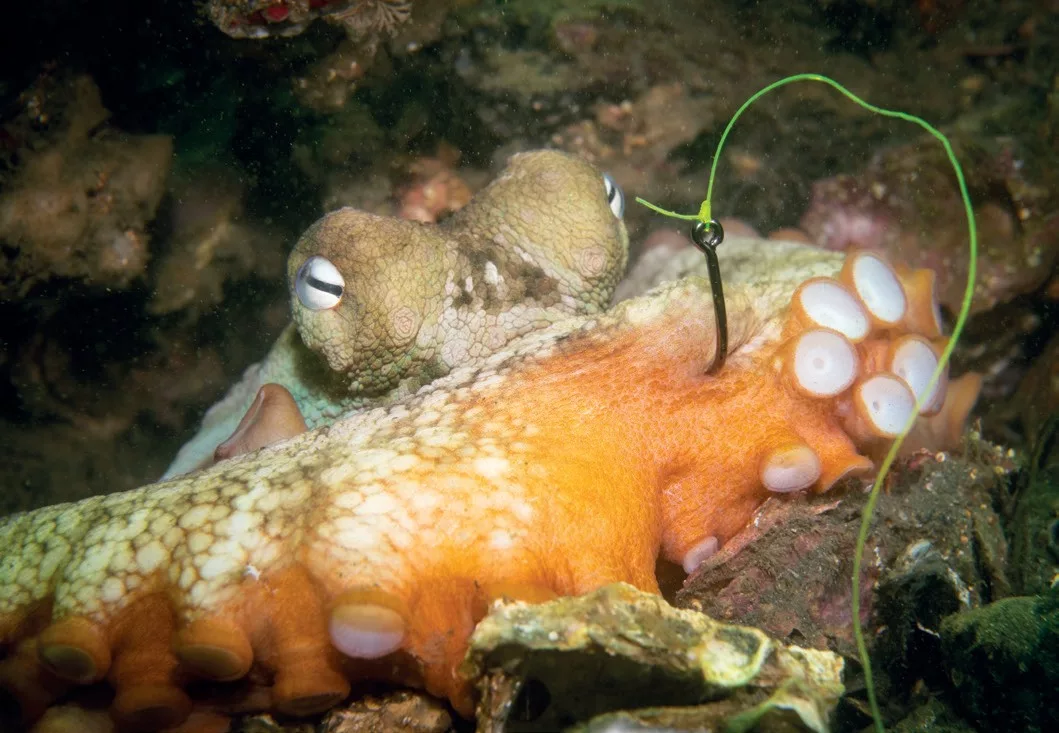
Chowder Bay is popular with fishers and I often see fish, rays and octopuses with hooks piercing their jaws or body, terrible wounds from fighting their capture, and fishing line trailing behind them.
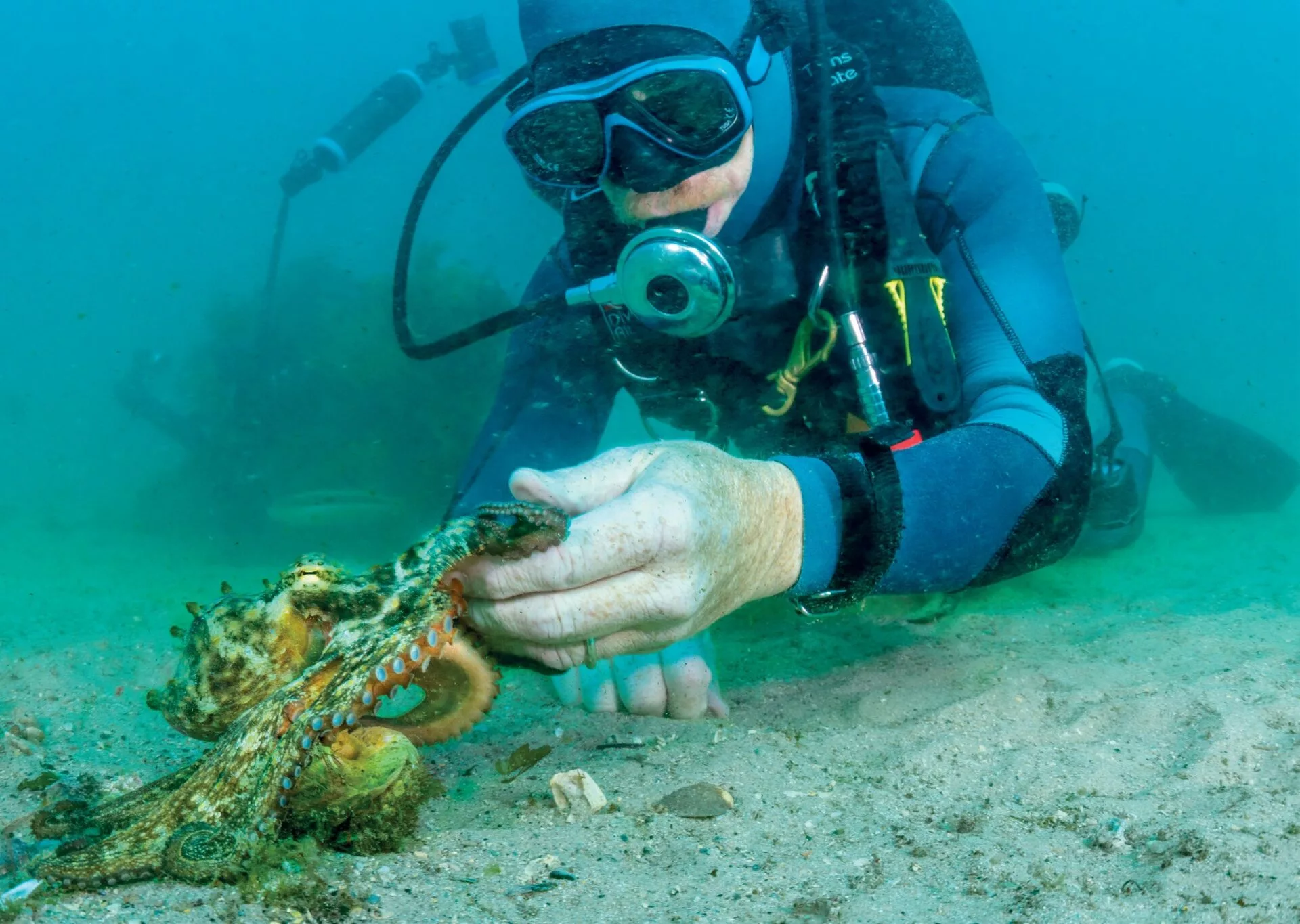
We scuba divers have the unique opportunity to see up-close the greatest wonders of the natural world: mass mating aggregations of giant Australian cuttlefish, gatherings of grey nurse sharks, and seahorses giving birth. Diving regularly in the same site we come to know the resident marine animals and they, in turn, lose their natural fear of us. We experience tender moments when an animal connects with us, such as an octopus reaching out to explore our hand. We become emotionally attached to them and feel sad when we see one of them with a severe injury or struggling with a fishhook embedded in its body.
When I saw the pike I wanted to ease its suffering, even though its injury was a natural occurrence. I grabbed it firmly and, with the trauma shears I always carry when diving at Chowder Bay to cut myself free from fishing line, I quickly euthanised it. But was the pike actually ‘suffering’? It’s tempting to believe that fish are simple, living machines that respond to an injury with a simple reflex and are incapable of feeling pain in the same way we and other vertebrates do. Believing this makes it easier for us to accept the many ways we treat fish for our sport, food, and entertainment. But science is telling us a vastly different story. The evidence from years of research shows that fish experience suffering, meaning they feel stress, fear and pain. Professor Culum Brown, from Macquarie University in Sydney who is a highly respected fish cognition researcher, has written that ‘fish experience pain in a manner similar to the rest of the vertebrates’.
These injuries we see, whether a result of fishing or the outcome of a predator’s unsuccessful attack, cause suffering to fishes, as well as to stingrays and octopus. Many divers are driven to help when they find an animal in these situations. If, like me, you feel the need to help, how can we help?
Jules Casey’s Experience
Jules Casey is a Melbourne-based diver and underwater photographer who is known around the world for her social media posts as @onebreathdiver. Jules has rescued countless fish, sharks, and rays from hooks and lines and documented them in her social media posts. Sadly, she has also witnessed people’s deliberate cruelty to marine animals where the only feasible help was to quickly euthanise the animal.
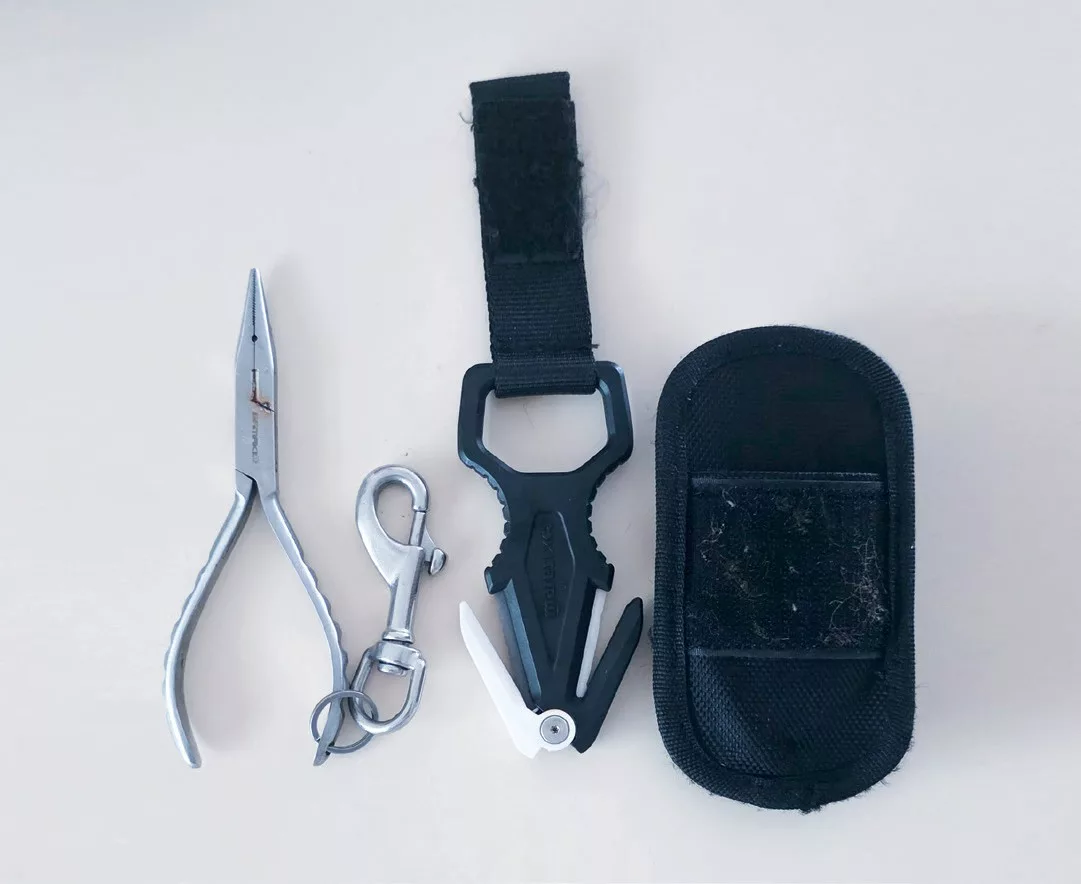
Jules told me that her ‘most memorable encounter was when I was photographing baby seahorses at Blairgowrie. I thought my buddy nudged me in the back to gain my attention. I turned around to find a huge Melbourne skate with a large hook embedded in its face on the surface. I tried for about 15 minutes to remove the hook as the skate circled around and kept coming up to me. My buddy tried to help but he couldn’t remove the hook either. The next day I purchased pliers and a line cutter so that I was never in a situation where I couldn’t assist’.
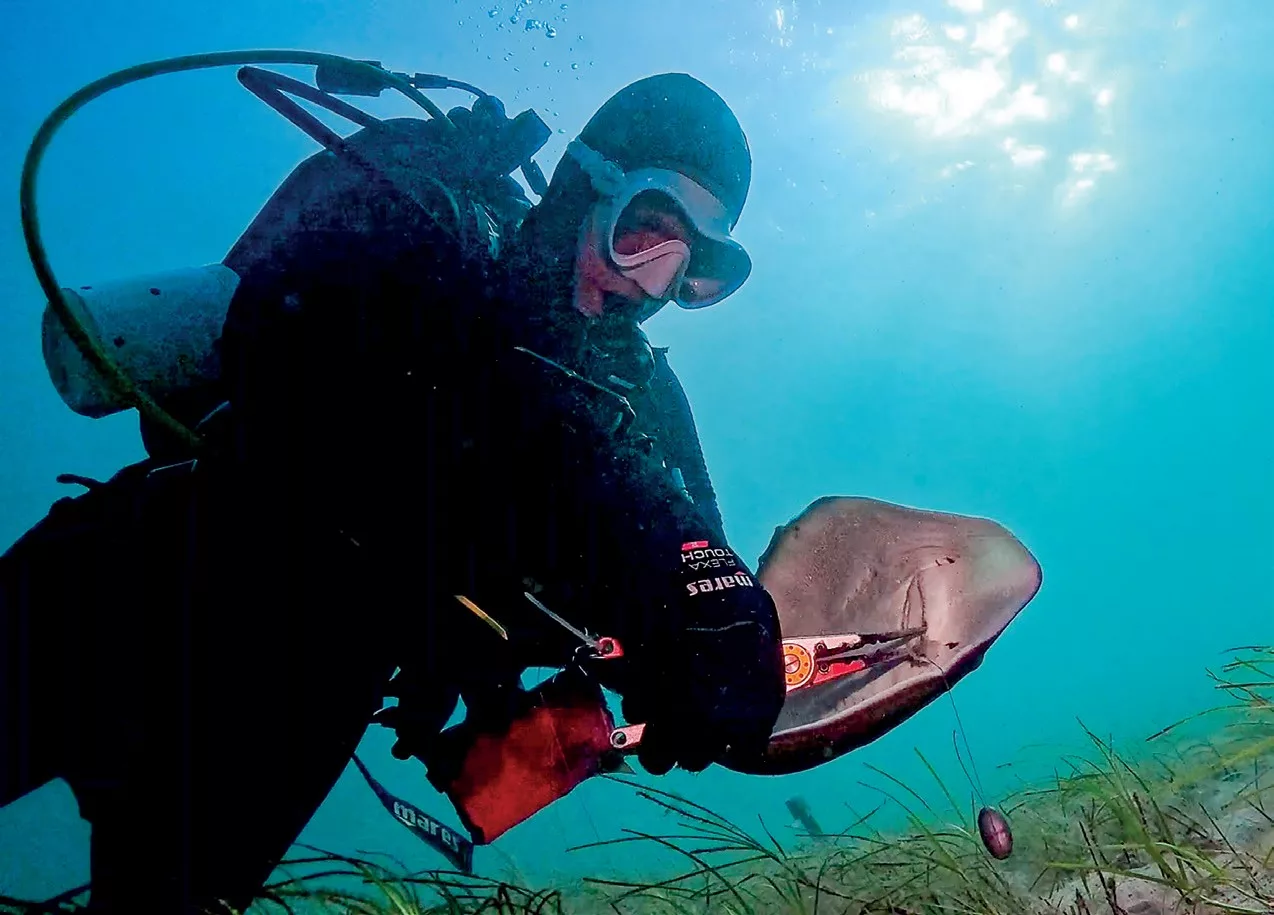
Jules advice for divers wanting to help is to ‘always carry marine grade stainless steel pliers and a line cutter and learn how best to remove a hook from a fish, ray or shark. Learning how best to handle marine life without stressing them further is helpful. Often it’s best to have your dive buddy hold it while you remove the hook or cut it free from fishing gear’.
When It’s Not Possible to Help
Sometimes it’s not possible to help. I have used my trauma shears many times to cut the fishing line but couldn’t remove the hook. I hope that what I was able to do at least prevented the animal from getting tangled and tied up in kelp. For some animals, such as rays with venomous barbs, it can be too risky to our own safety to help them.
“Jules advice for divers wanting to help is to ‘always carry marine grade stainless steel pliers and a line cutter and learn how best to remove a hook from a fish, ray or shark “
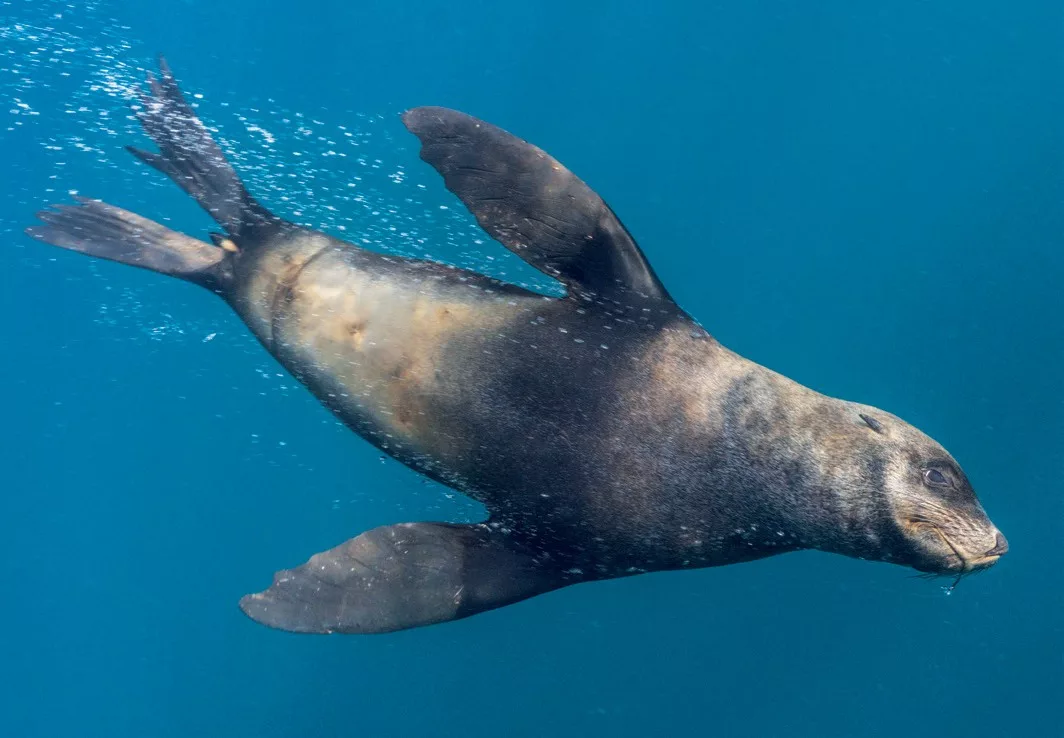
Removing a fishhook and line, or quickly euthanising a suffering fish, undoubtedly reduces their suffering. I’ve focused on the impacts of fishing because it’s something we often see while diving and can personally do something about. For other larger animals, such as seals, turtles, sea birds and larger sharks, contact experienced agencies and volunteer organizations like ORRCA, Marine Wildlife Rescue, zoos, state fisheries, and Sea World.
FAQ
Why do divers feel the need to assist marine life?
Divers often develop emotional connections with marine creatures and feel a need to alleviate their suffering when they see them injured.
What tools should divers carry to help injured marine animals?
It is recommended that divers carry marine grade stainless steel pliers and a line cutter to assist marine animals entangled in fishing equipment.
What should be done if a diver encounters a larger injured animal?
For larger animals such as seals and turtles, it is best to contact experienced agencies and organizations like ORRCA or Marine Wildlife Rescue for assistance.
Gallery
This article was originally published in Scuba Diver Magazine
Subscribe today with promo code DIVE1 — enjoy 12 months for just £1!
