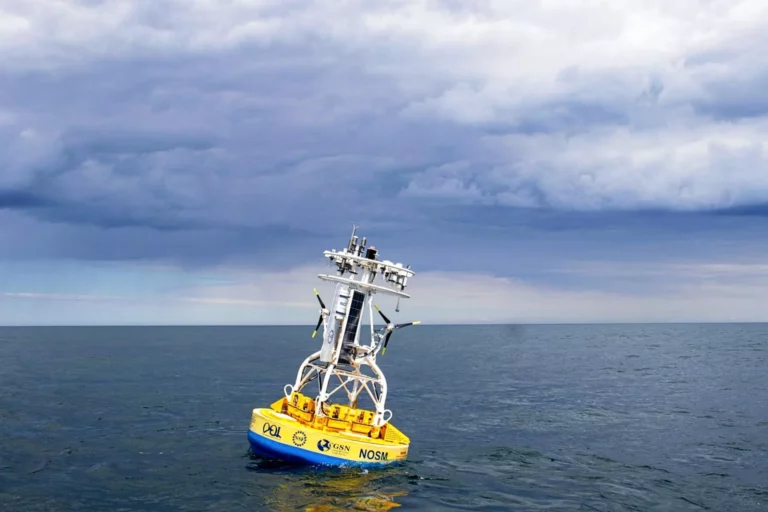
In the face of mounting opposition, the USA’s Trump administration has performed a rapid U-turn on recently announced plans to dismantle the Ocean Observatories Initiative (OOI), one of the world’s biggest ocean-monitoring systems.
Plans to scrap the system had been introduced in late May, as reported on Divernet, a move that environmental group Ocean Conservancy had described as “absolutely myopic”.
Pushback came swiftly, not only from environmental groups and Democrats but from Republican senators in coastal and fishing states – a development likely to have made it more difficult politically to proceed with the plan.
Established by the USA’s National Science Foundation (NSF), the OOI is generally regarded as the biggest and most comprehensive civilian ocean observatory ever built in the USA.
The system helps to monitor fisheries and protect against earthquakes, storms and coastal flooding. The move to dismantle it had been announced on the verge of what is expected to be one of the worst El Niño cycles in a century.
The NSF had said that it intended to ‘descope’ the OOI by removing over the next 15 months most of its ocean-based infrastructure, which had been installed at a cost of hundreds of millions of dollars.
This would have taken hundreds of instruments out of service at sites off Alaska, Washington, Oregon, North Carolina, Greenland and elsewhere.
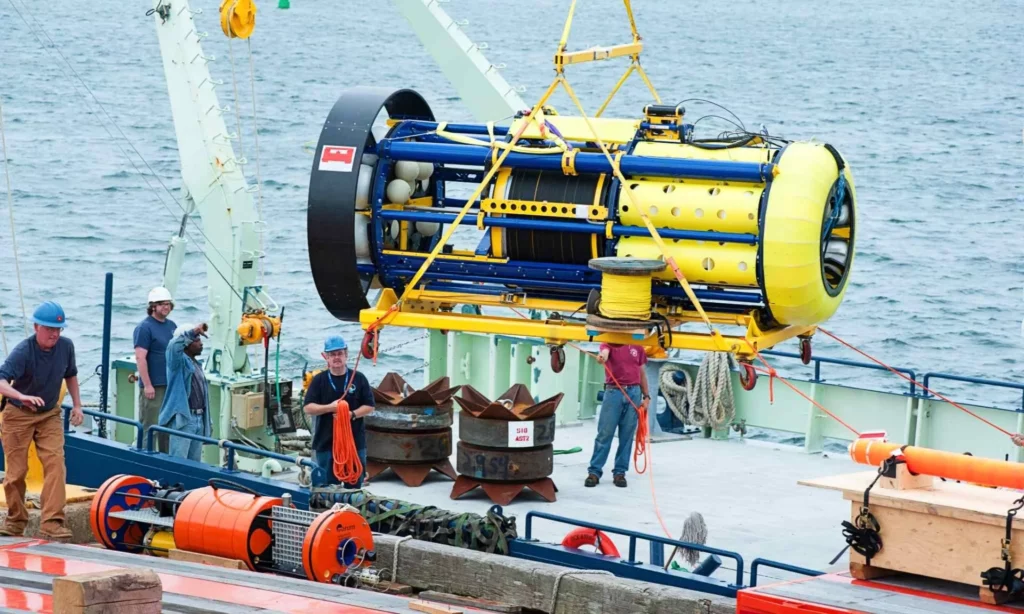
The OOI comprises more than 900 instruments collecting continuous data on ocean circulation and currents, marine ecosystems and biodiversity, climate variability and ocean heat content, coastal flooding risks, extreme weather and El Niño-related conditions, as well as seismic and volcanic activity in some regions.
Much of the data is made freely available to researchers, governments, fisheries and coastal communities.
Expert panel
Scientists had described the decision to scrap the system as reckless, short-sighted and damaging to long-term research, while oceanographers warned that it would destroy unique long-term datasets that could not simply be recreated later.
Environmental and ocean-conservation groups publicly campaigned against the move, while members of Congress from both the Democrat and Republican parties questioned the legality and rationale of the decision. Some lawmakers accused the NSF of bypassing normal review processes and wasting taxpayer money by removing equipment only to potentially restore it later.
On 18 June, the NSF announced that it would “not proceed with further removal or descoping of equipment from the remaining arrays and will continue operations, including planned maintenance”.
The agency said that it “appreciates the concerns raised by the range of stakeholders” and that it would convene an expert panel to determine the OOI’s future. Equipment already removed from one array was expected to be redeployed after servicing.
The reversal falls short of providing a guarantee of the OOI‘s long-term future, because the NSF says that it will seek a “sustainable path” forward by means of a review. The US president has made no public comments about either the original OOI dismantling decision or its reversal.
Also on Divernet: Trump draws flak with deep-sea ‘pirate mining’ order