Alex Mustard discusses why underwater photographers should sometimes leave their scuba kit behind and break out the humble snorkel
Photographs by Alex Mustard
Acouple of issues ago we looked at a lesson that photographers could learn from tech divers. This month we’re after inspiration from the other end of the underwater exploration spectrum, the humble snorkel. As scuba-diving photographers, it is easy to slip into the misconception that scuba is always the superior choice for photography. And if we have a full day of diving planned, then that is surely the route to the best images.
This month I hope to dispel that way of thinking. It is the start of April, and I’ve already logged my 100th dive of the year, but there have also been times I’ve skipped dives to snorkel. To convince you I’m going to talk through some of my 2026 images where I’ve taken the tube, instead.
There are many well-known snorkel trips for photography, such as chasing baitballs, or hoping for encounters with cetaceans, manatees, whale sharks, seals and rays. The aim of this column to remind you to reach for the snorkel, when it is not the headline activity of the trip. A snorkel can get you into environments and photographic opportunities that you simply wouldn’t be able to dive. The shallows can often be packed with life, have the best light and give the opportunity to work surface texture, reflections and split-level images into our portfolio. Of course, all dives start and finish at the surface, but that simple J-shaped plastic tube keeps our attention there.
Gear-wise, snorkel photography is usually biased to wide angle. You can shoot macro and fish portraits when snorkelling, but the compromises of either having to hold your breath or being constantly wobbled by the surface, are limitations.
I’ve taken plenty of macro shots while snorkelling, but at best they are often indistinguishable from scuba shots. If you are looking for new images, then wide angle brings few drawbacks and visually makes more use of the opportunities of the shallows. I usually favour a fisheye, but any wide angle will do. Most of the time, there isn’t much need for flash, but that depends on the situation.
Snorkeling in Grand Cayman
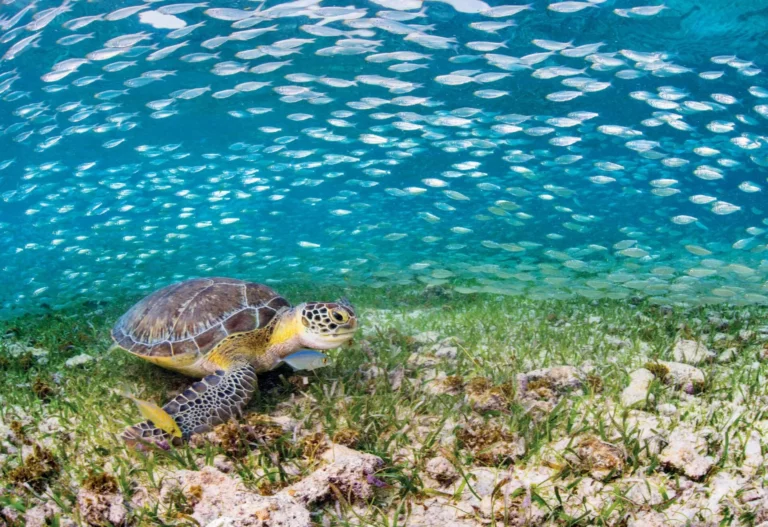
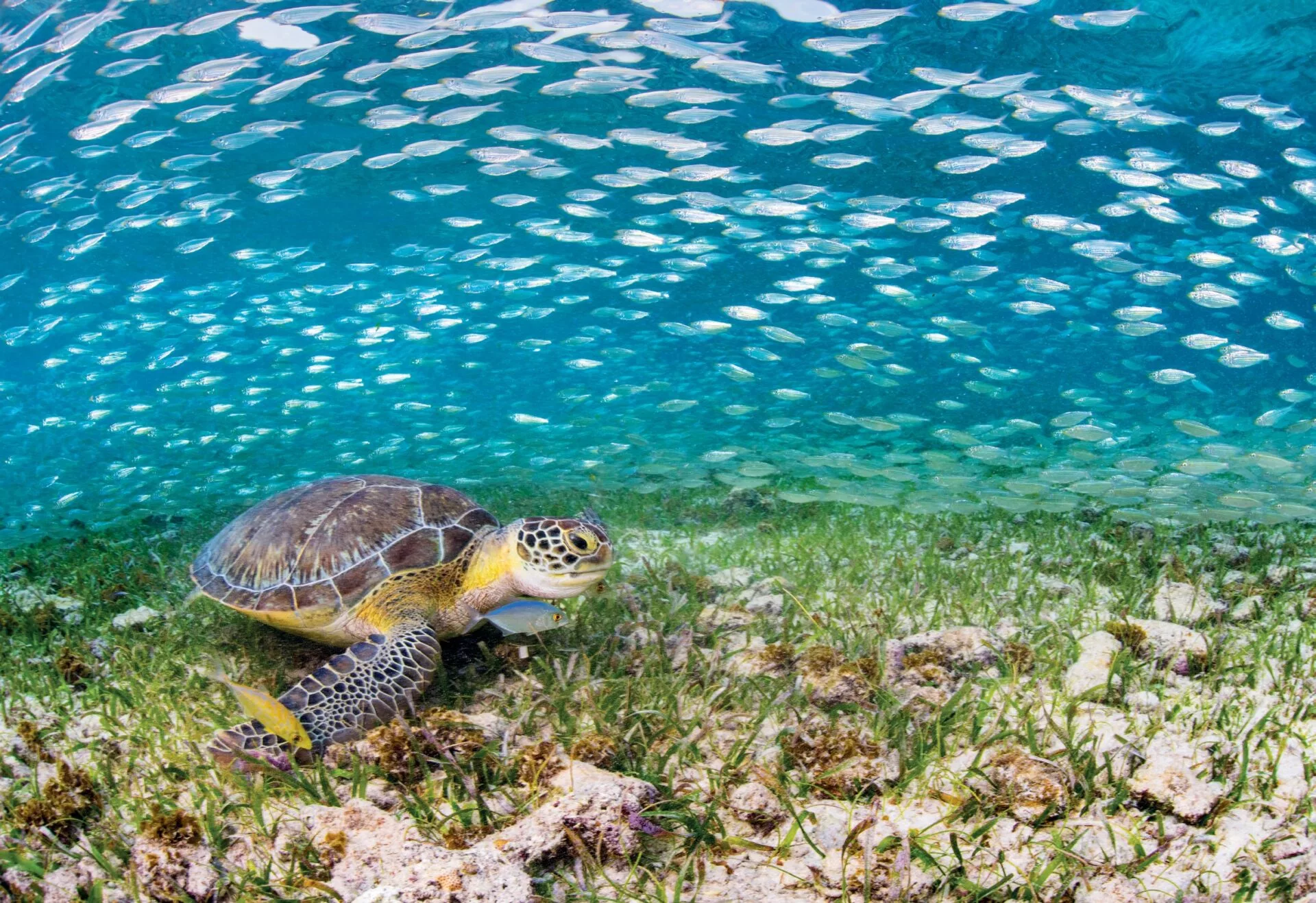
My first trip of the year took me to Grand Cayman, a destination famous for clear waters, spectacular vertical reef walls and shallow reef sites cut with caverns and canyons. Lesser known to outsiders is a small bay on the south coast called Spotts, where in chest deep water there is a lush seagrass meadow, home to friendly green turtles, stingrays, octopus and huge school of silvery scads. You can snorkel there all day, but I particularly like the mornings and evenings, when the low angle of the sun adds beautiful light rays to the picture.
This is one of those situations where there is a benefit in using flash. Normally, the shiny flanks of the scads act as perfect camouflage in shallows, so a tickle of flash helps to pop them from the background, especially when shooting against the attractive sunbeams. The turtles don’t really need strobes in these depths, but since I have them on the camera, I use them on low power for fill. Patience is the most-powerful ally. Green turtles don’t mind you being close or photographing them, but they don’t like you approaching them! The trick is to get into range without looking like you are trying. Never swim directly towards a turtle, instead swim parallel, slowly closing the gap, without looking at them too much. Once you are up close, they will stay totally relaxed and let you shoot for as long as you want.
Exploring Raja Ampat
My other trip took me to the amazing Indonesian archipelago of Raja Ampat. Raja has more underwater delights that any other place I know, and the diversity of adventures makes it a must for the snorkel. The world’s most-famous jellyfish lake is in Palau, where an enclosed lake of seawater is home to stingless golden jellies. Raja Ampat is made of similar porous limestone islands and has a number of smaller jellyfish lakes. None are on the scale of Palau, but they remain interesting for photography. I don’t recommend taking strobes because most jellyfish lakes are murky, the jellies stay right at the surface and they involve a hike to reach, so the lighter the camera the better! There are a few different images to chase here. First is a dense jellyfish bloom, simply find the area with the most jellies and try and get a frame filler. Time your shots so that you end up with a key jelly as a focal point to give structure to the pattern. The second image is the split level. Jellyfish lakes are usually surrounded by trees and the juxtaposition of jellies and forest create compelling pictures. You can also include the trees through a slice of Snell’s window in a fully underwater shot.
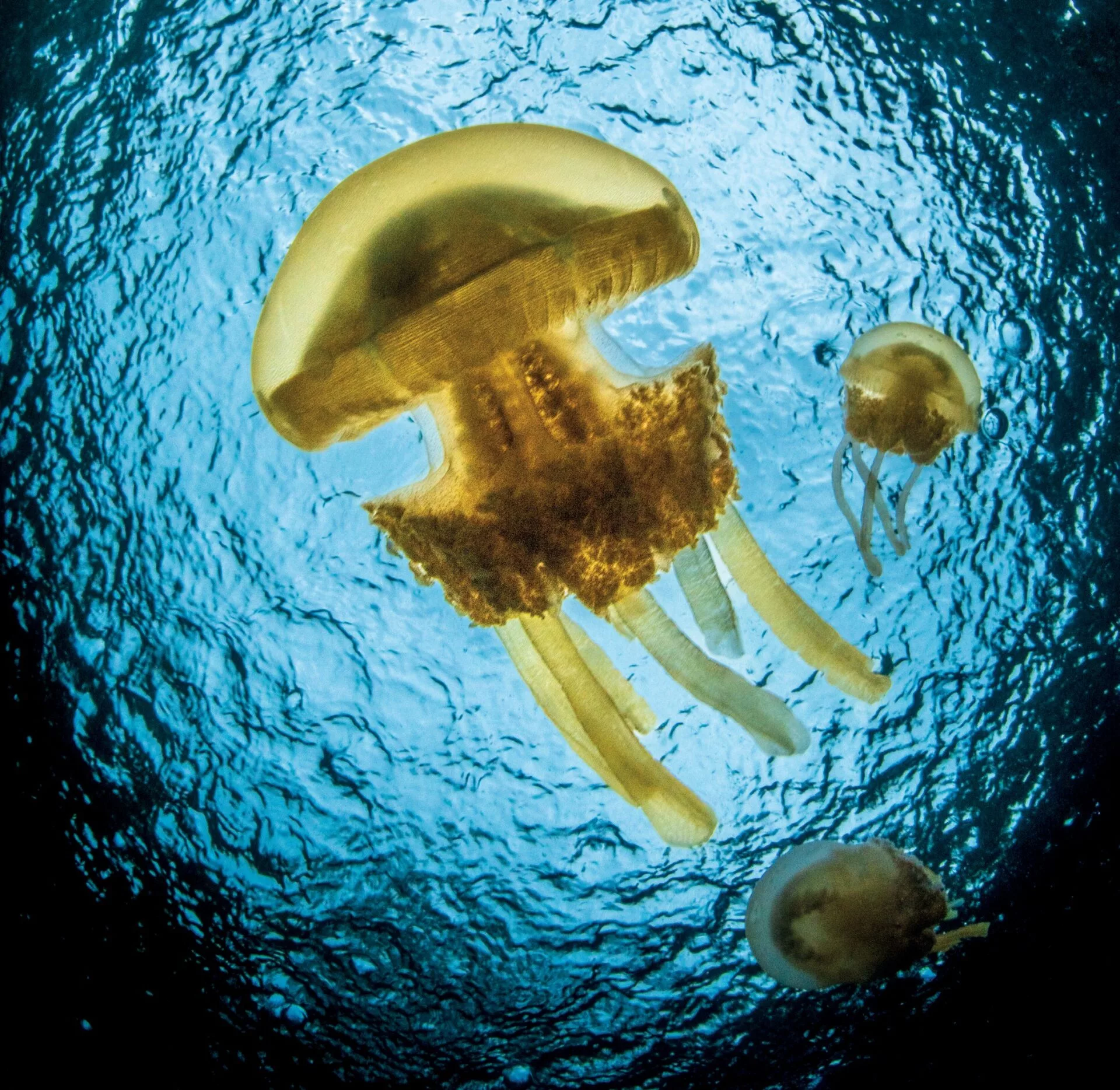
The final option is a classic – the jellyfish lightbulb shot. This is an upward composition, framing the jelly in the circle of Snell’s window, with the sun behind it. Obscuring the sun with the jelly acts to both make the jelly glow like a bulb, but also makes the rest of the exposure easier to balance. We often take this shot blind, by positioning the camera beneath the jelly. With a fisheye it is easy to get your own head in the photo, so hold the camera out at arm’s length. This time, our trip to the jellyfish lake coincided with a tropical downpour. Rather than lament the lack of sun, I embraced it and tried to capture the raindrops in all my images.
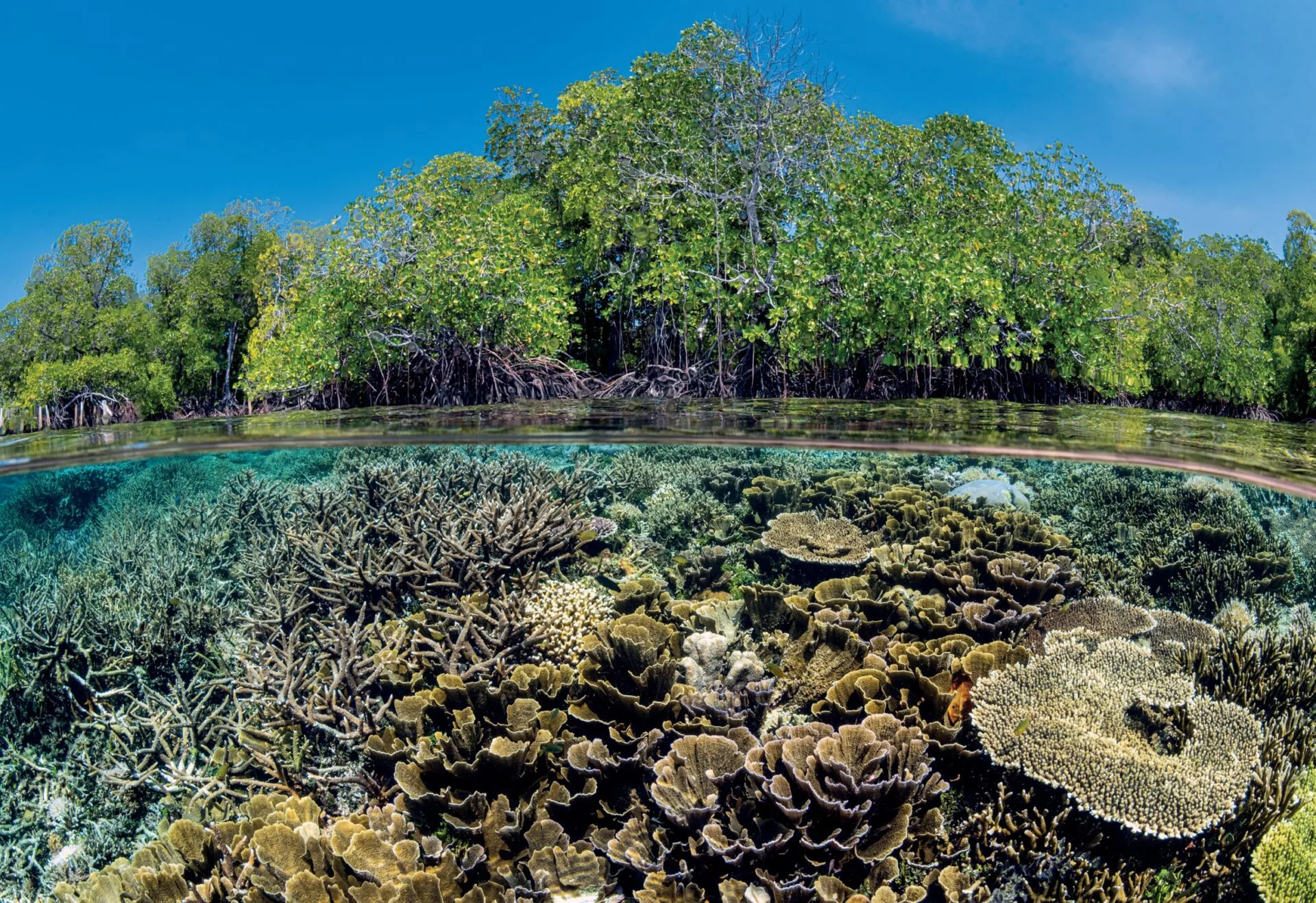
Raja Ampat is especially celebrated for its mangrove environments, with thriving corals growing right up to the roots of the trees. This habitat offers excellent conditions for split level photography, but the very shallow water (less than 60cm) makes shooting these images tricky.
The hardest aspect is lifting the camera up, half out of the water, without touching down on the delicate corals. On my last trip, Don Silcock, a regular contributor to Scuba Diver, suggested we bungee some foam yoga blocks beneath our housings, which worked brilliantly to hoist them half in and half out for the shot. Mid-morning and mid-afternoon give the best light, but it is important to wait for a sunny day for the optimum pictures.
FAQ
What type of camera lens is recommended for snorkel photography?
A fisheye or wide-angle lens is recommended, as they perform well in shallow waters and make the most of the opportunities presented by the environment.
Why should photographers consider using a snorkel over scuba diving?
Snorkeling offers unique photographic opportunities that highlight surface textures, reflections, and split-level images that cannot always be captured through scuba diving.
How can photographers approach turtles without startling them?
It is best to swim parallel to the turtles and slowly close the gap without looking directly at them too much, as this will keep them relaxed and allow for extended photography sessions.
About the Author
Alex Mustard has been taking underwater photographs for 30 years and has received awards in multiple international competitions. He was a founder of the Underwater Photographer of the Year competition.
This article was originally published in Scuba Diver Magazine
Subscribe today with promo code DIVE1 — enjoy 12 months for just £1!
