
Getting to French Polynesia from Australia has long required patience — stopovers adding time to what should be a straightforward South Pacific escape. But that’s about to change. From 14 December 2026, Air Tahiti Nui will launch direct flights between Sydney and Papeete, making this iconic destination far more accessible.
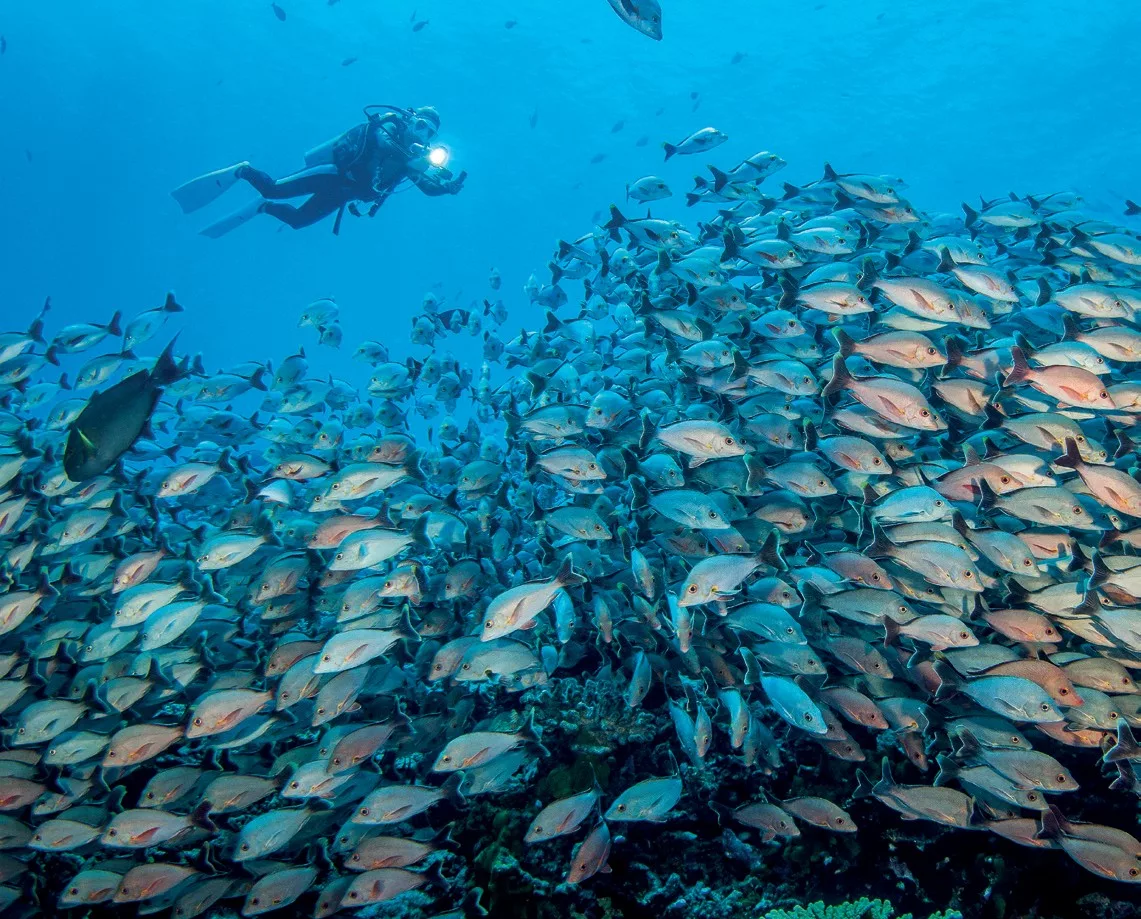
For divers, that’s big news. Because while French Polynesia is known for overwater bungalows and turquoise lagoons, beneath the surface lies something far more exhilarating — one of the world’s great big-animal dive destinations.
Why Dive in French Polynesia?
Diving here is all about energy, current and marine life. The action centres on lagoon passes — narrow channels where tidal flows concentrate fish and predators in spectacular numbers. Expect strong currents, world-class drift diving, large populations of sharks, huge schools of fish and visibility often exceeding 30 metres.
Seasonal events like whale migration and spawning add even more intensity. This is dynamic, adrenaline-fuelled diving — not a gentle reef experience.
Tuamotu Islands — The Heart of the Action
The Tuamotu Islands are the epicentre of diving in French Polynesia, home to some of the most-famous passes in the world. Fakarava offers pristine reefs, dense fish schools and abundant sharks, ideal for intermediate to advanced divers. Its South Pass hosts the famous grouper spawning (June–July), where thousands of fish gather, attracting large numbers of hunting sharks.
Rangiroa’s Tiputa Pass delivers thrilling drift dives with dolphins, sharks and manta rays, while Tikehau offers a more-relaxed experience with manta rays and exceptional fish density.
Marquesas Islands — Remote and Untamed
For a more-adventurous experience, the Marquesas Islands, particularly Nuku Hiva, offer raw, less-dived conditions. Volcanic underwater landscapes and nutrient-rich waters attract sharks, rays and pelagic species. This is frontier diving — remote, unpredictable and best suited to experienced divers.
Society Islands — Easy Access, Big Encounters
The Society Islands — including Moorea, Tahiti and Tahiti Iti — provide the most-accessible diving. Moorea is known for reliable shark and ray encounters, while Tahiti offers a mix of reef and pass dives with sharks, turtles and schooling fish. These islands are ideal for easing into the region before tackling the Tuamotus.
Humpback whales (July–October) migrate here to breed and calve. While encounters are mostly snorkelling-based, divers may hear whale song underwater or spot whales between dives.
Grouper spawning (June–July) in Fakarava is a major highlight, drawing huge numbers of fish — and sharks — into one place.
Diving is year-round, but: May–October: best conditions and visibility June–July: grouper spawning July–October: whale season
The Takeaway With direct flights from Sydney launching in December, French Polynesia is about to become far more accessible. If your ideal dive involves current, big fish and unforgettable moments in the blue, French Polynesia should be high on your list.
If you’re ready to explore French Polynesia’s underwater wonders, the Diveplanit team is here to help you plan the perfect trip: Diveplanit.com/french-polynesia
FAQ
When do direct flights from Sydney to Papeete begin?
The direct flights from Sydney to Papeete will begin on 14 December 2026.
What are the dive highlights of the Tuamotu Islands?
The Tuamotu Islands offer exhilarating dive experiences including Fakarava's South Pass grouper spawning and Rangiroa’s Tiputa Pass drift dives.
What is the best time for grouper spawning in Fakarava?
The best time for grouper spawning in Fakarava is between June and July.
This article was originally published in Scuba Diver Magazine
Subscribe today with promo code DIVE1 — enjoy 12 months for just £1!
