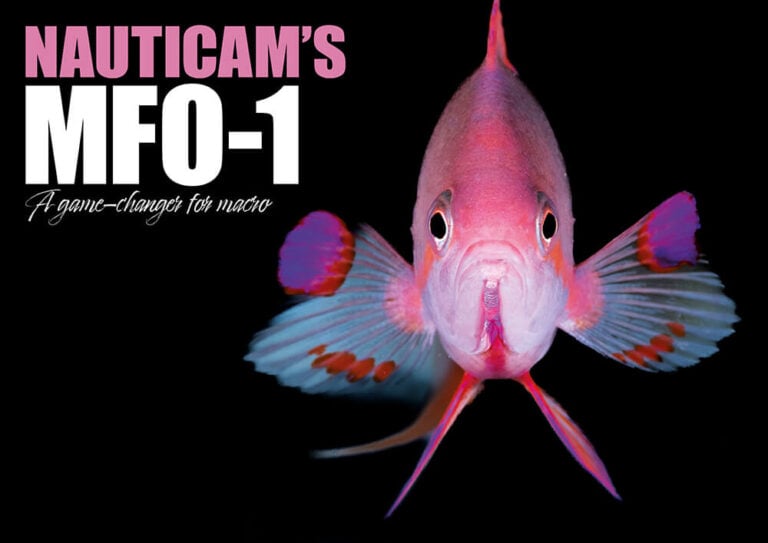
Walt Stearns takes a closer look at the Nauticam MFO-1 and reckons it sets a new high bar when it comes to macro photography.
The Challenge of Autofocus in Underwater Macro
One of the biggest struggles in my macro photography has been getting a sharp, in-focus image of hyperactive subjects, like male flasher wrasse courting females or warning off rivals. Even with a truly remarkable modern camera system like the Nikon Z8 paired with the acclaimed Nikkor Z 105mm f/2.8 VR S macro lens, I have often come away feeling bruised from the endeavor.
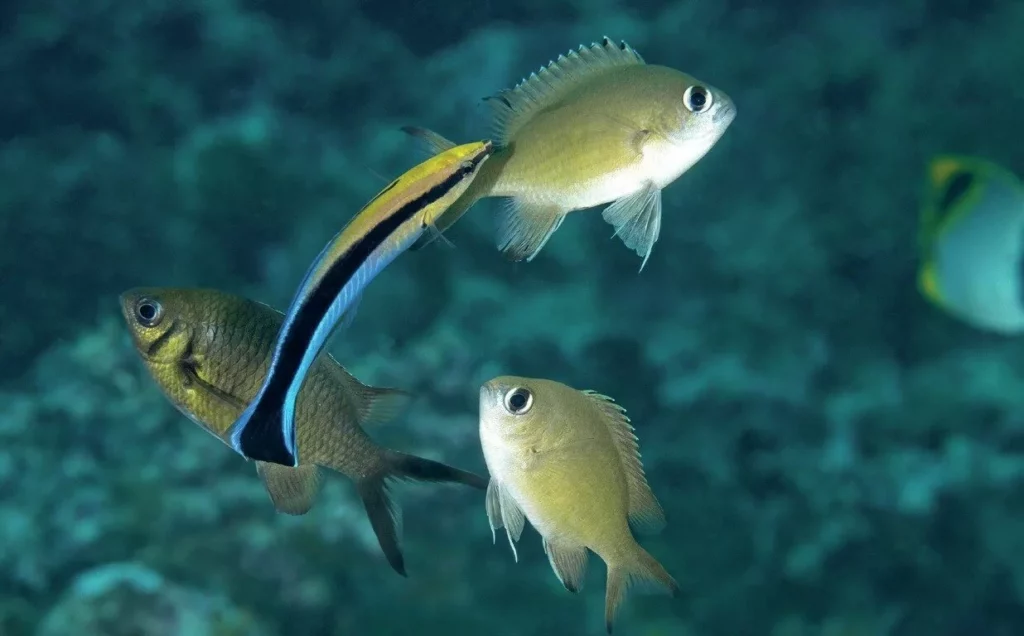
To be clear, when shooting macro underwater, few camera systems have impressed me with a faster, more-responsive experience than the Nikon Z8. It offers a variety of autofocus modes, from AF-S for static subjects to AF-C for moving ones. Within its autofocus menu, the AF subject detection options include settings for Animals, Birds, and People. When shooting marine life, I favor the ‘Birds’ setting, as it does a fantastic job of prioritizing the eye of a fish or reptile. But even the best systems sometimes need a leg up. During a trip to Indonesia last June, I spent a good portion of my time playing with an interesting water contact optic from Nauticam called the MFO-1.
Real-World Performance with Fast-Moving Subjects
Before a dive on a site known for its resident population of yellowfin flasher wrasse (Paracheilinus flavianalis), I mounted my newly acquired Nauticam MFO-1 to a Nauticam M67 Flip Diopter Holder. This way, I could quickly flip it out of the way if it didn’t perform as advertised. Once I found my quarry, things got exciting.
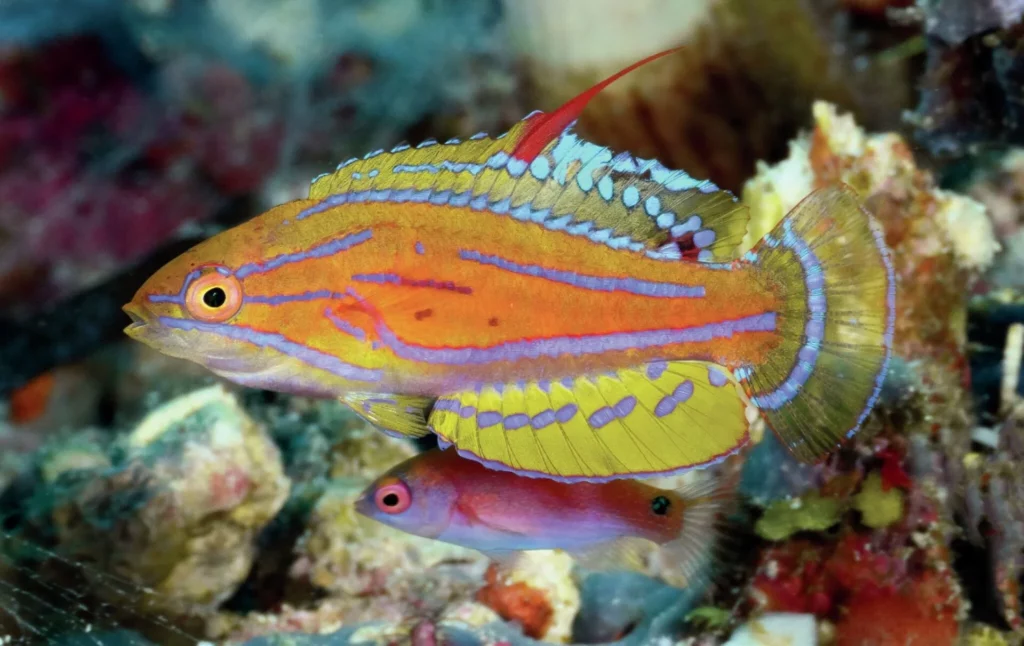
I focused on one of the more-mature males, as they generally have the boldest markings and coloration. Through the viewfinder, I tracked his movements, waiting for that moment when he would raise his dorsal and anal fins to make his announcement. These little two-inch-long fish are called flasher wrasse for a good reason; the display you’re waiting for is over and done with in a flash. After reviewing the images, the difference was clear. The ratio of sharp, in-focus images of the flasher wrasse at the peak of their display was more than two-thirds greater than what I got without the Nauticam MFO-1.
Did you know?
Male anthias are known for their vibrant coloration, often bright red or purple, contrasting with the more orange or pinkish hues of the females.
What Is the Nauticam MFO-1?
MFO stands for Mid-range Focus Optimizer, a name that describes the nature of this unique water contact optic. It was designed specifically for housed camera systems using macro lenses in the 90mm to 105mm range. The MFO-1is similar in size to Nauticam’s CMC and SMC magnifying lenses, with a distinctive bright orange band around its aluminum body. Like all Nauticam optics, it can be affixed to any flat port or flip adapter with an M67 thread mount.
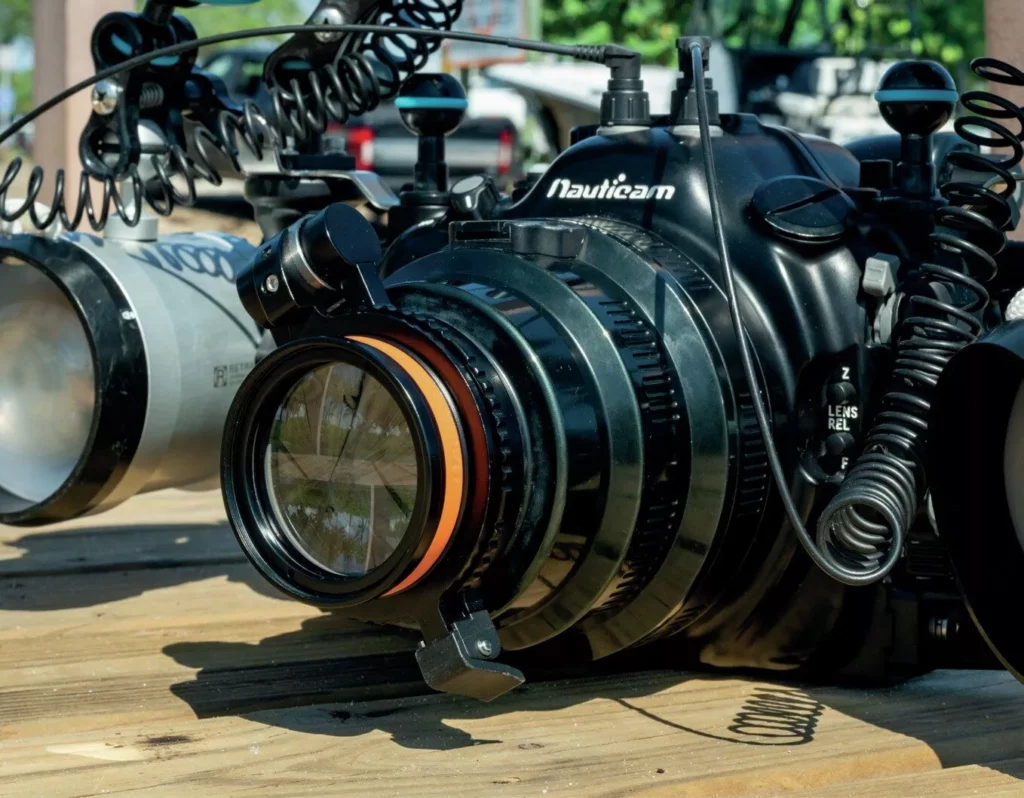
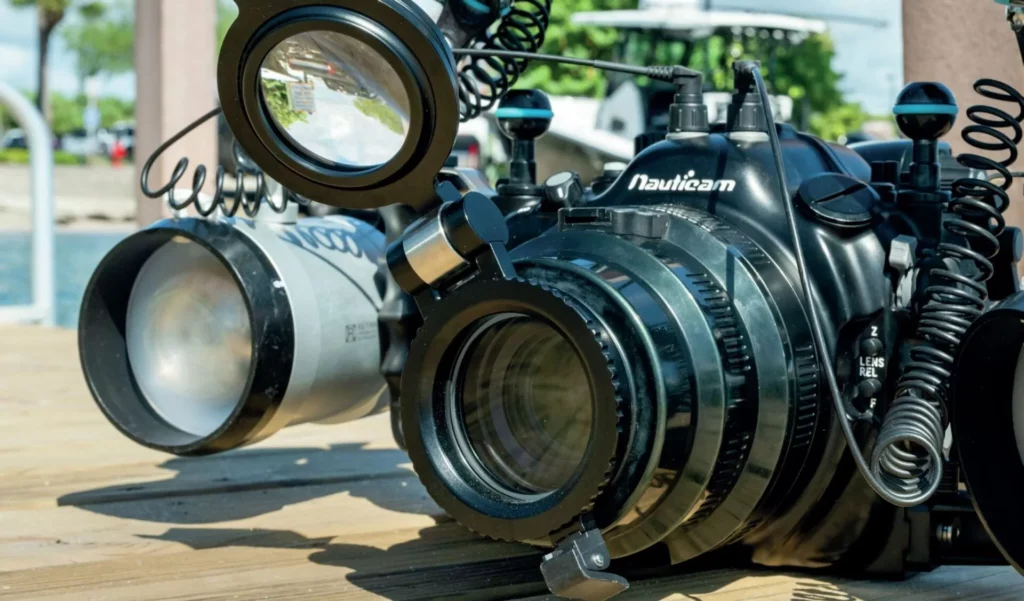
What separates it from other close-up optics is its lack of significant magnification. While you might see a slight boost (up to 1.2x with the Nikon 105mm and up to 1.6x with the Canon RF 100mm), that’s not its primary function.
Blackwater Photography Applications
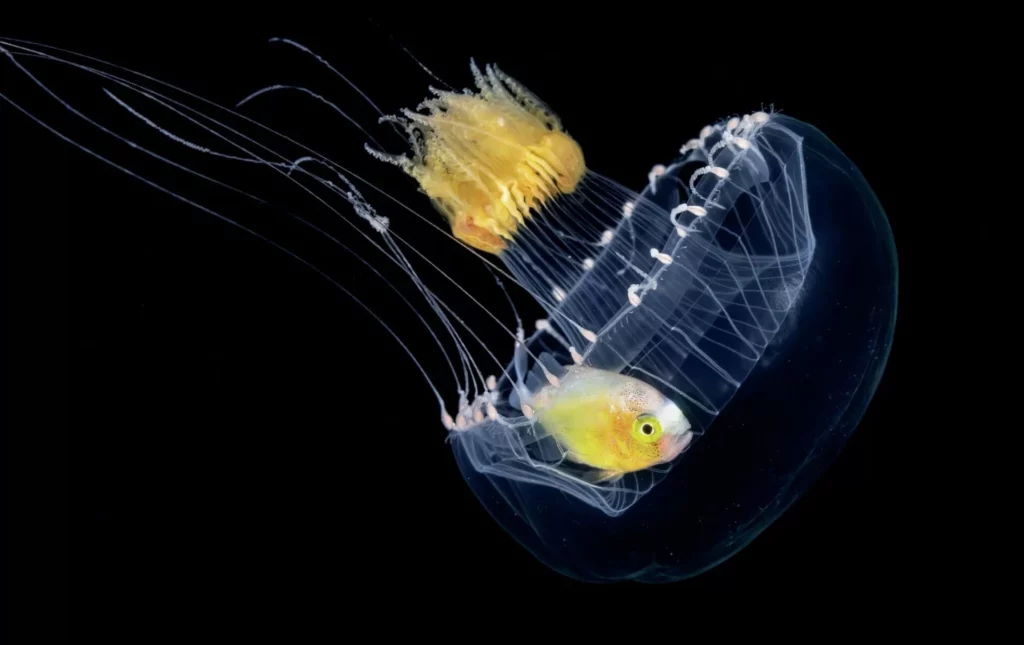
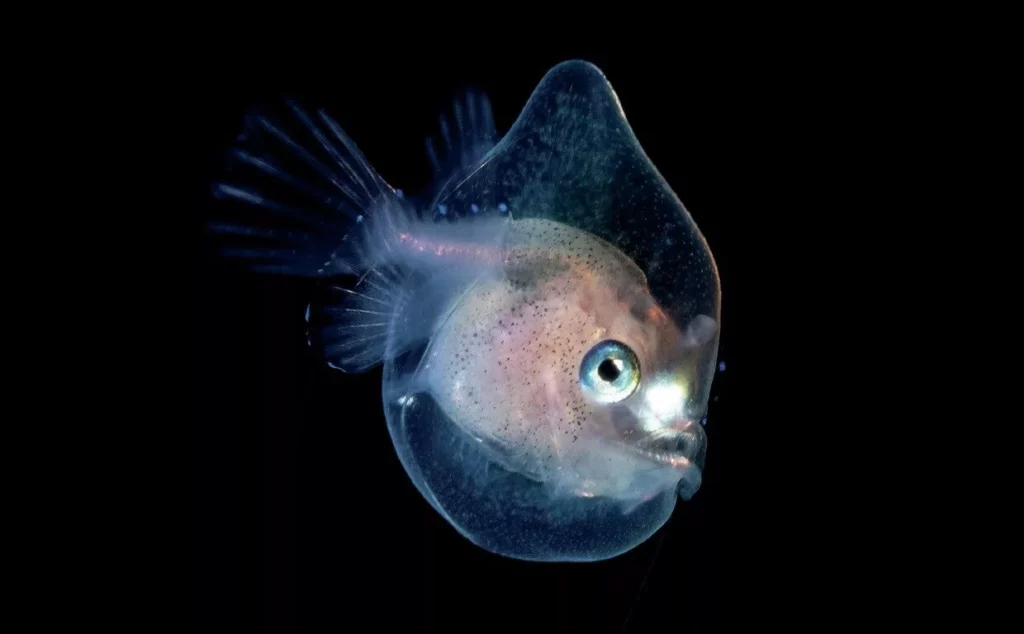
The MFO-1’s main purpose, developed at the request of noted underwater photographer Alex Mustard, is to counteract optical aberrations caused by light refraction through a flat port. It also optimizes the autofocus range of macro lenses. For many lenses with a focus limiter switch, the MFO-1 is advertised to more than double the maximum working distance, giving you a greater focusing range – up to 114cm – which helps eliminate frustrating focus hunting issues. This makes the MFO-1 particularly effective for fast-moving macro subjects. Lately, I’ve even been using it with my Nikon 60mm macro lens on blackwater dives with great results. In addition to a slightly closer minimum focusing distance and a magnification boost up to 1.3x, the MFO-1provided a noticeable improvement in locking focus on erratic subjects.
Final Verdict: Who Is the MFO-1 For?
The MFO-1 is not a tool for super macro photography, despite a slight increase in magnification. Instead, its true value lies in its ability to solve the problem of focus hunting that even the best mirrorless autofocus systems struggle with when shooting small, fast-moving fish.
It’s a specialized tool that improves focus accuracy and consistency, making it easier to capture the moments that matter most.
Frequently Asked Questions
What is the Nauticam MFO-1?
The Nauticam MFO-1 is a Mid-range Focus Optimizer designed to improve autofocus performance for macro lenses underwater.
Does the MFO-1 increase magnification?
Only slightly. Its main function is improving focus accuracy, not super macro magnification.
Which macro lenses work with the MFO-1?
It’s optimised for 90mm–105mm macro lenses, including Nikon 105mm and Canon RF 100mm lenses.
How does the MFO-1 reduce focus hunting?
It corrects optical aberrations caused by flat ports and extends the effective working focus range.
Is the MFO-1 suitable for fast-moving fish?
Yes. It’s especially effective for hyperactive subjects like flasher wrasse, anthias, and blackwater species.
This article was originally published in Scuba Diver Magazine
Subscribe today with promo code DIVE1 — enjoy 12 months for just £1!
