Some of the most-beautiful creatures on the Great Barrier Reef are also the smallest. Macro photography can be easily overlooked in favor of bigger and more obvious inhabitants, but this Great Barrier Reef macro photography guide will help you capture the hidden wonders, as John Magee explains.
Photographs by John Magee
The Art of Macro Photography on the Great Barrier Reef
Macro creatures are something that although are always out there, take patience and understanding to see. Swimmers and divers may well swim straight past them without even noticing the beauty right under their fins. Once you start looking among the seagrass, coral or even algae, you will be amazed at what you can find.
When practicing any kind of photography, it is always important to have your camera set up and ready to go at a moment’s notice, and this is even more crucial with macro.
Often the creatures are so tiny and shy that your perfect shot may be only a few seconds worth of interaction.
As part of this Great Barrier Reef macro photography guide, it’s important to select the right camera and lenses. As time goes by, I find that the camera I am currently using, the Canon R5, is a great piece of equipment to work with, especially for macro. The R5 is not for everyone but is one of the top cameras on the market for stills and high resolution in pictures.
Equipment and Lighting
My main concern is the colour I can get in a picture, and this is why I will always be a Canon fan, as the colour is the closest you can get to the colour nature intended your subject to be.
There are many cameras on the market right now though that will all give a great result, such as the iPhone 15 or the TG6. Both may be more affordable and still give great results with a bit of practice and understanding.
I also use a few different macro lenses depending on the situation and subject. The Canon rf 100mm 1×4 macro lens far outcompetes the older L 100mm I previously had and is still a great lens for close ups.
The other two lenses that I use are the older Canon macro 60mm and the Laowa 100mm macro 2x manual lens. Both give me the details in macro that takes the picture to a whole new level.
Lighting is one of the most-important parts of photography and could be an article all on its own (watch this space!) and so I rely on my Ikelite DS 161s strobes.
It is an adventure video light with 800Ls, a snoot, a backscatter mini flash with a scoot and a small hand torch all in one! It’s the Swiss army knife of strobes and lighting and I couldn’t be without it.
Observing and Approaching Macro Subjects
Taking great photos starts with research. You must have a good understanding of your subject and the dive site.
When you start the dive, it is best if you already have an idea of what you are looking for and how to find it as this focus will produce the best results and will stop you wasting valuable dive time. Upon finding your subject, try to get as close as you can, while still giving the creature its space.
This is where an understanding of its behaviour can come in very handy, by being able to recognise its stress signals, you will know when to back off and when you can sneak in a little closer.
You will need to watch for the direction of the current and be aware of any silt you may stir up as not only will this affect your photos but could potentially put your feature creature in danger.
This Great Barrier Reef macro photography guide emphasizes the importance of patience and observation to get the best results.
Ensure you watch your subject for a few minutes at the beginning to evaluate the potential of getting a good photo. Some subjects are so skittish that you may want to pass them by as you will learn that there is very little chance of getting a good shot.
This ability will only come with experience and practice. The more time you spend with your subjects, the more you will be able to anticipate their movements and behaviours and so, get the best shots in the process.
Lastly, if another photographer is already in the area shooting the same subject, be careful not to great too close as it could disturb any silt and impact their photos.
This is common courtesy that often gets overlooked in the heat of getting the shot!
The hardest part of macro sometimes can be finding the subjects in the first place, and this is where dive guides come in.
These people spend their days diving the same sites, they know them inside and out and are often very proud to show off the amazing diversity that their sites can provide.
Have a chat with your guide for the day and let them know that you are out to find macro life. You will be amazed at the difference a good guide can make to your success rate.
As mentioned before, one of the most-important things is do your own research. Some creatures are only active at certain times of the day or are completely nocturnal.
Others can only be found in specific habitats, there are species of shrimp for instance that only live on the backs of certain sea cucumbers. Once you understand your intended subjects, finding them becomes a whole lot simpler!
Macro underwater photography is an art form to itself. Some days you will take the most-beautiful pictures and feel like you finally have the code cracked and the next, nothing goes right.
No matter what the day, learn from both your successes and mistakes and jump back in as soon as possible.
Macro Life Really is Everywhere
Macro life really is everywhere and once you know what you are looking for, the sky, or maybe the sea floor, is the limit! Blink and you just might miss it though…
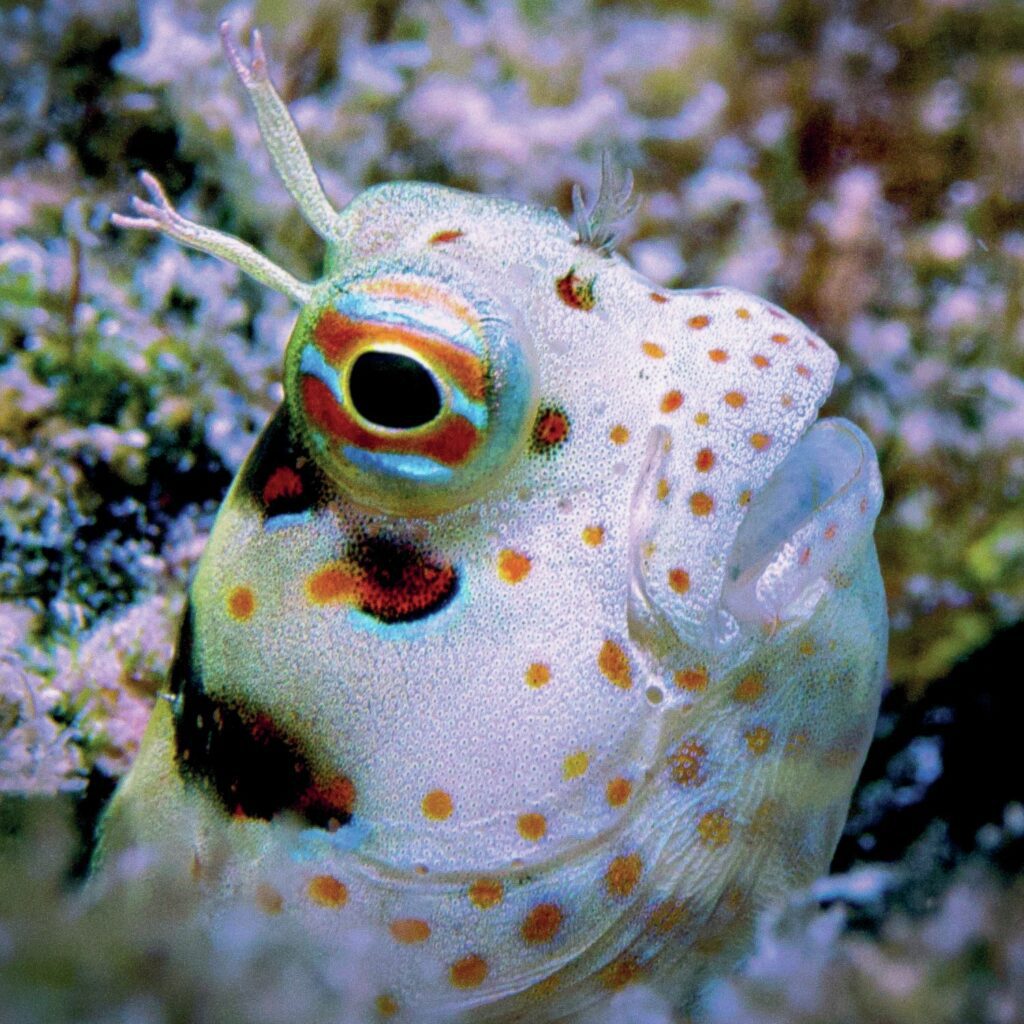
Here are a few little critters you can expect to encounter on a dive on the Great Barrier Reef.


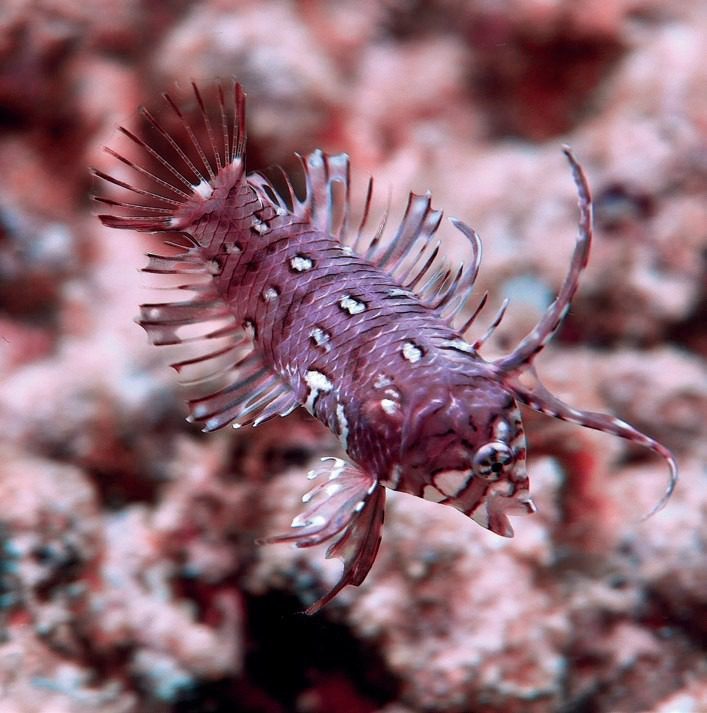
Leafy scorpionfish
The juvenile white leafy scorpionfish, another example of deadly but beautiful, if you were a fish of course… Taken from one of the smallest reefs on the Great Barrier Reef, this fish is only 4cm long and one of the masters of underwater camouflage.
Being an ambush predator means that you will find them in places where dinner is easily accessible, so areas with lots of small fish are their preferred habitat.
They can live up to five years in areas where food is plentiful and are found in coral reefs across the Indian and Pacific oceans.
I was lucky enough to spot this juvenile out of the corner of my eye while looking for other things, you just never know what you will come across whilst underwater.
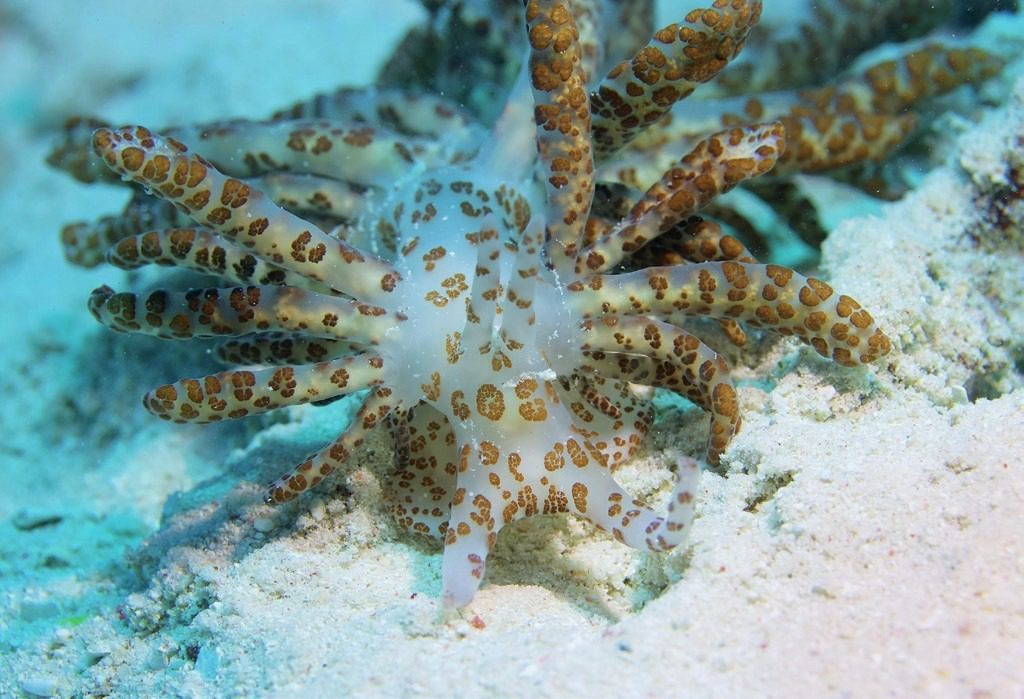
Solar nudibranch
The solar nudibranch, an animal at the cutting edge of working with alternative energy sources. Sea slugs or nudibranchs, unlike the mostly disliked and frankly, a little gross land-based slugs, are among the most spectacular and morphologically diverse animals on Earth.
There are around 3,000 species that have already been described, with new ones being found all the time. Over a hundred of those are found just on the Great Barrier Reef, and, even more impressively, 300 alone have been found just on Heron Island in the southern Great Barrier Reef!
Nudibranchs are molluscs that are closely related to clams, oysters and cephalopods and can be found in almost every habitat imaginable on a reef.
The solar nudibranch is incredibly well camouflaged to look like its preferred environment, a soft coral, even though it doesn’t eat this. It actually eats the algae found on the reef and it is from this that it gets it chloroplasts which allow it to photosynthesise.
The photosynthesis converts the sunlight that it gets from the beautiful conditions on a reef, into food. Many animals on the reef have this symbiosis with photosynthetic algae but these nudibranchs take things to a whole new level.
So next time you are on the reef, keep your eyes open for these very special, sun-loving nudibranchs.
Mantis shrimp
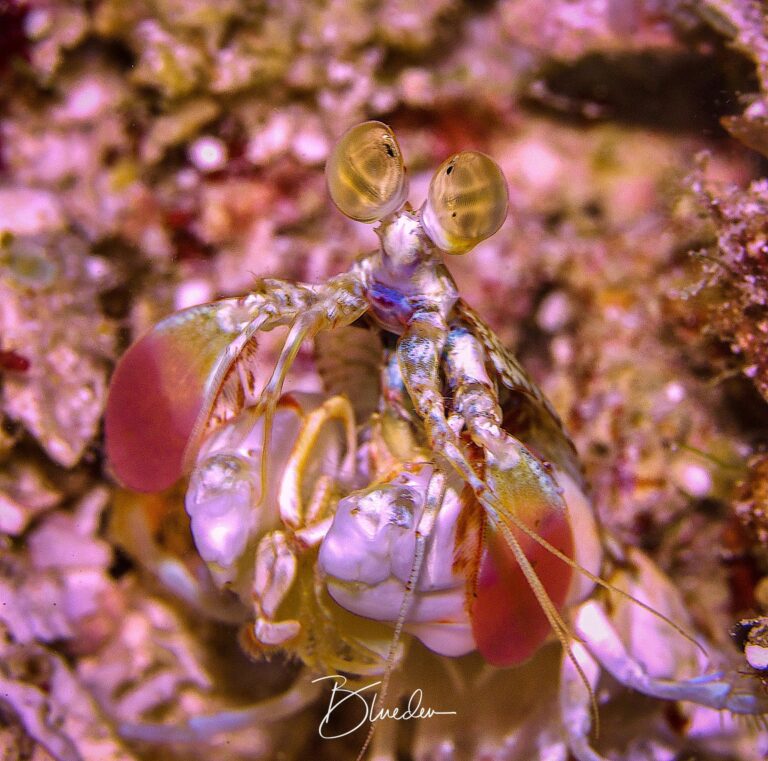
When you first see a mantis shrimp, it is sometimes hard to believe that nature could really create something this colourful, some species are almost like looking at something from the circus!
They are known as the predator in paradise and with 450 species in the world, 250 in the Indo-West Pacific area, there is a lot of variety as you can imagine.
The most-common behaviour that these incredibly shrimp are known for is their strength. With two main types of shrimp, spear and club, they have made catching their prey a fine art. Spear species will throw out a spearlike appendage on their front claw and impale their prey.
Club species will hit their prey with a club appendage instead. This hit can be the same power and speed as a .22 calibre bullet, which is strong enough to break the shells of almost all creatures.

Mantis shrimp are also highly intelligent creatures capable of complex behaviours such as bonding in lifelong relationships and interactions with their neighbours.
When breeding, the female will lay the eggs in a burrow or under their own tails while the male will hunt for food for them both, which shows a brilliant cooperation and intelligence.
They are also very sensitive to changes in their environment and are a great indicator of a healthy reef.
Trying to take a picture of these feisty crustaceans is not always easy. They always have two or three entrances to their burrow, and they will often only peek out for a split second at a time so you must be ready!
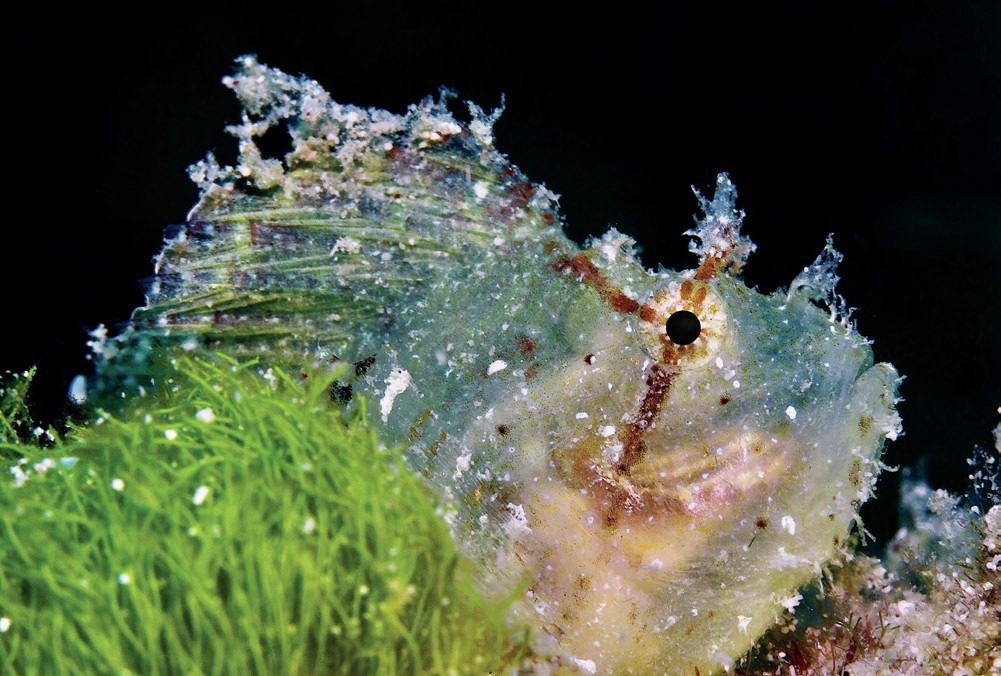
Ghost Pipefish
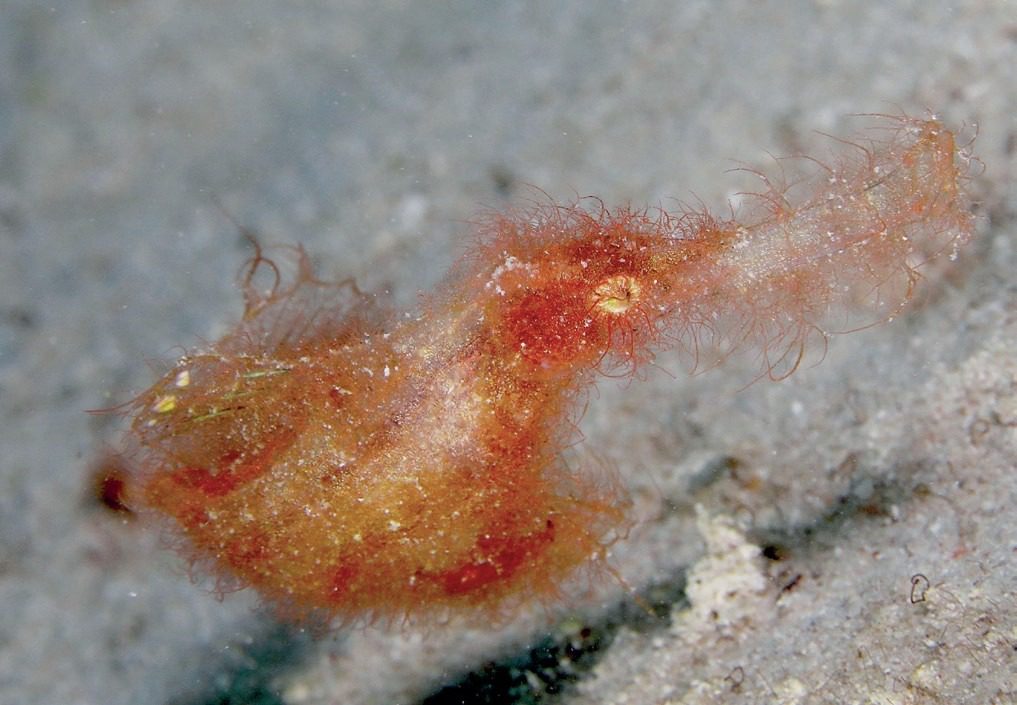
Ghost pipefish are a family of fish that are still relatively new to science and are close relatives of the seahorses. Seahorses are covered in armoured rings, but the ghost pipefish instead have large bony plates on their bodies to protect them.
The hairy ghost pipefish is a species that has only just been found and there is still debate over whether it is a species on its own, or a different coloured version of an existing one. It is found all over the Indian Ocean from Australia all the way up to Japan.
They start their lives floating in the mid water along with the other plankton and are almost transparent.
They move around with the ocean currents and when they find a reef, they settle around areas where they can camouflage best, so in the hairy ghost pipefish’s case, around long algae patches. They are very hard to spot, especially as they usually live deeper than 10m.
Their camouflage is used for two main reasons. The first is to hide from predators. Hairy ghost pipefish are very small, which makes them the perfect snack for lots of larger fish.
The long filaments on their bodies allow them to blend in perfectly with their habitat, meaning that the only way to spot them is to look for an eye in the middle of algae!
The other way they use their camouflage is to make hunting easier for themselves. Ghost pipefish are ambush predators.
Their mouth is a tube shape, and they have special muscles there that can make the tube wider, creating a sucking motion that sucks prey straight into their mouths.
When they find a mate, the female will hold the fertilised eggs in a special pouch on the front of her body that is made by bringing her two back fins together against her stomach to form a pocket.
Their lives are quite short and it is thought that after they give birth to their live young, they die, leaving the next generation to start the cycle all over again.
FAQs
What is macro photography in scuba diving?
Macro photography focuses on capturing small marine creatures, revealing details often missed by the naked eye.
Which equipment is best for reef macro photography?
Macro lenses, strobes, and compact cameras like the Canon R5, TG6, or iPhone 15 are ideal for underwater macro photography.
How can I approach shy macro subjects safely?
Observe the creature, avoid direct paths, minimize eye contact, and move slowly to prevent stress or silt disturbances.
Which macro species can I expect on the Great Barrier Reef?
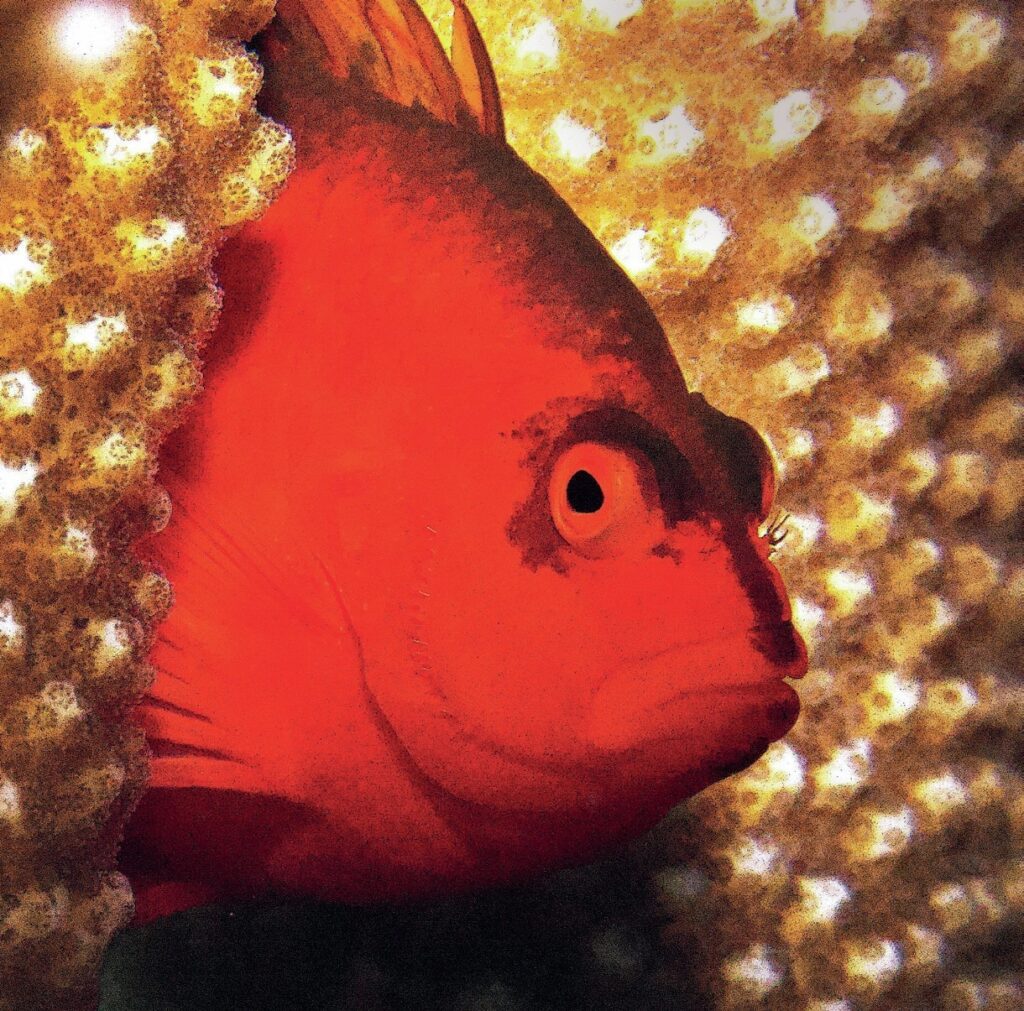
Look for nudibranchs, mantis shrimp, ghost pipefish, flame hawkfish, and juvenile scorpionfish among coral and seagrass.
When is the best time to photograph macro life?
Some species are nocturnal or active only at certain times, so research dive sites and timing for optimal results.
This article was originally published in Scuba Diver ANZ #64
Subscribe today with promo code DIVE1 — enjoy 12 months for just £1!
