The discovery of two shipwrecks – one Japanese and one American – sunk during WW2 in the Bering Sea between North America and Russia has been detailed in a new study led by researchers from East Carolina University. Their underwater survey also appears to have solved a long-standing submarine mystery.
The wrecks are in diveable depths, and the authors say that their significance lies in the fact that Japanese occupation of the Aleutian Islands of Attu and Kiska in June 1942 represents the only time since 1812 that US territory in North America has been invaded by a foreign power.
Attu was the site of a three-week battle for control of the islands in which more than 3,000 lives were lost on both sides. The conflict also resulted in the indigenous population being effectively expelled from their homeland – though the events in this cold and remote theatre of war were largely forgotten as the wider war continued.
The discovery was reported on Divernet in 2024 but the team, led by Dominic Bush and Jason Raupp, has only now put together its survey report, which excludes another wreck found in shallow water during the survey, the Japanese freighter Cheriton Maru.
The operation, the first such in Attu, was conducted from the vessel Norseman II using a combination of synthetic aperture and multibeam echo-sounder sonar and ROV-mounted underwater video.
The team of maritime archaeologists and hydrographers, funded by NOAA Ocean Exploration and the National Park Service’s American Battlefield Protection Program, conducted the five-day operation in which more than 1,000 targets were investigated.
The two shipwrecks described as “marquee findings” were the the US cable-layer Dellwood, sunk on 20 July, 1943, and the Japanese military transport Kotohira Maru, sunk by a US aircraft seven months earlier. Both vessels had seen service for two decades before being requisitioned for their countries’ war efforts.
Kotohira Maru

The first to be lost, Kotohira Maru, had been launched in 1918 by Osaka Iron Works as the Taibu Maru. The 124m coal-powered single-screw steamship, with triple-expansion three-cylinder steam engine and scotch boilers, was built as a general cargo-carrier.
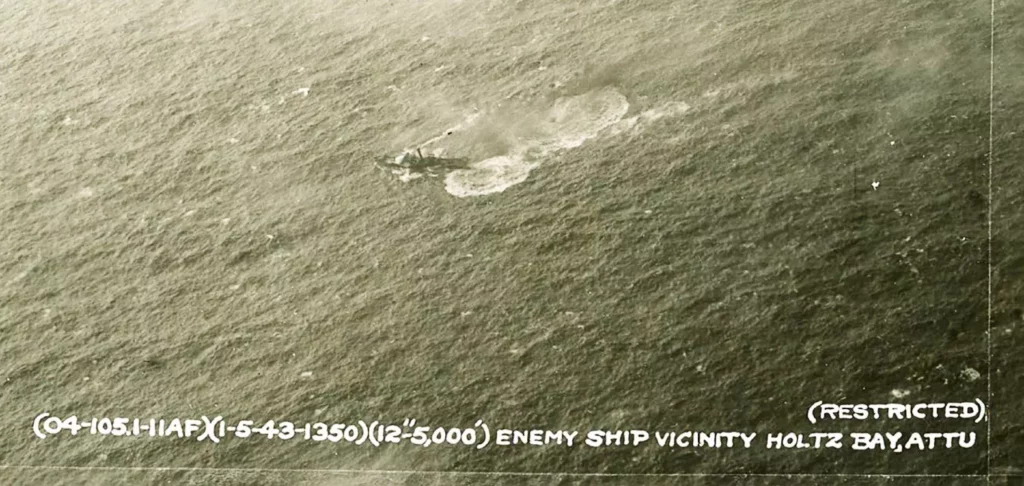
The ship had supported the invasion of Burma before being reassigned to Japan’s most northerly outpost in the Kuril Islands. On the last day of December, 1942 she set out unescorted carrying lumber, fuel and supplies for the Japanese garrison on Attu. There is debate over whether she was also carrying a platoon of troops.
Kotohira Maru was about 8km from Attu early on 5 January when she was spotted by the crew of a USAF B-24 weather plane. The aircraft dropped a dozen 500lb bombs, scoring two direct hits on the vessel’s side and bow and leaving her burning and down by the bow. The entire crew of 30-50 sailors – and the troops if they were present – would have died in the sinking.
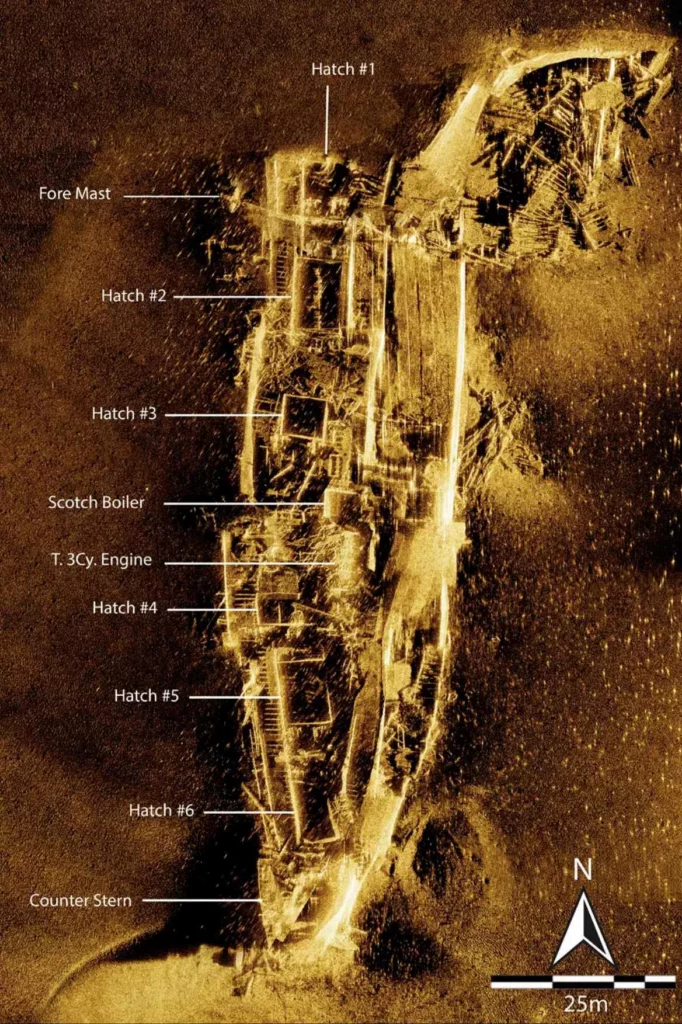
The “fairly intact” wreck rests at 83m, mostly standing proud of the seabed, according to the surveyors. Damage patterns were consistent with the historical description of her sinking, with the direct hit on the bow detaching it from the rest of the vessel and leaving it lying on its starboard side.
“It is likely that the impact of the bombs opened the hull in this area and caused the ship to take on water,” says the team, with the ship sinking bow-first and the bow detaching on hitting the seabed.
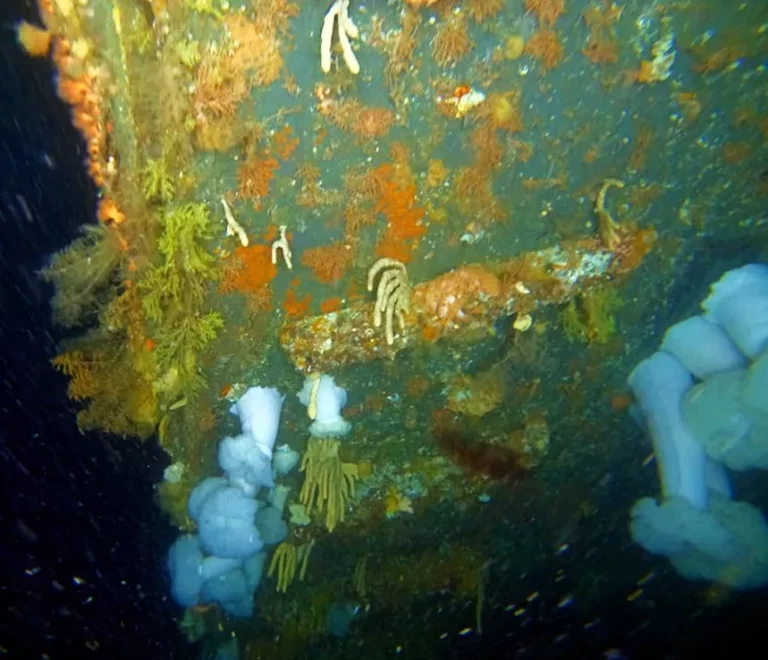
Damage to the starboard midship section also suggested successful bombing efforts. The stern rested upright on the seabed and showed minimal signs of impact. The wreck was heavily colonised, mainly by white-plumed anemones. The ROV was deployed four times, though photography was hindered by powerful subsurface currents.

A further explanation of the state of the Kotohira Maru might also have emerged from the survey, On 13 May, 1943, two days after the US landing on Attu, the destroyer USS Phelps had reported detecting a submarine on the seabed and dropping 11 depth charges.
After this an oil slick had been observed, with the object remaining static on the seabed, though Japanese records seemed to conflict with the claim.
The new survey appears to indicate that if a submarine was hit it must have escaped, and the seabed object was likely to have been the wreck of the Kotohira Maru – which could have been further damaged by the depth charges.
Dellwood

The 98m single-screw Dellwood, powered by a three-cylinder triple-expansion steam engine, was built by Hanlon Drydock & Shipbuilding in Oakland, California for the US Shipping Board during WW1 but not launched until peacetime in 1919.
In 1921 she was converted into a cable-layer, with her holds transformed into cable tanks, the bow extended and machinery at both fore and aft ends. She carried out important work as the US government’s only deepwater cable ship until 1931, when she joined the Alaska Steamship Company (ASSC) fleet.

Within days of the Pearl Harbor attack the recommissioned Dellwood was undertaking regular trips between the Puget Sound area of Washington and northern military facilities. In March 1943 she resumed operations as a cable-layer attached to the US Navy’s Task Group.
Following US victory in the Battle of Attu she arrived as part of the Alaska Sector Escort & Supply Group to lay 64km of cable between the command HQ on Attu and a new airfield on the island of Shemya. She had started work the previous day but on 20 July struck an uncharted, submerged pinnacle off Attu’s Alexai Point.
A tug pulled the ship off the rocks but an out-of-control landing craft drifted between the two vessels, severing a towline. With the Dellwood listing badly, salvage personnel were sent aboard to recover cable and other items before she started sinking some 5km off Alexai Point. All crew were evacuated.
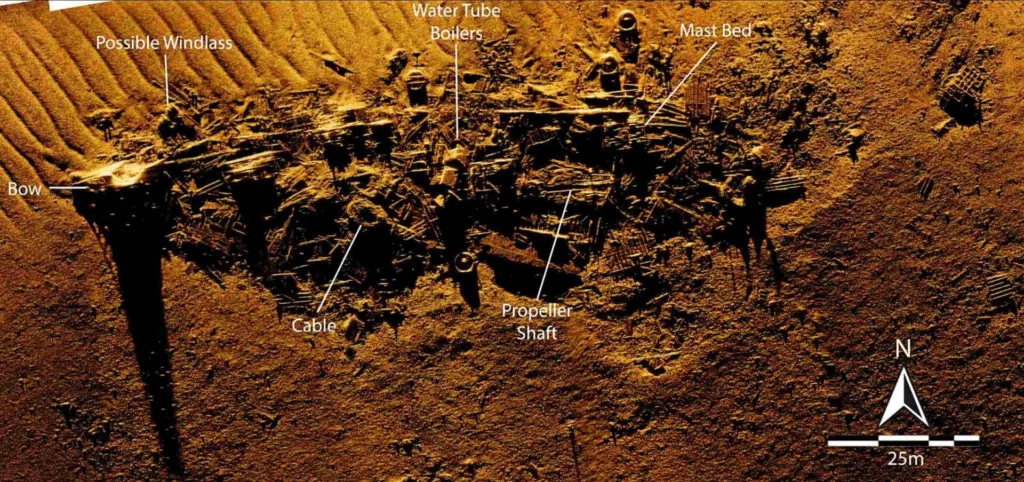
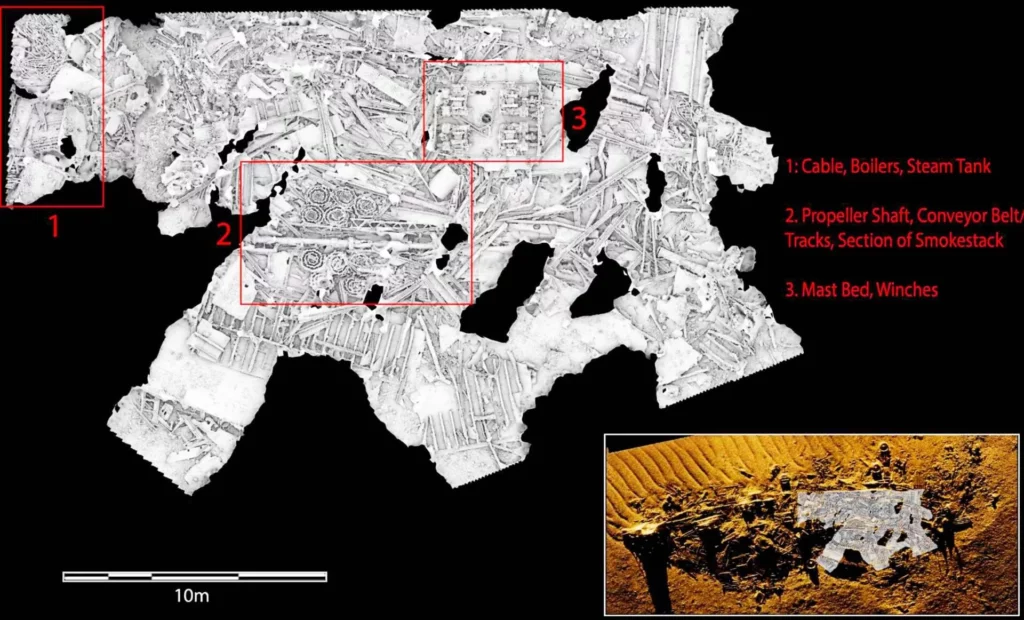
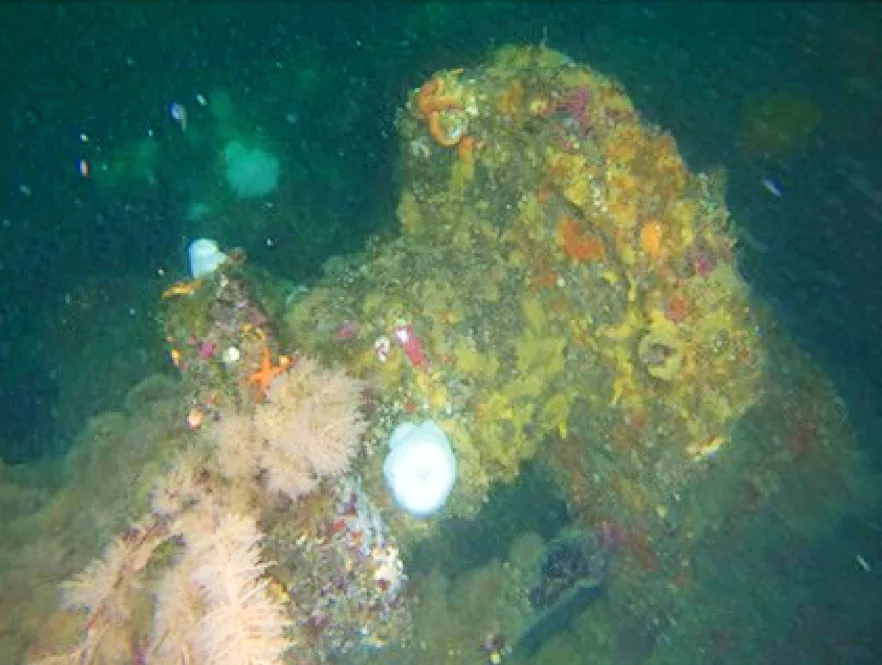
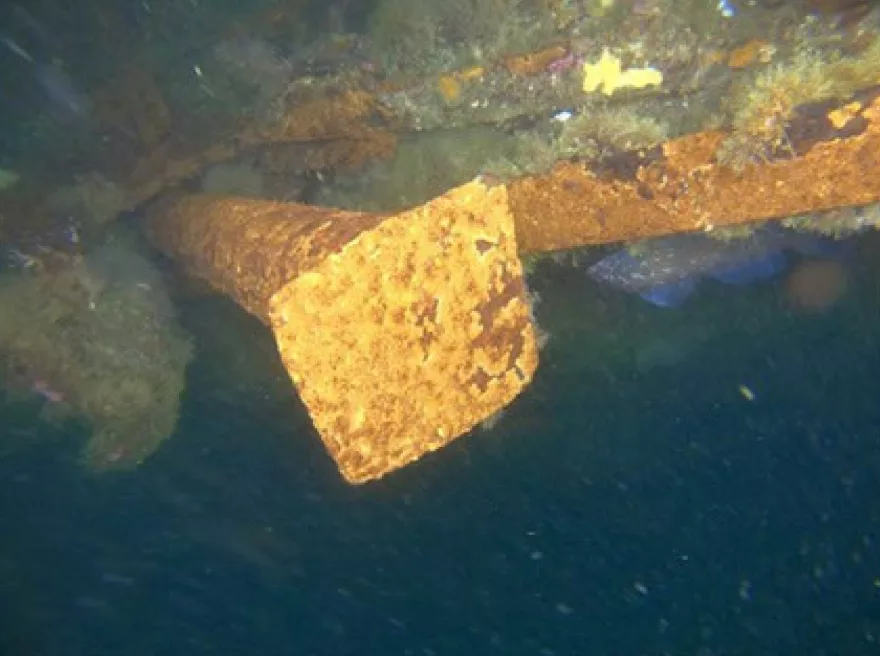
The 35m-deep wreck was surveyed 81 years to the day the ship sank. It was found almost completely flattened, though sections of the hull and the funnel, mast-bed with winches, propellor-shaft, boilers, cable-laying components, cable and what was thought to be the anchor windlass were discernible. The remains were more corroded than those of the deeper Kotohira Maru.
Again strong surface currents made it challenging to keep the ROV in position to allow for full photogrammetry. The state of the wreck was thought to be consistent with post-war demolition to clear shipping routes using explosives and/or wire-dragging, after the US Navy had abandoned hopes of salvaging the cable and machinery in difficult working conditions.
“The loss of the vessel delivered a blow to the Japanese forces stationed at the remote command post, as the materials and provisions it carried would have been most welcomed,” say the authors of the survey. “Unlike their countrymen scattered throughout the South Pacific, those on Attu had to contend with near-Arctic weather conditions.”
As a result of the ship’s sinking the Japanese military decided to change the supply strategy for its Aleutian outposts to using high-speed vessels. For the USA, sinking the transport is said to have marked a significant victory in its efforts to expel the invaders, especially considering that the skies over Attu represented “the worst flying conditions in the world”.
Japan occupied Attu and Kiska for just over a year, from 3 June, 1942 to 15 August, 1943, when the “forgotten battle” ended with US and Canadian forces retaking the islands. The new shipwreck study has been published in the journal Heritage.