The discovery of a mystery shipwreck last autumn has been revealed by Swedish authorities, now that analysis has confirmed the remains to be more than 500 years old.
The wreck was found in the south of the Kalmar Strait, which separates the island of Oland from the south-eastern mainland of Sweden.
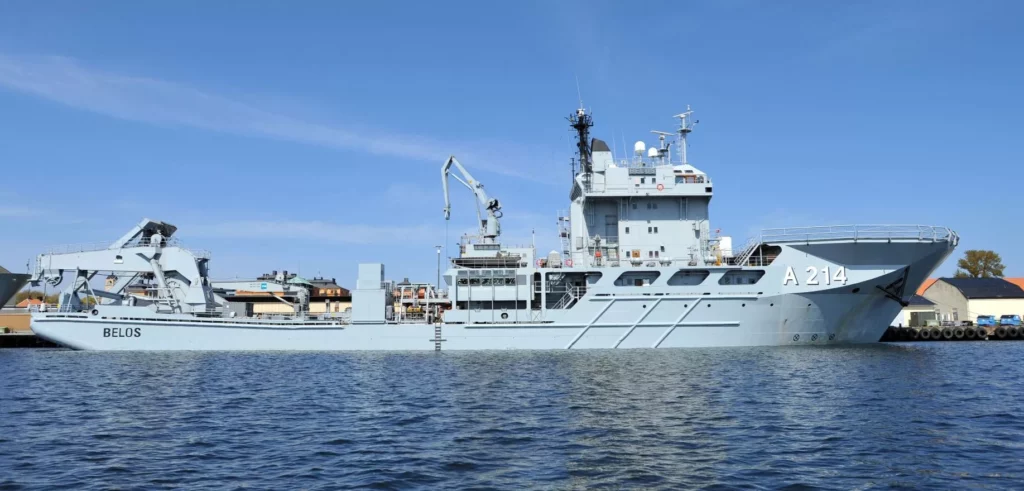
HSwMS Belos, the Swedish Navy’s primary submarine-rescue and diving-support vessel, had been carrying out exercises when the wreck showed up as an anomaly on its instruments.
The Navy reported the existence of the site to the Kalmar County Administrative Board, which is responsible for cultural environment work in the county.
The board in turn commissioned regional maritime institution the Kalmar County Museum to develop a “care and protection plan”, and delayed making the find public until the results of tree-ring analysis confirmed that the vessel dated back to the late 1500s.
Sweden’s most famous shipwreck the Vasa, which was restored for public display and is now widely considered the nation’s biggest tourist attraction, sank in 1628, shortly after being built. The new discovery would have been built at least 30 years earlier, but was considerably smaller.
“The depth is about 20m and the vessel is 20m long and 6m wide,” antiquarian Daniel Tedenlind of the administrative board told Divernet.
The Baltic Sea, with its cold, brackish water, low oxygen levels and darkness, is associated with preserving centuries-old timbers intact, but in this case it seems that the best-preserved parts of the ship could be buried.
“The wreck is not very well-preserved above the seabed,” said Tedenlind. “Visible parts above the bottom of the original hull structure consist of a large number of closely spaced but in most cases severely degraded frames.”
The museum is currently analysing the evidence obtained by divers from the site. “The goal is to make a preservation plan for the wreck,” said Tedenlind. “Meanwhile we have made a legislative decision to protect the site from diving, fishing and other operations that might risk causing damage.
“We do not know the origin of the vessel but we know that it was built at the end of the 1500s, thanks to dendrochronological analysis. During our investigation and production of a preservation plan the work and results are confidential, so we will not release any photography or films before our work is done.”
The Royal Swedish Navy has been helping with documentation of the wreck, he said, and the site has been registered as an ancient monument by the Swedish National Heritage Board, with the Swedish Coast Guard helping to monitor it as the investigation continues.