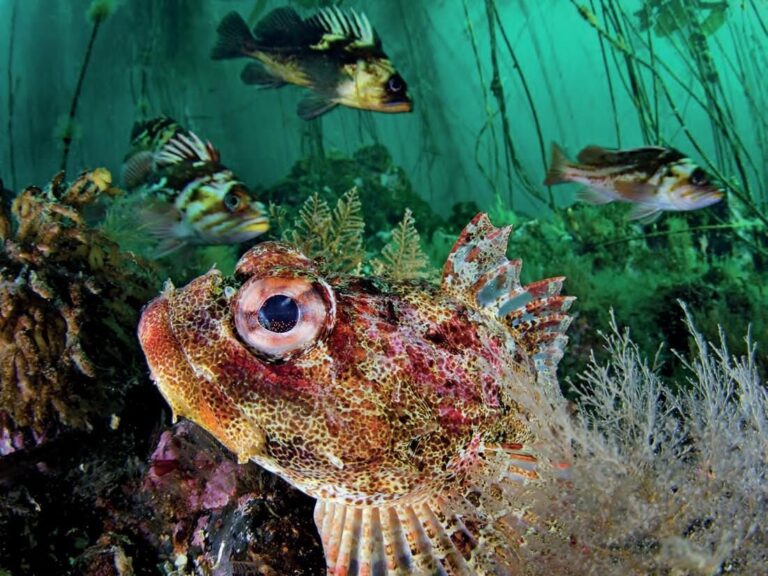
Photographic perfection is an impossibility, but striving for it is essential for stand out images, explains Alex Mustard

From Casual Snapshots to Intentional Photography
Most of us take up underwater photography to capture a record of what we’ve been seeing on our dives. The shots allow us to relive those moments and share them with others. When we’re starting out, our goal is simply a clear image of every cool thing we encounter underwater. Ideally, we want a camera system that can collect pictures of as many different sizes of subjects as possible.
As our portfolio of images grows, our mindset shifts from being a diver with a camera to being a photographer who dives. Now our aim becomes producing the best photos we can when underwater, which means ignoring much of what we see and thoroughly working the most photogenic opportunities, typically dividing dives into macro and wide-angle. This is the first step in optimising our approach and striving for perfection. But we’re not yet at our destination. As we develop, we sub-divide and optimise further and further, trying to edge ever closer to perfection.
Why Less Gear Often Produces Better Images
One of the toughest hurdles as our photography standards balloon is learning what gear to leave up on the boat. I think it’s Snell’s second law that the longer an underwater photographer stays involved in the hobby, the more photographic gadgets they accumulate! And learning what not to take is particularly difficult because those accessories are never cheap! Having researched, bought and brought a shiny new item all this way, it is inevitable that we want to get our value from it on every dive. But dressing our camera system up like a Christmas tree is counterproductive. Decked-out gear is harder to shoot, and overly bulky systems cannot be squeezed into the perfect position for the killer composition. Furthermore, a photographer cluttered with options is less likely to think clearly about a shot, more likely to be distracted by the next toy, and unlikely to push on for that stand-out image.

I’ve regularly seen macro photographers heading down with strobes, video lights, a separate snooted strobe, close-up lenses, special effect filters, coloured filters, backgrounds, off-camera lighting, etc, etc. Too many people who own underwater camera shops are involved in teaching underwater photography, and they are all too happy to promote this approach. Now I am not actually saying don’t own the accessories, I am just encouraging you to not always dive with them all. Instead, dive with more focus.
Planning Your Shot Before You Hit the Water
If we want to make our images a cut above, think about the shots we’re chasing pre-dive and then optimise each part of our camera rig for that purpose. Just as you did when you switched away from trying to shoot everything you saw on those early dives. For example, I like to divide my wide-angle photography into the distinct disciplines of Big Scene and Close Focus Wide Angle (CFWA), the difference between a subject being out of and within touching distance. Both techniques use the same lens, but how I set up my strobes, arms and port is very different. Sometimes I will want to shoot both on a dive, but when I know I will strongly favour one over the other, I will optimise my gear before the dive.

Optimising Your Rig for CFWA vs Big Scenes
If the target subject is small and the visibility is limited, I am likely to concentrate on CFWA. Switching to a smaller dome port to get the lens closer and making the subject really pop in the frame. A smaller dome also makes it much easier to get a good quality of light on the subject when working so close. Because of the short working distance, strobe power is not limiting, so I might switch to more compact strobes, and I’ll definitely fit strong diffusers, such as domed ones, to soften the light as much as possible. When working close, I will have my strobes pulled in, so I only need short strobe arms, and I often use just one section on each side of the camera to keep the rig compact, which really helps in squeezing the camera in close to find the angle that really unlocks the composition.
When the dive site allows me to switch to big scenes, I’ll use powerful strobes and standard diffusers and will probably switch over to the biggest dome for the best image quality. I’ll position the strobes on long strobe arms, so that they can light more distant subjects without creating too much backscatter. I may still shoot some CFWA images with this set-up, but they wouldn’t push as close to perfection as those taken with a totally optimised set-up.
Streamlining Your Macro Setup for Maximum Control
As I’ve already mentioned, macro photography has a much higher toy count, and we need more discipline to keep our system honed for the shot. But it also means that there is much more potential for us to create standout images, because everyone else’s rig is bloated. Lighting style dictates strobe arm choices: short arms give us a usefully compact camera rig, while long arms allow for creative lighting, like backlighting and inward lighting. Many photographers add a focus light to the top of their system whenever they go macro, but for me, I always question if I really need it; if not, it is just clutter, cutting down my strobe positioning options.
Setting Up Properly for Supermacro Success
When I am shooting tiny supermacro subjects, I prefer to set my camera up for them and make this technique the focus of the dive. Supermacro can be challenging, and switching back and forth between standard close-ups is a major reason photographers struggle because the gear and techniques are quite distinct. For example, many photographers use standard autofocus for normal macro but fixed focus for supermacro. Although I own lots of supplementary close-up lenses for super macro shooting, I don’t use one of those multi-flip holders, which means there is always one and often two lenses where I want my strobes to be. I prefer to carry my close-up lenses in a pocket and attach them when needed, keeping my camera small and optimised.
Composition and Rig Layout: The Last Mile to Photographic Perfection
Getting the camera down to the eye level of the subject is an essential part of producing macro shots that will really connect with people. When the subject is tiny, it is particularly valuable not to bulk up our rig. This is especially tough when shooting vertical compositions, because underwater cameras have handles and strobe arms sticking out just where we don’t need them. A lot of lazy underwater photographers shoot their vertical seabed macro shots by simply cropping their horizontals, a plan that comes unstuck when the contest asks for their RAW files! When I am on muck diving trips with lots of subjects on the sand, I will do a ‘vertical day’ every few days, unbolting the left handle from my housing. This lets me get the rig much closer to the ground and gives my shots that slight edge. Yes, it does limit my flexibility, but that is part of the process of approaching perfection.
Frequently Asked Questions
How do you optimise an underwater camera setup for different shooting styles?
Tailor your gear before the dive—adjust ports, strobes, arms and diffusers based on whether you’re shooting macro, big scenes, CFWA or supermacro.
Why is reducing accessories important in underwater photography?
Overloaded rigs limit mobility, reduce strobe-positioning control, and make it harder to place the camera precisely for the strongest composition.
What’s the benefit of using a small dome for CFWA?
Small domes let the lens work closer to the subject, increase light quality at short distances, and make it easier to achieve punchy, dramatic CFWA shots.
How should strobes be positioned for macro and supermacro photography?
Short arms help keep the rig compact for tight shots, while longer arms allow advanced lighting techniques like backlighting and inward lighting.
Why should photographers avoid switching between macro and supermacro mid-dive?
The gear and techniques differ significantly; switching causes missed shots and inconsistent focus performance, reducing overall image quality.
This article was originally published in Scuba Diver Magazine
Subscribe today with promo code DIVE1 — enjoy 12 months for just £1!
