Our panel of industry experts look at the pros and cons of boat diving vs shore diving, explaining that there are merits – and issues – with both forms of diving
Boat Diving vs Shore Diving
So you are going diving, but how are you getting into the water? Are you venturing off with your buddy on a shore dive, or are you climbing about a charter hardboat or RIB to be whisked to an offshore dive site? There are pros and cons for both shore and boat diving. Both have their merits, and both have their issues. We asked our industry experts for their opinion on boat diving and shore diving.
Garry Dallas, Training Director for RAID UK and Malta, commented: “Does it just really depend on the weather on the day?Several factors simultaneously vary in the differences of boat or shore diving on the day. RAID’s comprehensive literature in our course materials reflects the detail in a diver’s awareness skillset.

Boat vs Shore Diving
“One main factor is the diver(s). Understanding and knowledge as well as key skills for the different environments chosen to dive are vital tools to have a safe and enjoyable day.
Looking at the boat diver, you can go as far out to sea as you’d like, weather conditions permitting in the open seas, and visit those lonely wrecks sitting on the seabed for decades. The ability to kit up on a boat without forgetting anything orlosing it, planning gas, route and egress, while the boat is manoeuvring in the wakes or choppy seas, takes a bit of practice.
Easy enough providing planning is done well in advance, so the mind can focus on safety while you abandon ship (legally termed). To finish, the skipper comes along and picks you up from the shotline or your DSMB and takes you home with a cup of hot chocolate. The smiles on faces equal the number of bums on places and worth the £70-£80 for the two charter dives!

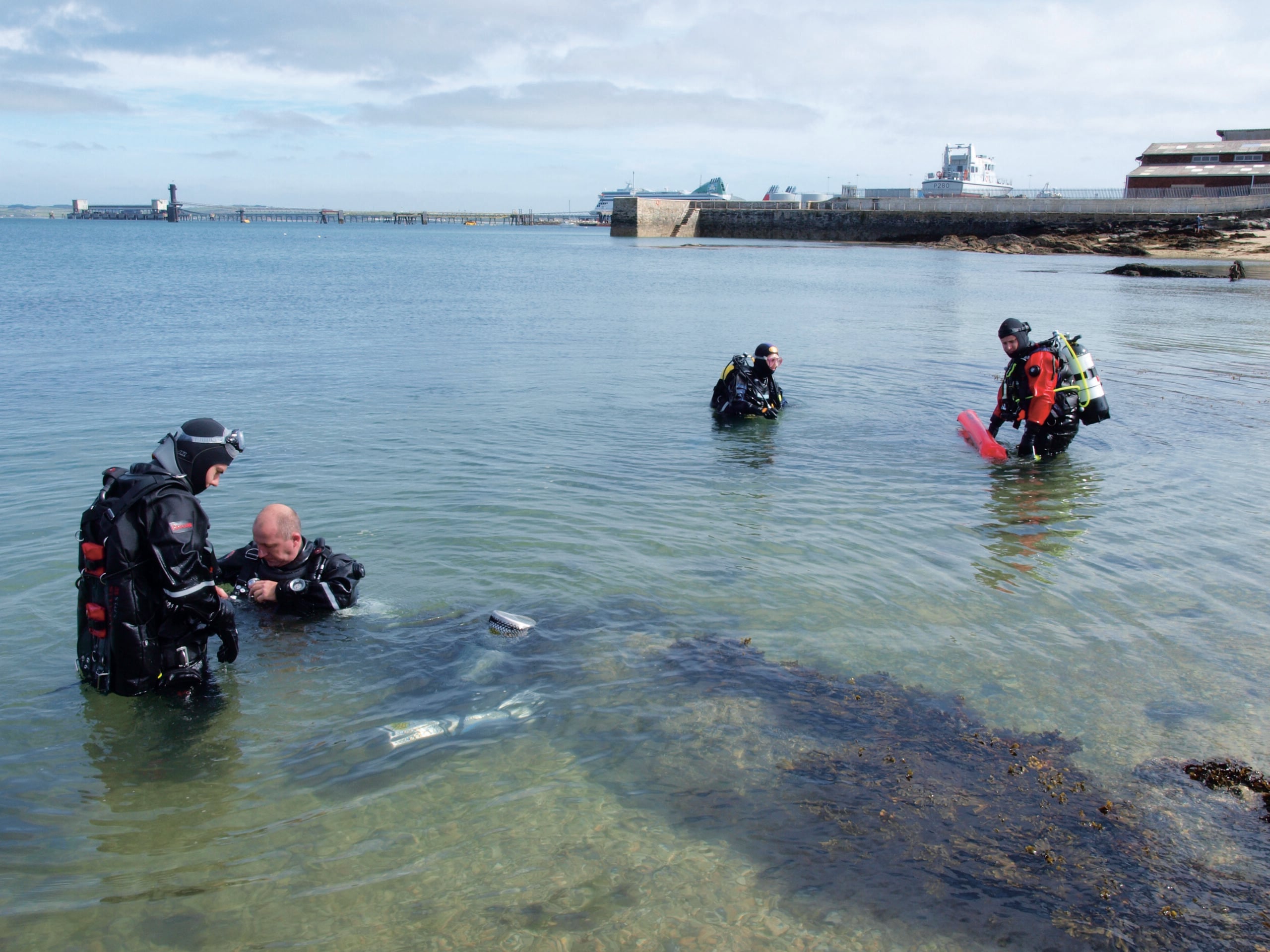
“Then there’s the shore diver, somewhat limited to those World War Twowrecks in shallower waters, but nonetheless equally enjoyable seeing the aquatic life surrounding the maritime reefs of the complimentary British coastline. So how else does this diver differ from the boat diver? Although both dives are similar, the rugged coastline, surges, currents and entry/exit points differ from that of the open sea dive, yet play an important role in navigation.
“Disregarding jumping off a jetty, surge can be unbalancing, boat wakes are replaced by surf, slippery and equipment-cluttered floors are replaced by invisible rocks under the surf, yet getting your fins off can still be challenging, but unless everyone has incredible natural navigation instincts or brings their compass and uses it proficiently, returning home to their initial entry point might be a challenge too. The last thing you want is the HM Coastguard being alerted by your shore cover to come and pick you up!”
Emily Petley-Jones, PADI Examiner and Regional Training Consultant, said: “Having completed many boat dives in the UK, I know there are some fantastic dives which can be reached either from the shore or by boat. When considering diving in a new location, it is always a good idea to go out with a local dive boat, as you will greatly benefit from their local knowledge of the dive site, topography and interesting features.
Diving Features
Diving from boats allows you to get to dive sites which are inaccessible from the shore. Additionally, when diving from a boat there are some which have additional benefits, such as a head, cabin for shelter, and a spares box, or you may even get the luxury of a lift to get you out of the water, and hot drinks for after your dive. The most-important feature of diving from a boat has to be the additional safety provisions on board, including oxygen, first-aid kits and a marine radio so help can be summoned quickly if necessary.
“There are some excellent reasons for choosing to dive from the shore as well. Shore diving in the ocean usually costs as much as your air fill, parking and a Cornish pasty.
This makes it an excellent low-cost option for divers. Additionally, there is the flexibility to dive at a time that suits you, though it is always worth checking the tide tables to get the best tides.

You can often get several boat dives in one location. As the shore dives are generally shallower than sites you may visit on a boat, you will most likely have longer no-stop limits on your computer, so can dive for longer. When planning shore dives, you should also factor in where the parking is, how far you will have to carry your kit, and over what terrain as this can sometimes make the logistics of shore diving more challenging. You should also ensure you bring plenty of spares for your kit as it is unlikely you will find a spare fin strap nearby should yours break.”
Understanding and knowledge as well as key skills for the different environments chosen to dive are vital tools to have a safe and enjoyable day
Photographs by Mark Evans
FAQ
Q: What are the main benefits of boat diving?
A: Boat diving gives access to offshore sites that are not reachable from shore, including deeper wrecks and reefs. Boats often provide added comforts such as shelter, toilets, hot drinks, and lifts, as well as important safety equipment like oxygen, first aid, and marine radios.
Q: What are the downsides of boat diving?
A: The main drawbacks are the cost (typically £70–£80 for a two-dive charter), the need for advance planning, and the challenge of kitting up and entering the water while the boat is moving. It also requires careful gas planning and navigation back to the pick-up point.
Q: What are the advantages of shore diving?
A: Shore diving is very affordable, with costs usually limited to air fills, parking, and food. It also offers more flexibility to dive at times that suit you, and sites are generally shallower, giving longer no-stop times on your dive computer.
Q: What challenges does shore diving present?
A: Shore dives can involve dealing with surf, surge, slippery rocks, and tricky entries and exits. Carrying kit over long distances or rough terrain can also be demanding. Navigation is critical, as divers need to ensure they return safely to their entry point.
Q: Which type of diving is safer—boat or shore?
A: Both can be safe when well-planned. Boat dives often come with better on-board safety provisions, while shore dives rely more on the diver’s preparation, navigation, and surface cover.
Q: How should divers choose between boat and shore diving?
A: The choice depends on factors like cost, experience, logistics, and the type of site you want to explore. For new locations, experts recommend diving from a boat first, as local skippers and guides provide valuable knowledge about conditions and features.
This article was originally published in Scuba Diver Magazine
Subscribe today with promo code DIVE1 — enjoy 12 months for just £1!