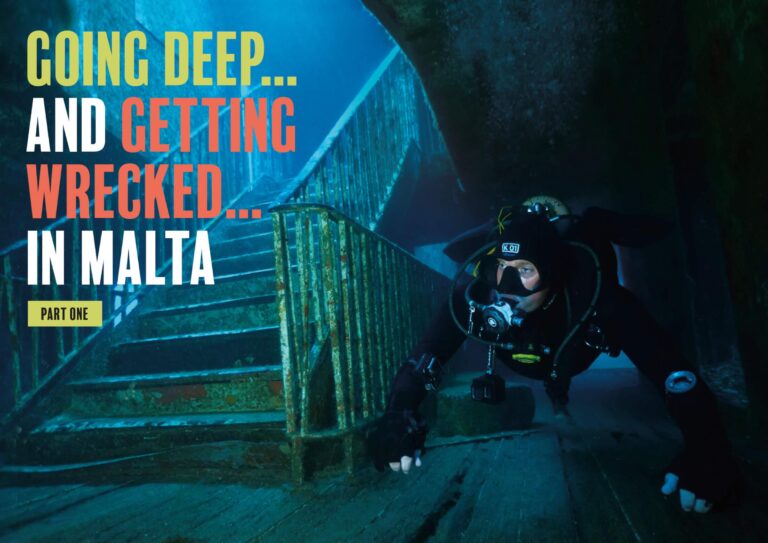
Luke Evans makes the most of a family diving holiday to the Mediterranean hotspot of Malta to rack up another couple of PADI certifications – Deep Diver and Wreck Diver – on his way to Master Scuba Diver
Text and photographs by Mark Evans
The Maltese archipelago is one of the top destinations for scuba diving in Malta, perfect for adding new dive qualifications to your CV. With a plethora of highly regarded dive centres covering several of the major training agencies, and wrecks and reefs in every depth range, the islands of Malta and Gozo – and tiny Comino nestled between – are the ideal place to either start your journey with an entry-level course, add some additional recreational training to your skillset, or even venture into the world of technical diving. There are plenty of centres who can also help you ‘go pro’ if you fancy making diving a career.
The Evans clan made one of our regular trips for a family diving holiday in Malta this summer, after an unusually long five-year hiatus, and while we were looking forward to just getting some good diving in on some of the most-popular dive sites (see issue 90 for the full story of our visit and some of the sites we visited), including some that had previously been out of Luke’s reach when he was a Junior Advanced Open Water Diver, it also made sense to add a couple of Specialties at the same time, so we dually organised with the team at Divewise, one of the leading centres for PADI courses in Malta, for him to complete his Deep Diver and Wreck Diver certifications..
Arriving back at Divewise HQ in St Julian’s felt like coming home. There is such a warm, welcoming feeling to the place, and it is not hard to see why the team have such a huge repeat clientele list. We were swiftly paired up with our driver, guide – and Luke’s instructor – for the week, Michael Tandy. Mike was an excellent guide, and he really gelled with Luke, who certainly enjoyed his two courses.
Luke came on the trip as a PADI Advanced Open Water Diver with just shy of 300 dives under his weightbelt, and getting his Deep Diver and Wreck Diver Specialties would be another couple of steps on the ladder towards his Master Scuba Diver rating, as well as being certs that would expand his diving skillset. Dive site planner extraordinaire Viv had scheduled a great selection of dive sites over our four days of diving, which included one of Luke’s favourites from his last visit, the HMS Maori warship, as well as the Um El Faroud, the P29 (sister ship of the one he did in Comino on our last trip) and the Karwela.

Um El Faroud
First up as part of Luke’s Wreck Diver course was a two-dive visit to the Um El Faroud, one of the icons of Malta wreck diving and among the best wrecks in the Mediterranean, and one of the shipwrecks he was most looking forward to visiting having seen our photographs from previous visits.
Located off the coast of Wied iz-Zurrieq, this Libyan oil tanker – though originally built in Middlesborough in the UK in 1969 – was thoroughly prepared and scuttled as an artificial reef back in 1998 after suffering severe damage in a gas explosion while it was in drydock in 1995. Tragically, nine shipyard workers were killed in the incident, and there is a brass memorial plaque on the front of the bridge.
Measuring 110 metres in length, with a beam of some 16 metres, she makes for an impressive sight as she appears from the blue.
The prop is down at 36m, while the top of the funnel reaches to 15m, so that gives you an idea of the scale of the vessel.
Given this was Luke’s first visit to the wreck, we did a grand tour of the external areas, with dive one focused on the stern, and dive two on the bow and midships
She lies a good 150 plus metres offshore from the entry point (which is where the small tourist boats operate from to the nearby Blue Grotto, so watch your head as you are leaving/returning to the entry/exit point), but handily there is a sculpture of an old-fashioned hardhat diving helmet on a square plinth about halfway there to aid navigation. As it happened, on our diving day, the vis was that exceptional, we could just about make out the shape of the Faroud stern while we could still see the rocky reef behind us.
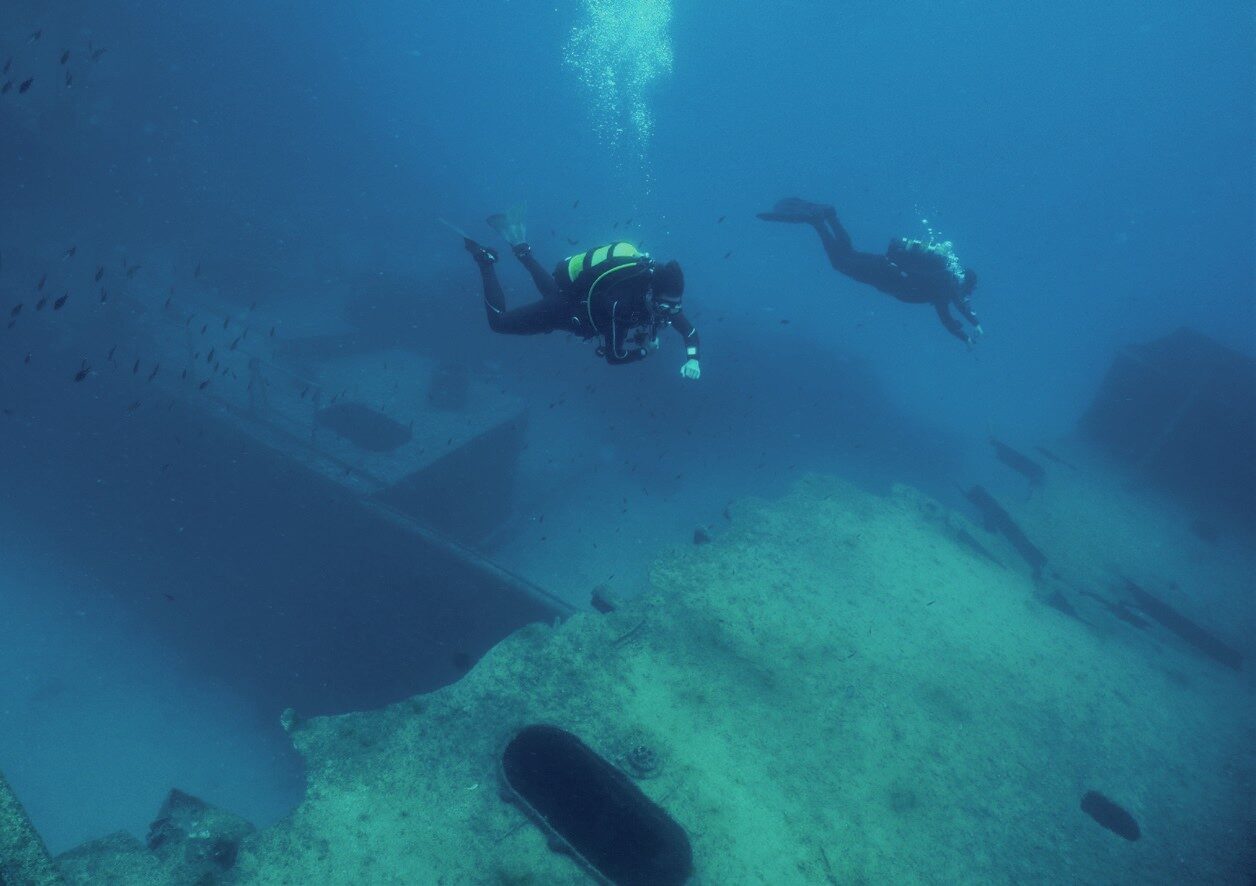
We did two dives on the Faroud, but this still only scraped the surface of what is possible on this huge wreck. Experienced and suitably trained wreck divers could spend an entire dive inside the engine room and superstructure alone, whereas on our dives, as it was Luke’s initial Wreck Diver course dives, we barely passed through a couple of areas of the bridge.

Given this was Luke’s first visit to the wreck, we did a grand tour of the external areas, with dive one focused on the stern, and dive two on the bow and midships. During the winter storms of 2005/2006, the Um El Faroud split completely in two, and now the port side of the bow section almost lines up with the starboard side of the stern section. Being effectively two parts now, this fit well with our two-dive plan.
On dive one, we swam down both covered walkways on either side of the stern superstructure. While these are open on one side above the railing, you are still effectively in an enclosed environment of sorts, so it was a good intro for Luke to be finning in a confined area and be aware of his surroundings. Once we’d done the tour to the ‘split’ and then had a look at the memorial plaque on the front of the bridge, we did a swim-through from one side of the bridge to the other. I could see Luke eyeing up a stairwell disappearing down into the depths of the superstructure – next time, young padawan, next time… He is certainly shaping up to be a ‘wreck ferret’ like his Dad.
On dive two, we ventured all the way to the bow. This site is often listed among the best wreck dives in Malta, thanks to its sheer size and photogenic split hull. We also dropped down and through the enormous split in the hull, which also makes for a great photography location.
HMS Maori
One of Luke’s favourite dives on our last visit was the remnants of the British World War Two Tribal-class destroyer HMS Maori, in St Elmo’s Bay, and we made two dives on it this time around, as it is the perfect wreck to practice mapping, and lining out techniques.
The HMS Maori, originally constructed in Govan, Scotland, ended up being sunk in Valetta’s Grand Harbour during a German air raid in February 1942, near the entrance to Dockyard Creek. In July 1945, the wreck was refloated and moved out of the shipping lane. However, while it was originally planned to tow her intact to near Fort St Elmo and scuttle her there, during the tow, two-thirds of the aft section broke offand went down in deep water, leaving just the remaining third – the bow section – to be sunk as planned, coming to rest in just 16m, making this one of the shallowest wartime wrecks in Malta.
What is left of the wreck is well broken, with much of it semi-buried in the sand of the seabed, but this all helps create a truly authentic atmosphere when you are diving the wreck. The visibility is generally a bit on the green side and more reduced than at blue-water sites such as the Faroud or the P29, but again, this adds to the aura of the place. Just be aware that being a ‘proper’ shipwreck, there are lots of sharp edges to avoid, and the inside is thick with sand and silt, so watch your finning techniques to not destroy the visibility.
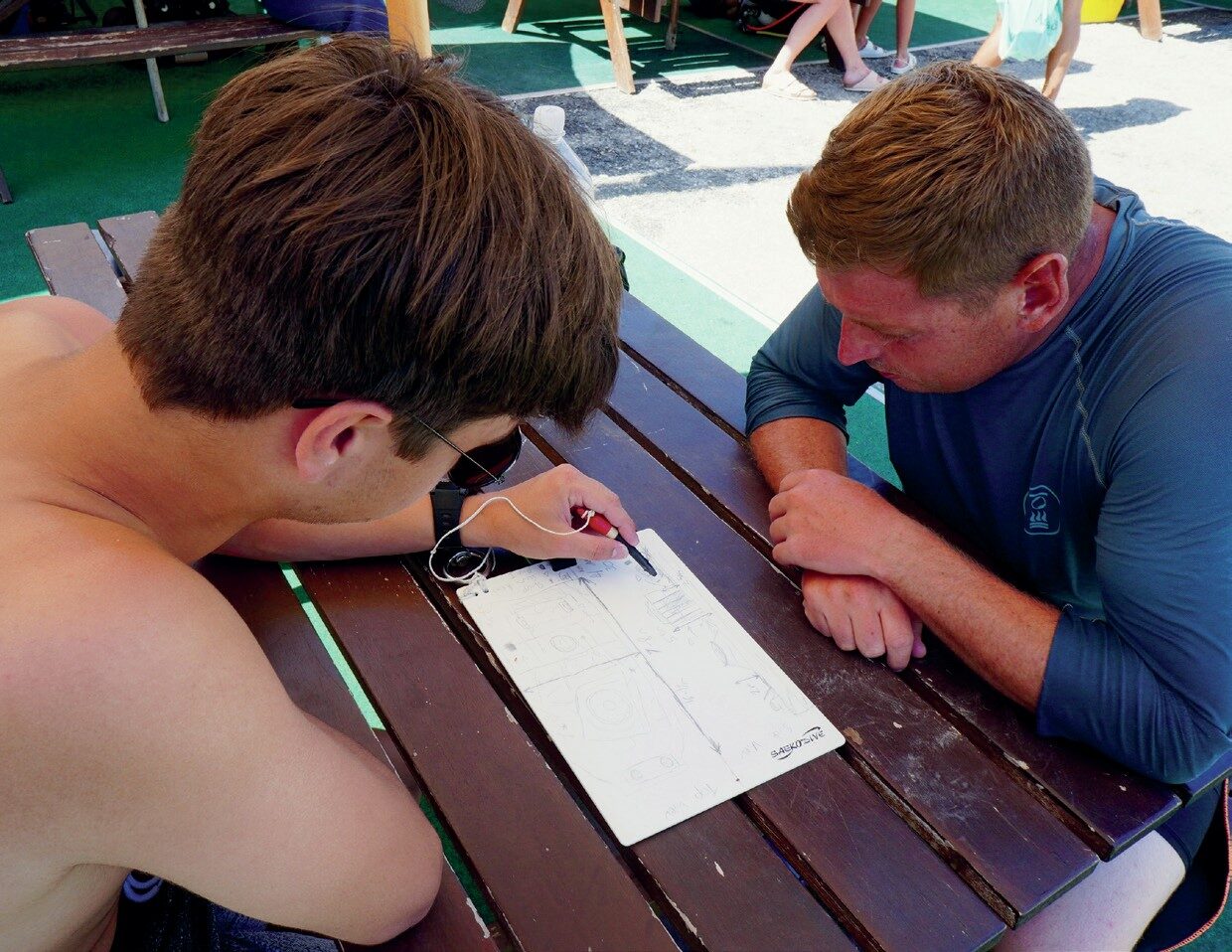
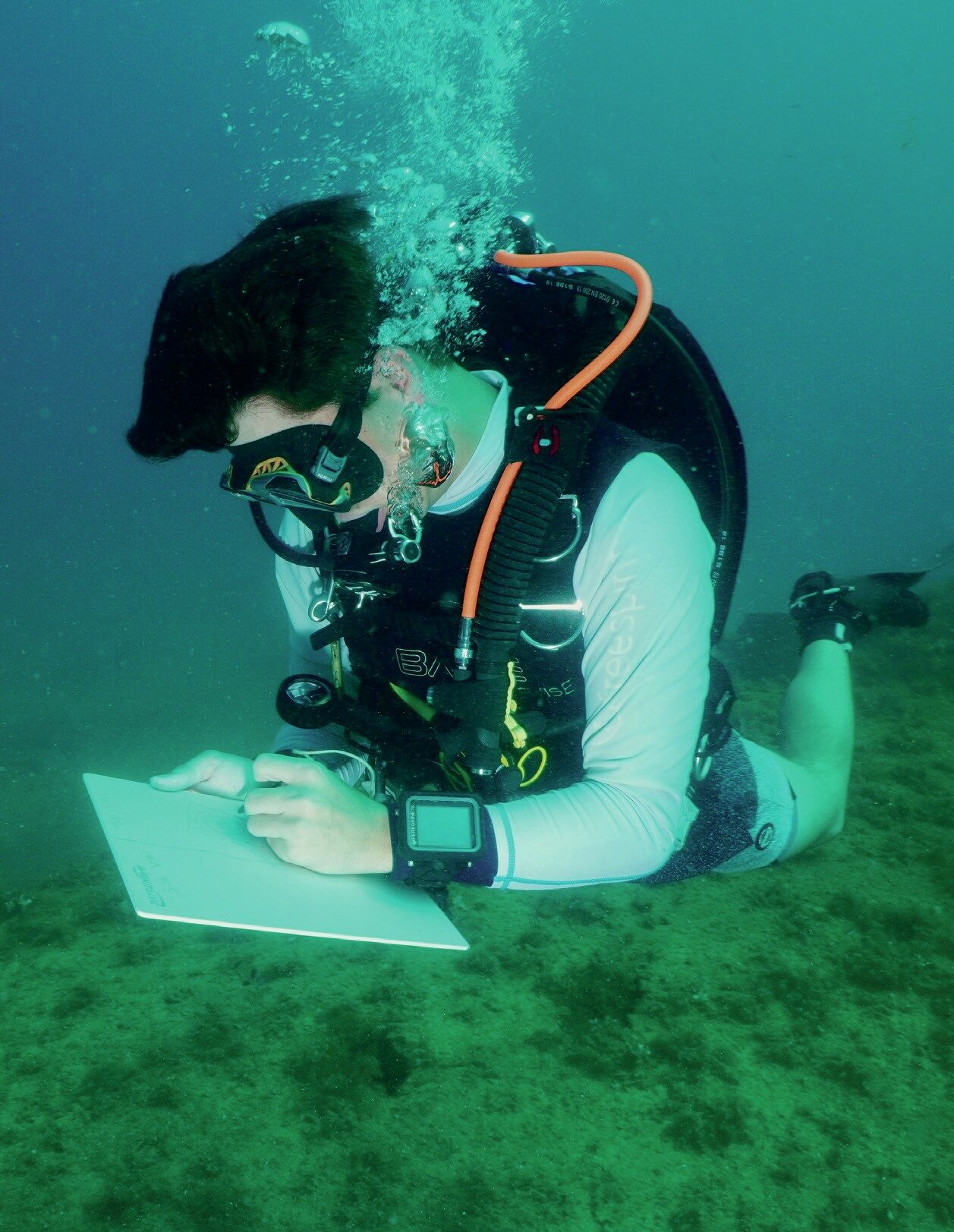
All of this adds to the Maori being a favourite location for instructors teaching the Wreck Diver course. Mike had Luke busy drawing out a sketch of the Maori, with all of its distinctive features, and they spent some time back at Divewise HQ going over his efforts. The shallow depth helps remove any time constraints – to an extent – and this meant Luke could focus on his measurements and drawing.
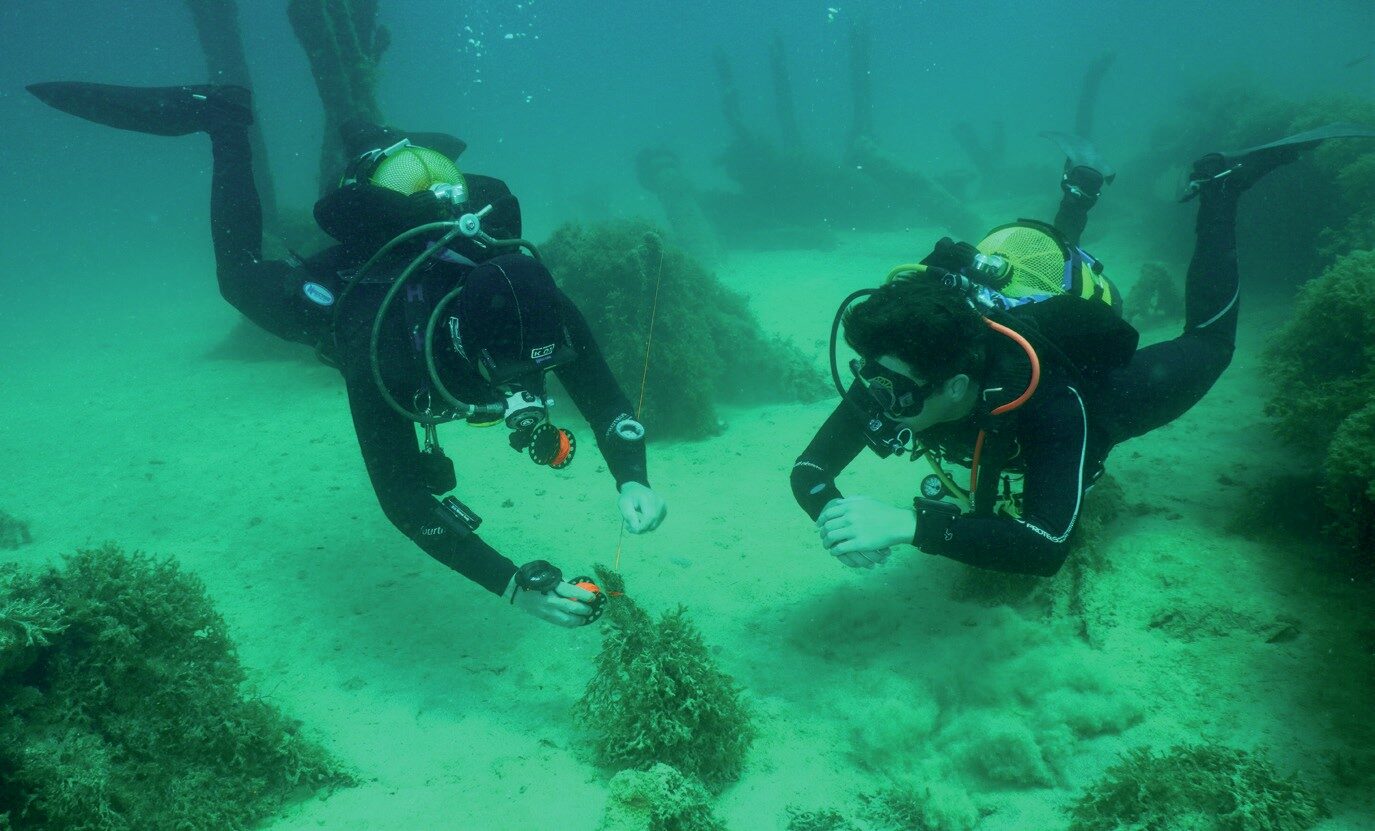
Then came Luke’s favourite bit – the lining out. Mike demonstrated how to line out using a spool, showing how to fasten offthe line at different hold points, and then had Luke do his own lining-out runs. They started with just a couple of tying-offpoints, before progressing to seven or eight as he became more-proficient. Once Luke had mastered lining out through the Maori, Mike upped the ante by having him line out a route with several tie-offs, and then remove his mask before following the line back to the beginning. Some people baulk at mask-removal, but Luke took it in his stride and did a sterling job.
Why Malta is Perfect for Scuba Diving
The Maltese archipelago is one of the top destinations for scuba diving in Malta, offering everything from beginner-friendly reefs to advanced wrecks. With a wealth of highly regarded dive centres representing several major training agencies, the islands of Malta, Gozo, and tiny Comino are ideal for adding new certifications to your diving CV.
- Warm Mediterranean waters with visibility up to 40m
- A wide range of wrecks and reefs across depth levels
- Professional dive centres offering everything from entry-level courses to advanced technical training
It’s also one of the best places for families to combine leisure and learning through PADI courses in Malta.
FAQ – Diving in Malta
Is Malta good for beginner divers?
Yes. Malta, Gozo, and Comino offer sheltered bays, shallow reefs, and excellent visibility, making them ideal for entry-level PADI Open Water courses.
What are the best wreck dives in Malta?
Top wrecks include the Um El Faroud oil tanker, HMS Maori (WWII destroyer), the P29 patrol boat, and the Karwela ferry. Each offers different depths and experiences.
Can families take PADI courses in Malta?
Absolutely. Malta is family-friendly, with dive centres catering to adults and children. Families can train together, from beginner to advanced certifications.
Which diving courses can I do in Malta?
Malta offers everything from PADI Open Water and Advanced Open Water to specialties like Wreck Diver, Deep Diver, Nitrox, and even technical diving.
When is the best time to dive in Malta?
The main diving season runs from May to October, with warm water, calm seas, and visibility up to 40m. Winter diving is also possible but cooler.
Do I need a guide to dive Malta’s wrecks?
Yes, most wrecks require guided dives with a licensed dive centre for safety. Many wrecks, like Um El Faroud, are deep or partially enclosed.
