Komodo to Raja Ampat
Adrian Stacey continues his epic odyssey on board a traditional phinisi-style Indonesian liveaboard travelling from Komodo to Raja Ampat.
I was on a pilgrimage from Komodo to Raja Ampat, part of an expedition that would take 19 days and provide those on board a host of unique and amazing experiences both above and below the water.
The first leg of the trip was from Komodo to Alor (see last issue), and we had left the small town of Labuan Bajo, the gateway to Komodo, seven days earlier and already there had been some fantastic dives, stunning topside scenery and even an exploding volcano.
The second leg of our journey would take us from Alor, across the Banda Sea, to the Banda Islands. These relatively unexplored territories promised to provide even more wonderful sights and memorable encounters, especially as this was hammerhead season in the Banda Sea.
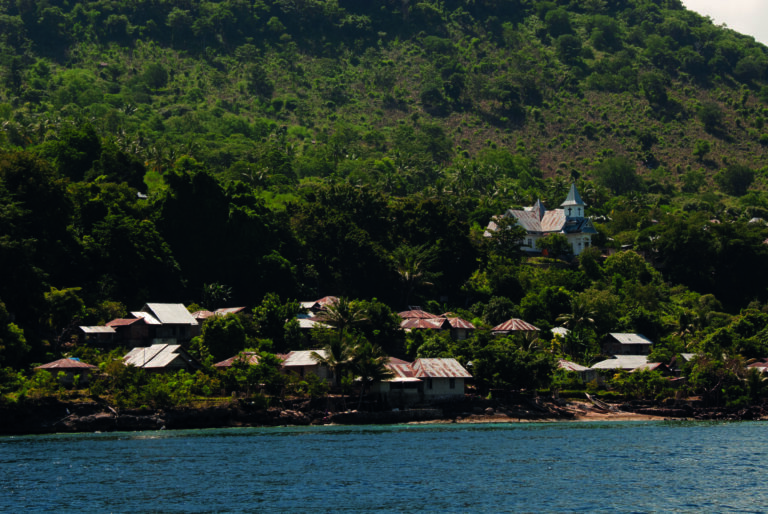
Before venturing out into the wilderness of the open ocean, we had our first scheduled dry day. While the crew stayed behind to restock the boat with more fuel, water and provisions, we ventured onto land to soak up the local culture. Located east of Flores, the Alor archipelago is beautiful.
Spired Churches
Villages dominated by domed mosques or spired churches are perched sporadically on steep tree-covered slopes. The inhabitants, especially the children, are always happy to meet new visitors to the area. They would paddle out to where we were diving in tiny carved-out wooden canoes.
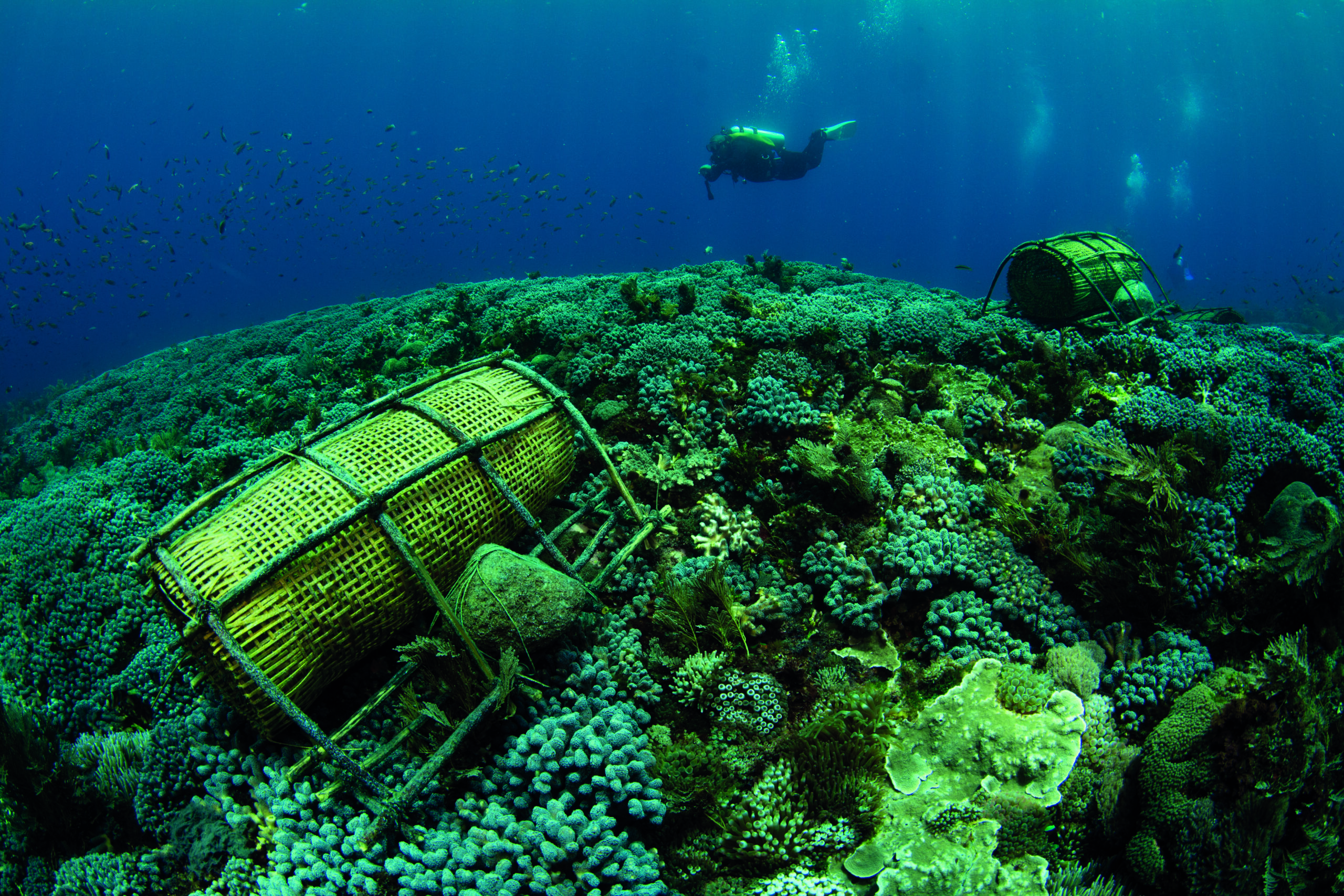
Some would duck dive under the water and stare at us through unusual homemade goggles while others would wait until we popped up from our dives before greeting us with wide smiles. The locals are still very reliant on fishing, but it seems to be carried out in a sustainable way and the intricate wooden traps they use sit on top of the reef looking like extravagant decorations.
The Diving In Alor
The diving in Alor is spectacular. It is not yet as well-known as it more famous neighbours, Komodo and Raja Ampat, but I think it will be in the not-too-distant future. The reefs are varied and pristine, and the currents can be every bit as strong as Komodo.
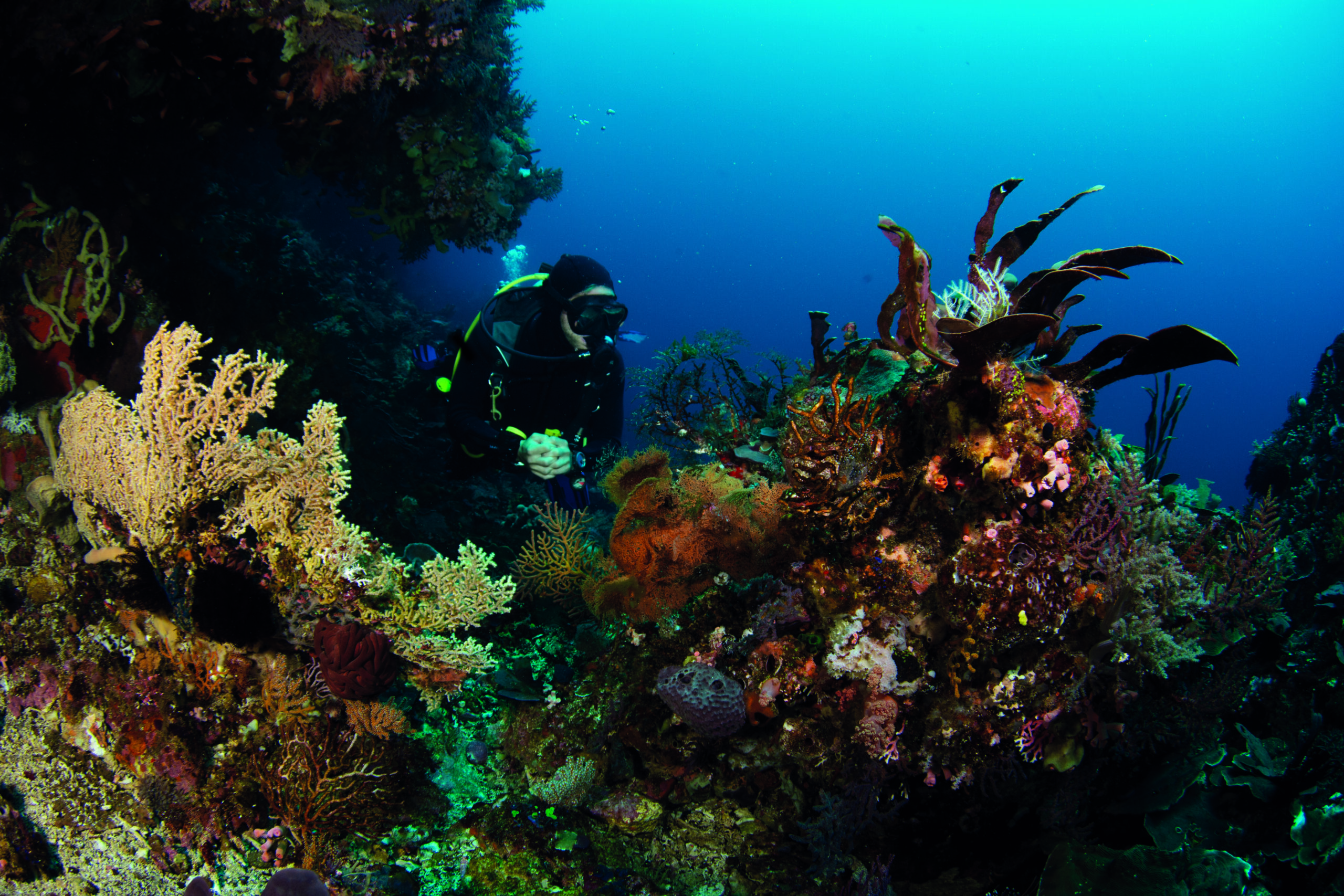
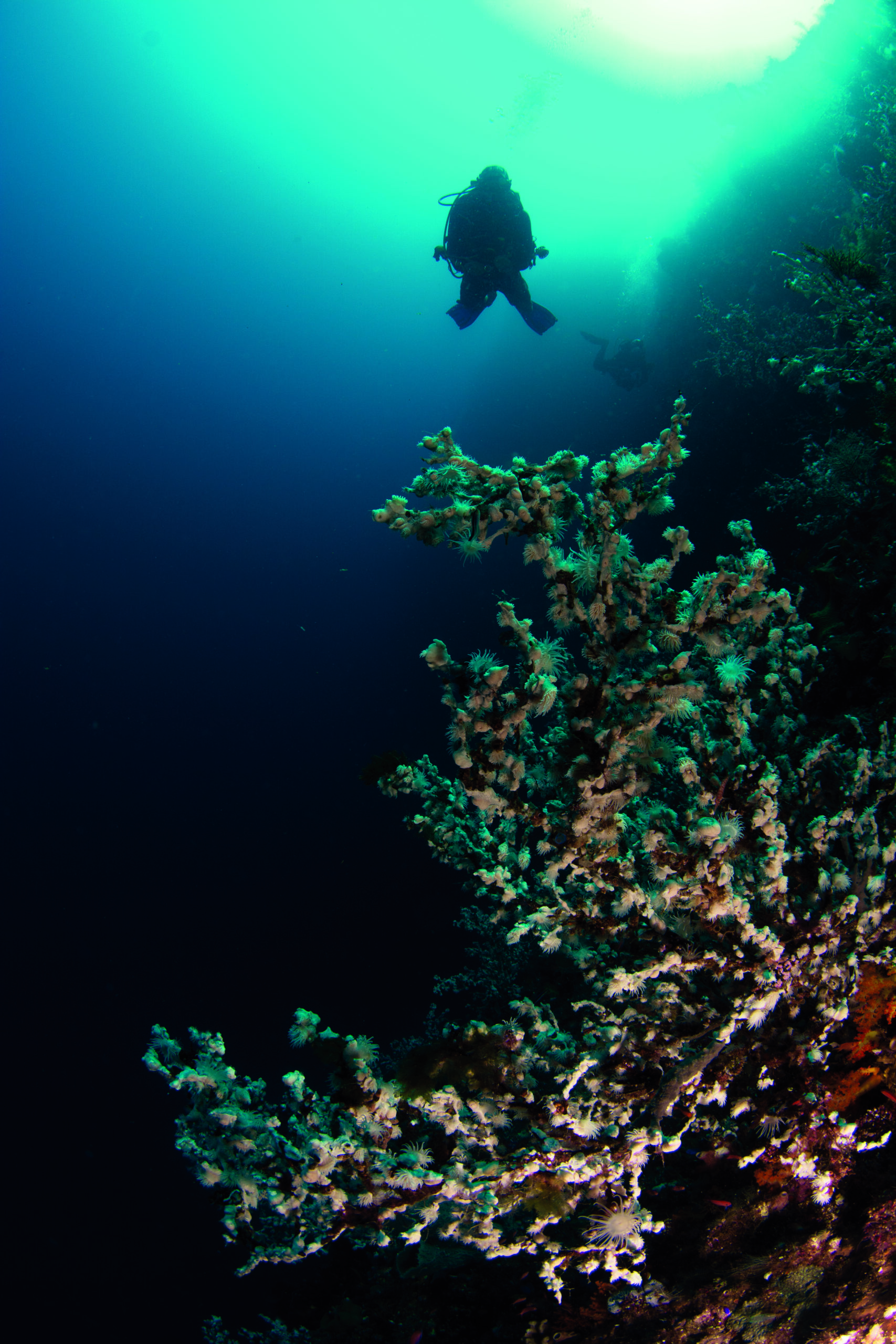
There is also a rich diversity of marine life in the area, ranging from rhinopia to thresher sharks and occasionally even mola mola. At Arch Wall, we found a beautiful wall boasting numerous overhangs, colonized by sponges, sea fans and whip corals. Large gatherings of fusiliers hung out in the blue, while schools of red-tooth trigger fish stayed close to the safety of the reef.
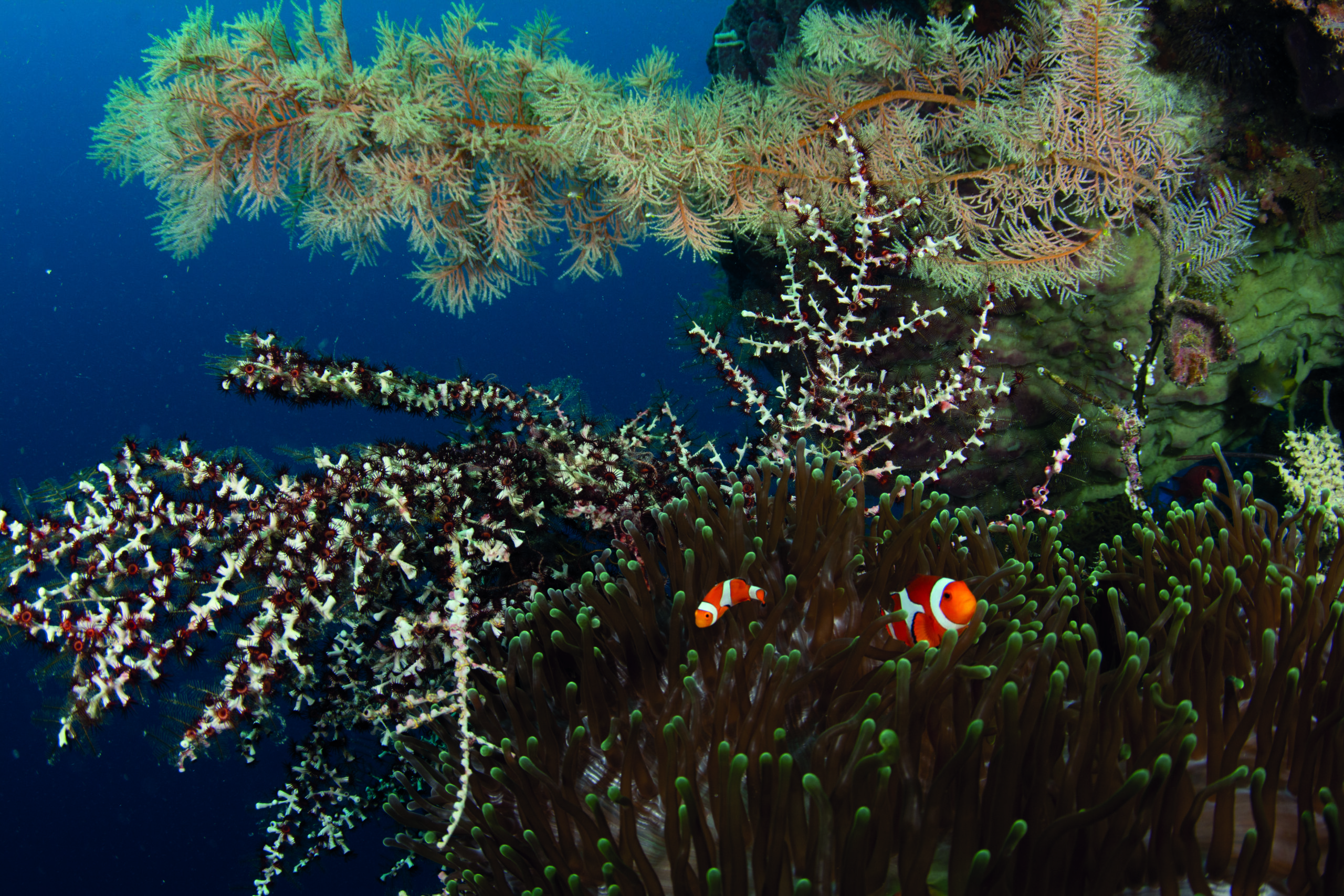
My favourite dive was at the stunning Clown Valley Boulders. A slope covered in hard coral leads down onto an immense plateau littered with pinnacles, and every inch of its substrate is covered in hard corals, soft corals, whip corals and sponges. Fighting for space in among this profusion of growth are literally hundreds of anemones with resident clown fish.
Great visibility, schools of fusiliers, tuna and a multitude of small reef fish contributed to the sensory overload. Fish Galore provided more stunning reef and a close encounter with a thresher shark. The night dive showed off Alor’s critter credentials with a variety of nudibranchs, scorpion fish, decorator crabs and many other weird and wonderful nocturnal creatures.
The next three days would be spent island hopping across the Banda Sea, diving by day and traveling by night. The first island we reached was Pulau Wetar, followed by Pulau Nyata, Pulau Mitan, Pulau Damar and Pulau Terbang Utara.
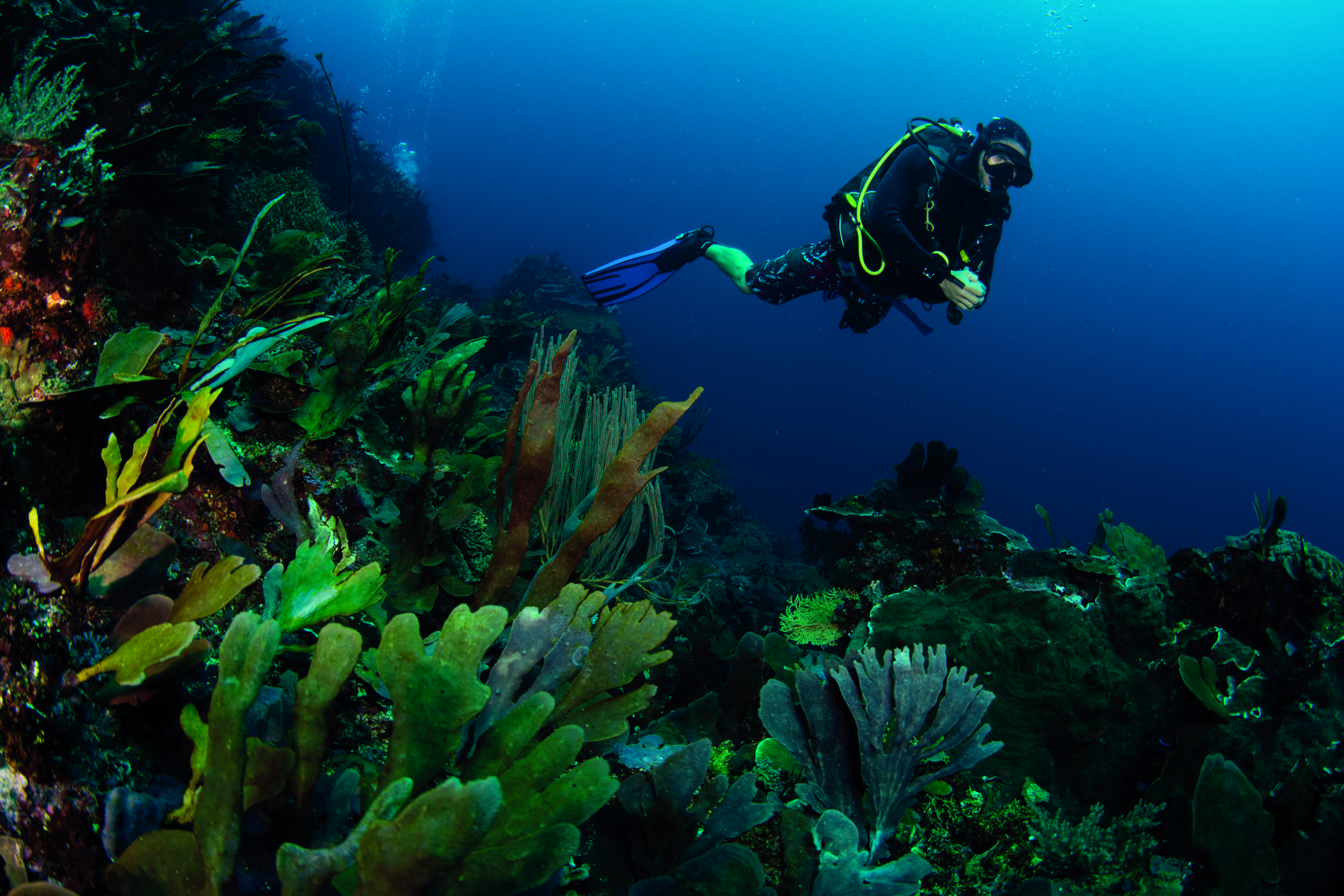
At each of these destinations we had some amazing dives along sheer, plunging walls, all with their own characteristics and all teeming with fish. At Wetar, the walls were scarred with deep crevices and decorated with sea fans and sponges. Nyata boasted soft corals and whip corals along with a beautiful hard coral garden on the fringing reef.
Mitan’s walls
Mitan’s walls were home to several species of nudibranchs and were infested with feather stars, as was the shallow, bommie-covered plateau that sat on top of this spectacular drop-off. Damar offered a great mixture of hard and soft corals, while Terbang Utara was covered in thick, bushy black coral.
Due to choppy seas hindering our progress on some of our night-time crossings, we were only able to dive twice a day on this stretch of our journey. However, a close encounter with a huge fin whale and her calf, a visit to a beautiful palm-fringed beach and an ill-fated attempt to snorkel with a large pod of pilot whales, more than made up for the two dive days.
Not to mention that it gave us the chance to relax, off gas and simply enjoy the fact that we were cruising through a beautiful and remote part of the world.
With only two days left before arriving at the Banda islands, we reached the huge, submerged reefs of Dusburgh and Nil Desperandum. Karang Dusburgh (Karang is the Indonesian word for reef) was our first port of call. Hiding only a few metres under the surface, a vast plateau sits on top of steep walls adorned with sea fans and barrel sponges.
Blacktip Reef Sharks
Blacktip reef sharks patrolled the shallows and large schools of shy humphead parrot fish grazed relentlessly on hard corals – reef conservation was clearly not a priority for them! Out in the blue was a frenzy of activity as massive tuna torpedoed through the ranks of a large school of the constantly picked-on fusiliers.
Then gliding along the reef came the creature we had all been hoping to see and what this reef is well known for – a hammerhead shark. The moment was fleeting, but it was a good start to the day. Three hours northeast was our next site, its topography and marine life are very similar to that of Karang Dusburgh but out of the two, I preferred Karang Nil Desperandum.
The reef was just a little bit prettier, the marine life a tad more prolific and the action slightly more frenzied. Not to mention it has a much cooler name. Translated Karang Nil Desperandum means Do Not Despair Reef.
We dived twice on this fabulous reef, and where Dusburgh had provided a great start to the day, Nil Desperandum gave us a fantastic finish with at least four hammerhead sightings throughout our final dive. The privileged feeling, mixed with a hint of smugness, which accompanies such sightings soon evaporated upon hearing that a few days earlier another liveaboard had seen a school of hundreds of these unique creatures.
The Final Destination
The final destination before our next restock and land visit day was the amazing Gili Manuck. This small volcanic island in the middle Banda Sea looks like something out of a Jules Verne novel. Its steep slopes are covered in thick forest which is home to hundreds of noisy sea birds. They endlessly circle the island, occasionally plunging into the water to search for food.
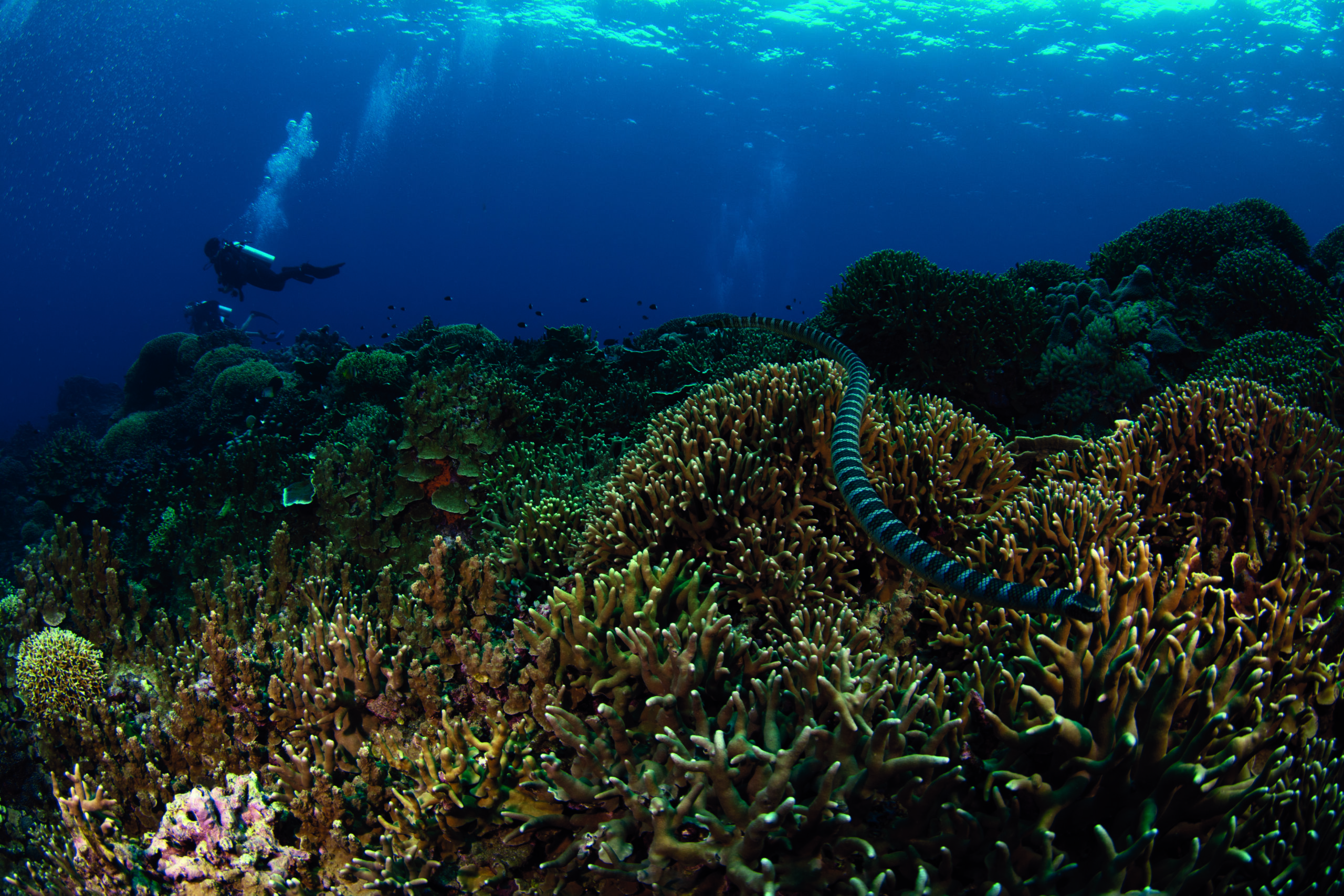
While we were there we rescued two frigates and a boobie that had injured themselves on entry – their fishing techniques clearly needing a little more practice. But what makes this place really special is beneath the surface. On a single dive we encountered at least 50, sometimes quite large and often over-friendly, sea snakes.
Completely unfazed by our presence they would swim between our legs or creep up stealthily from behind, materializing just in front of our masks. It was great fun to watch when it happened to other divers, but a little scary being on the receiving end. We had three dives here, all of them superb. The snakes were the undoubted stars of the show, but by no means the only stars.
We had a fleeting glimpse of a hammerhead, several encounters with eagle rays, a huge marble ray and for the macro enthusiast, there was a good smattering of large, colorful nudibranchs. The reefs themselves are also beautiful and varied.
There were plunging drop-offs and huge plateaus, littered with coral-covered boulders and bommies that sat in warm volcanic sand. Massive barrel sponges and huge patches of plate coral engulfed some areas of reef while ridges of jagged black rock supported abundant soft coral growth. Gili Manuck really is a magical place – unless you have a phobia for snakes, then it would be just terrifying.
After a 12-hour night time crossing, we arrived at the Banda islands. On this leg of the expedition we had travelled over 500 miles, enjoyed 16 dives and had encounters with hammerhead sharks, eagles rays, whales and of course plenty of sea snakes. The journey so far had been an amazing experience – and we had not even reach Raja Ampat yet.
Photographs by Adrian Stacey
FAQ
Q: What makes a Komodo to Raja Ampat liveaboard special?
A: This 19-day journey covers some of Indonesia’s most remote and biodiverse waters. Divers experience Komodo’s currents, Alor’s pristine reefs, the hammerhead-rich Banda Sea, snake-filled Gili Manuck, and finally, the legendary Raja Ampat.
Q: What marine life can you expect to see on this route?
A: Highlights include hammerhead sharks in the Banda Sea, blacktip reef sharks, thresher sharks, mola mola, sea snakes at Gili Manuck, eagle rays, fin whales, pilot whales, massive tuna, and incredible critters like rhinopias, nudibranchs, and decorator crabs.
Q: What are the diving conditions like in Alor?
A: Alor offers strong currents, vibrant walls, and diverse marine life. Sites such as Arch Wall and Clown Valley Boulders showcase healthy reefs, anemone fields, and large schools of fish, often with exceptional visibility.
Q: Why is the Banda Sea famous among divers?
A: The Banda Sea is known for hammerhead encounters, stunning coral-covered walls, and vast remote reefs like Karang Dusburgh and Nil Desperandum. During hammerhead season, divers may see multiple individuals—or even schools.
Q: What is Gili Manuck known for?
A: Nicknamed “Snake Island,” Gili Manuck is home to huge numbers of sea snakes, often interacting closely with divers. It also features hammerheads, eagle rays, marble rays, and colourful reefs with both macro and wide-angle subjects.
Q: Are there topside experiences during the expedition?
A: Yes. Divers visit remote villages, palm-fringed beaches, volcanic islands, and the bird-filled forests of Gili Manuck. Land excursions allow cultural encounters, nature walks, and moments to relax between dives.
Q: How many dives can you expect on this section of the trip?
A: On the Alor to Banda Islands leg alone, divers completed around 16 dives, despite occasional rough crossings. These included wall dives, plateaus, night dives, and iconic hammerhead hotspots.
Q: What was the most unique wildlife encounter?
A: Many divers rank the hammerhead shark sightings at Nil Desperandum as the highlight, but the sheer number of sea snakes at Gili Manuck—sometimes swimming between divers’ legs—made for unforgettable and unusual dives.
Q: How remote is this expedition?
A: The journey crosses more than 500 miles of open sea. Most dive sites are isolated, far from mass tourism, making this a true adventure for divers who seek pristine, rarely visited reefs.
Q: Who is this trip best suited for?
A: Experienced divers looking for adventure, biodiversity, and unique encounters. Strong currents, deep dives, and remote conditions mean divers should be confident and comfortable in challenging environments.
This article was originally published in Scuba Diver Magazine
Subscribe today with promo code DIVE1 — enjoy 12 months for just £1!