Walt Stearns has travelled extensively over his decades as an underwater photographer and photojournalist, but incredibly, he’d never dived the Egyptian Red Sea, so in July 2025, he finally saw this much-lauded diving destination for himself, during an epic two-week Red Sea liveaboard diving trip aboard the All-Star Scuba Scene liveaboard that took in all of the best dive sites from north to south.
First Impressions of Red Sea Liveaboard Diving: Abu Dabbab
Now, this is my idea of a check-out dive. Shortly after pulling out of Port Ghalib on Egypt’s central Red Sea coast, we arrived at our first dive site at Abu Dabbab Reef. Abu Dabbab, along with its neighbouring reef Sha’ab Marsa Alam, feature a common profile -crests that begin near the surface and drop abruptly. This was the first dive of a 13-day adventure aboard the 159-foot liveaboard All-Star Scuba Scene. We descended to a plateau at a depth of 32ft-65ft that was decorated with a collection of eight-to-15-foot column-shaped coral formations, alive with an assortment of orange anthias.
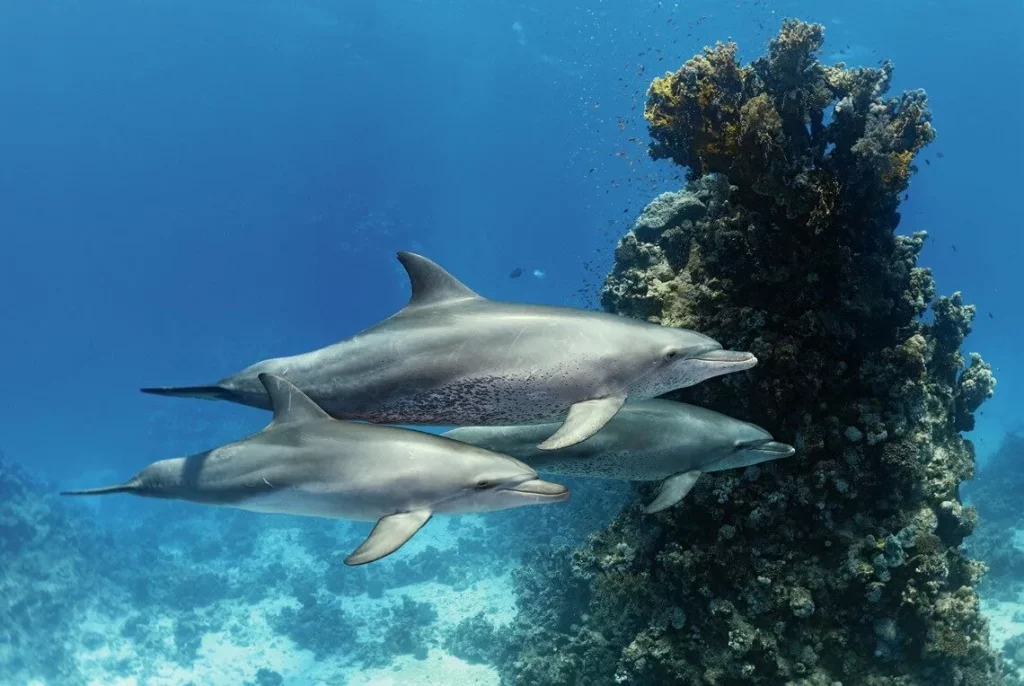
I was quickly engrossed in getting the first images of a Red Sea photo library when I saw something large and gray in my peripheral vision. Turning my head, my mind instantly registered – bottlenose dolphin! Before I could get a decent shot, this spirited cetacean zipped off, buzzing a few other divers in the group before departing. I thought the encounter was over, but my assumption was quickly proven wrong. The dolphin returned, this time with a few friends who took turns making several close passes around me. This time, affording me a few decent images before they too were gone. Wow! If this is what a Red Sea check-out dive is like, what’s the rest of the trip going to be?
Did you know?
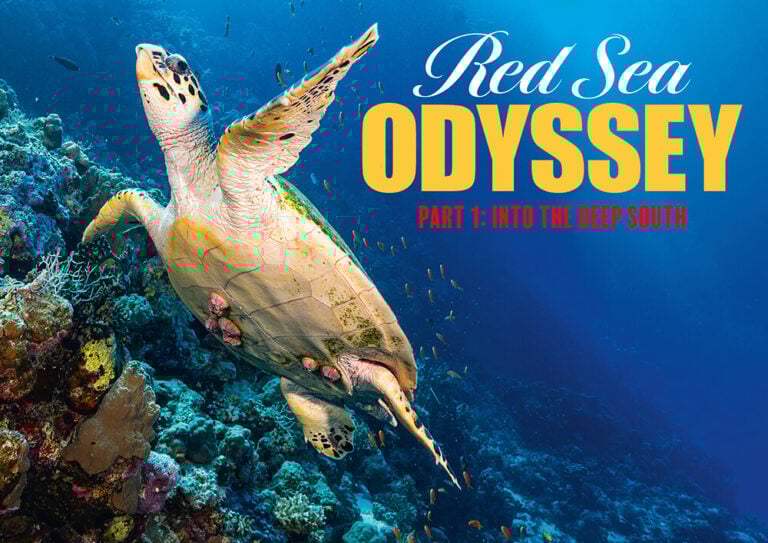
Hawksbill turtles are most easily identified by their “beaks” but they also have other distinguishing characteristics. A green sea turtle has a clean shell whereas a hawksbill turtle’s shell often gathers algae growth and appears mottled.

Life Aboard the All Star Scuba Scene
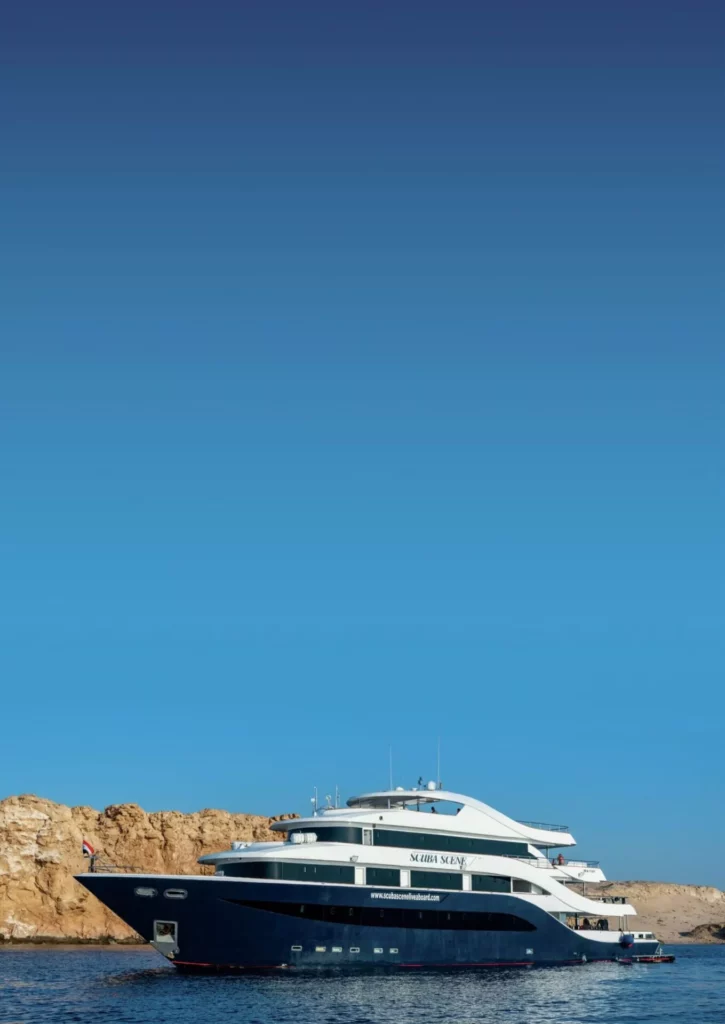
In 2023, American-based liveaboard operator All-Star Liveaboards expanded their global options into the Red Sea with the Scuba Scene. Measuring 159 feet long by 34.5 feet wide, it’s a massive vessel by current liveaboard standards, with a total of five deck levels. The steel-hulled ship accommodates up to 28 guests in 14 twin-bed/double cabins, each with its own ensuite bathroom. While six cabins on C Deck have doors leading to the outer deck, all cabins feature large sea-view windows.
Because this is Egypt, the climate is very hot most of the year. Thankfully, all cabins include adjustable, temperature-controlled air conditioning, as do the dining room, the TV room, and the main salon. My one disappointment was seeing that the camera area did not feature any form of climate control, which often became a sweaty affair when working on my underwater photo system.
Red Sea Liveaboard Itineraries Explained
The itineraries offered on the All Star Scuba Scene are categorized by their positioning along the Egyptian coast. The southern itinerary covers Egypt’s Central and Southern regions, including Rocky Island, St John’s Plateau, Elphinstone Reef, Daedalus Reef, and both Small and Big Brother Islands.
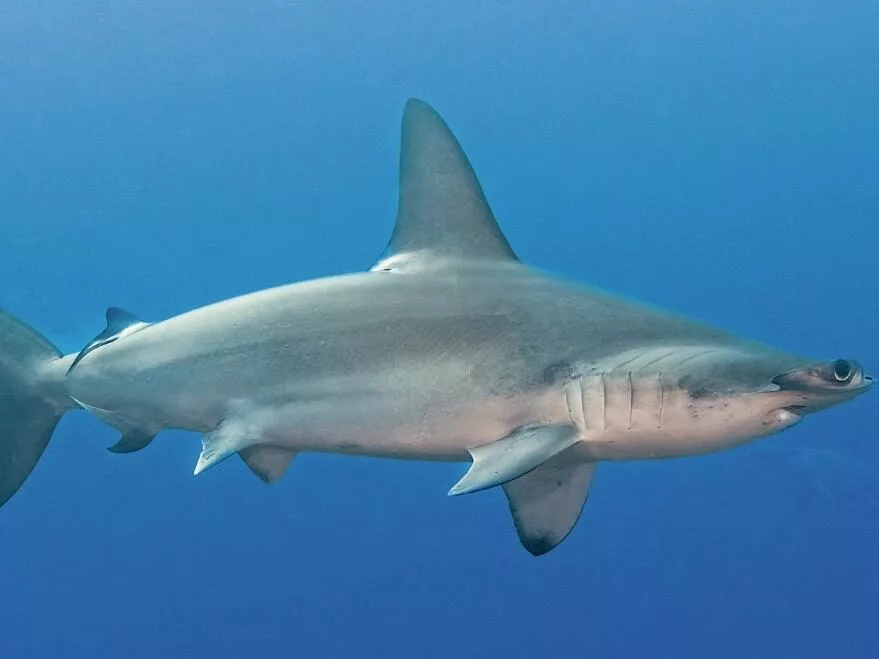
During the winter season (October-April), when water temperatures range from 73-82°F, the Brothers, Daedalus and Elphinstone become the star attractions for divers looking to see sharks like oceanic whitetips, schooling scalloped hammerheads, and the occasional thresher shark.
Throughout most of that season, All Star often runs a ‘BDE’ (Brothers, Daedalus, Elphinstone) itinerary for those particularly interested in coming face-to-face with these large, toothy creatures.
The northern itinerary is a totally different animal, with a greater focus on the reefs and wrecks around the southern tip of the Sinai Peninsula. Anyone familiar with the area will recognize names like Ras Mohammed, the Straits of Tiran, and classic wreck dives like the Giannis D and the Carnatic at Abu Nuhas (known as a ship graveyard), the SS Dunraven, and the famous SS Thistlegorm. When I was offered a single epic itinerary last July that included both the northern and southern regions of the Red Sea, it was an opportunity I couldn’t pass up, especially since the Red Sed was one of the few ‘A-list’ destinations I’d yet to visit.
Heading South: Rocky Island, Zabargad and St John’s
After that first day of dives at Abu Dabbab and Sha’ab Marsa Alam, the next four days were spent sampling some of the prime locations the Red Sea’s Deep South had to offer. This included Rocky Island, Zabargad, Habili Ali, Habili Omran, St John’s Plateau (also known as the Cave Reef), and out to the furthest from shore, Daedalus Reef.
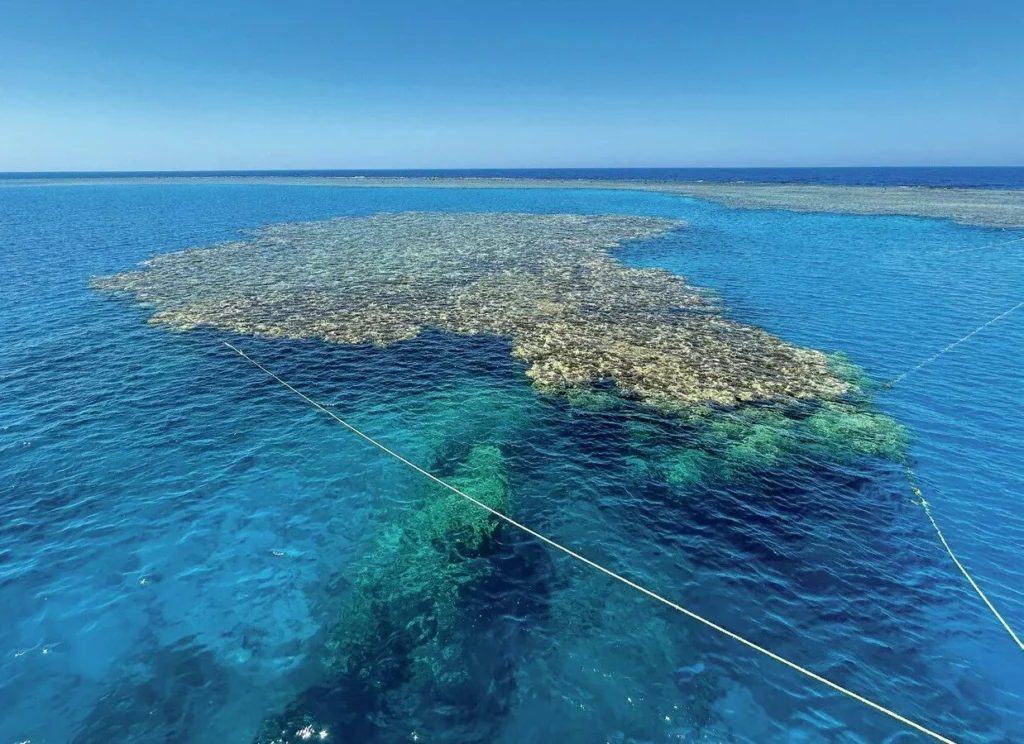
Rocky Island and Zabargad, located a little farther offshore, had more dramatic profiles. Starting at the surface, Rocky Island featured a vertical face that plunged well past 131ft, whereas neighboring Zabargad Reef’s contours were more like a giant stair step, dropping almost straight down to a broad shelf before continuing down into the blue.
Coral Kingdoms and Underwater Landscapes
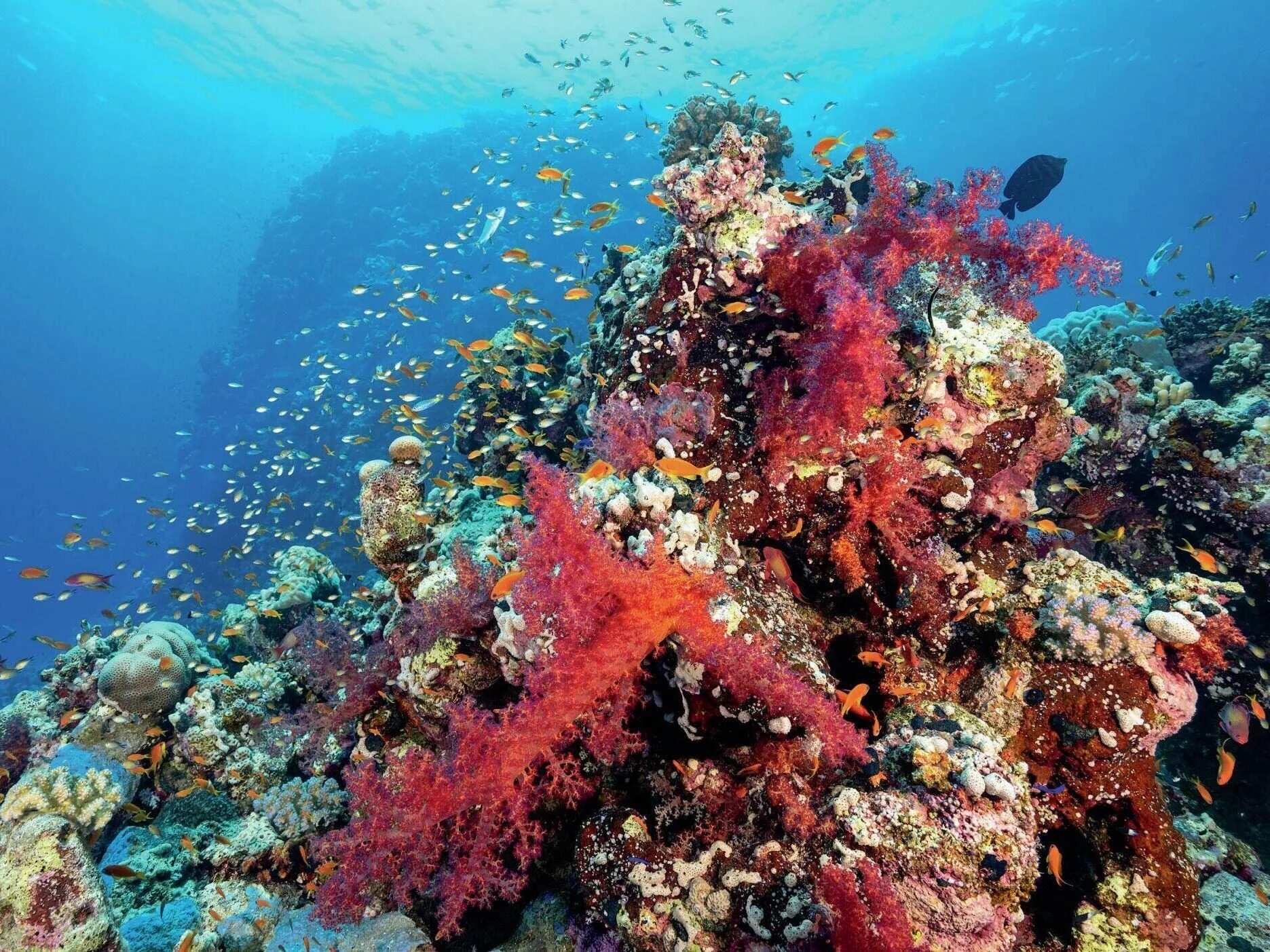
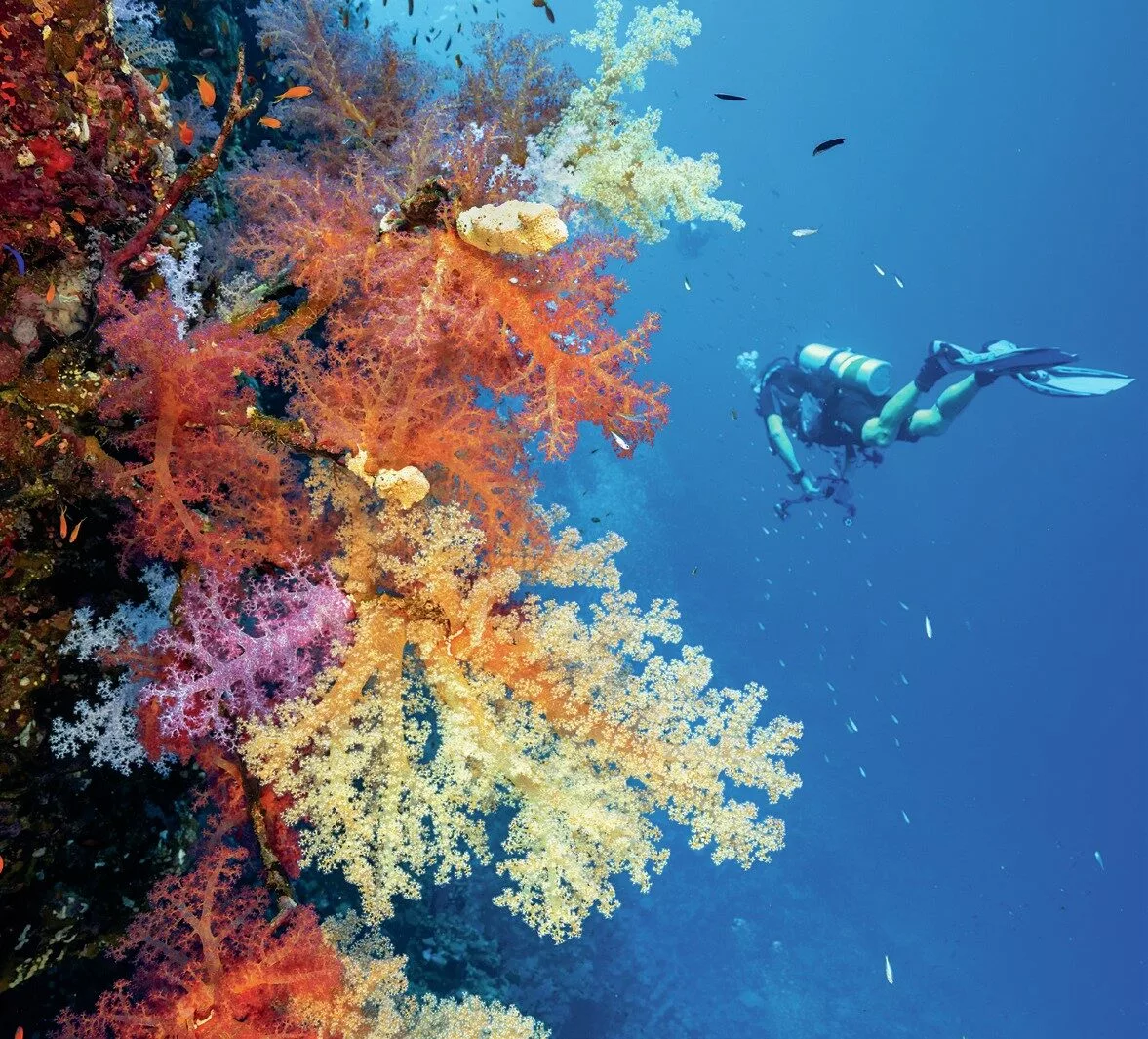
Adding to their dramatic profiles, these reefs were covered in a rich assortment of corals, including one my favorites – Alcyonacea soft corals. While these corals do not produce a stony skeleton, their colonies are famous for flamboyant hues that range from pale yellow to vibrant shades of orange, red, purple, and pink.
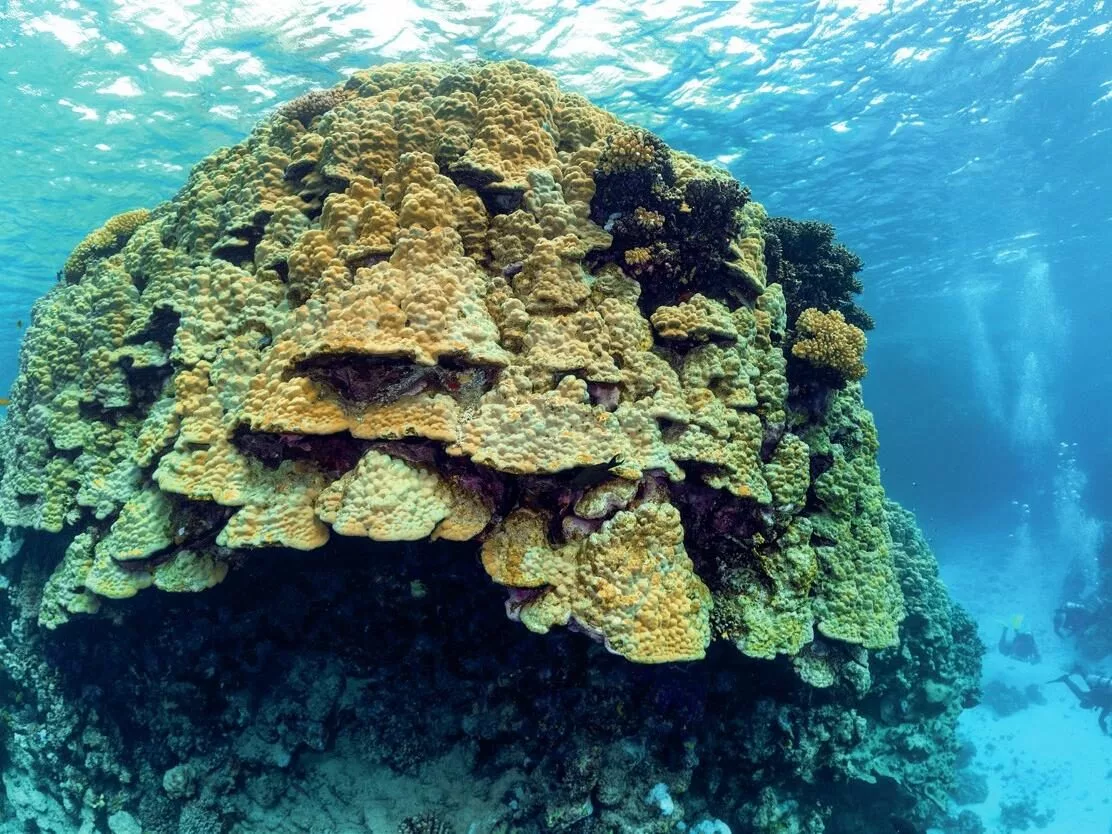
By day three, we had hopscotched our way through Habili Ali, Habbilli Omran, and St John’s Caves, all sites that were similar to Rocky Island and Zabargad. Habili Ali is an elongated, flat-topped seamount with a shallow top and contours plunging straight down to around 103ft before turning outward into a sloping profile. The underwater terrain of Habili Omran is a broad subsea mount with five massive, 60-foot-tall pinnacle formations.

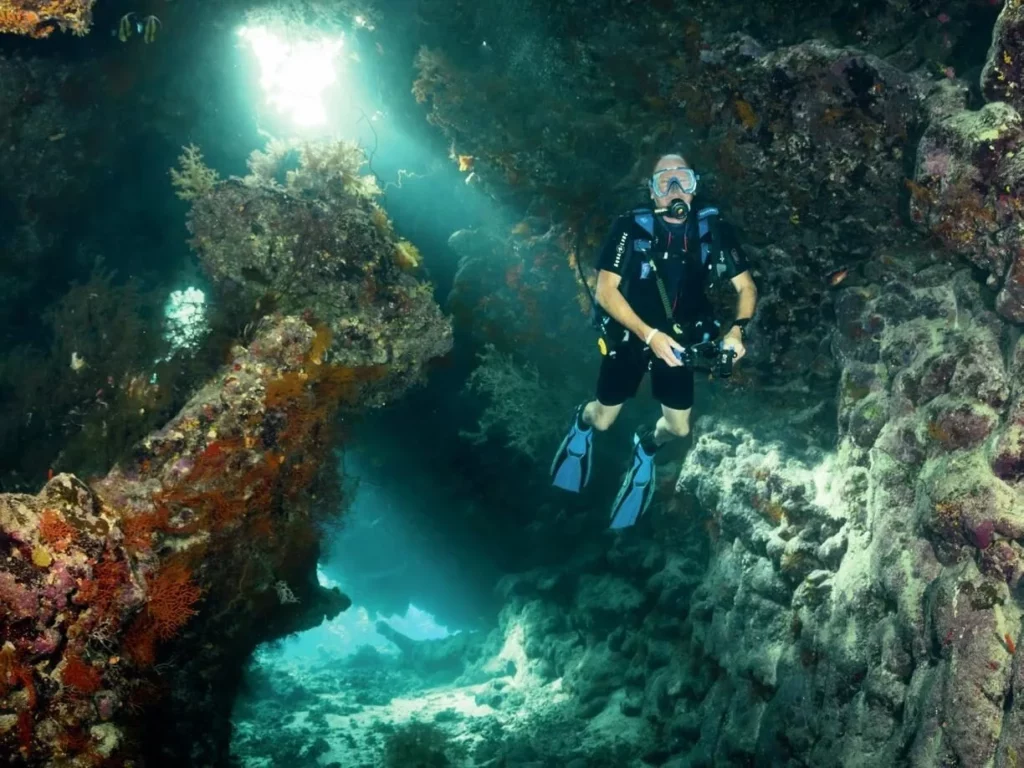
I was quickly discovering that the Red Sea is full of stunning coral reefs, with St John’s Caves regarded as one of the ‘you really have to see it’ dives. The attraction is an expansive network of shallow caverns, swim-throughs, and coral-covered tunnels. From a photography standpoint, the setting has an ethereal ambiance with shafts of sunlight filtering through the narrow openings above, creating illuminated passageways ideal for wide-angle imagery. Depths within this maze never go deeper than 59ft, making it suitable for divers of all experience levels.
Going to the Big D: Daedalus Reef
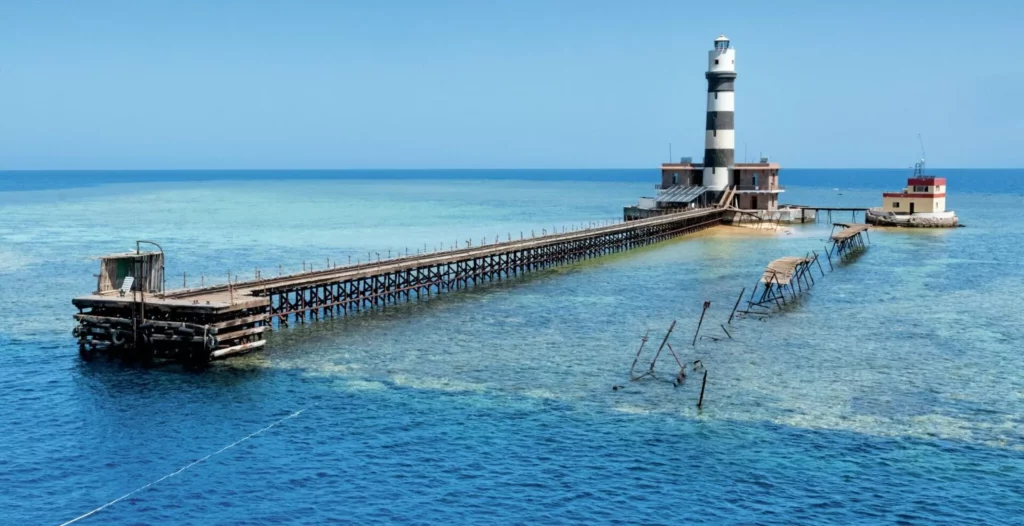
If you were to peel back the ocean, you would see Daedalus Reef as the top of a lone underwater mountain rising straight up like a giant skyscraper from the seabed 1,610ft below. On its cap is an extremely shallow reef flat with a lighthouse built in 1931 and manned by the Egyptian Navy.
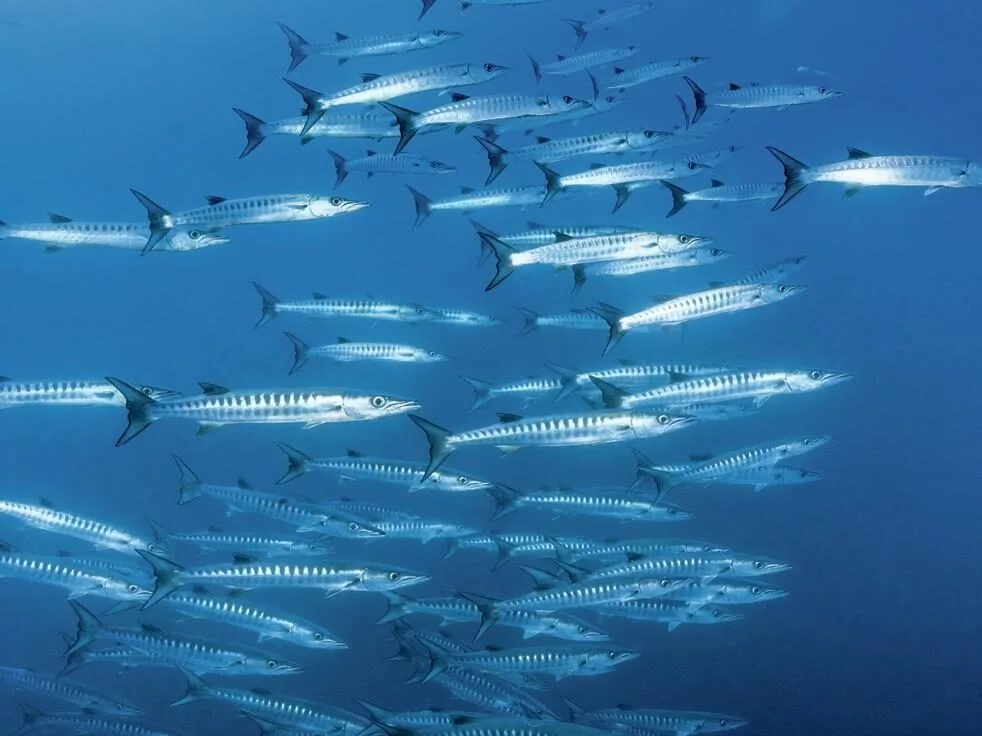
Due to its far-off location and frequently strong currents, Daedalus Reef is not considered well-suited for novice divers. For years, I had heard plenty about ‘the Big D’s’ reputation as an attraction point for a large variety of pelagic marine life, from dogtooth tuna to oceanic whitetip and hammerhead sharks, and even manta rays. After a two-day stay, I felt it well-deserving of this reputation. Even with the water temperature excessively warm for larger forms of marine life, we still managed a few sightings of scalloped hammerhead sharks cruising the depths, along with a short flyby by a manta ray. On other dives, the action included a sizable school of blackfin barracuda and hefty giant trevallies cruising along the reef wall.
Underneath the All-Star Scuba Scene, a place where oceanic whitetip sharks are known to sometimes hang out, we instead had a robust four-foot-plus greater barracuda that would venture out from the liveaboard’s shadow to look us over.
Daedalus is not just about the big and toothy. There is also plenty of small stuff to see as well. During our second day, before departing for our next rendezvous point, Elphinstone Reef, we dropped in at a spot called Anemone City. Tucked into a corner of the reef’s vertical face is a large colony of iridescent yellow/green sea anemones with an equally large colony of Red Sea anemonefish. These fish, primarily bright yellow-orange with two dominant ice-blue bands, are a subspecies of the orange-fin anemonefish found throughout the Indian and Pacific Oceans.
Five Days Down — And This Is Only the Beginning
So far, I have only covered the first five days of my Red Sea odyssey. There is still much more to come, which I will deliver in the next two parts.
Frequently Asked Questions
Where is Abu Dabbab Reef located?
Abu Dabbab Reef is located near Marsa Alam on Egypt’s central Red Sea coast and is known for vibrant reefs and frequent dolphin encounters.
What makes the Red Sea popular for liveaboard diving?
The Red Sea offers clear water, dramatic reef structures, rich coral growth, historic wrecks and regular encounters with pelagic species.
What marine life can divers expect in the southern Red Sea?
Divers may encounter dolphins, turtles, barracuda, giant trevallies, manta rays and sharks such as scalloped hammerheads and oceanic whitetips.
Is Daedalus Reef suitable for beginner divers?
No. Due to strong currents and remote location, Daedalus Reef is best suited to experienced divers.
What is special about St John’s Caves?
St John’s Caves features shallow caverns and swim-throughs with dramatic light shafts, making it ideal for wide-angle underwater photography.
This article was originally published in Scuba Diver Magazine
Subscribe today with promo code DIVE1 — enjoy 12 months for just £1!
