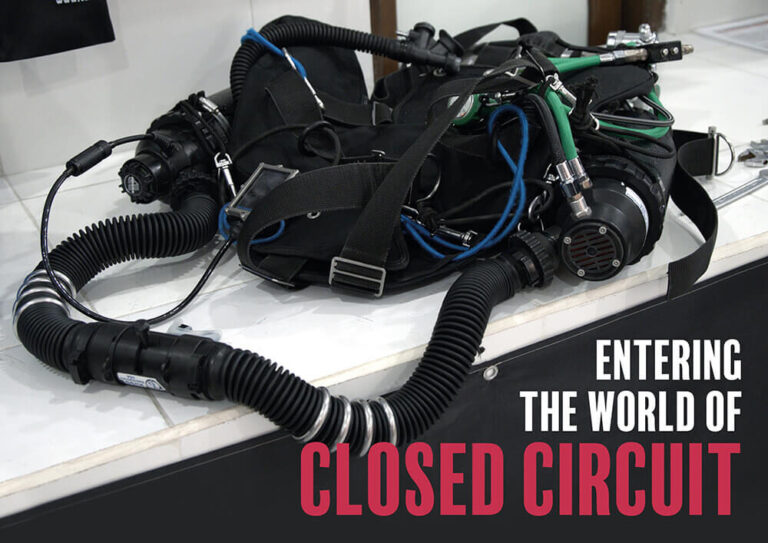
Don Silcock explains why he is going down the route of closed circuit rebreathers and CCR diving training, and discusses how a familiarization session with two units ended up with a rather expensive purchase – and the promise of more adventures to come.

What I discovered was an entirely new way of diving, one that was not only safer but also opened the door to a whole new world of underwater adventures
CCR familiarization
If you had asked me just three years ago whether I would ever consider spending five figures on a rebreather, my response would have been a resounding ‘no’ – probably embellished with an additional colourful turn of phrase… Back then, I had no idea how they worked, saw no need for one, and frankly considered them glorified death traps.
And yet, just last week, my new closed-circuit rebreather arrived in Sydney. After parting with another (albeit smaller) four-figure sum to clear customs, it’s finally in my hands. Soon, I’ll be taking it to Bali to begin my formal training.
How Did I Get Here?
A good question… I first dipped my toe into technical diving during the pandemic as it seemed like the perfect antidote to lockdowns and restricted travel. Plus, I was curious to see what it was all about.
What I discovered was an entirely new way of diving, one that was not only safer but also opened the door to a whole new world of underwater adventures.
At the time, my ultimate goal was a trip to Bikini Atoll to do some deep wreck diving on the nuclear wrecks – the World War Two warships sunk during the Able and Baker atomic bomb tests in July 1946. To make that a reality, I needed to qualify for dives to 55m, along with the extended decompression requirements that came with it.
I did exactly that. Then, in June last year, I made the long journey to Bikini and finally dived those incredible wrecks. But in the process, I had a revelation… diving deep on air simply wasn’t a good idea. The narcosis was just too much.
I also realized something else: I wanted to do more of these kinds of adventures. And the only safe way forward meant embracing CCRs.
The Parallel Universe of Rebreathers…
It’s one thing to decide to cross the Rubicon and embrace the so-called death machine, but quite another to figure out which rebreather to choose. With so many options, the decision isn’t straightforward.
The first major choice is between manual/ mechanical (mCCR), automatic/electronic (eCCR), or hybrid (hCCR) operation. In simple terms, mCCRs require the diver to manually adjust the gas mix and volume in the loop, while eCCRs handle it automatically. Hybrid systems sit somewhere in between. Then comes another big question, the configuration – back-mounted, side-mounted, or chest-mounted?
And finally, there’s the weight factor. Traditional CCRs have tended to be big and heavy, which posed a serious challenge for me. I already travel with around 50kg of dive and photography gear, so adding a 25kg rebreather was a definite non-starter!
Trust Your Instructor
My Italian dive buddy, Filippo Borghi, is an outstanding underwater photographer with a passion for capturing the deep reefs of the Mediterranean. He crossed the Rubicon two years ago and now regularly dives to 80m on CCR.
He shared a piece of invaluable advice with me: ‘Find an instructor you truly trust and dive with them regularly as you gain confidence and experience with the rebreather’. That way, if something ever goes wrong, you’ll be with someone who knows your diving style and can assist in an emergency.
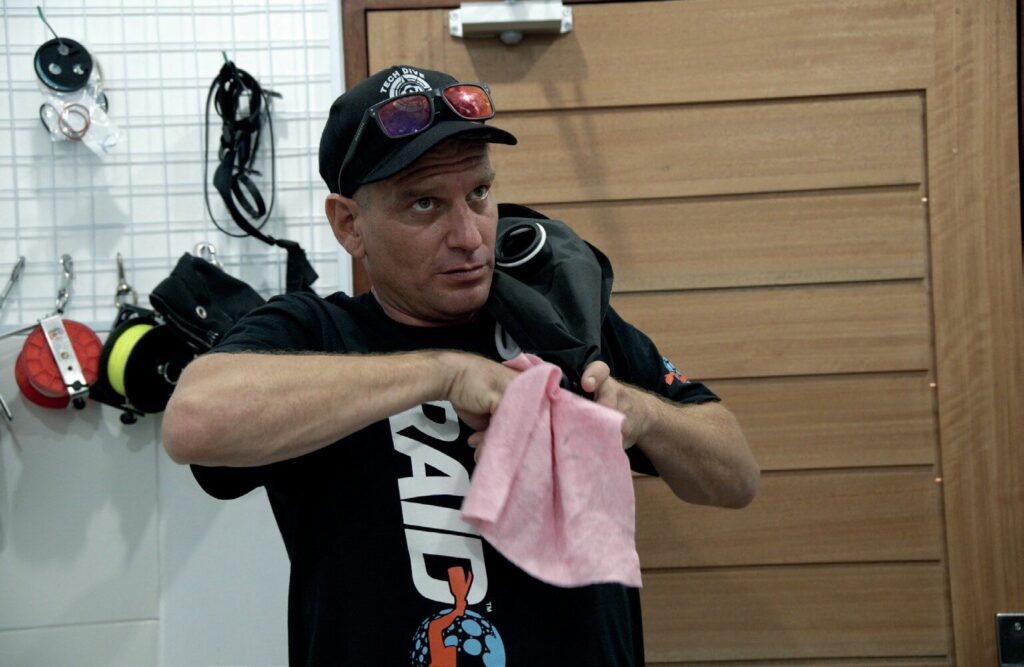
It sounded like excellent advice. So, I turned to Antoine Martin in Bali, the same instructor who had put me through the wringer to prepare for Bikini Atoll last year. Antoine’s initial guidance was simple: Define what you want to achieve, then come up to Amed for a weekend familiarization course based on those objectives. This would give me first-hand experience with the most suitable rebreather technology before committing to a system.
My Objectives
Antoine’s advice made a lot of sense, so I took my time thinking through my goals. In the end, I landed on three key criteria:
• Compact and lightweight – The CCR should be as small and light as possible to make travel easier.
• Manual operation (mCCR) – Minimizing reliance on electronics.
• Versatile – Suitable for learning but capable enough to grow with me into the future.
The Familiarization
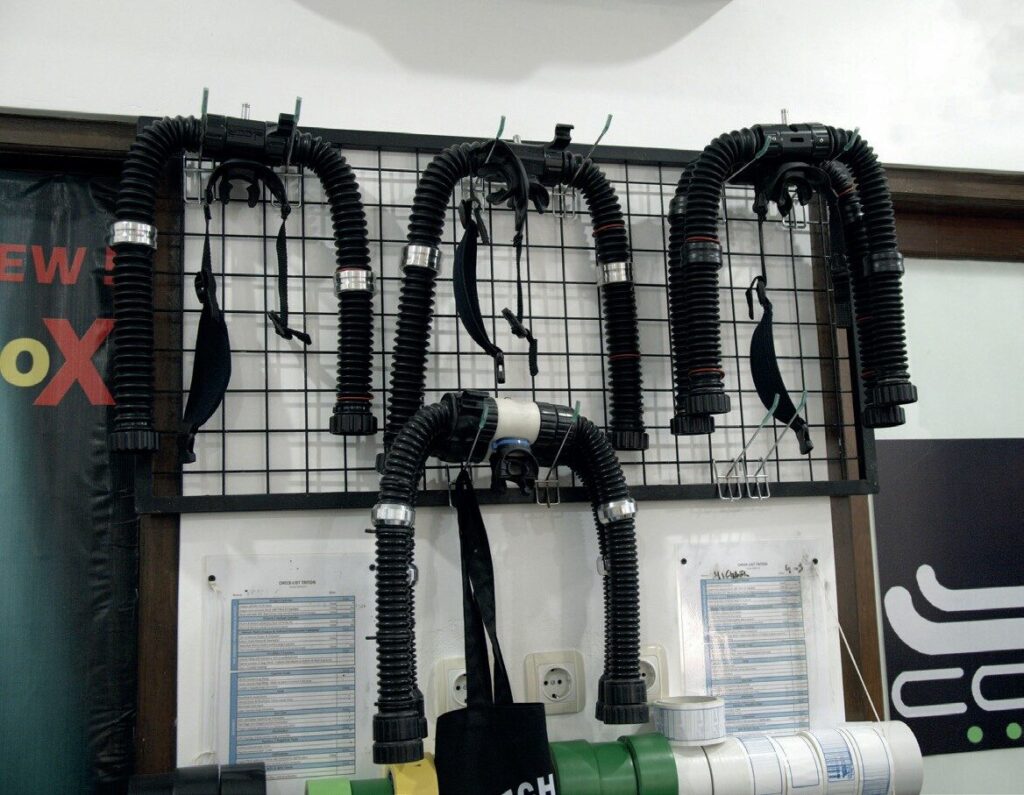
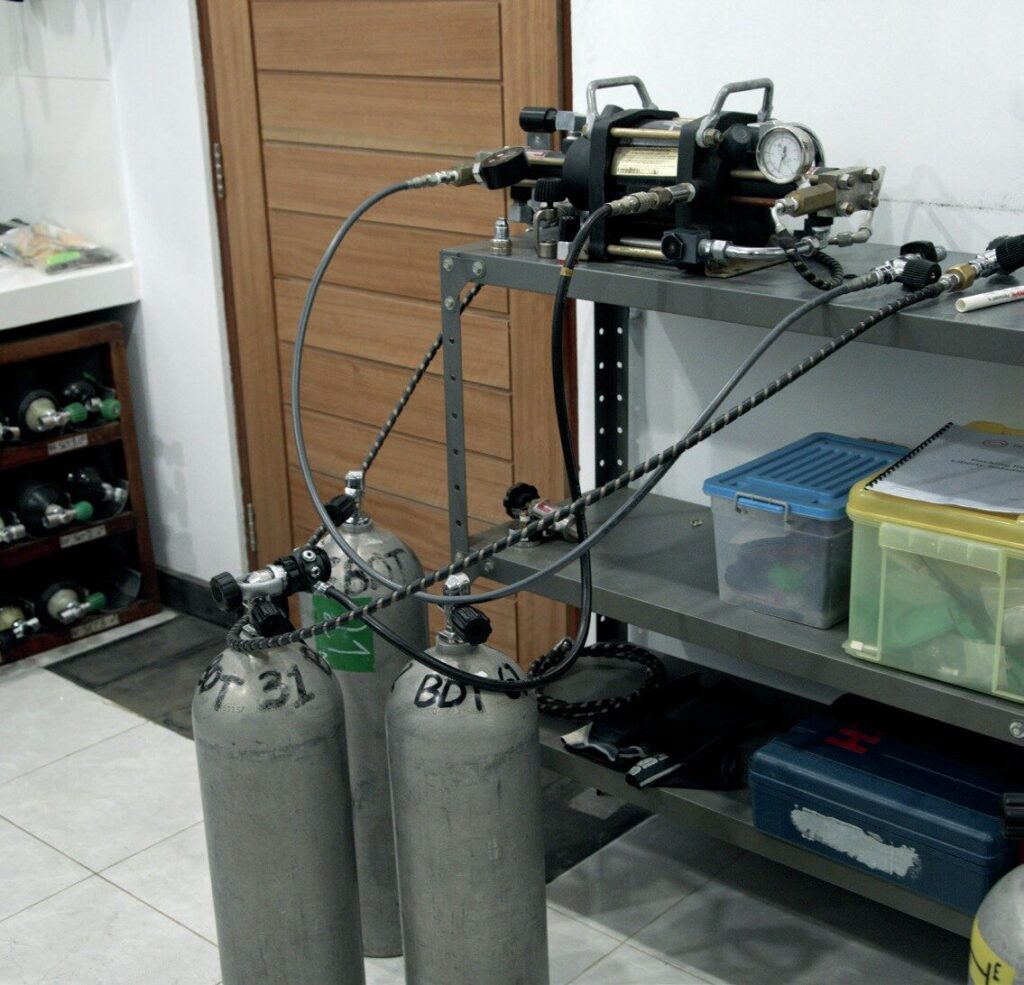
Antoine runs Bali Dive Trek in Amed, northeast Bali, and is a highly experienced technical and CCR instructor. In his dedicated, air-conditioned rebreather room, he has seven different CCR units – all of which he dives regularly.
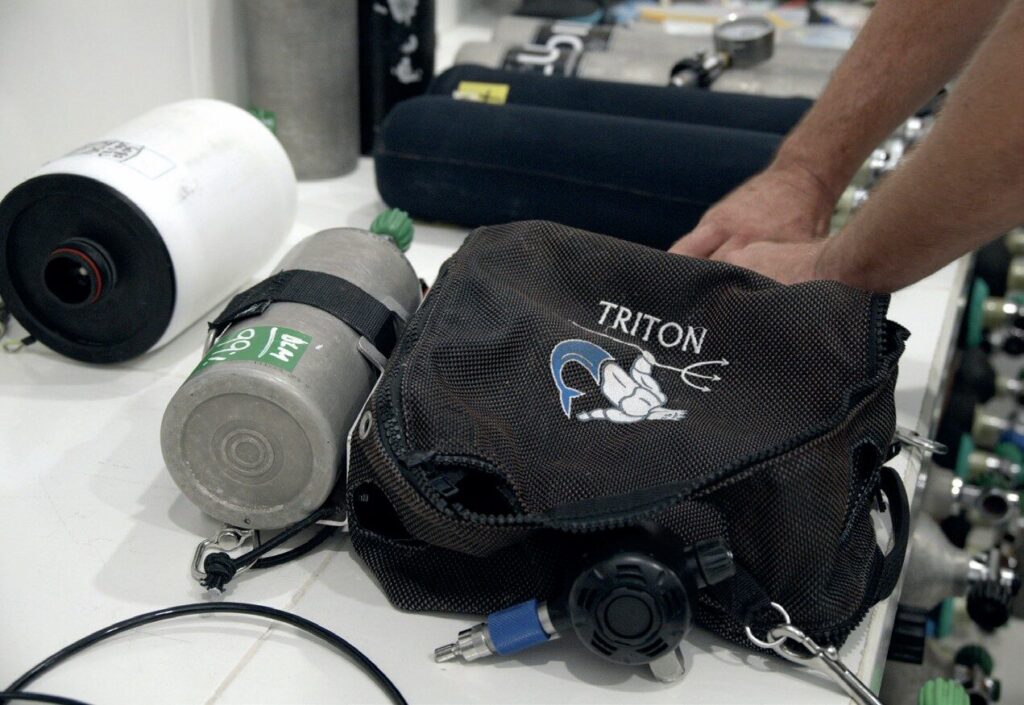
Based on my objectives, he recommended testing two units: the KISS Sidewinder (a side-mounted rebreather) on the first day and the Triton (a chest-mounted unit) on the second.
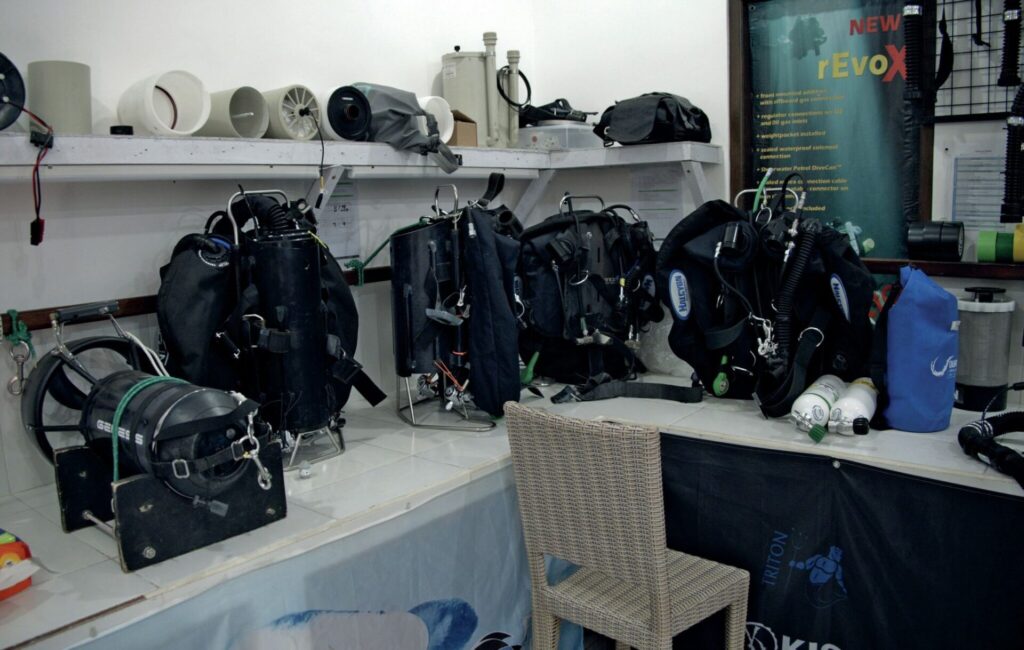
We started with a classroom session on the first morning, covering the fundamental theory of CCR diving, basically the dos, the don’ts, and what to expect underwater for the first time. Antoine then walked me through the preparation process for both the KISS and Triton units, explaining their setup and maintenance requirements.
In The Water
There are several key differences between diving open-circuit and closed-circuit, but for me, the most striking was the silence and the impact that had on marine life. Suddenly, fish that would normally dart away barely seemed to notice me. The second major difference was buoyancy control. Unlike open-circuit diving, where you can fine-tune your position by inhaling or exhaling, CCR diving requires a completely different approach.
Of course, I had read about these differences, and Antoine had emphasized them in our briefing, but experiencing them firsthand was something else entirely. From an underwater photography perspective, the possibilities with CCR seem almost endless. Without noisy exhalations to startle marine life, I could get closer than ever before. Overall, the two-day familiarization answered many of my questions and confirmed that embracing CCRs is the right move.
The Outcomes…
I decided to ‘invest’ (because spending a lot of money sounds better that way) in the new Triton II CCR, which boasts several improvements over the earlier version but remains compact and lightweight—just 12kg when optimized for travel.
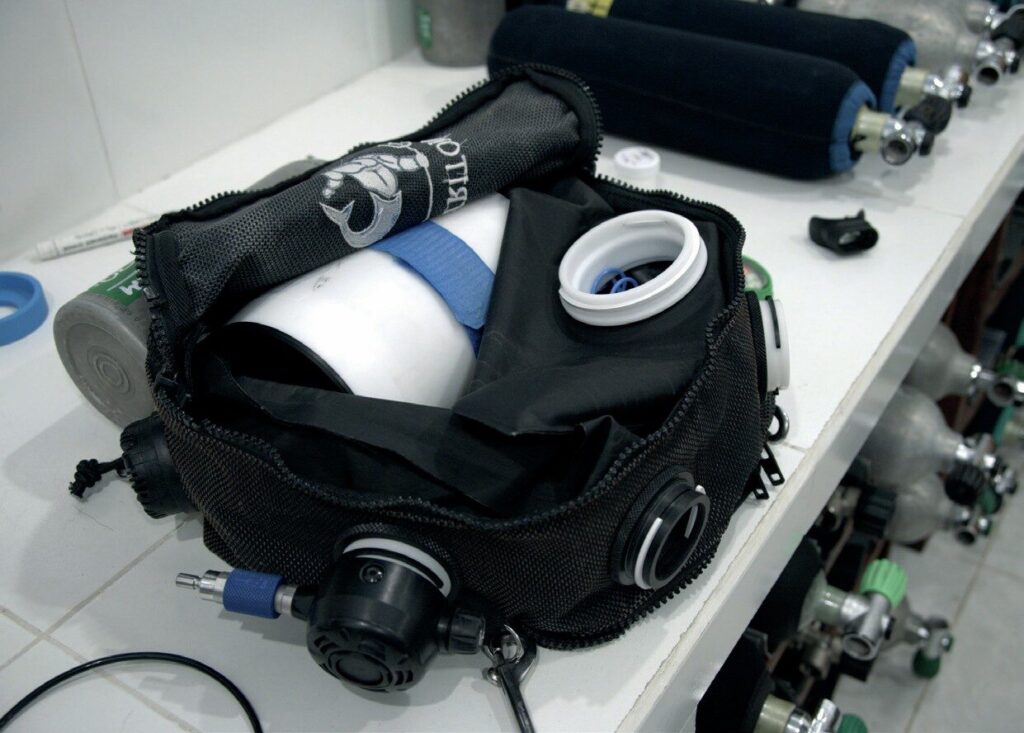
Antoine, who, like Triton’s parent company M3S, is French, connected me with the key people behind the unit. As a result, I was able to secure one of the first production units to be released.
The full kit arrived in Sydney, cleared customs and was delivered by FEDEX, within just five days of leaving the factory in southern France. It’s now packed and ready to head to Bali.
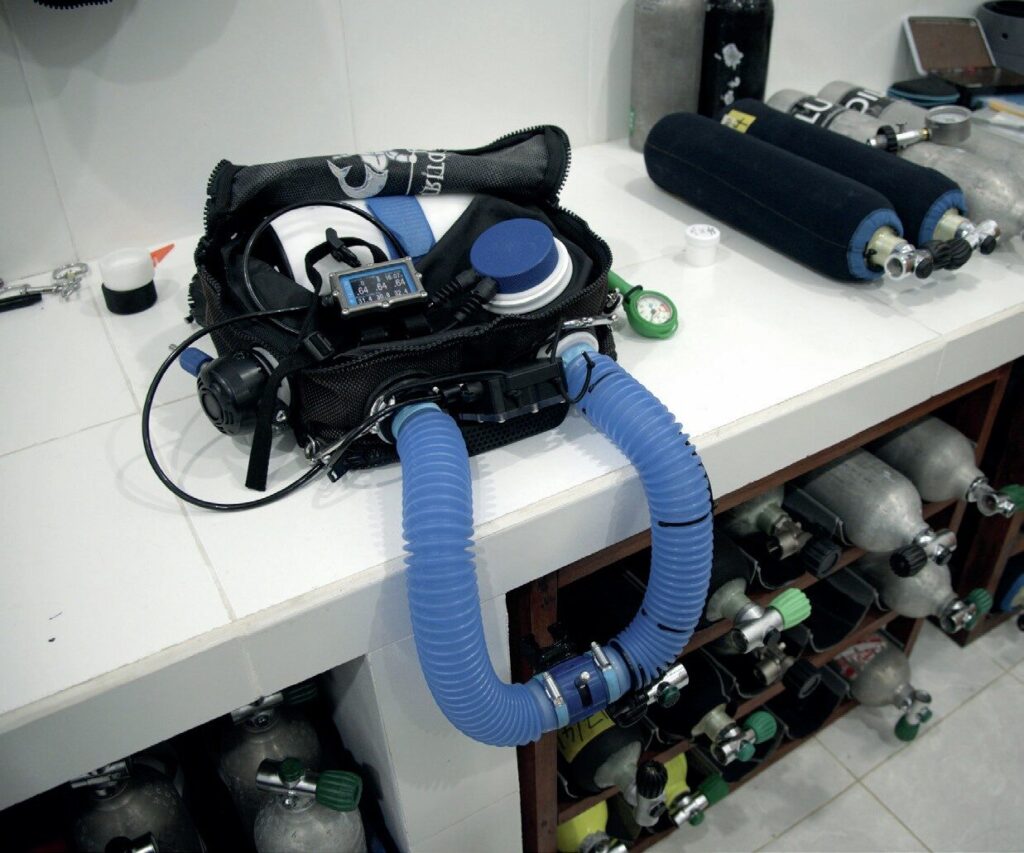
My initial training is only a couple of weeks away, and while I’m feeling excited, I also have a touch of nervousness about the challenge that lies ahead. Read about Don’s first week on his new rebreather here.
Don Silcock
Don is Scuba Diver’s Senior Travel Editor and is based from Bali in Indonesia. His website has extensive location guides, articles and images on some of the best diving locations in the Indo-Pacific region and ‘big animal’ experiences globally.
Frequently Asked Questions
What is a closed-circuit rebreather (CCR)?
A CCR is a diving system that recycles the diver’s exhaled gas by removing carbon dioxide and adding oxygen, allowing for longer and quieter dives than open-circuit scuba.
What are the main advantages of CCR diving?
CCR diving offers longer bottom times, silent operation that attracts marine life, and more efficient gas use, making it ideal for deep or photographic dives.
What’s the difference between mCCR, eCCR, and hCCR?
Manual CCRs (mCCR) require manual oxygen control, electronic CCRs (eCCR) adjust automatically, and hybrids (hCCR) combine both systems for greater flexibility.
How do I choose the right CCR for travel?
Look for compact, lightweight designs suited to your diving style and destination—side-mounted or chest-mounted units are often easier for travel.
How important is instructor experience in CCR diving?
Crucial. A qualified, trusted instructor ensures you learn correct setup, emergency procedures, and confidence-building through consistent, supervised dives.
This article was originally published in Scuba Diver Magazine
Subscribe today with promo code DIVE1 — enjoy 12 months for just £1!
