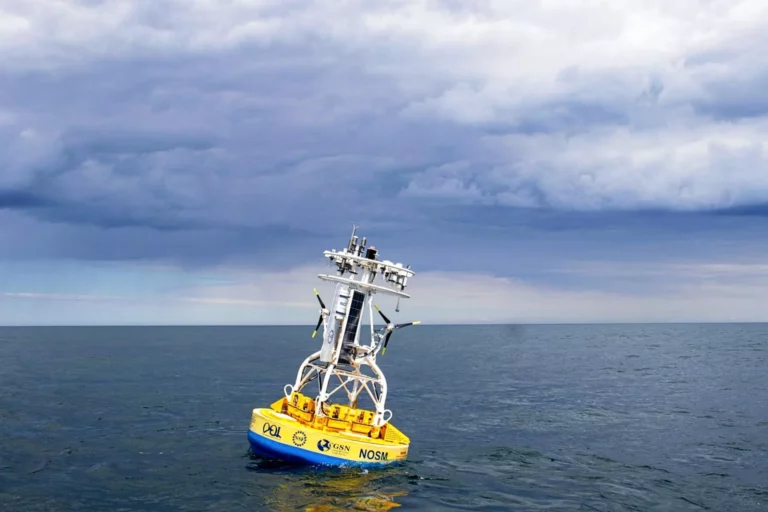
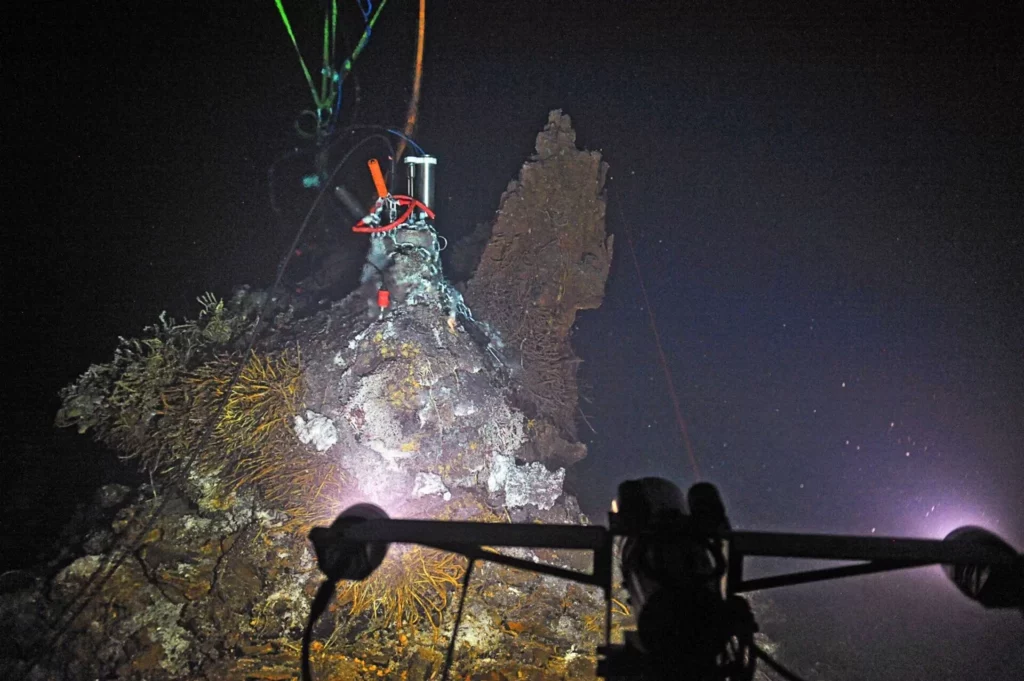
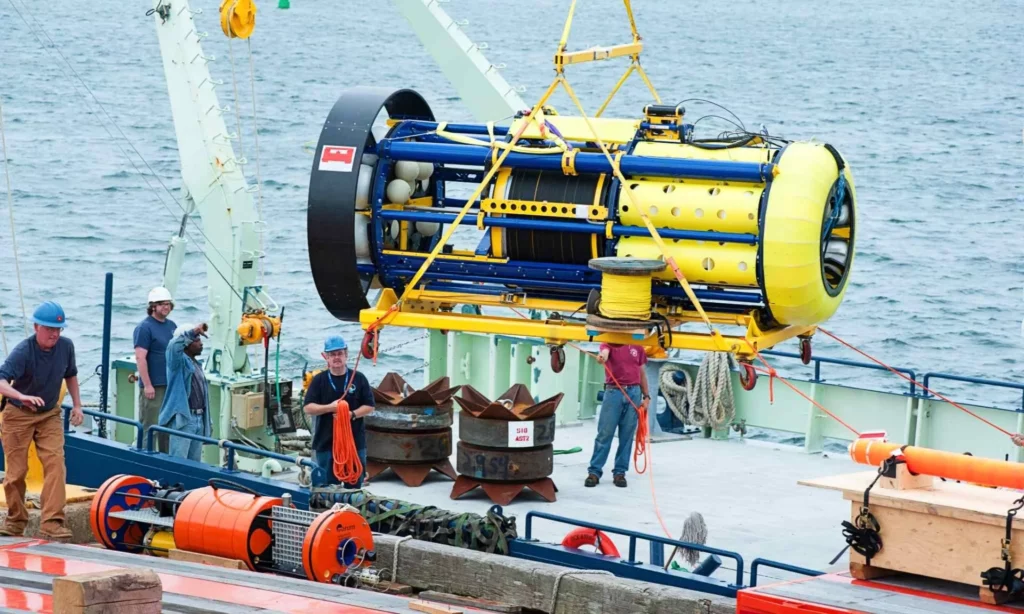
The USA’s Trump administration has announced plans to dismantle the Ocean Observatories Initiative (OOI), a deep-ocean observation system designed to collect freely available data on coastal environments, marine ecosystems and the currents shaping the world’s climate.
Established by the National Science Foundation (NSF), the OOI is generally regarded as the biggest and most comprehensive civilian ocean observatory ever built in the USA.
The system helps to monitor fisheries and protect against earthquakes, storms and coastal flooding, and the move comes on the brink of what is expected to be one of the worst El Niño cycles in a century, points out Washington-based Ocean Conservancy.
The campaign group says that particularly careful monitoring of ocean conditions is necessary to understand El Niño’s implications for marine wildlife, fisheries and coastal communities.
“Walking away from a $368-million investment in a state-of-the-art system, a feat of engineering already paid for by the American people, is absolutely myopic,” said Chris Robbins, Ocean Conservancy’s associate director of scientific initiatives.
“This system is a vital scientific asset that quietly protects American lives, communities and the economy through unfettered access to world-class scientific data,” he continued. “Its loss would create an irreparable blind spot for our country in predicting earthquakes, fishery health, storm forecasting, coastal flooding and more. It just doesn’t make sense.”
Funding organisation the NSF has characterised the move as a ‘descoping’ rather than a cancellation. The objective, it says, is to save money by adopting a “nimbler approach to prioritise support for evolving scientific priorities and emerging technologies, as well as smart life-cycle management within its research infrastructure portfolio”.
It also notes that one part of the system in the Pacific North-west will remain operational, and that the historical OOI data archive will remain available.
The OOI operations team has warned that dismantling the network would end long-term climate and ecosystem records; stop real-time monitoring important for fisheries and ocean circulation; remove data used to improve weather and ocean forecasting models; disrupt validation work for NASA satellites and Navy ocean models; and lead to the loss of specialised engineering expertise that would be difficult to rebuild.
The closest UK equivalent to the OOI is the National Oceanography Centre’s observing network, and the closest to a fixed deep-ocean observatory the Porcupine Abyssal Plain Sustained Observatory in the Atlantic west of Ireland.
The European Multidisciplinary Seafloor & Water-Column Observatory (EMSO) links observatories across multiple countries and there is also the international Argo Program float network and national observatory systems operated by countries such as Canada, Australia and Japan.
Also on Divernet: Trump draws flak with deep-sea ‘pirate mining’ order

We are witnessing EVIL play out as we abandon our mandate to steward and take care of our planet. Hosanna
I see the world’s largest man made reef is nearly ready to go.
Would someone like to point out to the Bureacrats in Guernsy, the real benefits of this project. Some time ago, a local well known commercial salvage diver, wreck detective and wreck historian, tried to arrange for a similar, but smaller project here in Guernsey. He was stopped at every stage by idiots that came up with every conceivable reason why this could not be done including, pollution, danger to environment shipping hazard, littering etc etc. Needless to say the idea was shelved. Total lack of understanding, total ignorance and no vision.
Good luck to the organisers of this monumental project. I hope your vision is fruitful.
Tim