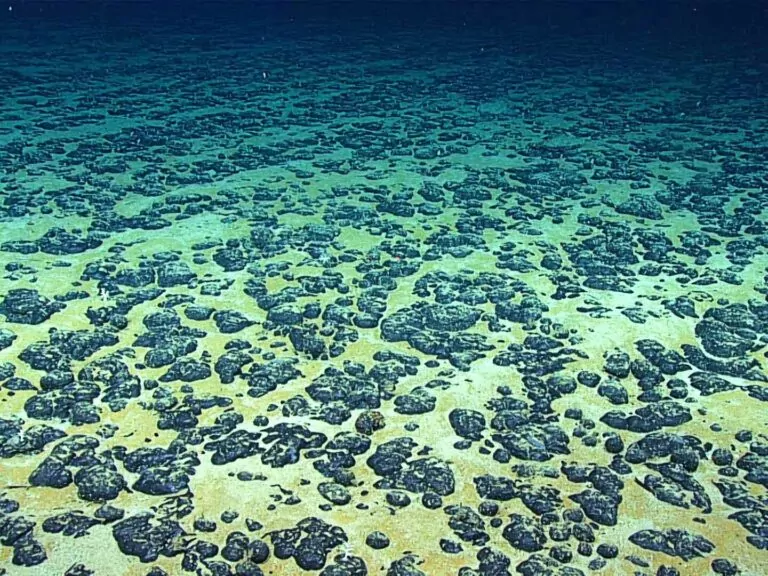
An executive order directing the USA’s National Oceanic & Atmospheric Administration (NOAA) to grant permits for deep-sea mining by US companies has been issued by president Donald Trump.
The move bypasses the authority of the International Seabed Authority (ISA), the UN-affiliated agency that has been considering standards to regulate any international attempts at mining in such a fragile ecosystem as the deep ocean.
Environmental campaigners have condemned the unilateral action as one based on a flawed and outdated business case – with some claiming that it is China that will gain most from the decision.
There is no commercial-scale deep-sea mining at present, but the deep seabed beyond territorial waters, particularly in the Pacific Ocean, is known to be a potential source of metals such as nickel, cobalt, manganese and copper.
“With this executive order, the president is paving the way for supply-chain resilience and a thriving domestic manufacturing industry,” claimed Erik Noble, principal deputy assistant secretary of commerce at NOAA, which is part of the US department of commerce.
“The United States will lead the world in deep-sea mineral extraction, and NOAA is the tip of the spear as we partner with federal agencies and private industry to support the discovery and collection of critical minerals on the sea floor.”
Opening floodgates
According to Ocean Conservancy, however, Trump’s order opens the floodgates for unregulated seabed mining in defiance of international consensus – and “flies in the face of NOAA’s mission”.
“NOAA is charged with protecting, not imperilling, the ocean and its economic benefits, including fishing and tourism; and scientists agree that deep-sea mining is a deeply dangerous endeavour for our ocean and all of us who depend on it,” commented Jeff Watters, vice-president for external affairs for the US environmental-advocacy group.
“Areas of the US seafloor where test-mining took place over 50 years ago still haven’t fully recovered,” he said. “The harm caused by deep-sea mining isn’t restricted to the ocean floor: it will impact the entire water-column, top to bottom, and everyone and everything relying on it.
“Evidence tells us that areas targeted for deep-sea mining often overlap with important fisheries, raising serious concerns about the impacts on the country’s $321-billion fishing industry.”
National interest
The Trump administration argues that permitting deep-sea mining is essential for securing minerals vital for the production of batteries, electronics and defence systems, and has claimed that it could generate $300 billion for the US economy and create 100,000 jobs over a decade.
It has also framed the issue as one of national security, aimed at reducing reliance on foreign sources – aimed mainly at China, which dominates the global supply-chain for such minerals – and positioning the USA as a leader of an emerging industry.
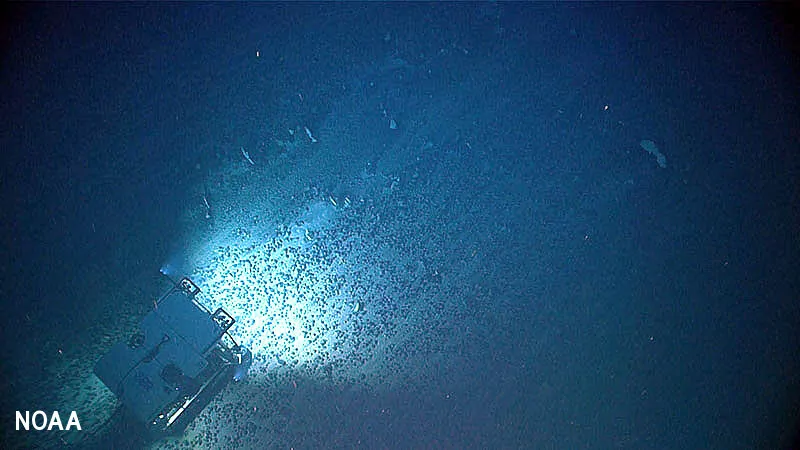
In contrast Dr Douglas McCauley, a professor at UC Santa Barbara and Berkeley, argues: “This executive order is a great gift to China’s economy. Up until today, most countries have been sitting around the same table in the International Seabed Authority, carefully negotiating binding mining regulations to ensure the equitable sharing of benefits from resources mined in international waters. The US is attempting to subvert that controlled process.
“The US has stepped forward to become the first pirate mining operation in international waters. With rules, we could have controlled the minerals that China or any country or person would take from this part of the ocean. But without any rules, China, simply put, will be far better at winning.
Radioactive mountain
“For example, these metals at the bottom of the ocean were recently discovered to be radioactive,” says McCauley. “It is difficult to imagine any community in the US that would want a mountain of these radioactive metals processed in their backyard. Other countries may be less squeamish about such things.
“The grand irony is that we just unleashed a gold rush – but a gold rush for fool’s gold. In our fever to get at these ocean minerals, the US seems to have neglected to run the numbers.
“The cobalt and nickel that could be mined from the ocean floor would be the most expensive cobalt and nickel mined anywhere on the planet… Cobalt and nickel are in oversupply today and can be bought with a click on international metal markets at a fraction of the cost. The US just signed on the dotted line for a very bad economic deal.”
‘Dire consequences’
Duncan Currie of the Deep Sea Conservation Coalition described the move as “a breach of international law with dire consequences for every country and person who benefits from the ocean as our common heritage.
“It upends more than 40 years of legal precedent in the UN Convention on the Law of the Sea, threatens to destabilise ocean governance globally and is an insult to the peoples and countries across the Pacific that this move will most impact,” he says.
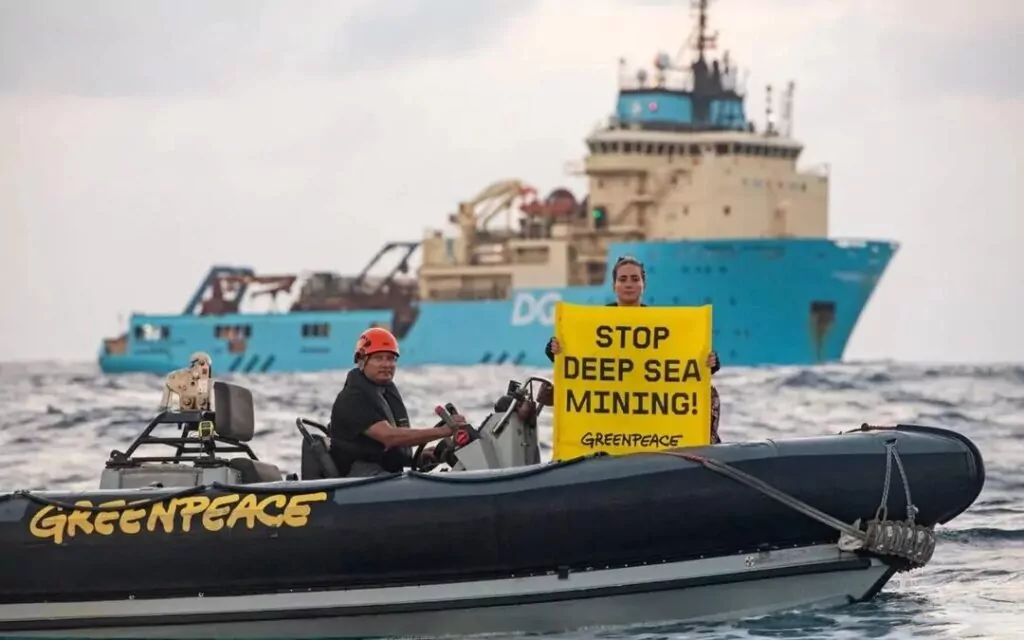
“The US government has no right to unilaterally allow an industry to destroy the common heritage of humankind, and rip up the deep sea for the profit of a few corporations,” commented Greenpeace, while the Centre for Biological Diversity stated: “Fast-tracking deep-sea mining is an environmental disaster in the making. Trump is trying to open one of Earth’s most fragile and least understood ecosystems to reckless industrial exploitation”.
NOAA says that it and other federal agency partners would be working “to better understand the deep sea through advancements in mapping, characterisation, environmental data collection and resource assessments. In addition, NOAA will carry out environmental compliance measures consistent with applicable law.”
Also on Divernet: ‘Fool’s gold rush’: Deep-sea mining outdated, warn experts, Whaling nation first to enable deep-sea mining, Most life in deep-miners’ target zone new to science

Reading BS, translating to English, the cost to mine is so exorbitant even China won’t waste the resources to do so. I’m tired of being lied to by the “experts”. Obviously this will be incredibly lucrative and give China the green light to do the same. Why not just say that and stop? Instead of this gobbledygook? “The cobalt and nickel that could be mined from the ocean floor would be the most expensive cobalt and nickel mined anywhere on the planet… Cobalt and nickel are in oversupply today and can be bought with a click on international metal markets at a fraction of the cost. The US just signed on the dotted line for a very bad economic deal.” Says McCauley.