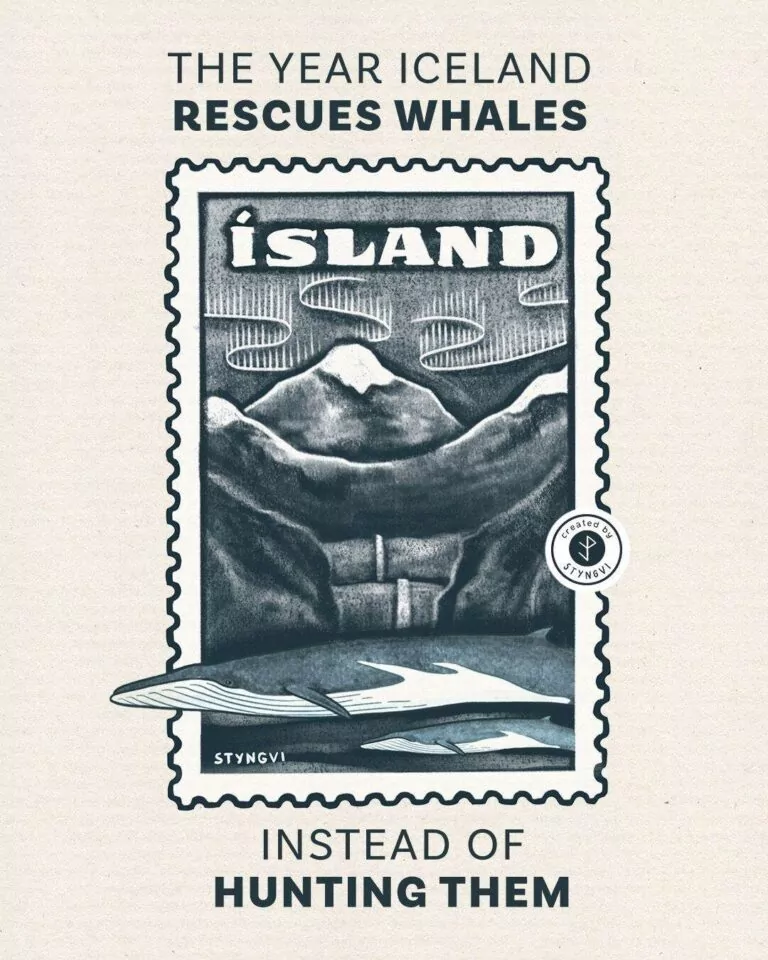
Iceland has had a bad rap in recent years for ill-treatment of whales – but according to Icelandic ocean storyteller and conservation illustrator Stefan Yngvi Petursson, that cetacean-unfriendly reputation is growing out of date.
“2025 is proving to be the year when Icelanders are actively saving whales instead of killing them,” says Petursson, whose professional name is Styngvi.
“In the past weeks, we’ve seen two whale strandings in Iceland – an orca was kept alive by locals until the tide returned. He managed to swim back out, and sadly an illness brought him back. But the dedication and kindness remained clear.”
This incident occurred on the night of 10 June in Grafarvogur, Reykjavík. Locals and emergency responders stayed with the orca through the night, keeping it wet using sheets. By early morning the animal had begun to float again but remained stuck.
Rescue teams waited for the next high tide, and around 5pm on 11 June they successfully guided the orca out of the cove using boats. It eventually swam safely into Faxafloi Bay, though it had to be euthanised a few days later after re-stranding at Kjalarnes.
Mass stranding
Styngvi then cites a mass stranding of 70 pilot whales “where Icelanders united and guided every single whale back out to sea. These actions say more than any protest: Icelanders care. We don’t wish harm on whales.”
Already regarded as one of the most successful mass whale rescues in Iceland’s history, this episode began near the harbour in Olafsfjorour in the north of the island, with the pilot whales thought to have been chasing mackerel but getting trapped in the shallows after becoming disorientated.
Local people, emergency responders and volunteers from nearby towns rushed to the scene and worked through the day and into the evening towards a successful outcome. “We stood in awe when it was over – I never expected them all to swim away,” said one of the rescuers, Lara Stefansdottir.
Whale-watching
On the topic of whale-hunting, Styngvi says: “That makes it two years in a row without a single whale killed in Iceland. In fact, one of the whalers has recently listed his boat for sale and maybe, just maybe, we’re witnessing the beginning of the end of whaling.”
Hvalur hf is the only company licensed to hunt fin whales, though another individual who was last year licensed to hunt minke whales now appears to be selling his only whaling-equipped boat. Hvalur hf declined to go out hunting in 2024 and now again in 2025, because of economic pressures and declining demand in what had been its primary export market, Japan.
A 2023 independent survey for the government showed that 51% of Icelanders opposed whaling, up from 42% in 2019. Active support had dropped to 29%, with the strongest opposition coming from younger people, especially those aged 18-29.
Whale-meat consumption has plummeted in Iceland, and anti-whaling demonstrations have become more frequent and visible, supported by influential figures such as the singer Bjork. Whale-watching also plays an increasing part in Iceland’s tourism industry.
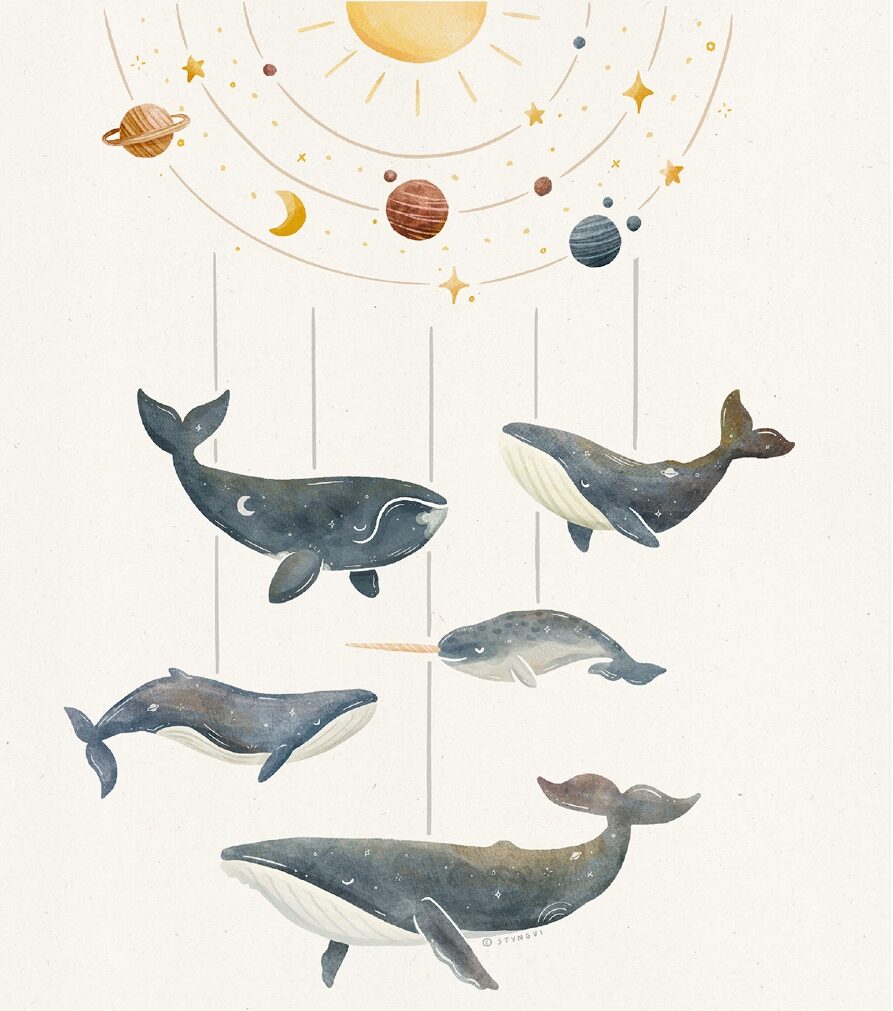
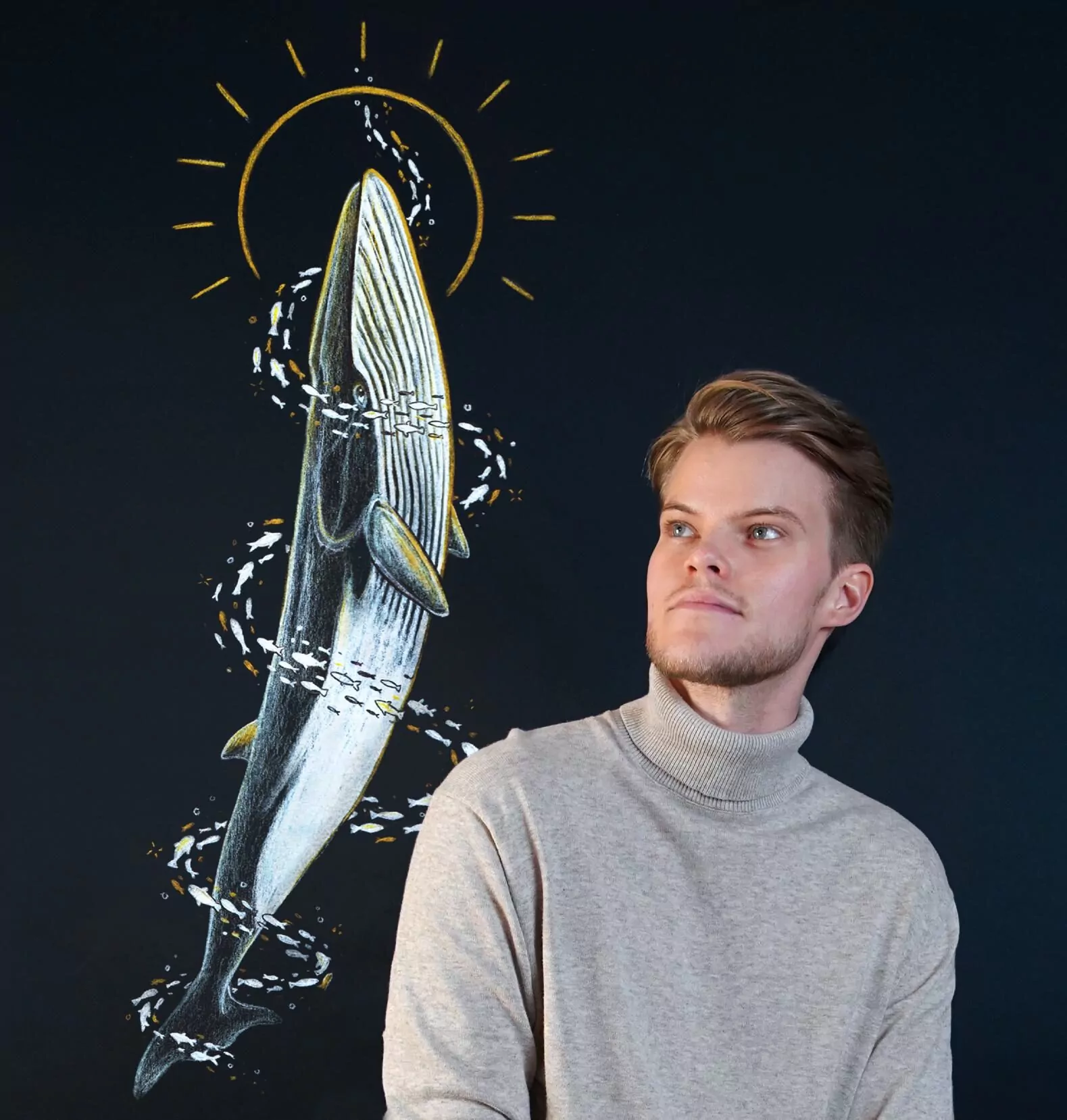
Currently based in the Czech Republic, Styngvi creates custom campaign visuals, designs and illustration services for ethical campaigns, and is also a scuba diver. “A lot of the inspiration for my artwork comes from exploring the underwater world,” he told Divernet.
If attitudes to whales have finally tipped over into the positive in Iceland, after a number of false dawns, he would regard that as a welcome outcome for the environmental campaign that lies closest to home. “This time, it feels different,” he says.
Also on Divernet: FIN-WHALE HUNT CALLED OFF IN ICELAND, HOME FOR CHRISTMAS: DANES FREE PAUL WATSON, BEGINNING OF THE END FOR WHALING?