Three Mediterranean islands have added new works by Italian sculptors to their shallow-water attractions for divers and snorkellers – on Gozo, Alonissos and Ustica – while in the USA the ambitious “The Reefline” project is about to be introduced to the public.
The ART4SEA project, co-funded by the European Union as part of the UN Decade of Ocean Science for Sustainable Development, issued a call for applications and selected 24 artists from around the world to carry out the work.
They enjoyed residencies on the islands from which they were supposed to draw inspiration from local culture, history and mythology as well as scientific data and environmental observations.
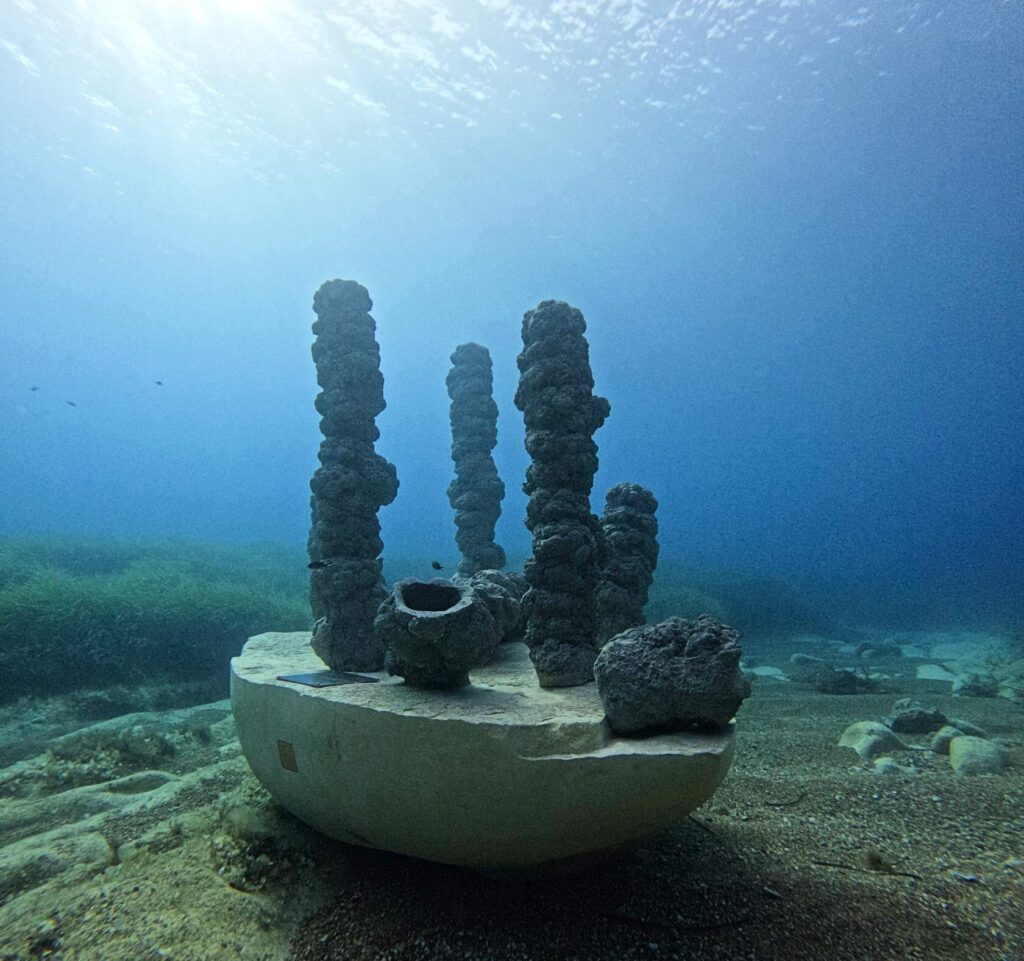
Trajectories by Giacomo Rizzo, positioned in Gozo’s Xwejni Bay, takes the form of a symbolic vessel, said to be preserving the memory of the Earth while welcoming new life.
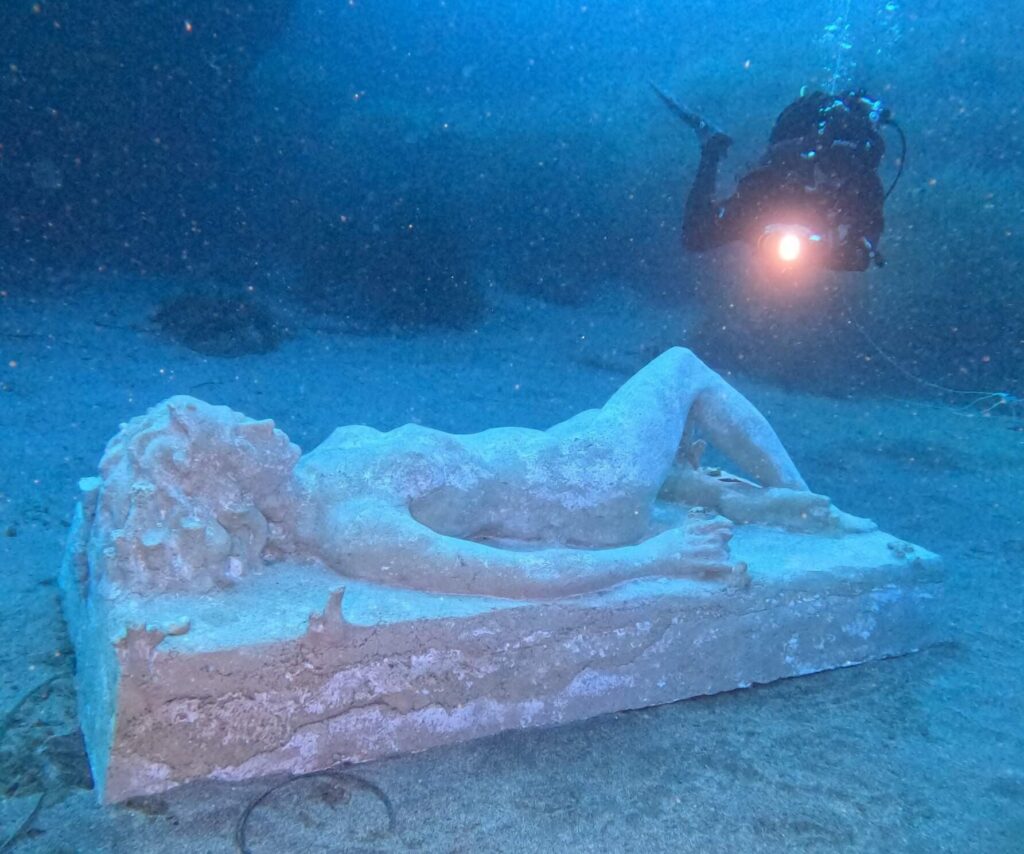
Aetas by Micol Cornali in Agios Dimitrios Bay, Alonissos in Greece is intended to denounce ocean pollution, while reclining female figure The Queen Of The Corals by Davide Galbiati on the Italian island of Ustica is “an allegory of the fusion between humans and nature”.
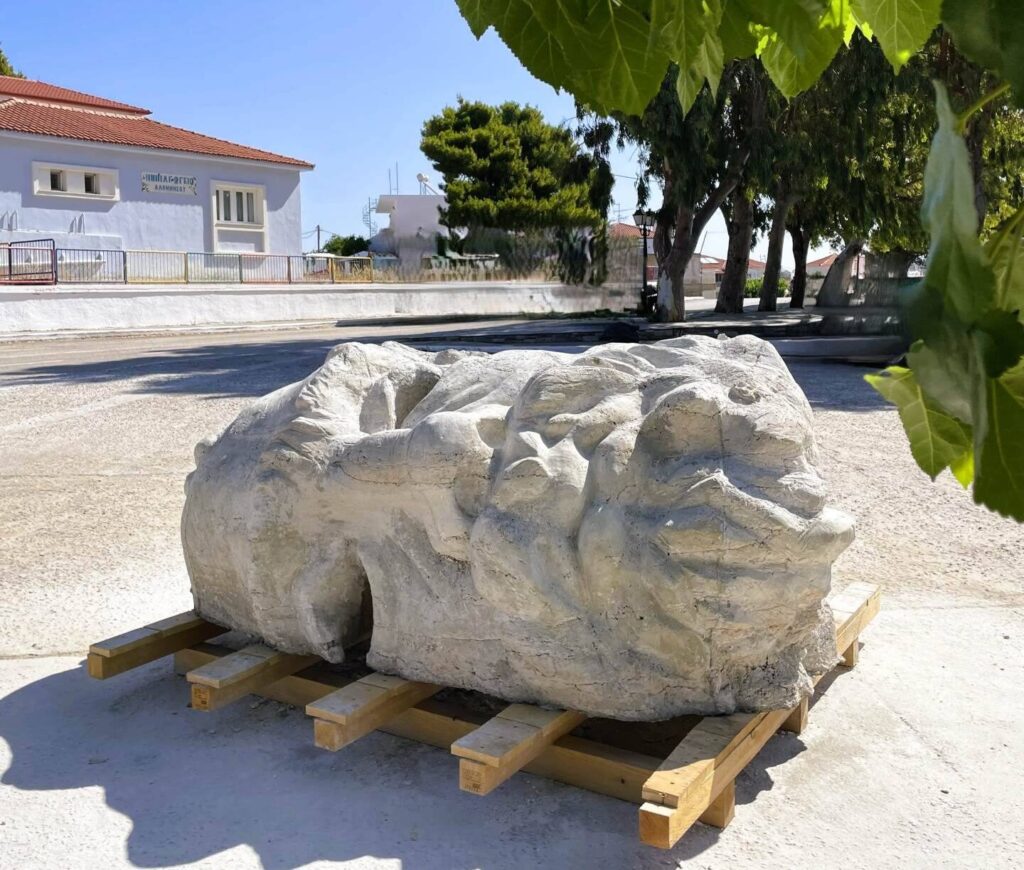
Above the surface displays of further sculptures, murals and mosaics are intended to celebrate biodiversity, Mediterranean myths and the relationship between humans and the sea. These include Calypso and Symbiosis on Gozo, Life Synchrony and Blue Diver on Alonissos, and the murals Beneath The Surface and Guardians on Ustica.
The artworks are made from eco-friendly and recycled materials including steel, glass and non-polluting debris. Twelve additional digital pieces can be accessed on the ART4SEA website, including virtual reality experiences, sound art and immersive videos.
Medical research and insurance body DAN Europe was one of seven international partners behind the project. “Every dive is a testament to the beauty and fragility of the sea,” commented its EU project co-ordinator Fabio Figurella. “With ART4SEA, divers are not just visitors: they become ambassadors for conservation, able to tell what is happening below the surface and inspire real change.”
On The ReefLine
While such individual underwater sculptures can provide handy underwater markers, other installations aim to overwhelm divers’ senses by their sheer scale.
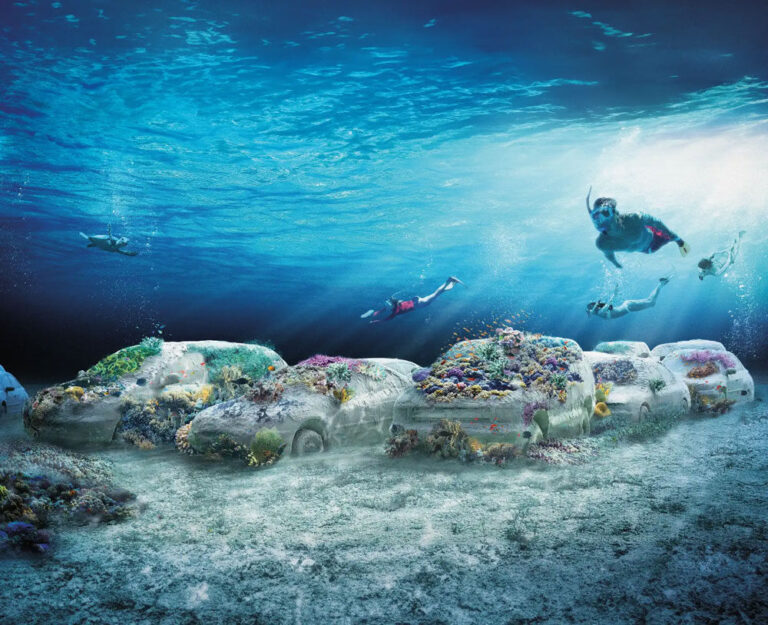
In Florida, artist Leandro Erlich has been submerging 22 full-scale marine-grade concrete cars off Miami Beach. His Concrete Coral contribution forms the first part of “The ReefLine”, an ambitious underwater sculpture park and hybrid reef project set to extend over 11km of coastline.
Each car weighs some 12 tonnes and is seeded with Coral Lok modules to encourage marine-life habitation and bolster biodiversity, protect coastline integrity and help revive the Florida Reef Tract. The installation is set around 6m deep.
This “art-powered climate intervention” transforms a symbol of pollution into a tool of restoration, says project founder and artistic director Ximena Caminos. The public unveiling is due in late October, with divers and snorkellers able to visit the site from November.

More statement sculptures are set to follow over the next few years, including Heart of Okeanos, a depiction of a blue whale’s heart by British artist Petroc Sesti made from an experimental eco-concrete said to act as a carbon sink.
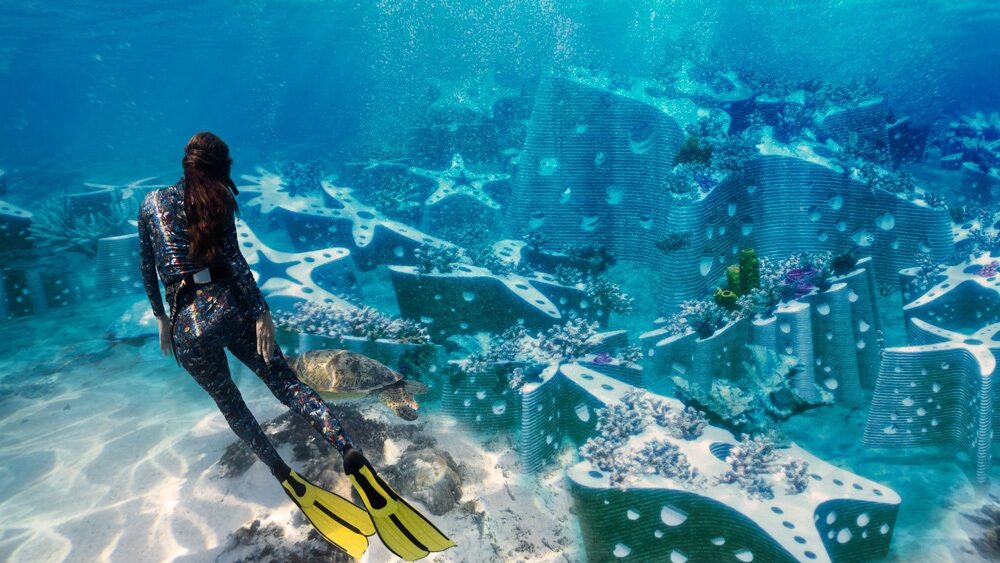
Another, Miami Reef Star, will consist of a set of 56 3D-printed concrete starfish in the shape of a giant star, designed by Carlos Betancourt and Alberto Latorre – the idea being that it should be visible to passengers flying into Miami.
The ReefLine project is funded through a combination of public support, private donations and institutional partnerships, and is expected to end up costing cost some US $11.8 million (£8.7m), according to Caminos. The ART4SEA project had a 3.5m euro (£3m) budget.