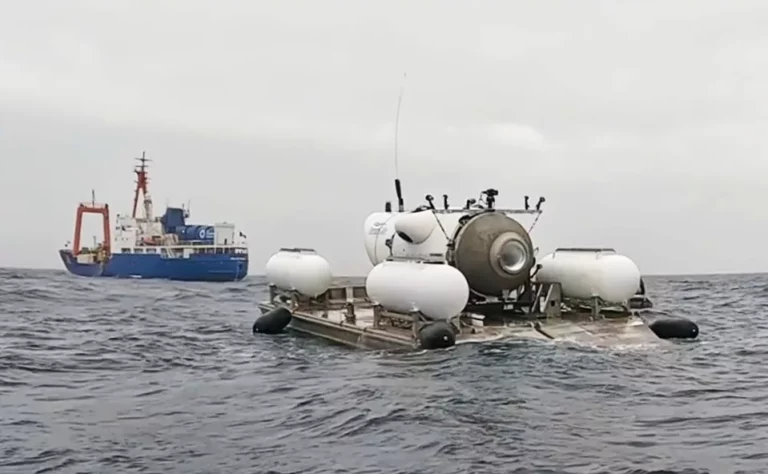
The fatal implosion of the Titan submersible in 2023 was not the result of one sudden mystery failure, but of a chain of engineering, monitoring, emergency-planning and oversight failures that left the five people onboard with no meaningful margin for survival, says Canada’s Transportation Safety Board (TSB) in a new report.
Titan was 105 minutes into a dive to the 3.8km-deep wreck of the Titanic in the north Atlantic off Newfoundland & Labrador on 18 June, 2023 when contact was lost. Wreckage of the submersible was found on the seabed four days later.
The TSB’s 52,000-word report into its investigation of the incident makes clear that as an independent agency its objective was not to assign fault or determine civil or criminal liability but to learn lessons to prevent such tragedies happening again.
Power dynamics
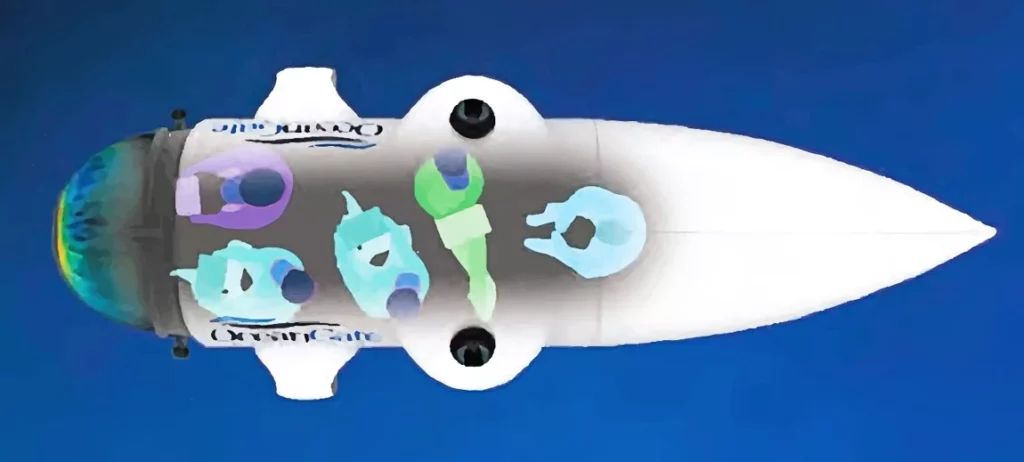
Titan, owned by its pilot Stockton Rush and his US-based company OceanGate, was carrying a Titanic guide and three paying passengers when it imploded on descent from the Polar Prince cargo vessel, operated by Canadian company Horizon Maritime Services.

Polar Prince had towed the submersible and its LARS launch and recovery system from St John’s to various dive locations and provided a base for OceanGate’s operations at sea. Horizon Maritime had provided the same service for the operator in 2021 and 2022.
Titan’s carbon-fibre pressure hull, capped with titanium domes, was a novel design for deep-ocean passenger use. Conventional deep submersibles are typically steel or titanium and often spherical to distribute pressure evenly.
The TSB investigators found that the hull had failed progressively, with damage accumulating during each dive. Its properties had never been tested to ensure that they met the theoretical specification used in the design, and its construction had not adhered to standard engineering practices.

OceanGate employed strain monitoring for post-dive analysis and an acoustic system intended to warn of hull failure in real time.
However, the TSB found that if the strain data had been analysed consistently the hull would have been withdrawn from service. The acoustic warning system had not been shown to give enough time to surface, and had not worked as intended on the day.
OceanGate’s risk management was further impaired by the company’s structure, power dynamics and “social-psychological” factors. The company did not know how long the hull would remain safe when used repeatedly for dives to the depth of the Titanic, and failed to identify and mitigate key risks associated with its operation.
When Titan imploded and communication and tracking were lost, external responders were not contacted for more than eight hours. While this had not affected the outcome, in a survivable emergency such delay could have been decisive, stated the TSB.
International implications
The investigation also identified a broader gap in the international oversight of submersibles. Member-states are not bound by International Maritime Organisation (IMO) guidelines regarding design and operation of submersibles, resulting in inconsistent oversight around the world.
This meant that although Transport Canada had known that Titan was operating from St John’s supported by a Canadian vessel, the submersible had received no regulatory oversight that might have identified safety deficiencies. Stated to be a “relatively common” situation in Canada, this had increased the risk to those involved in Titan’s operations.
OceanGate had also had numerous interactions with at least four Canadian government departments that might have raised red flags about its practices, yet information they had gathered had not been shared with Transport Canada.
“When it came to the Titan, critical information existed across multiple federal government organisations, but no one was responsible for connecting the dots,” said TSB chair Yoan Marier. “Without a complete picture of the operation, the Titan continued to operate in Canada without regulatory oversight.
“We have been calling for stronger regulatory surveillance in the marine sector for years. Lives are at risk when safety gaps are left unaddressed.”
Six recommendations
The TSB is issuing six recommendations designed to cover “what it describes as “systemic safety gaps” in the oversight of submersible operations, both in Canada and internationally, involving regulatory oversight, technical standards for submersibles and safety management. Details can be found in its comprehensive report.
The US Coast Guard’s 2025 Marine Board report into the Titan incident found that Rush’s conduct could have supported criminal referral had he survived the implosion, but had did not publicly identified another individual as a criminal target, and no public criminal charge or confirmed active prosecution against OceanGate or its surviving officers has been reported.
The main civil case underway as a result of the incident is a $50 million wrongful-death lawsuit brought in 2024 on behalf of submersible veteran Paul-Henri Nargeolet, who had been the Titanic expert guide onboard Titan on the day.
The new TSB findings could strengthen the factual backdrop for that legal action in terms of design validation, ignored anomalies, poor safety culture and lack of independent certification.