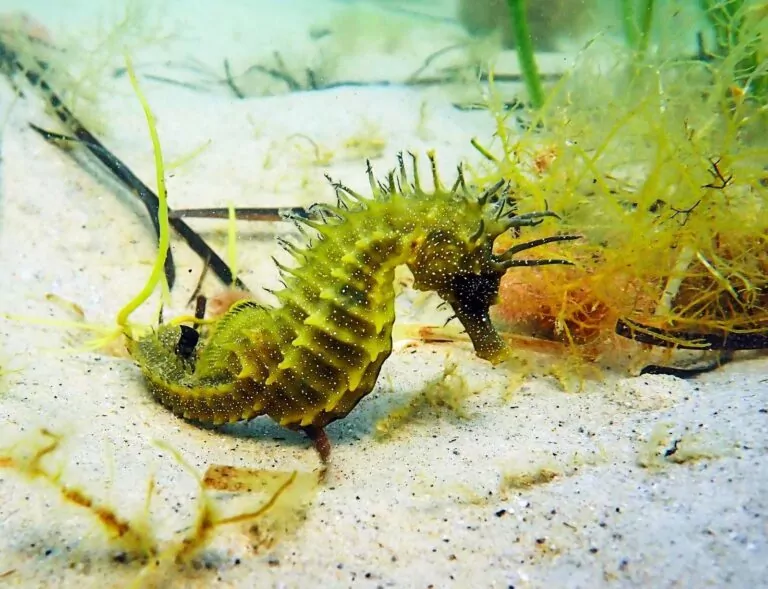
One marine species that appears to be thriving in England this summer is the seahorse, though the dedicated volunteers who have helped bring about this situation would appreciate it if other divers resist going to see for themselves.
In the first week of July, scuba divers from the Seahorse Trust carried out a survey on the South-west coast as part of their work on a documentary film, and were astonished to come across no fewer than 17 seahorses at one site. About half of them were male and most of these, boding well for the future of the population, were pregnant.
Only once before have the trust’s experts seen a greater number of seahorses on a single dive, which was the 22 recorded in Studland Bay in 2020 at the end of Covid lockdown, as reported on Divernet at the time. The trust reckoned that these represented fewer than half of the total number of seahorses inhabiting the site, though within weeks the population had dissipated.
It was Seahorse Trust founder and CEO Neil Garrick-Maidment who was leading the latest dive and first spotted the seahorses. He was responsible for getting the two species native to Britain, the spiny (Hippocampus guttulatus) and short-snouted seahorse (H hippocampus). protected under the Wildlife & Countryside Act in 2008.

It is unlawful to actively seek out these protected species by diving or snorkelling without the Marine Management Organisation (MMO) licences under which the Seahorse Trust divers are allowed to operate. However, any diver who come across a seahorse by chance is asked to report the sighting so that it can reflected on the National Seahorse Database (NSD).
Eco-moorings success
The Seahorse Trust set up the British Seahorse Survey in 1994, making it the world’s longest-running continuous survey of its kind. Sighting data is fed into the NSD, part of the World Seahorse Database.
A factor that now appears to be benefitting British seahorses are the eco-moorings installed by the Seahorse Trust, Boatfolk and the Studland Bay Marine Partnership to prevent damage to seagrass habitats from boat anchors and chains.
Eco-moorings use elasticated risers rather than chain and rise with the tide to prevent drag along the seabed. The system is expensive, costing some £100,000 a year to maintain, though mooring fees for boat-users and donations help to cover the outlay.
Also on Divernet: Seahorse haven enjoys big cash boost, Here’s to the Seahorse Trust!, Breaking the chains for Studland seahorses, Seahorse expert receives prestigious award

Very cool!