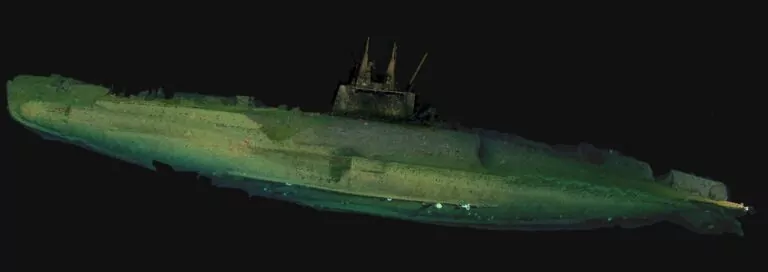
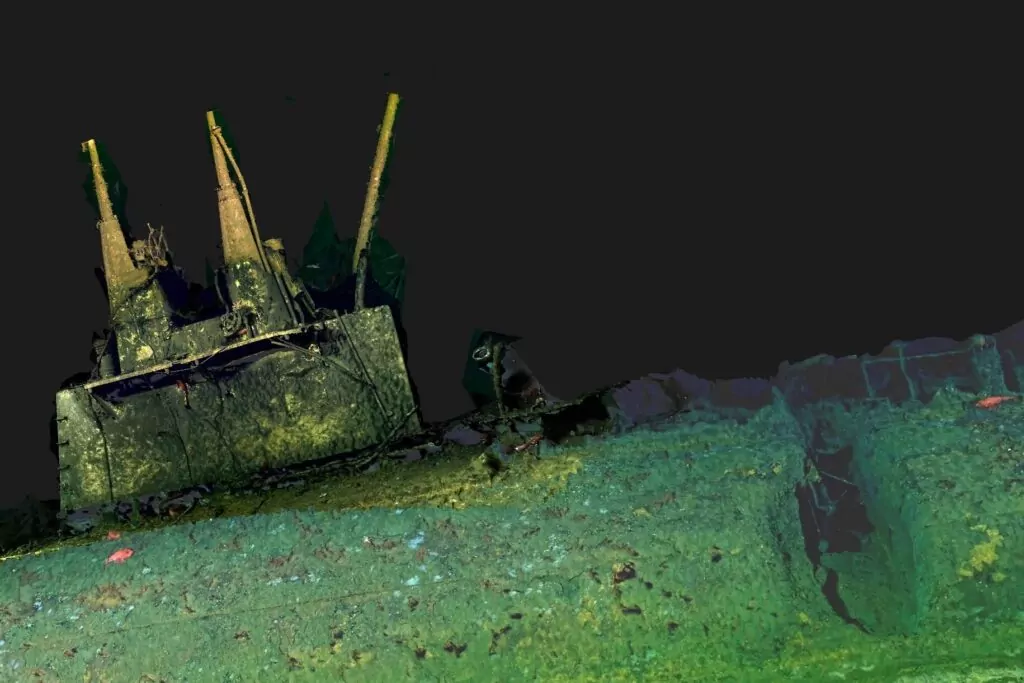
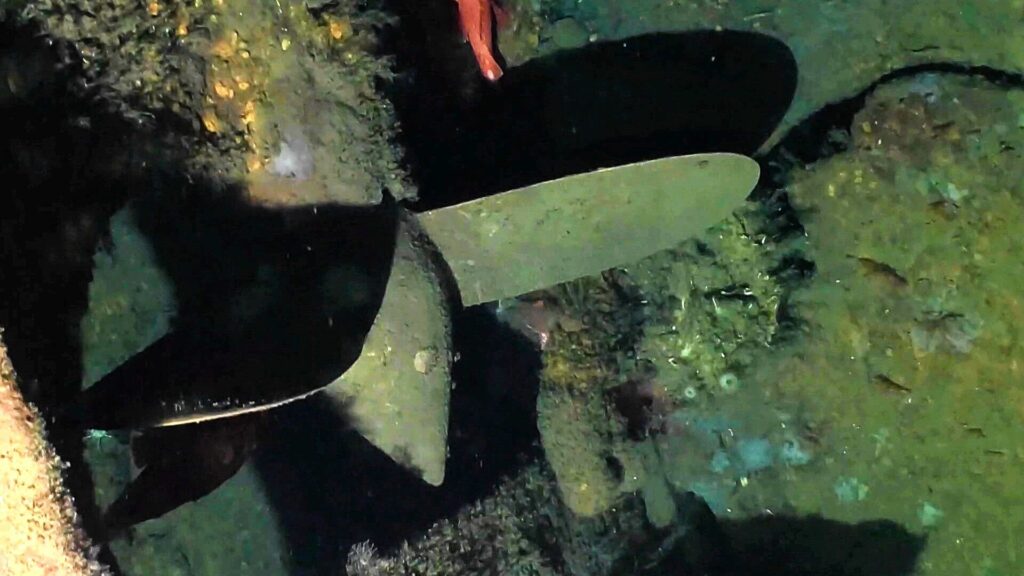
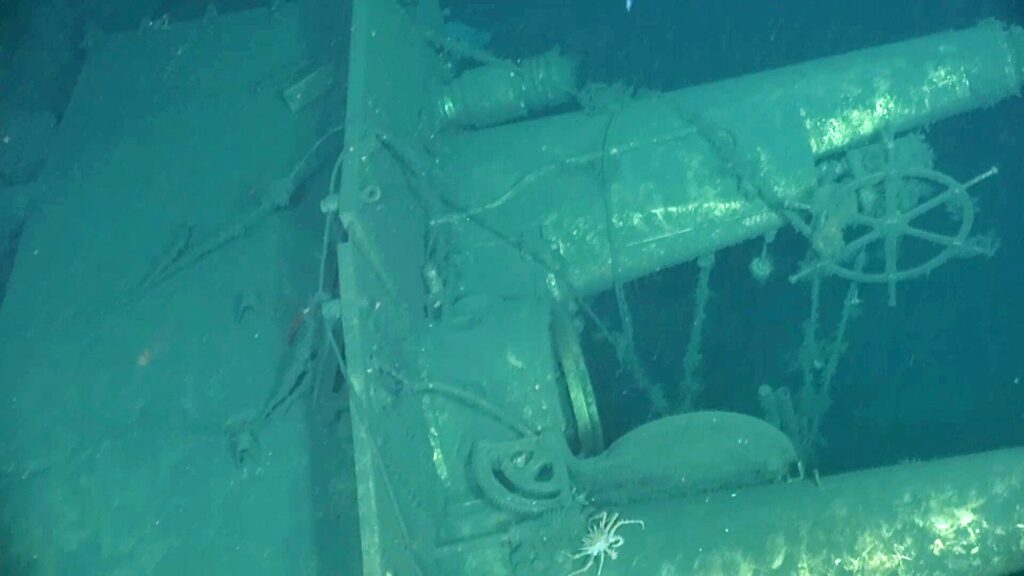
A deep-sea training and engineering dive off the coast of San Diego, California has yielded never-before-seen images of a WW1 submarine. USS F-1 had been lost on 17 December, 1917, with the deaths of 19 crew and was found lying on its starboard side “remarkably intact” at a depth of around 400m.
The high-definition images were obtained by an interdisciplinary team led by Woods Hole Oceanographic Institution (WHOI) with experts from the US Navy, Naval History & Heritage Command (NHHC) and the National Science Foundation (NSF).
Launched in 1911, the 43m-long submarine was for a time able to claim the world’s deep-diving record, following an 86m descent. From 1917 it served with the Pacific Patrol Force based in San Pedro, California.
While on manoeuvres off Point Loma, San Diego the sub collided with its sister-ship USS F-3 and, with a hole in its port side forward of the engine-room, sank within seconds. Only three men could be rescued.
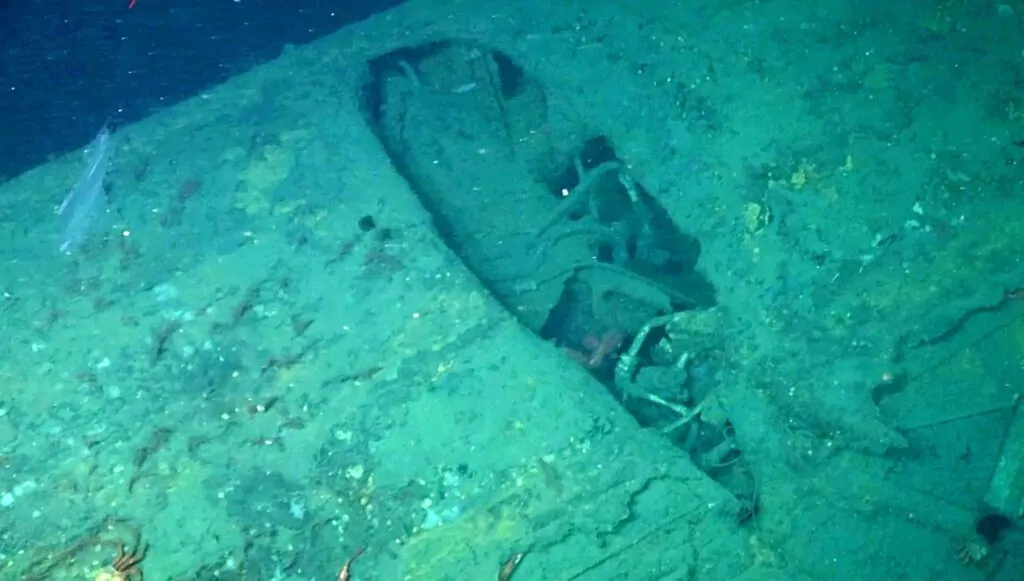
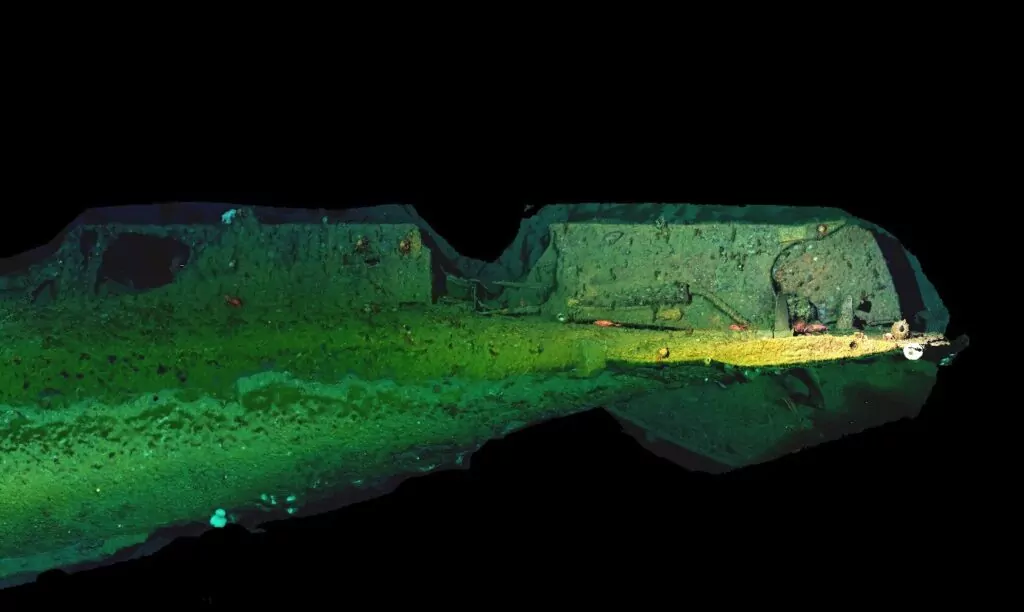
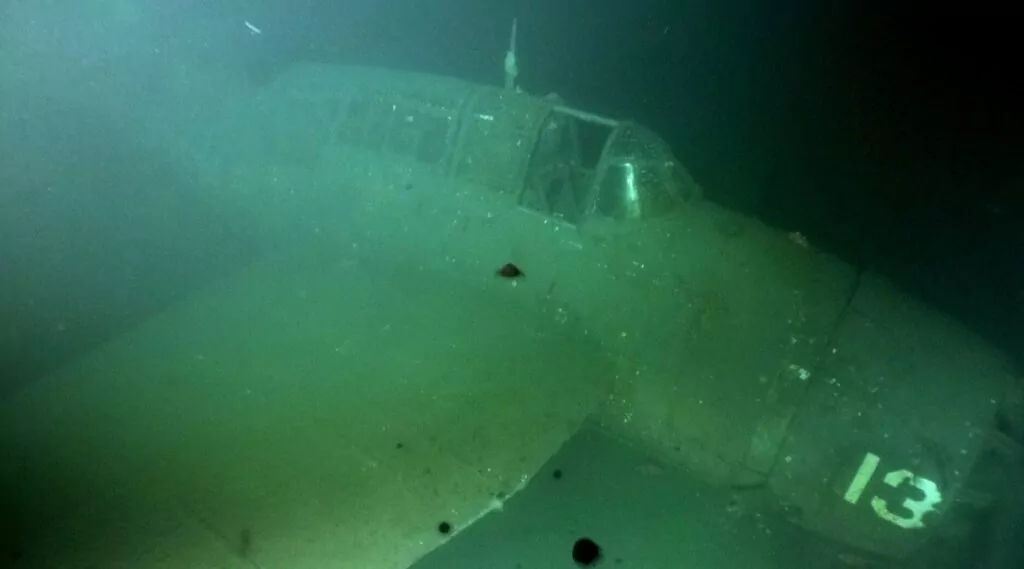
During the expedition the team were also able to survey a WW2-era US Navy Grumman TBF Avenger torpedo-bomber that was being used as a training aircraft when it crashed close to the F-1 site in 1950.
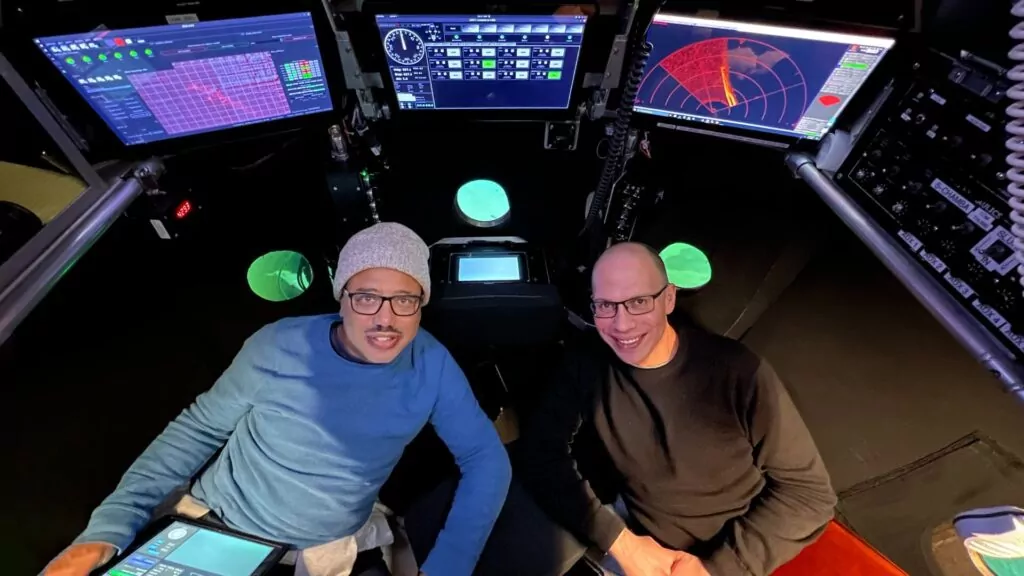
Operating between 24 February and 4 March from the research vessel Atlantis the team carried out seven dives at the wreck-sites, using non-invasive still and video imaging systems mounted on the submersible Alvin – now described as a human-occupied vehicle (HOV) – as well as sonar systems on the AUV Sentry.
The undersea vehicles are part of the National Deep Submergence Facility (NDSF) fleet, which is funded by the NSF.
Crucial moments
“The NDSF provides essential equipment for reaching the deep ocean,” said Lisa Clough, acting division director for the NSF Division of Ocean Sciences.
“Although HOV Alvin and AUV Sentry are critical for revealing deep-sea geological hazards and studying remote ecosystems, they also offer opportunities to train the next generation of scientists and uncover crucial moments from our nation’s history.”
NHHC works to locate, interpret and protect US Navy ships and aircraft, and its underwater archaeologist Brad Krueger undertook what was both his first Alvin dive and his first in-person dive on a historical wreck-site.
“It was an incredibly exciting and humbling experience,” he said. “All of us at the NHHC are grateful for this collaboration, which also enabled us to document and assess the condition of the crafts.”
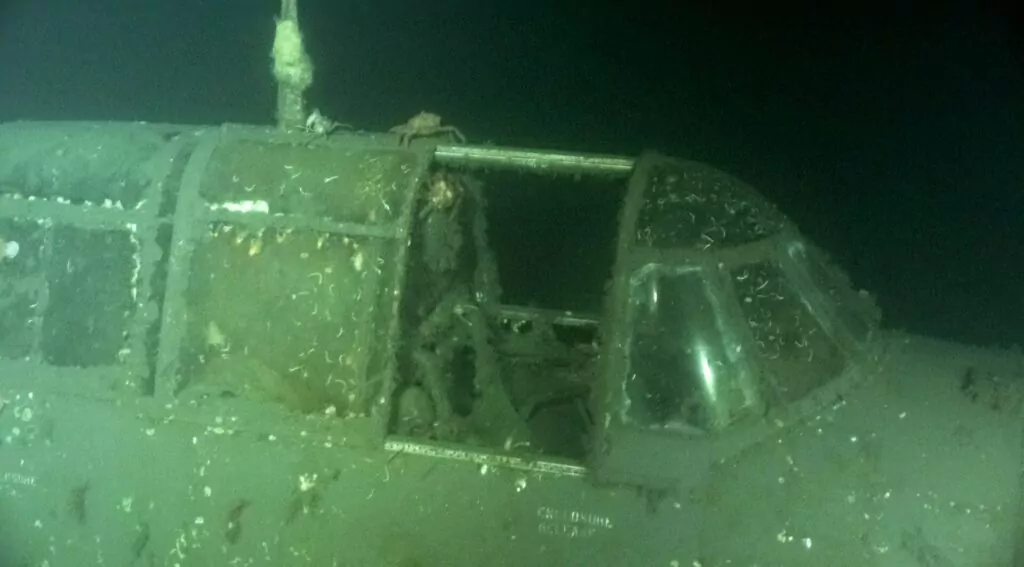
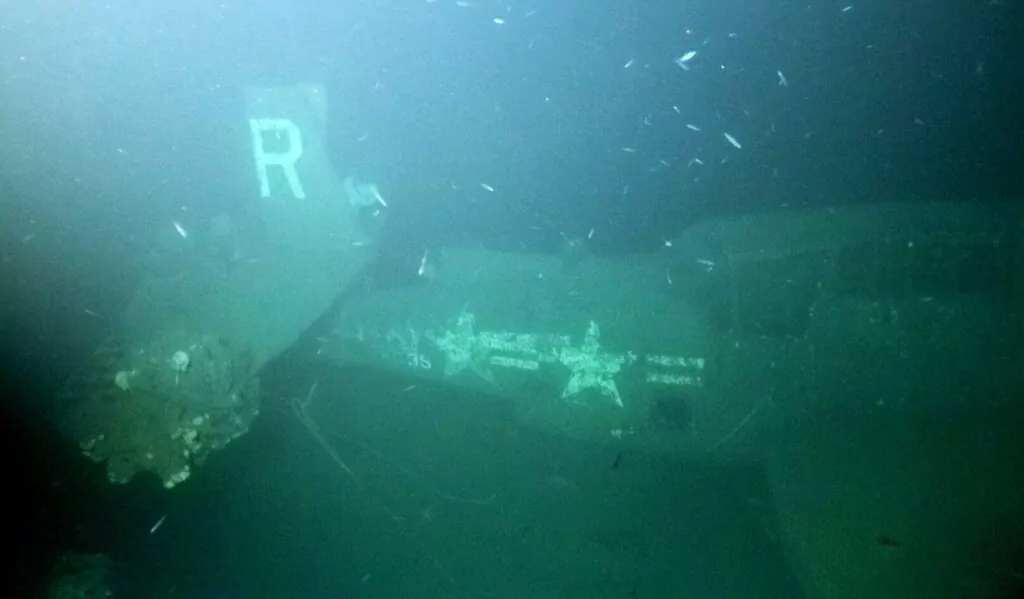
A remembrance ceremony was held on Atlantis above the F-1 wreck after the dives, with a bell rung 19 times – once for each crew-member lost. “History and archaeology are all about people and we felt it was important to read their names aloud,” said Krueger.
The multi-beam sonar systems on Atlantis and Sentry produced high-resolution maps of the submarine and surrounding seabed, while the high-res video footage and stills were used to produce 3D photogrammetric models offering precise measurements and details of marine-life colonisation.
“We were careful and methodical in surveying these historical sites so that we could share these stunning images, while also maintaining the reverence these sites deserve,” said NDSF chief scientist and expedition co-lead Anna Michel.
Also on Divernet: DEEP CORAL REEF IS WORLD’S BIGGEST KNOWN, STUDY SHOWS HOW SHIPWRECKS IMPACT ECOSYSTEM AROUND THEM, SAN JOSÉ SHIPWRECK’S TREASURE IS CONTESTED…, COLOMBIA TO STEP UP TREASURE-SHIP RECOVERY