Usually associated with plush resort-diving, the Indonesian archipelago of Wakatobi can also be experienced by divers closer to ground level, says PIERRE CONSTANT – and while the islands might be in a Marine Protected Area, some are not without their problems
Over the past 35 years of exploring Indonesia’s remote corners, I have visited Sulawesi on numerous occasions, from Makassar to Tana Toraja and the Togian Islands, diving Manado, Bangka Island and the Lembeh Strait. Somehow, however I had never been to south-east Sulawesi, aka Sulawesi Tenggara.
When I heard about the possibility of cave-diving in a karstic environment there, I made up my mind quickly. I had to check it out.
Brief communications with one dedicated dive-centre strongly suggested that the owner was unreliable. Another centre that offered cave-diving refused to help me unless I booked a full package including hotel, transport and cave dives.
This left me bemused. I had already bought my plane tickets to Jakarta, and further afield to Kendari, not expecting the trip to run anything but smoothly!
I diverted my search further south to the Wakatobi Islands. The name sounded familiar. An expensive Swiss-owned resort was operating flights directly from Bali to its island for wealthy customers but this was simply not my cup of tea – I wanted to dive the local way.
Raha stopover
I chose a low-key Indonesian operation on Pulau Hoga, expecting the trip out to be an adventure in itself. A fast ferry connected Kendari to Baubau in around five hours, but I fancied making a stop halfway for a couple of days – in Raha on Muna Island .
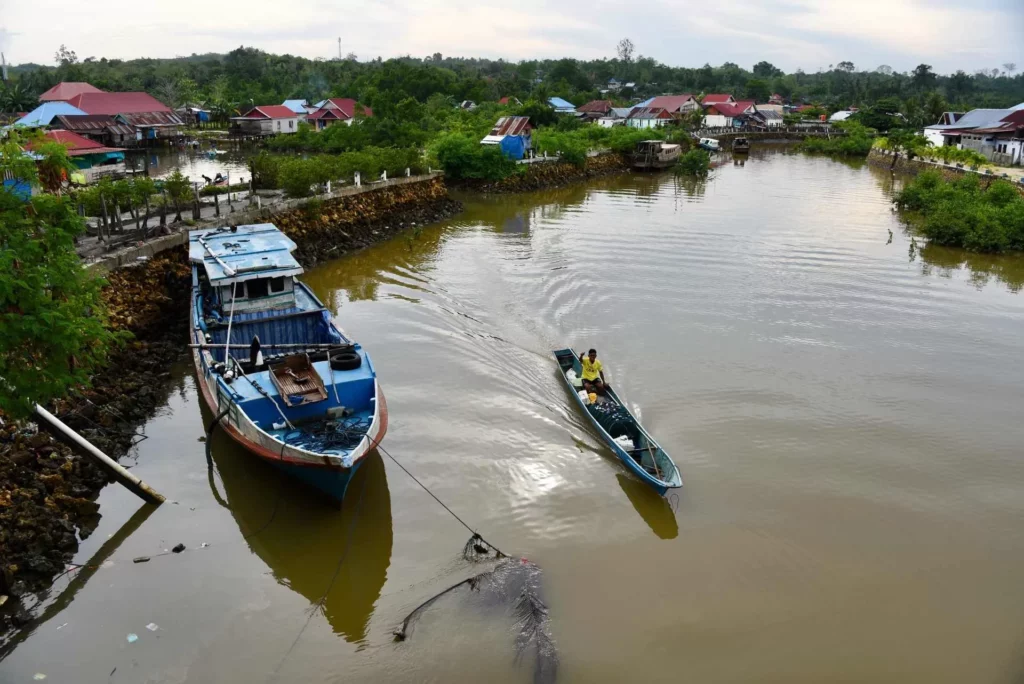
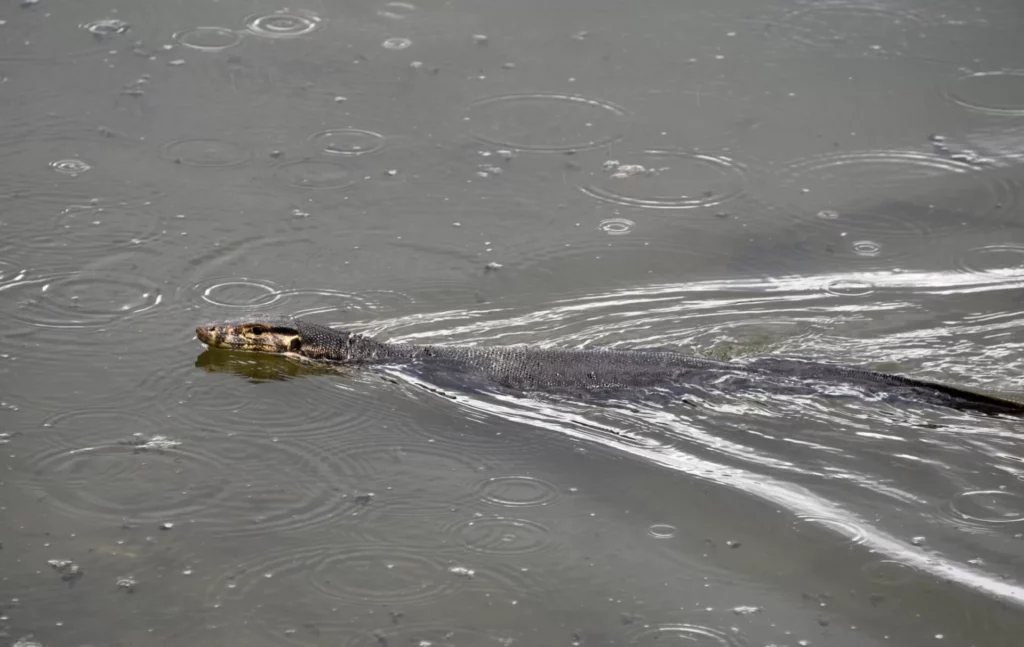
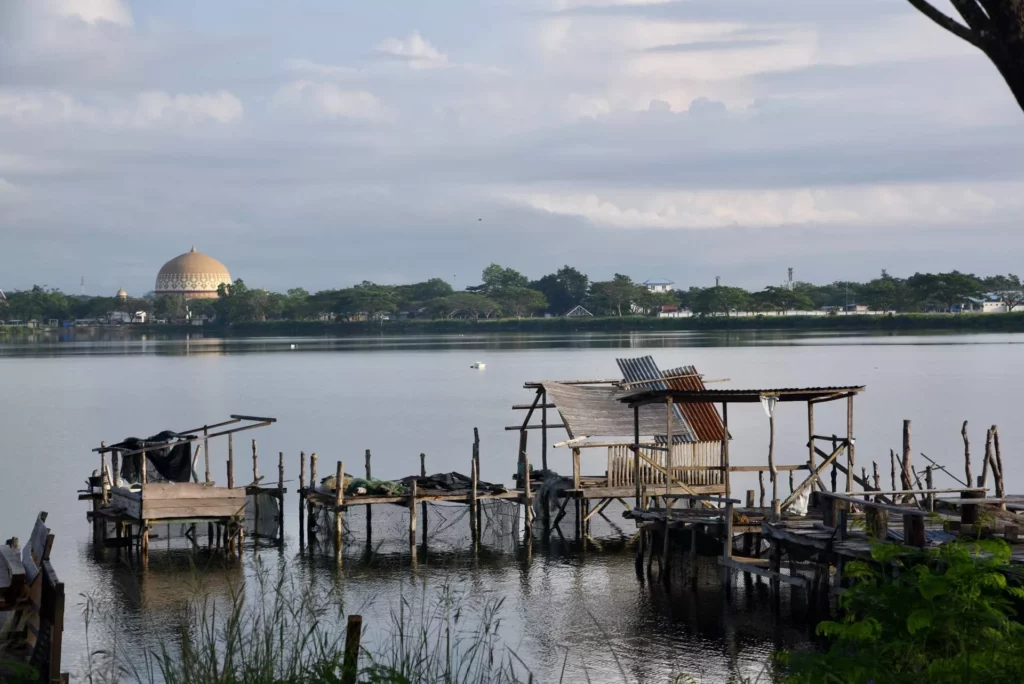
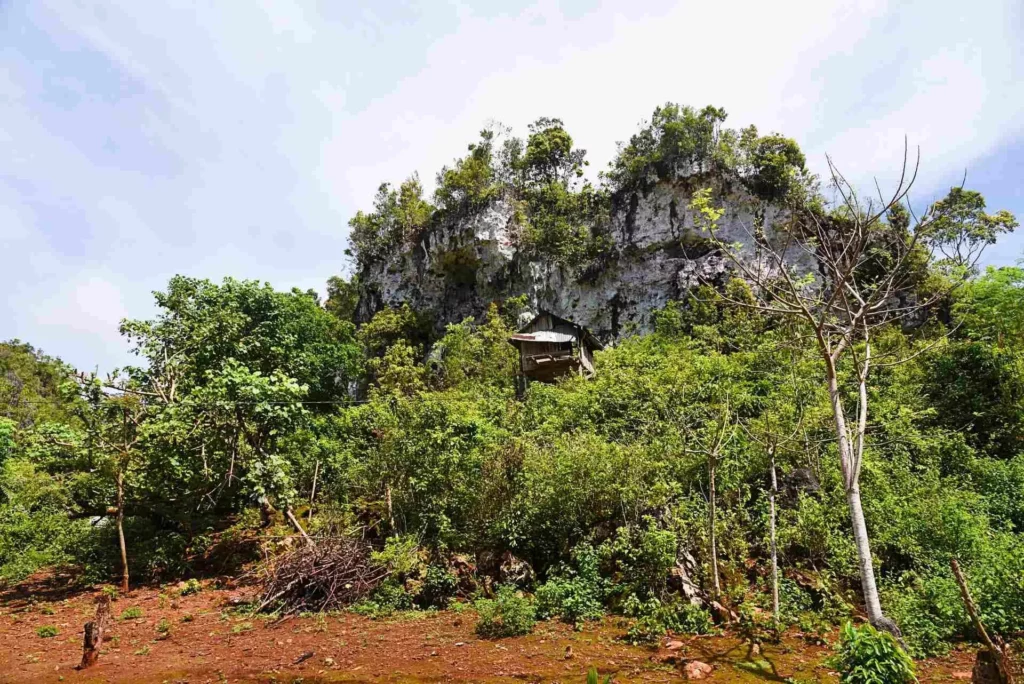
My interest had been piqued by the ancient cave paintings said to be hidden in the karst of the island’s jungle.
Similar paintings found in caves north of Makassar had been dated to 40,000 years ago. In Raha, the ochre red paintings of Gua Liang Kabori and Gua Metanduno depicted anthropomorphic figures, horned animals, deer, suns, battling warriors, horsemen hunting, people paddling in canoes…
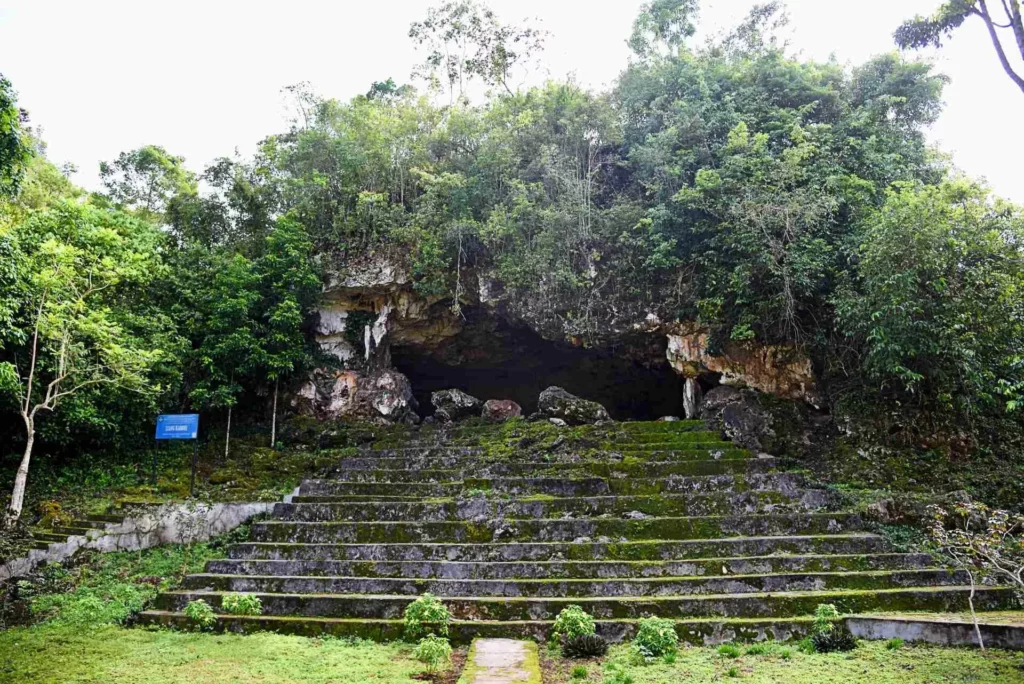
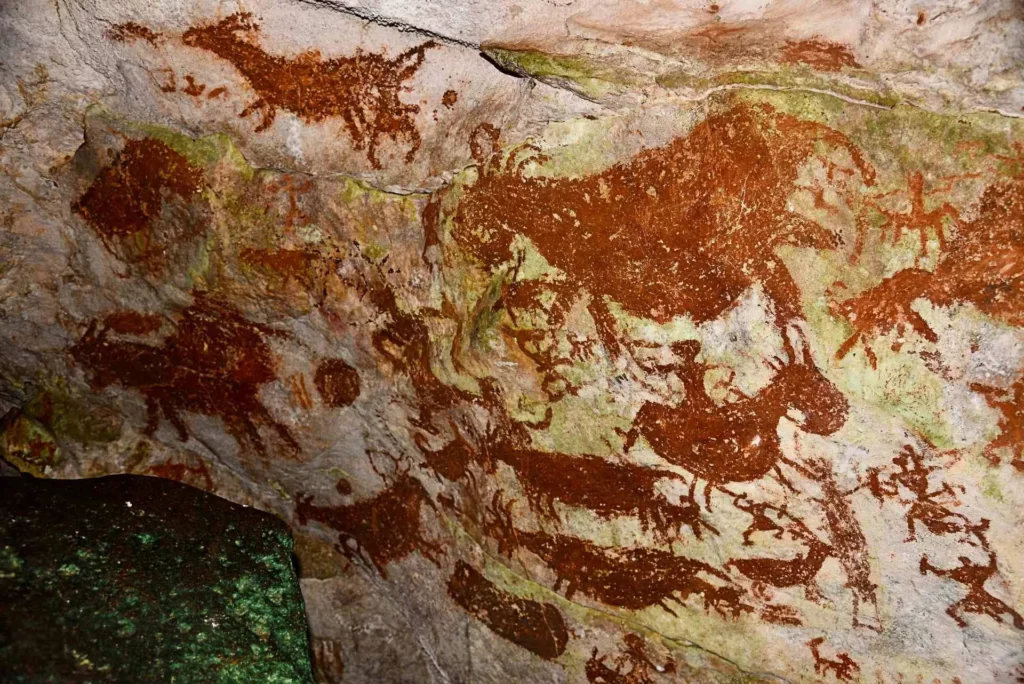
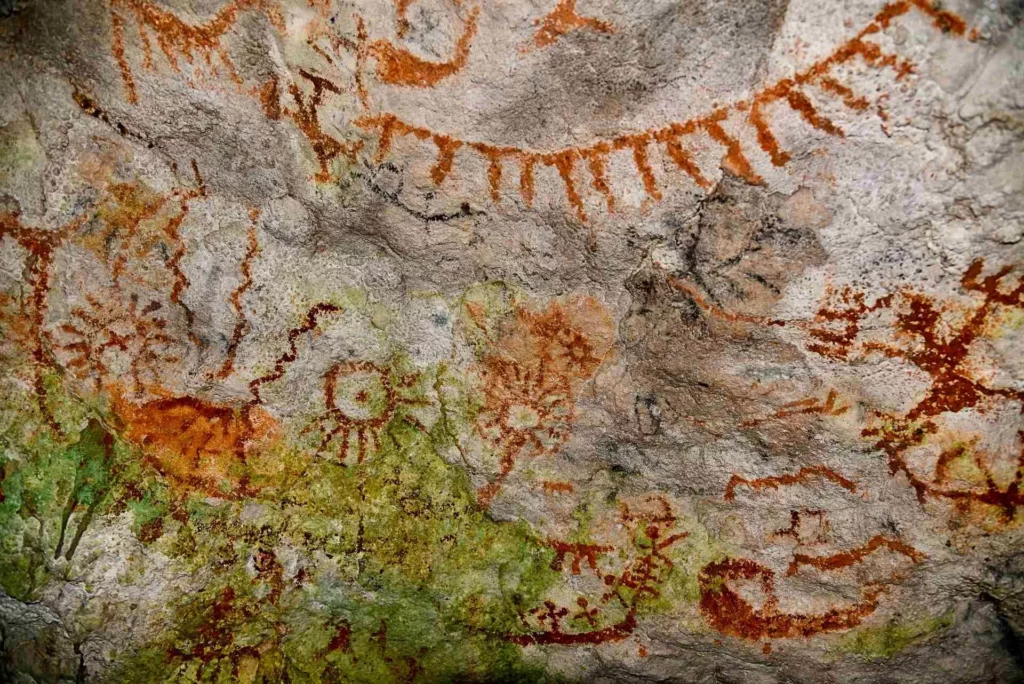
From Raha, the Express Bahari 6 ferry whisked me to the city of Baubau on Buton Island in two hours. A car left early in the morning for Pasar Wajo, across the mountainous interior.
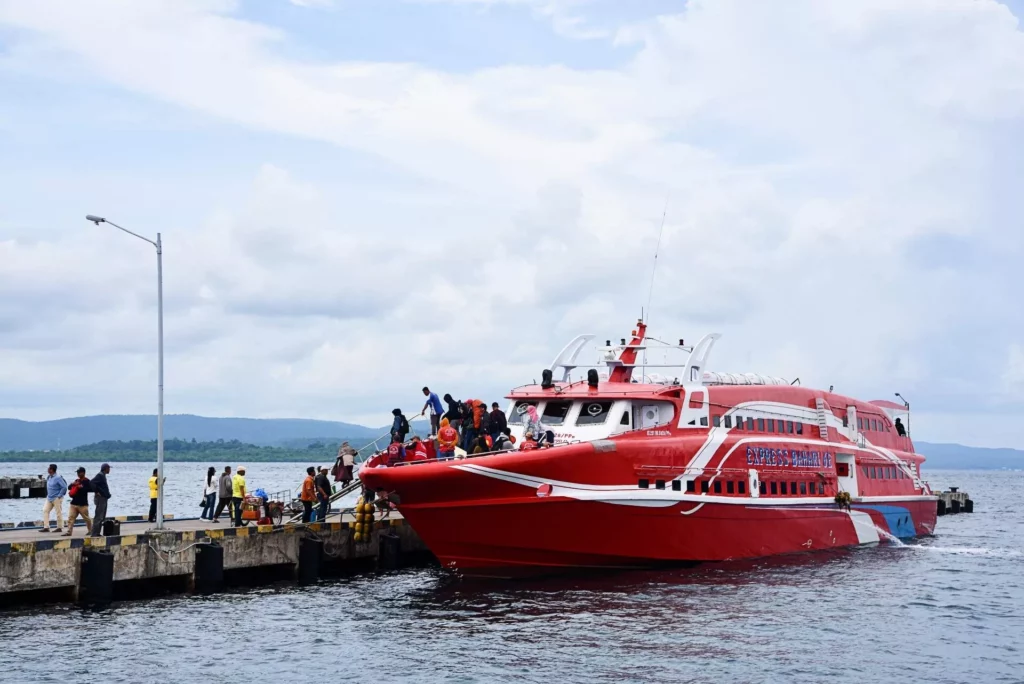
From there I hopped onto the fast ferry Batam Jet 5 to reach Kaledupa Island. Pulau Hoga Dive Resort’s boat picked me up on arrival for a 30-minute transfer to the island. It was a long day and, making the crossing even more enjoyable, I was copiously splashed by saltwater spray!
The Wallace line
Chromosome-shaped Sulawesi has an unusual geological history. It is located at the heart of the Asia-Australia collision zone, with continental fragments of central and south-east Sulawesi, Banggai-Sula and Buton Island broken off from the northern Australian continent in Jurassic times to drift north-west to their present position.
In the 19th century British naturalist Alfred Russel Wallace was the first to demonstrate the differences between flora and fauna of the Asian (Sunda) and Australian (Sahul) regions.
Considering the extent of land at the time of the Last Glacial Maximum – when sea level was 110m below present – the deep water of the Lombok Strait (between Bali and Lombok), and the deep Makassar Strait (between Borneo and Sulawesi) prevented fauna crossing further east from Asia, and vice versa.
This led Wallace in 1859 to draw the line that now bears his name, separating the biogeographic realms of South-east Asia from ‘Wallacea’, a transitional zone between Asia and Australia.
Monkeys were found to the west of Wallace’s line, marsupials to the east. His research furthered the emerging theory of evolution just as Darwin was publishing The Origin Of The Species.
With its quadrangular shape, Pulau Hoga is an uplifted slab of coral limestone covered in jungle, surrounded by white-sand beaches.
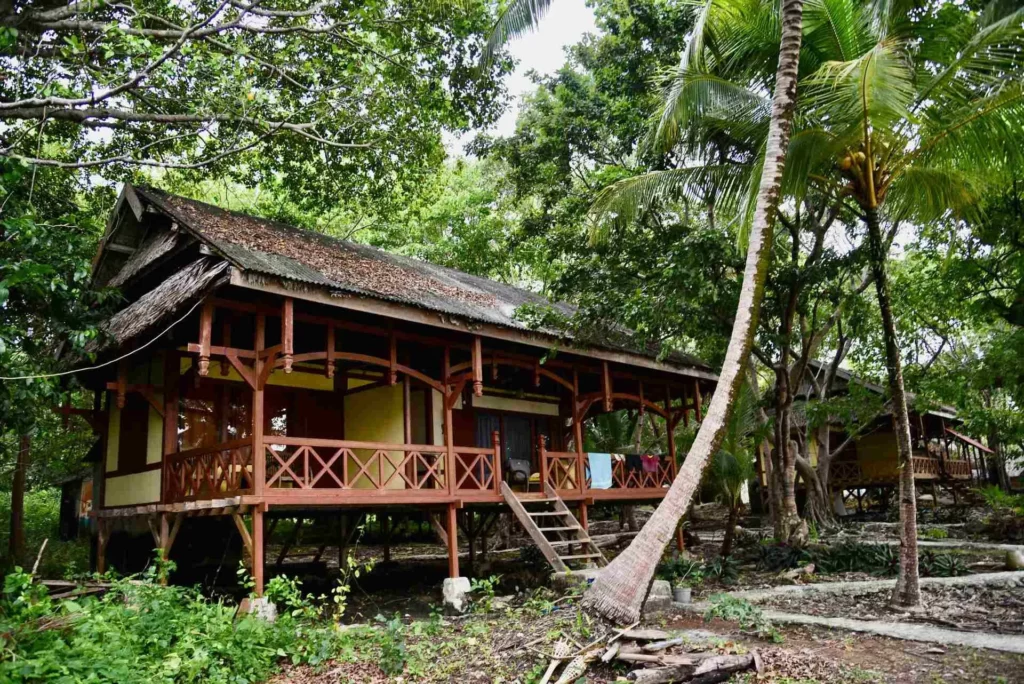
I landed on the beach and was led to my bungalow by Wia, the manager of the resort. Made of coconut wood, the bungalow on stilts was simple, with a large veranda but a rather small room with twin beds, a table and a closet. The toilet was outside with the shower, a blue drum filled with brackish water and a pink cup for convenience.
The jungle filled the background. The south-east trade winds blew non-stop at this time of the year, and there were mosquitoes, so a net had been placed around the beds.
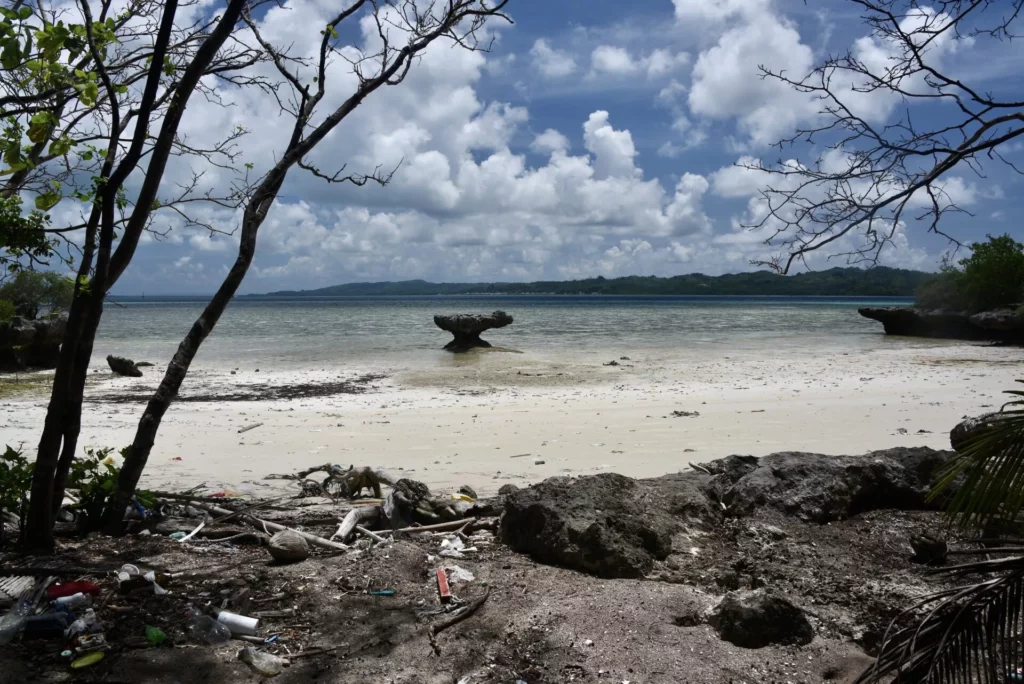
Facing the coastline were coconut palms and giant strangling fig trees with spreading roots, creeping in all directions like a monstrous spider web. A narrow, broken cemented path inlaid with shells wound its way to the open dining area overlooking the beach.
Started in 1995, the ageing operation was family-owned. A character for sure, 51-year-old Wia had taken it over and was the only one to speak a little English.
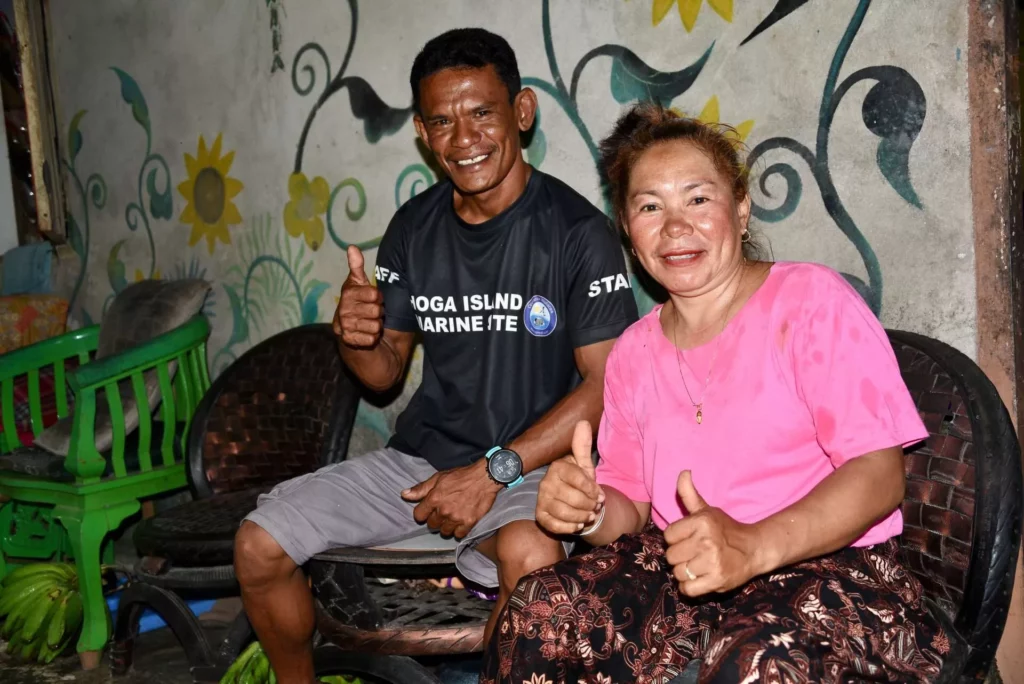
At 6am, over a breakfast of scrambled eggs and mango chunks, I met Duda, the slim and fit 42-year-old Bajau divemaster. Very experienced, he ran the diving operations and briefed me on the day’s plan.
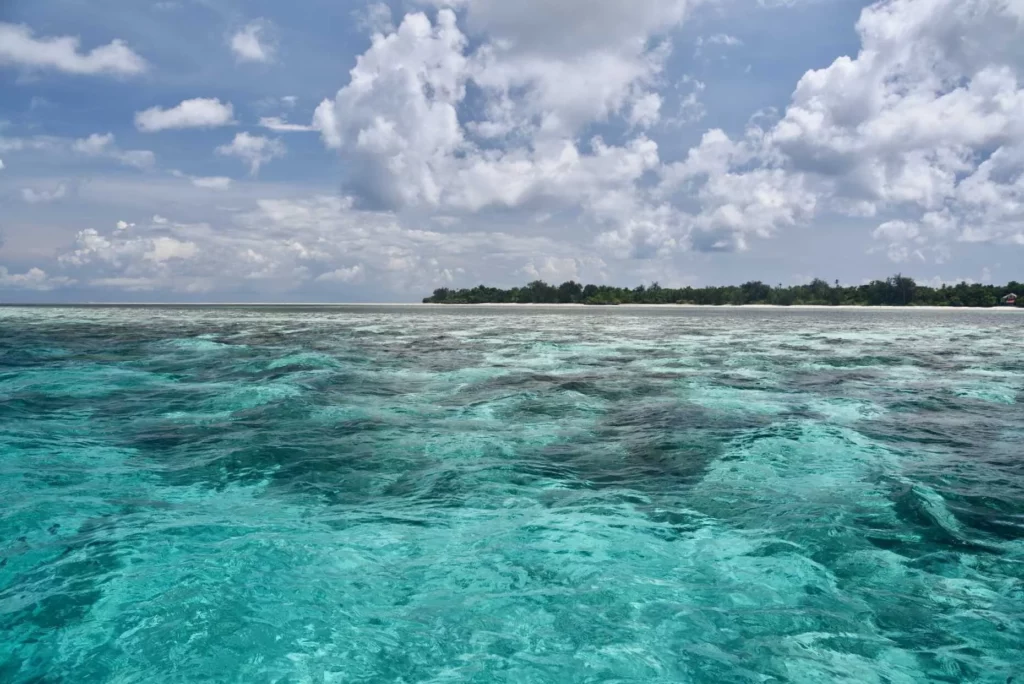
The 15 dive-sites were mostly located on the west and north coasts of Pulau Hoga. Low tide extended far out.
We walked for about 15 minutes towards an old cement jetty and over the sand flats in shallow water to reach the so-called dive-boat. This 7m rustic prahu, an elongated wooden canoe with an inboard engine and a flat bottom of boards inside the hull, had seen better days.
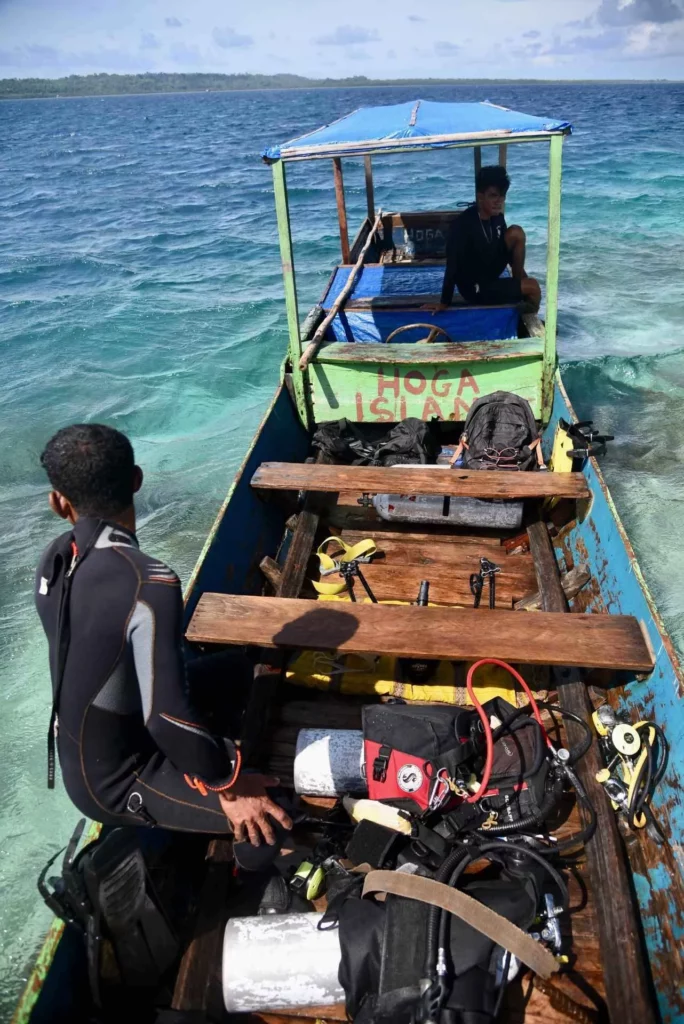
I sat on a plank across the width of the boat, with the dive-tanks behind me and the equipment on top. The underwater camera lay on my lap because, despite the cushion I had been given for it, the vibrations of the engine were just too much for it!
Hamid, our captain, was a smiling, gentle 24-year-old who lived in the Bajau village of Sampela, just across the strait on the Kaledupa side.
Outer Pinnacle
The first dive-site was 15 minutes distant. As we crossed the waves, with Duda sitting safe at the bow, I was splashed systematically by the salt spray. Hamid was laughing like a naughty kid.
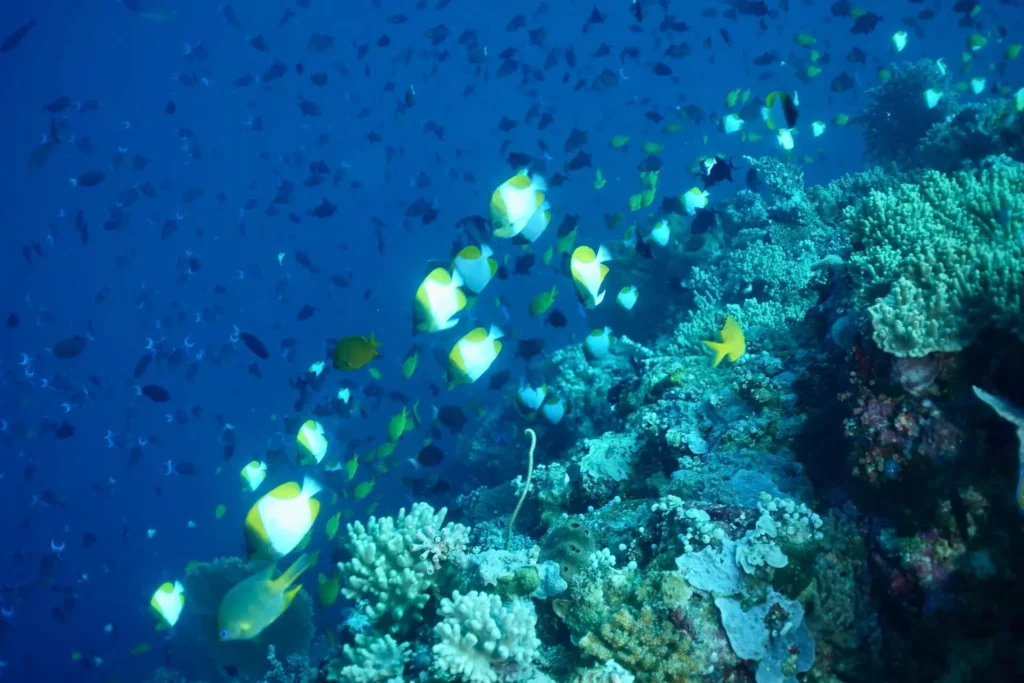
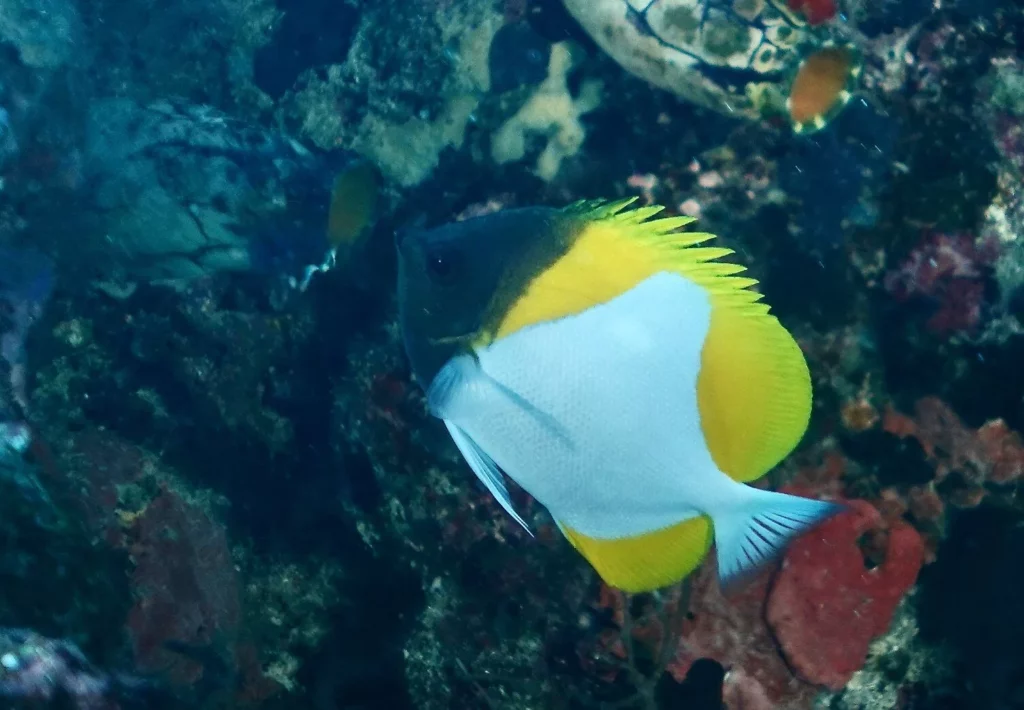
We hopped overboard on top of a seamount rising from the deep. Only small fish were visible at first glance, with fishing-lines under water explaining this. However, a Napoleon wrasse did show up. There were clouds of yellow chromis (Chromis analis), yellowlined and yellowback fusiliers and schools of pyramid butterflyfish (Hemitaurichthys taeniourus).
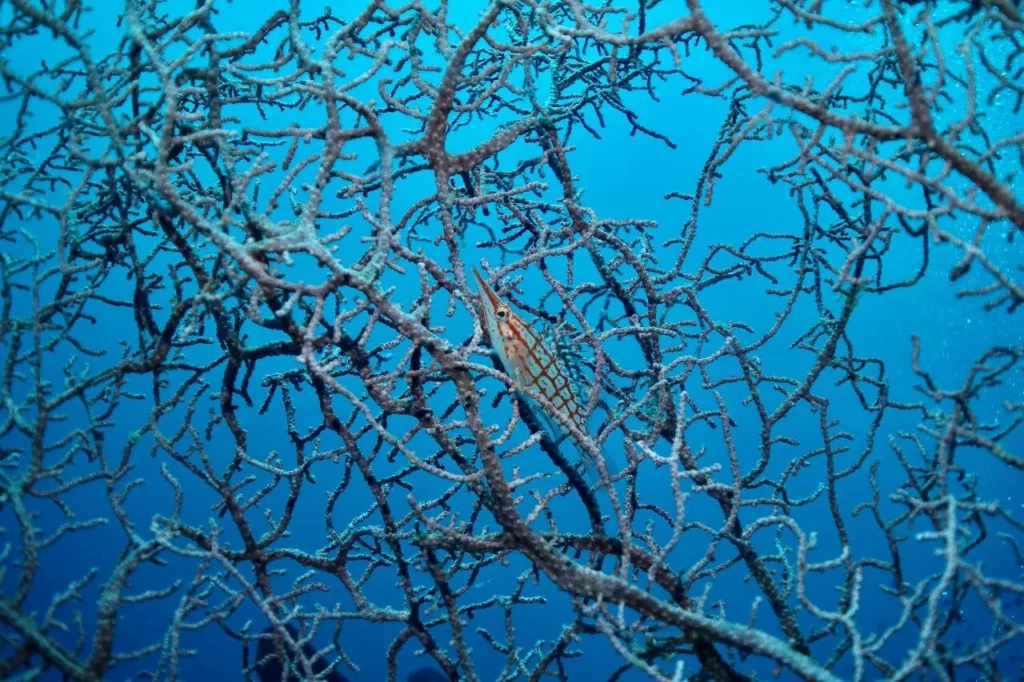
The number of crocodilefish was amazing. A cool longnose hawkfish (Oxycirrhites typus) sat on a blue-purple gorgonian and I saw a little school of two-spot snapper (Lutjanus biguttatus).
The dive flashed by, and it was quite choppy when I surfaced, the boat rocking madly from port to starboard. “We’ll do the interval time on the spot,” said Duda but I objected, and we returned to the calmer waters of the pier.
Pak Kasim’s
Pak Kasim’s was rather disappointing, a rubble slope with broken corals and misty visibility. A hawksbill turtle cruised by and I saw an orbicular batfish, barrel sponges and, again, old longlines. A dark spinecheek anemonefish (Premnas biaculeatus) in a fluorescent orange anemone caught my attention, as did a small Tridacna squamosa giant clam.
The tide was coming up as we returned, and Hamid and Duda pushed the boat over the sand flats towards the beach. Sunset was at 5.30pm, facing the resort. The generator was turned on between 6 and 9:30 pm daily for recharging of batteries and cameras.
I downloaded the underwater photos on my laptop, did the editing and selected the day’s best, a necessary routine.
Inner Pinnacle
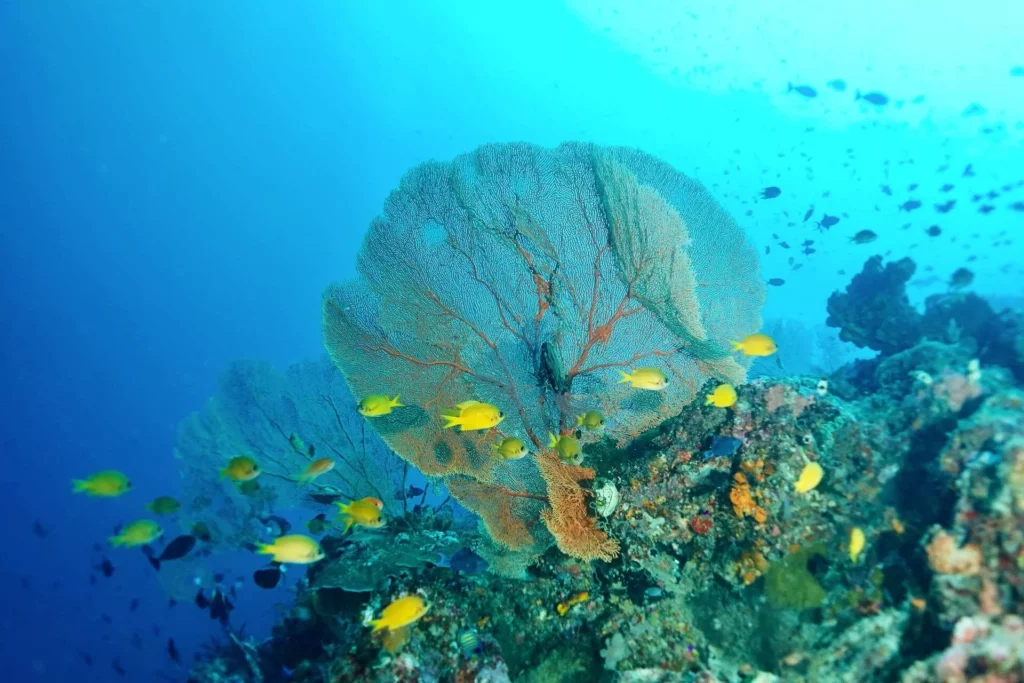
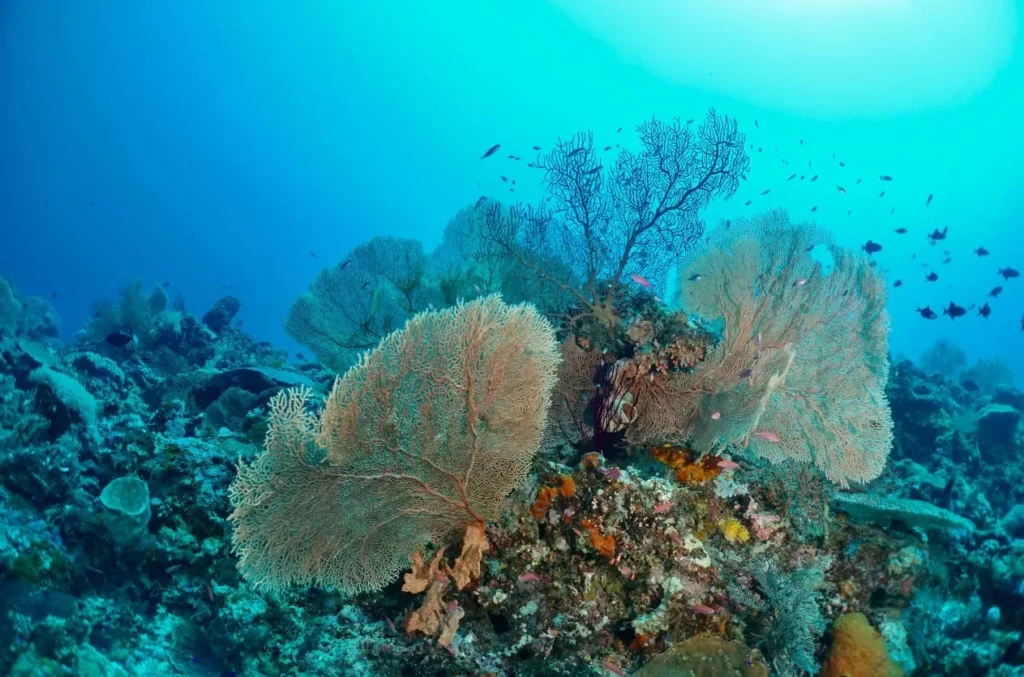
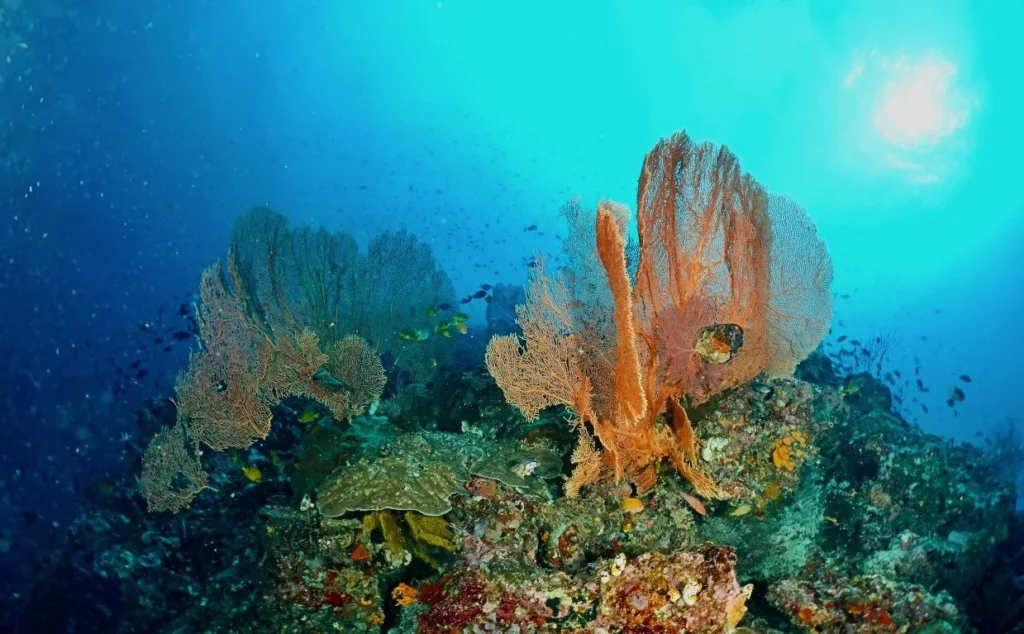
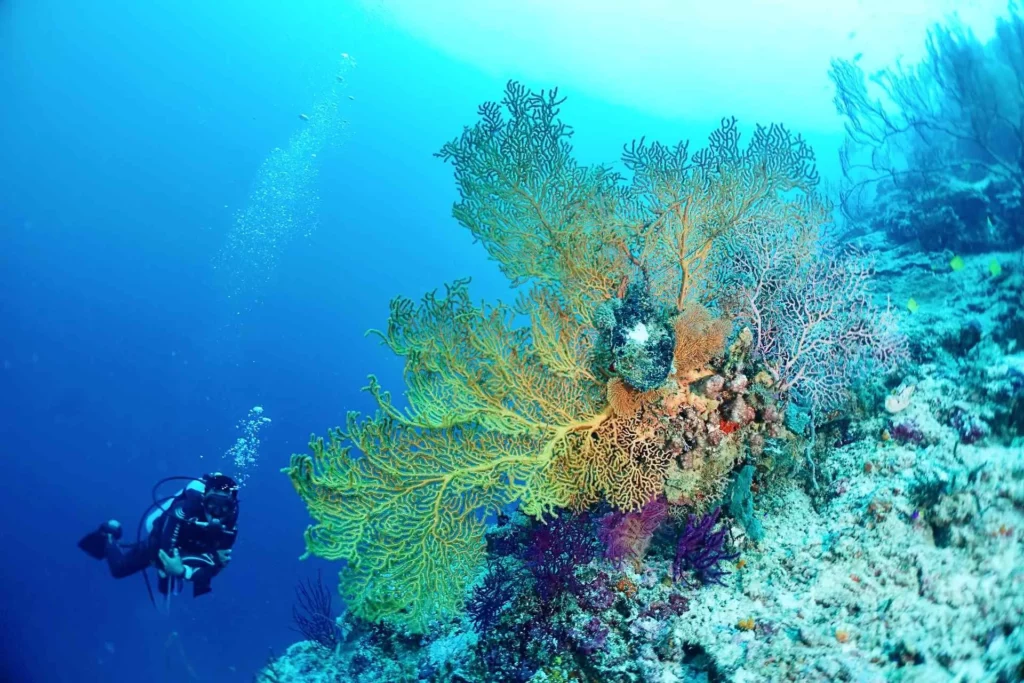
We left at 7am, carrying equipment over the reef flats. Opposite the ridge we had dived the previous day was another with a deep slope adorned with huge pinkish seafans spreading out like giant basketstars. A school of red snapper (Lutjanus bohar) cruised at a depth of 30m with longnosed emperors and a few bluefin jack.
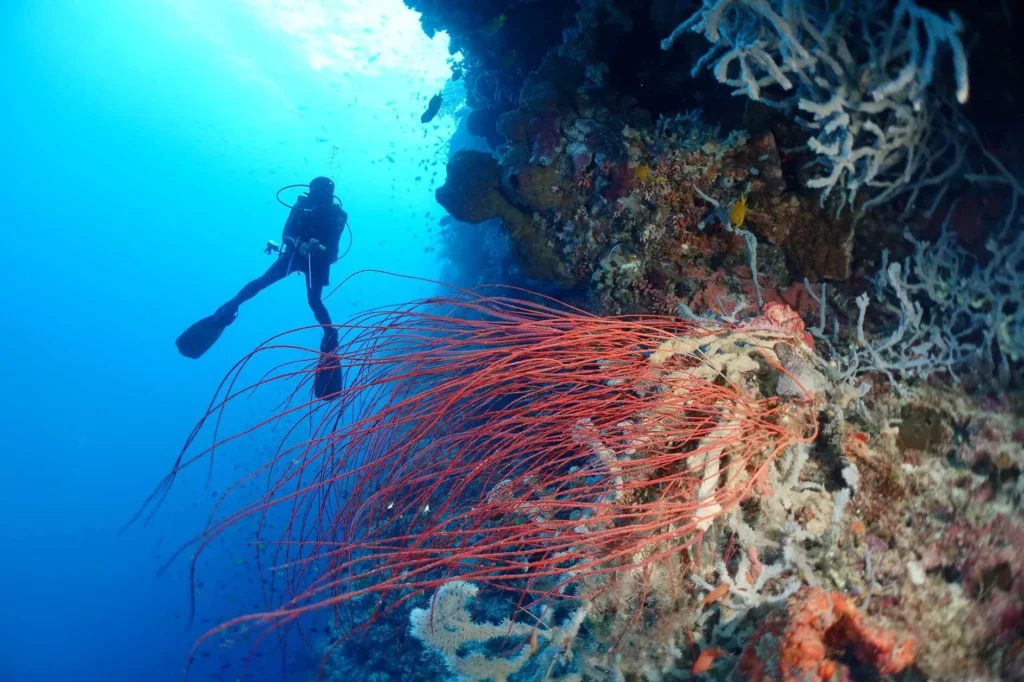
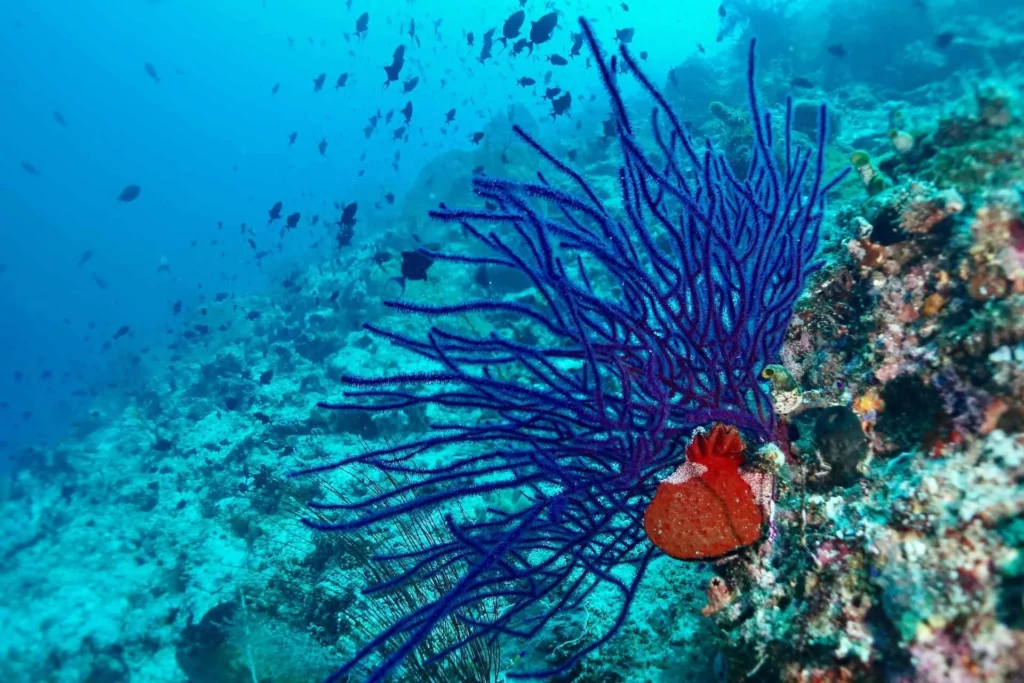
Clouds of yellow chromis mixed with pyramid butterflyfish and a lunartail grouper (Variola louti). Squarespot anthias (Pseudanthias pleurotaenia) fluttered, with a flock of orange females nearby. Red whip corals swayed in the current like fine hair, and a cobalt gorgonian left me in awe.
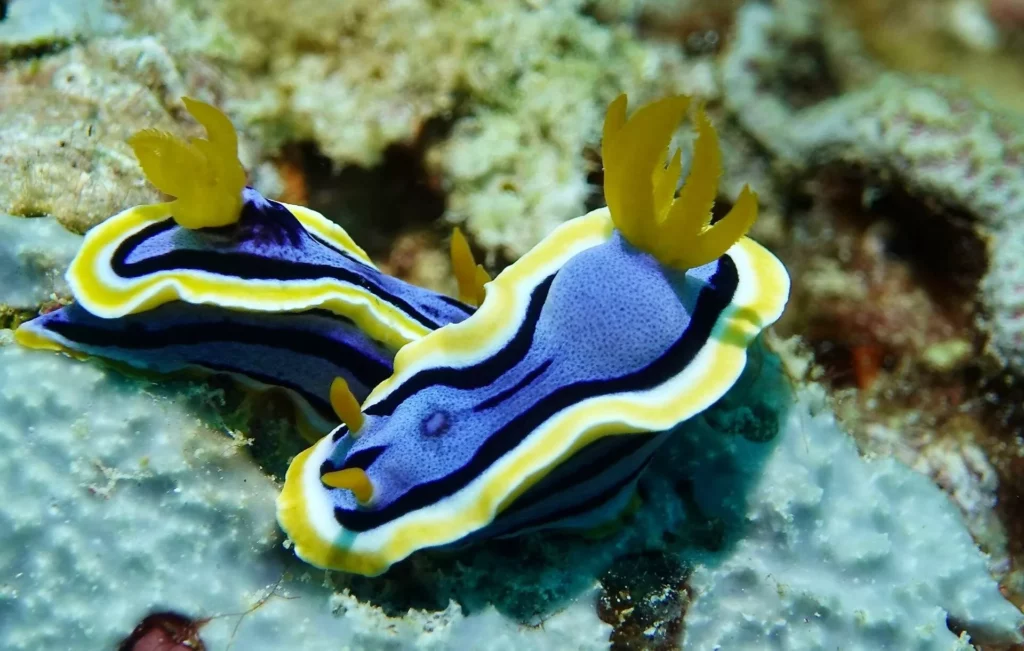
A whitetail anemonefish (Amphiprion chrysopterus) would appear every so often. Duda pointed out two mating Elizabeth’s chromodoris (Chromodoris elisabethina), with a yellow-white-black girdle, sky-blue back, orange gills and rhinophores. A macro highlight!
North Wall
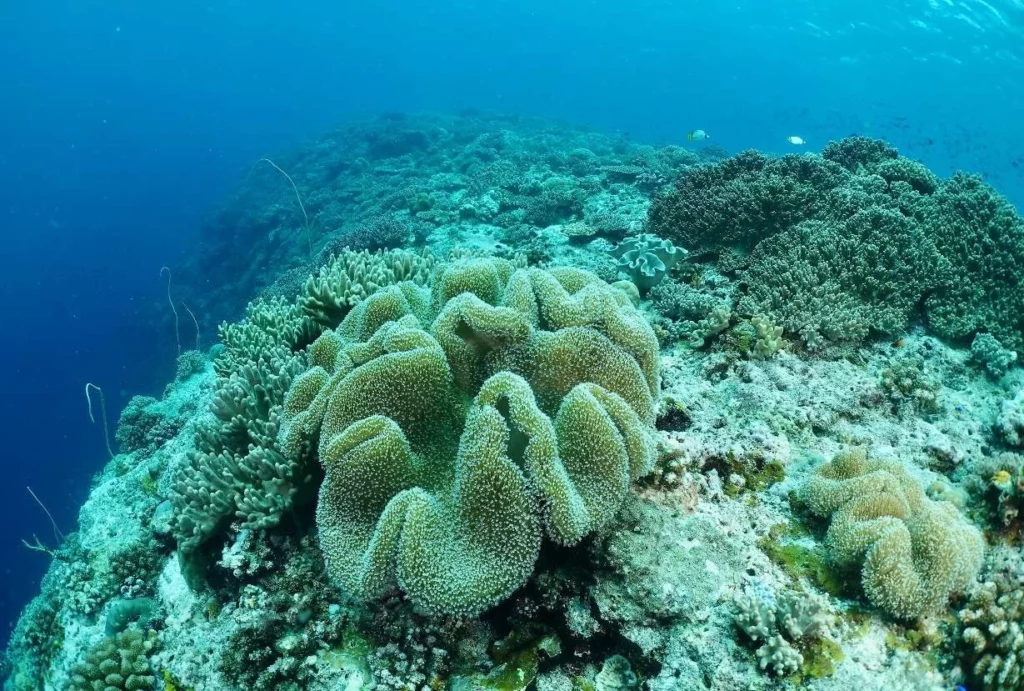
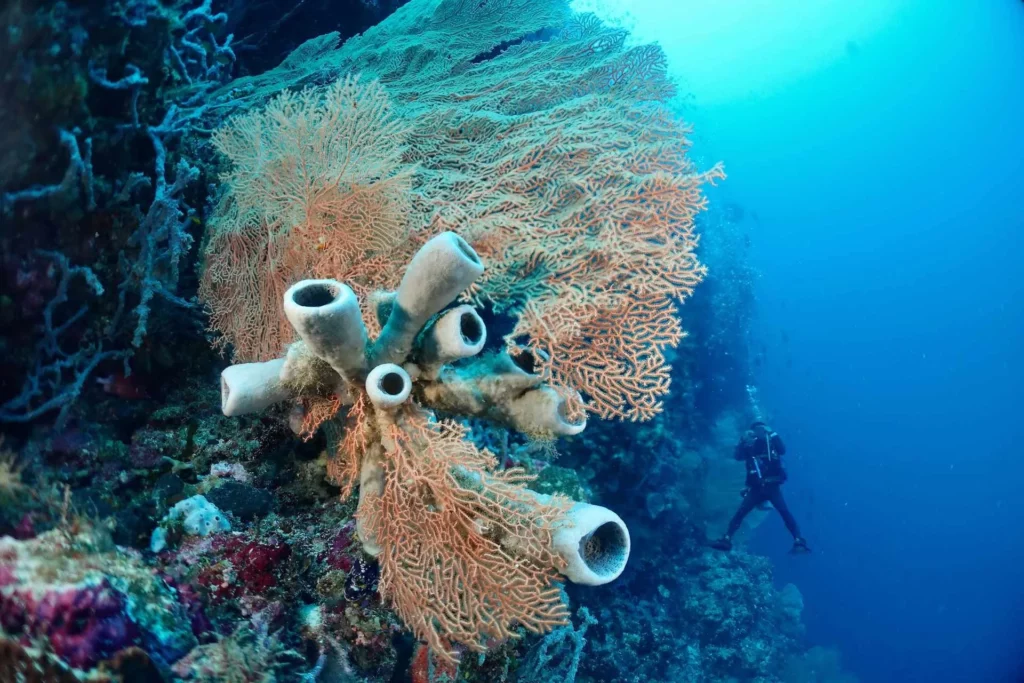
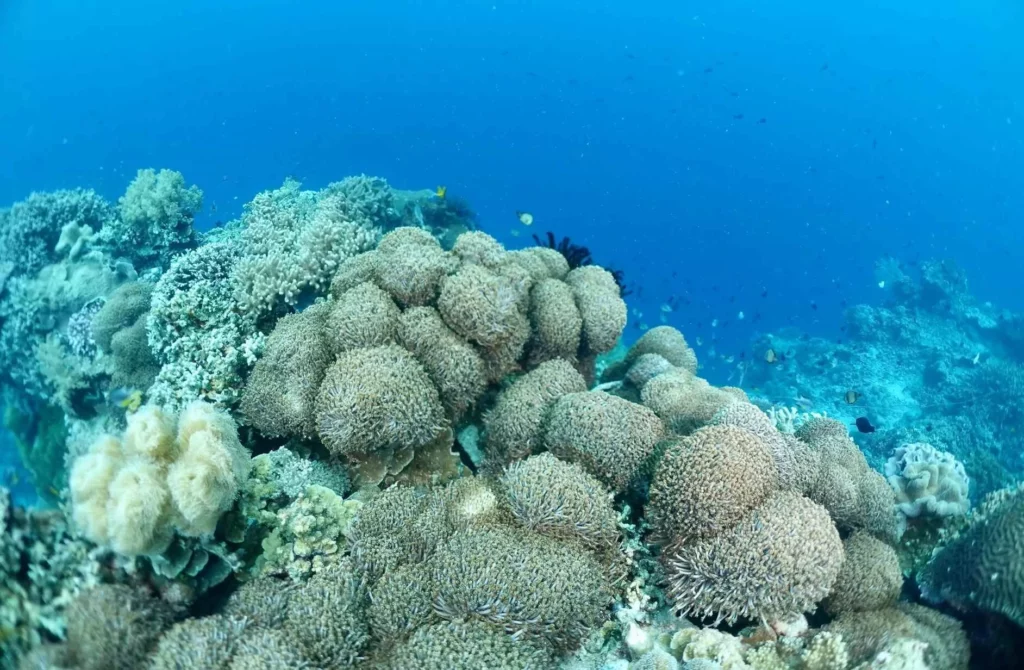
North Wall, on the north side of Hoga, was rich in decoration from gorgonians to sponges, with black coral bushes in white. This was an atmospheric site with nooks, crannies and overhangs, and a drop-off covered in Sarcophyton sp soft corals and tube sponges.
Facing the wind and waves on the way back, I was again sprayed aggressively – a full facial treatment for free! I hid behind one of my raised fins, camera on lap, to alleviate the misery.
Ridge 1
North-west of Pulau Hoga was another deep slope. Inquisitive, a small school of bumphead parrotfish (Bolbometopon murricatum) turned up at depth, joined by paddletail snapper (Lutjanus gibbus), always shy.
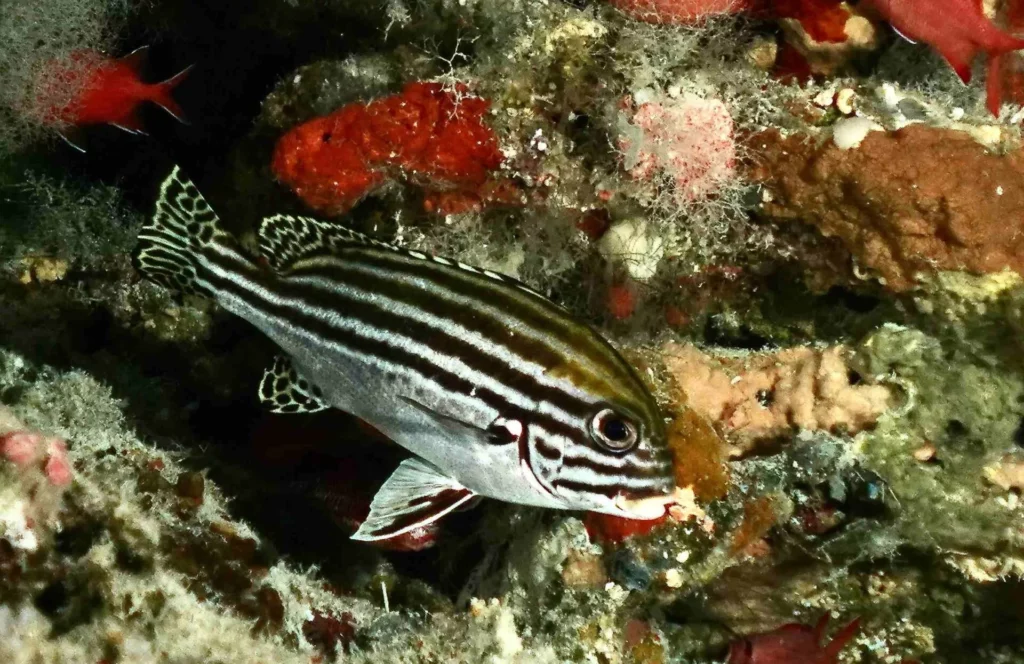
A couple of orange-rimmed batfish (Platax pinnatus), a juvenile Oriental sweetlips (Plectorhinchus vittatus) with brown bands, a masked grouper (Gracila albomarginata) and a school of yellowfin goatfish (Mulloidichthys vanicolensis) showed up. The noticeable current forced us to turn around during the dive.
Buoy 2
Back in the calm waters of the jetty, a sudden rain shower had us cowering under the boat’s plastic roof, shivering like wet vultures. We squatted on our heels until it stopped.
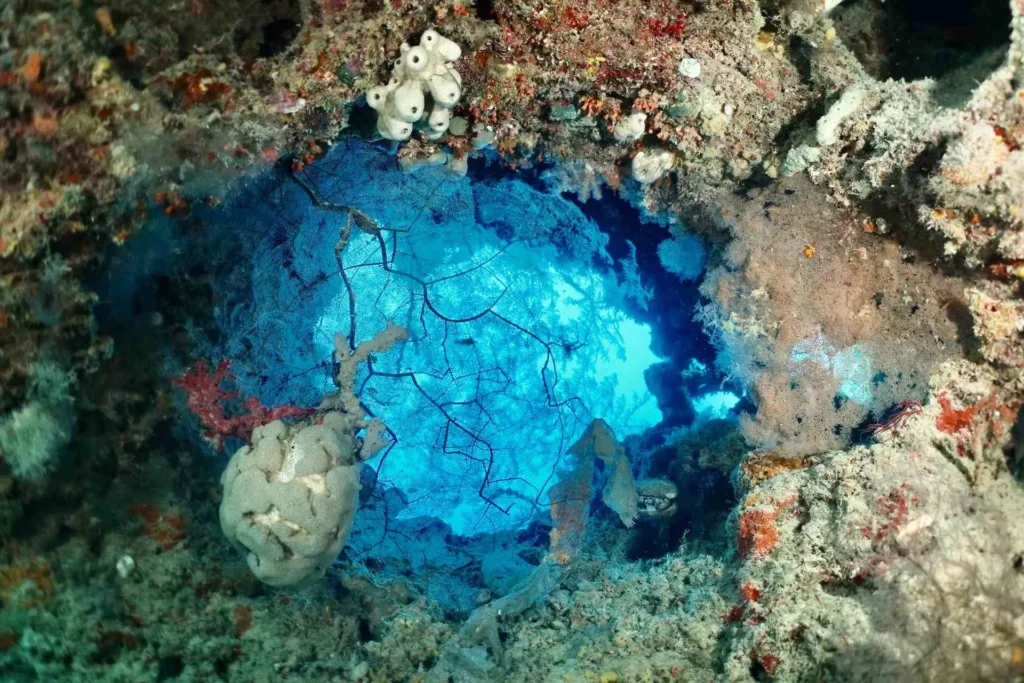
There followed a surprisingly interesting wall-dive between buoys 2 and 3 over a sandy bottom at 30m, with many gullies, crevices, overhangs and small caves.
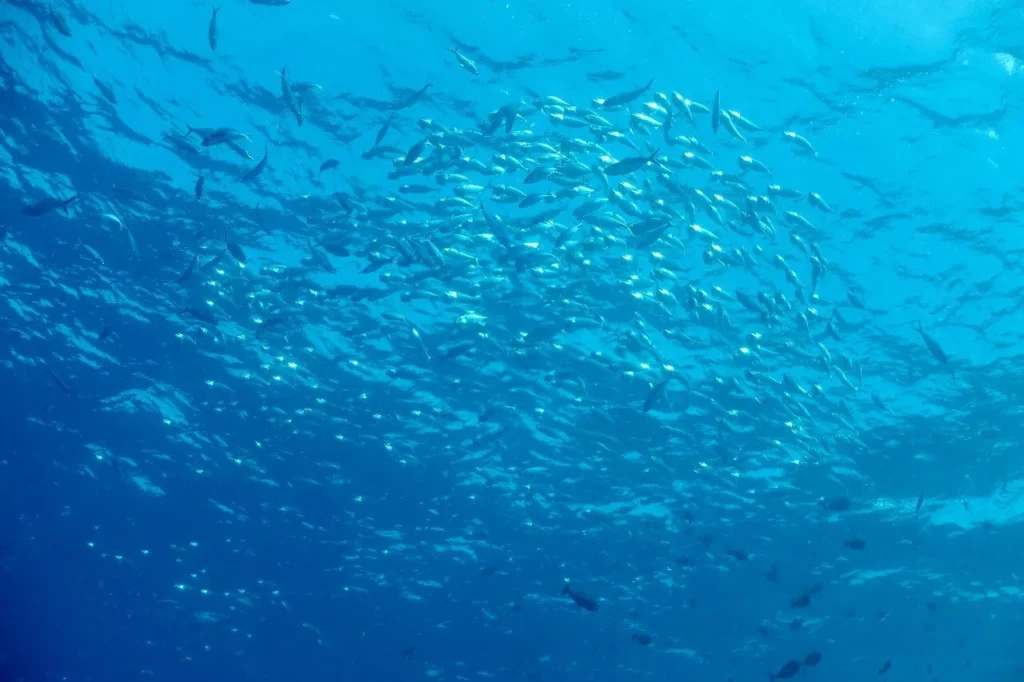
A school of long-jawed mackerel (Rastrelliger kanagurta) fed happily under the surface, their silvery jaws wide open and shining in flashes. Then they dived in a pack, checking me out as they passed like a shower of darts.
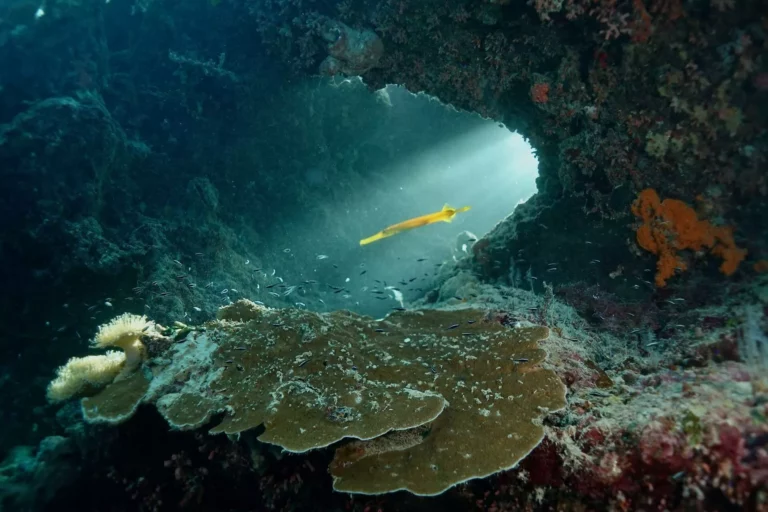
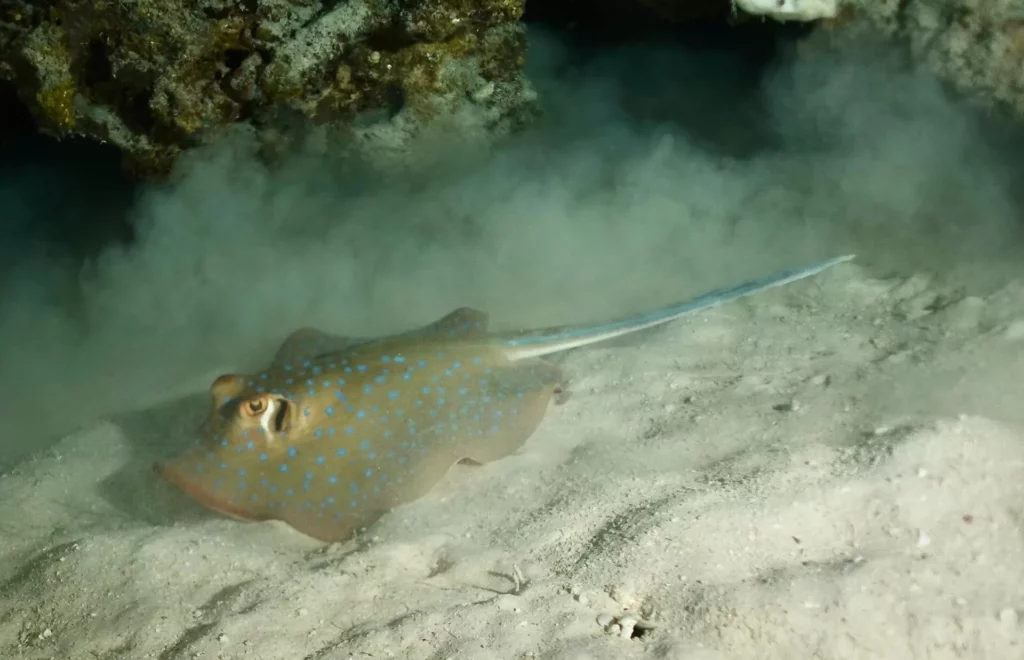
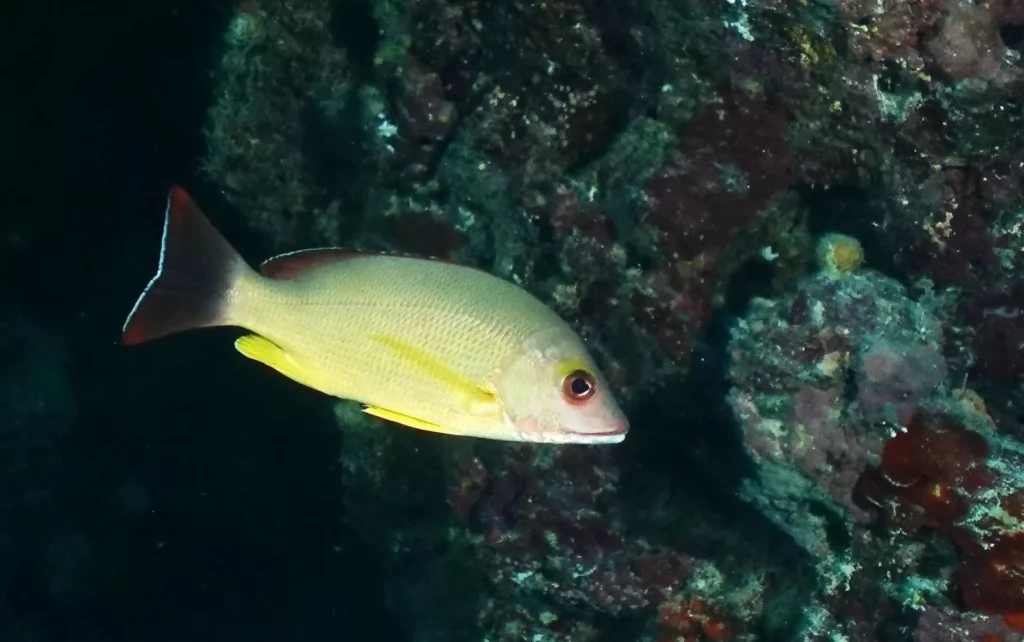
Not at all alarmed, a hawksbill turtle roamed in the shallows. A few blue-spotted ribbontail rays (Taeniura limma) hid in small caves over a sandy patch. A blacktail snapper (Lutjanus fulvus) and a clown triggerfish were followed by a yellow trumpetfish (Aulostomus chinensis) hovering in a sunbeam that filtered through a crack in the reef. Ethereal.
Coral Garden
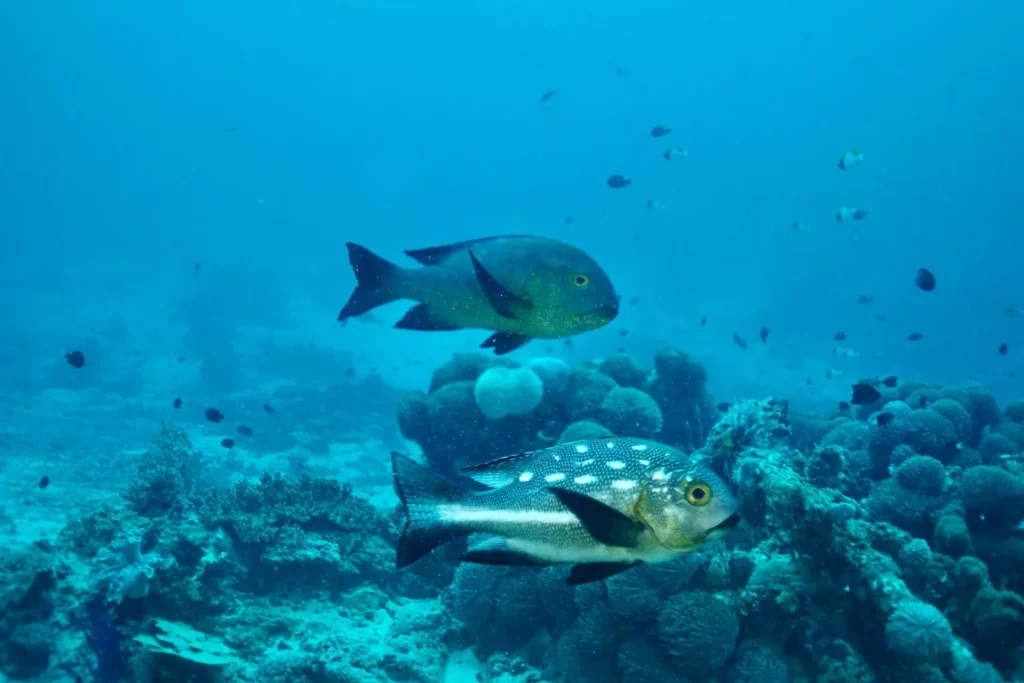
It started raining as we reached the north-west coast. I came across two midnight snapper (Macolor macularis), a long-nosed emperor, a school of yellowtail fusiliers and clouds of redtooth triggerfish (Odonus niger). There were also some Spondylus oysters and lots of white whip corals on the slope.
Baby Batfish
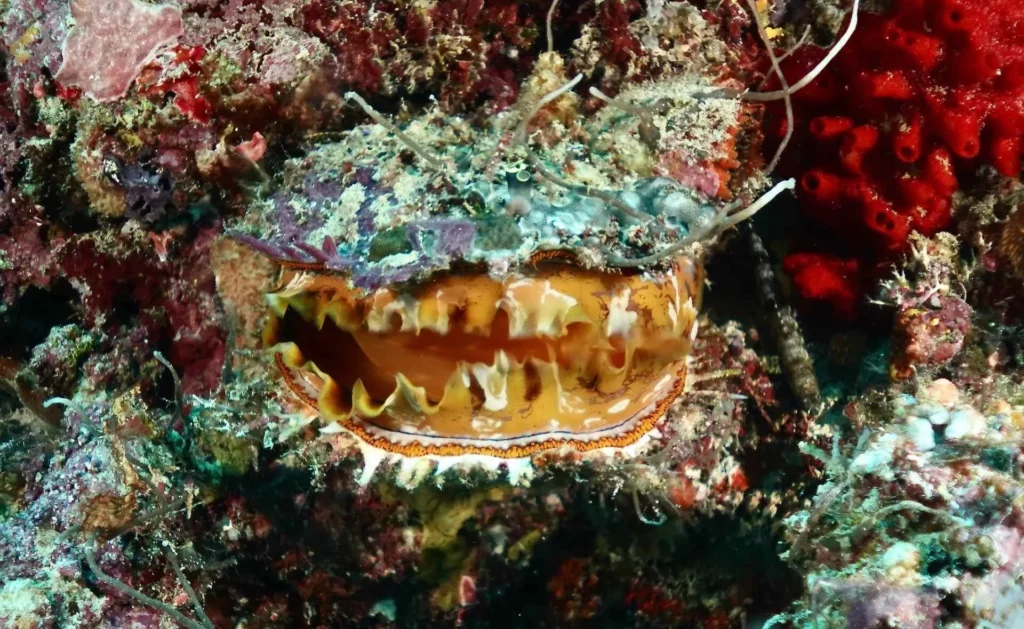
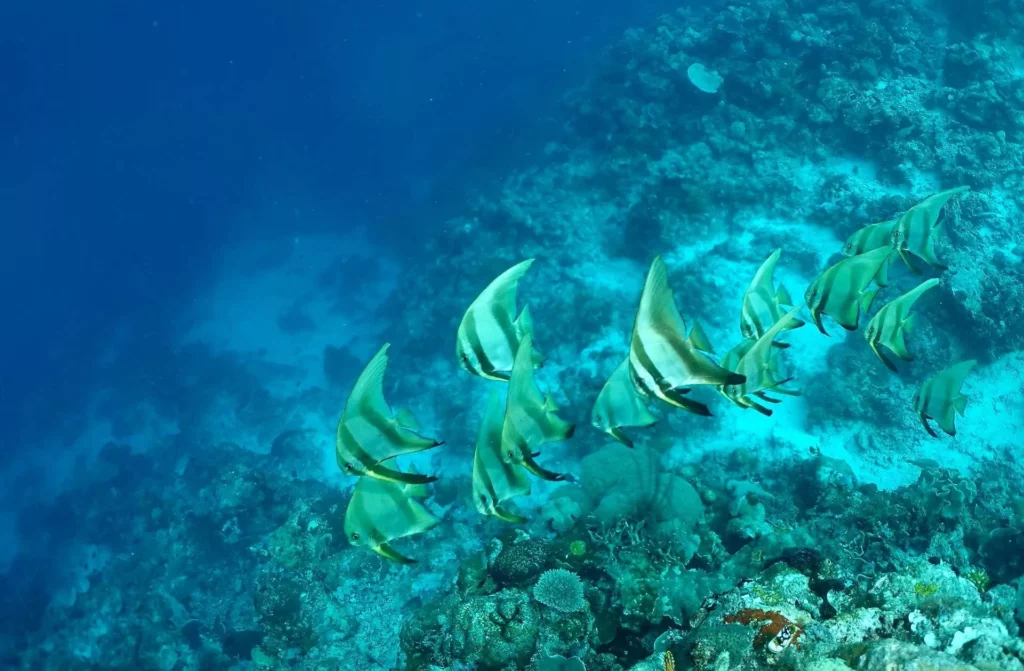
Closer to shore, this dive-site enabled me to encounter the eclipse butterflyfish (Chaetodon bennetti), yellow with a black spot on the side and two blue lines under the belly. Against all odds a school of juvenile orange-rimmed batfish (Platax pinnatus) zoomed in on me out of curiosity.
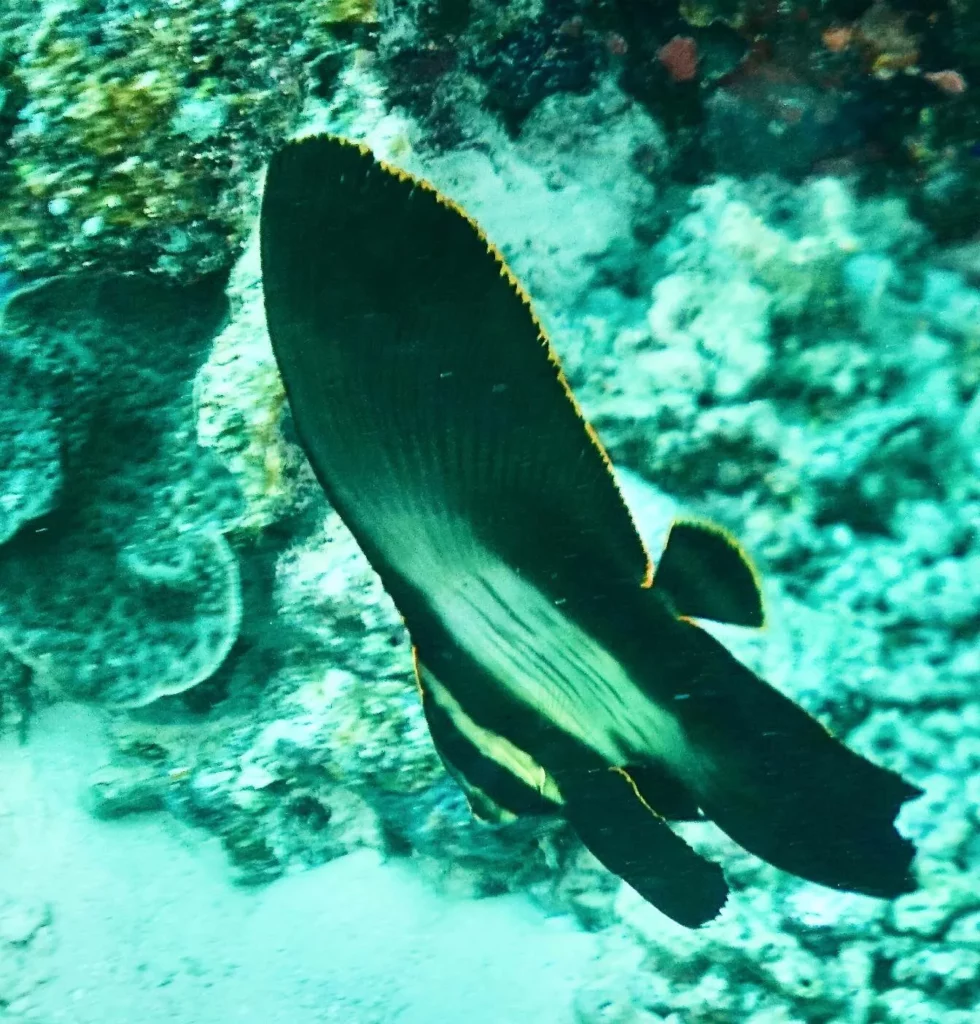
Cherry on the cake, a black baby batfish, outlined with an orange rim, played hide and seek behind an Acropora coral. It rained again on surfacing – ideal for washing the equipment!
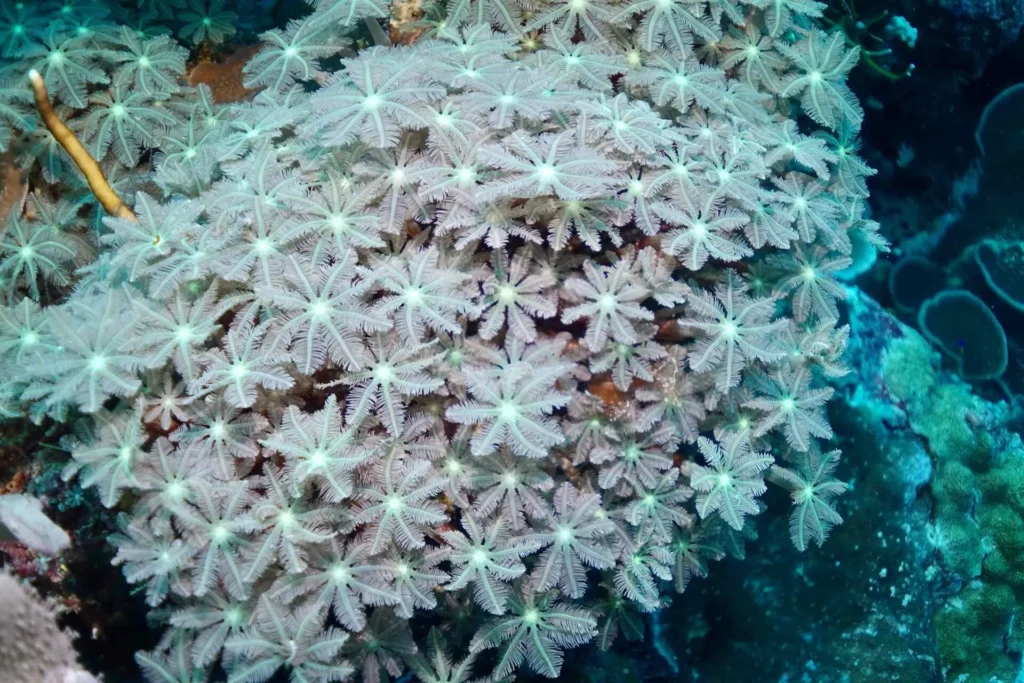
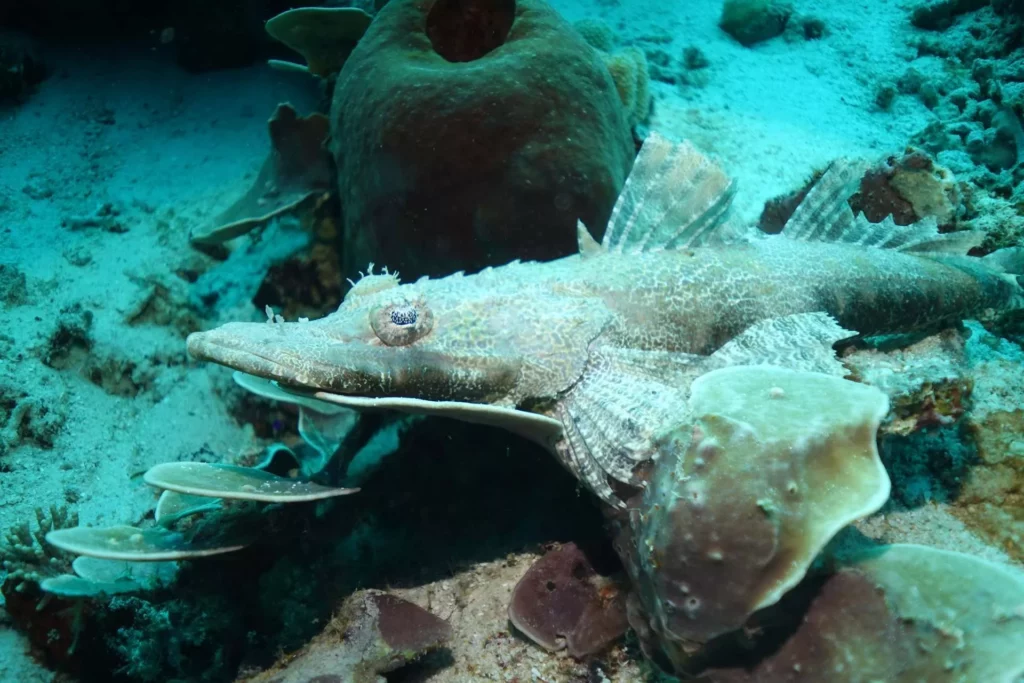
As night fell on Pulau Hoga, the wind suddenly died out. The Banda Sea turned into a dark mirror. It was Bintang beer time after sundown.
Wakatobi National Park
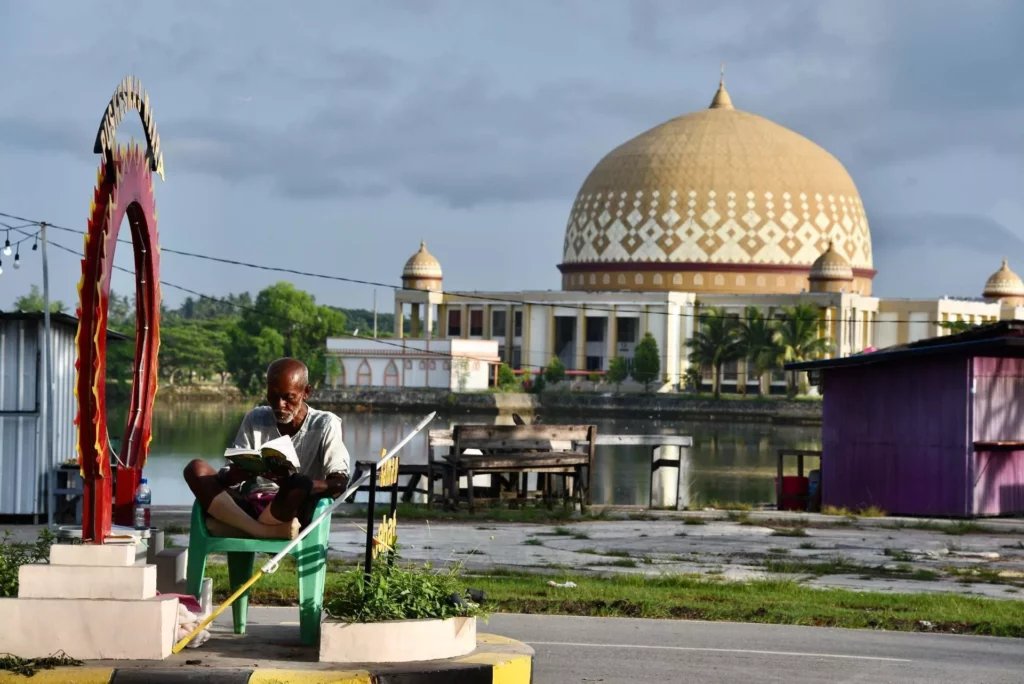
With a surface area of 13,900sq km, Wakatobi National Park is located between the Banda Sea to the north-east and the Flores Sea to the south-west. Established as a marine park in 2002, the name derives from a contraction of the four main Tukangbesi Islands: Wangi Wangi, Kaledupa, Tomia and Binongko.
Many smaller islands are added to the count, including Hoga. The highest elevation of 274m is found on Wangi Wangi. The population averages 100,000, of which the Bajau, aka sea gypsies, constitute a notable part.
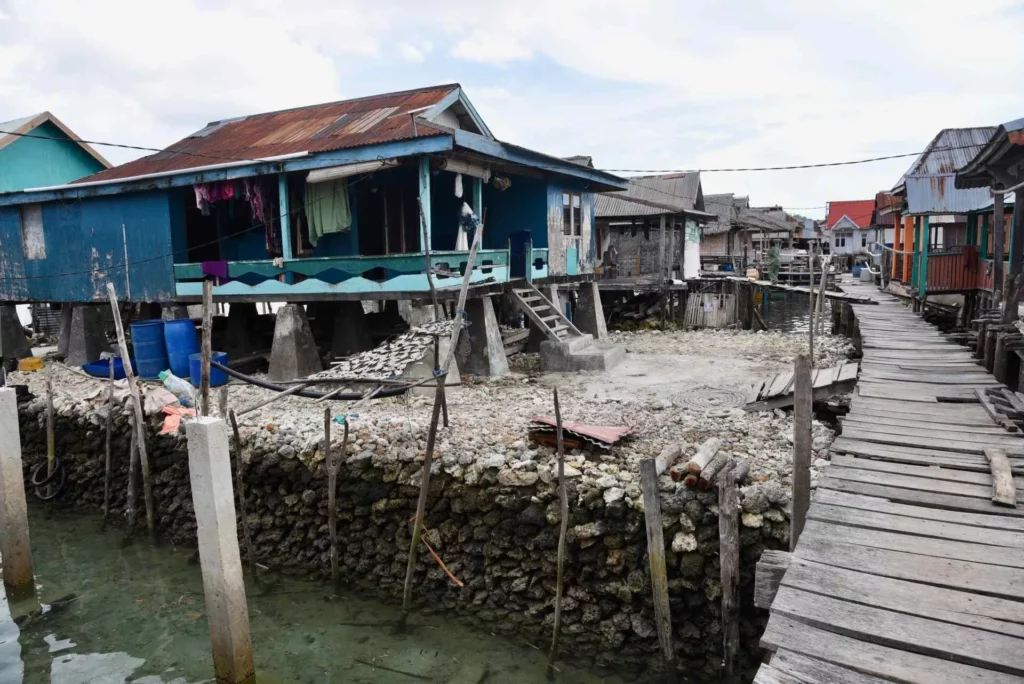
Research has it that Wakatobi hosts 942 species of fish and 396 species of coral, belonging to 15 families and 68 genera. The Wakatobi Archipelago comprises fringing reefs, barrier reefs and atolls.
The islands are managed by the Wakatobi National Park. Once listed as a tentative World Heritage Site in 2005, it remains a complex Marine Protected Area, with zoning allowing different levels of fishing and tourism.
Open waters are normally designated as traditional use zones, where local fishers are permitted to operate. Coral reefs are considered no-take zones and make up only 3.2% of the total MPA.
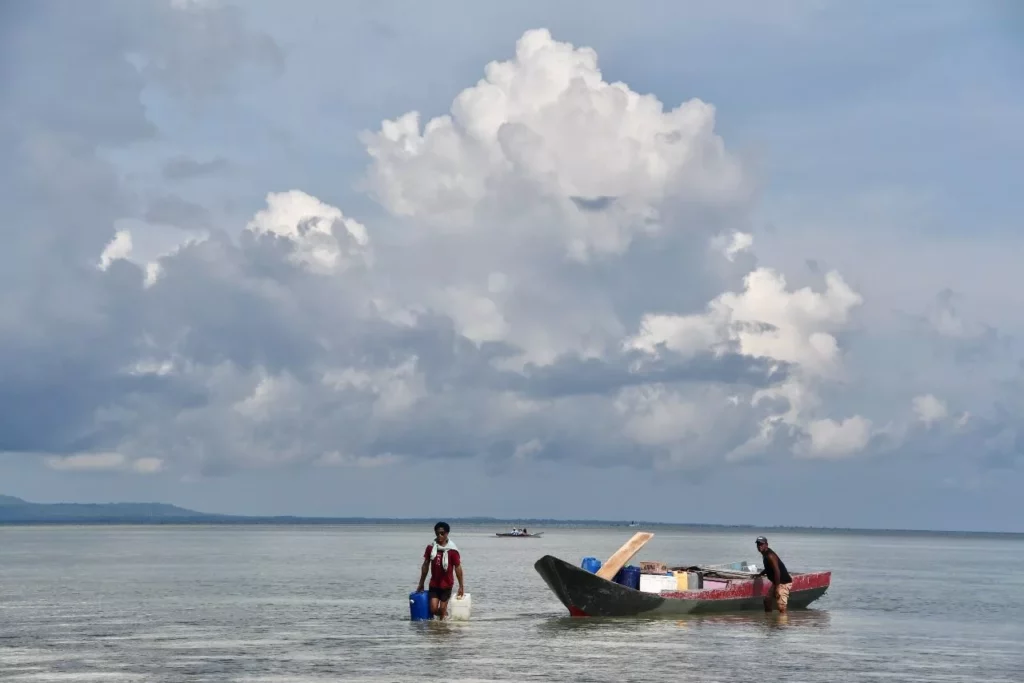
Foreign tour operators pay local villages for exclusive access to the no-take zones for the sole purpose of tourism. The money is used to repair public buildings and provide electricity to the villages.
Because most of the Bajau are nomadic and subsistence-oriented, they depend on marine resources for survival. Sadly, these fishermen use destructive techniques such as blast-fishing (bombing), cyanide fishing and coral mining.
Most fisheries within the park are still over-exploited, and the reliance on marine resources has created a split between locals and conservationists. With little support from the local communities, fishers are ignoring the boundaries of the no-take zones. Lack of enforcement means that the problem will be perpetuated in the future.
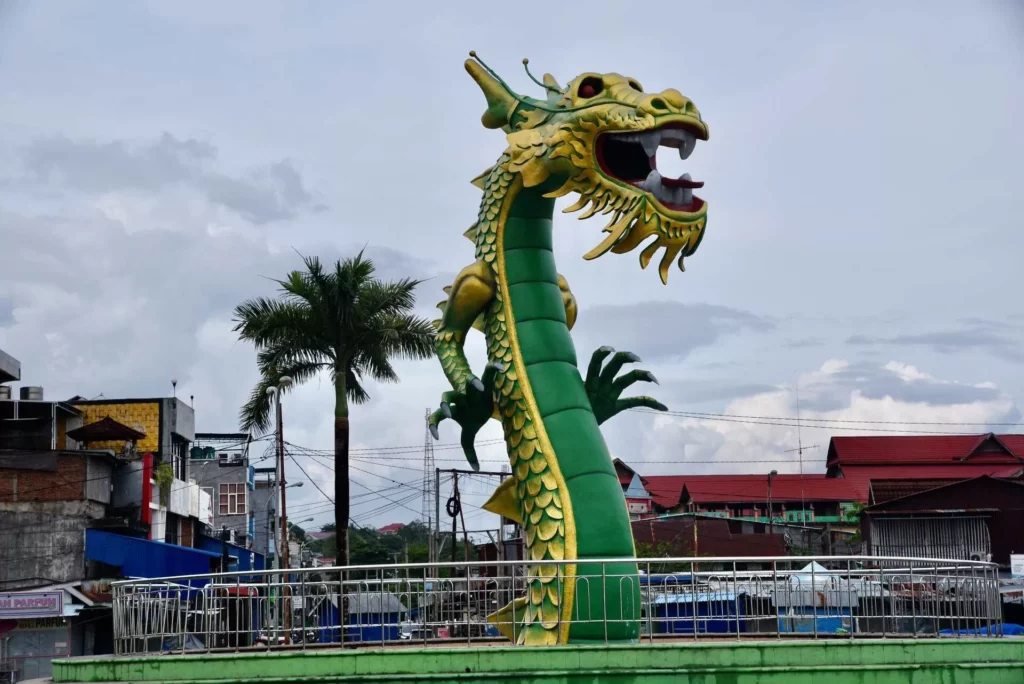
In 2001, a small no-take area was established off the island of Hoga, with a partnership between Operation Wallacea and the Bajau communities covering a 500m-long section of fringing reef and reef flats.
Today Operation Wallacea has abandoned its Hoga Island Marine Station and the resort is in ruins. “The east side of Hoga Island has been heavily bombed by the Bajau, the coral is destroyed,” lamented Wia, who now runs the only dive-resort on the island.
Only the west and north sides are worth diving. Once labelled an ‘underwater nirvana’ by Jacques Cousteau, the Wakatobi Islands are definitely under pressure as their population grows.
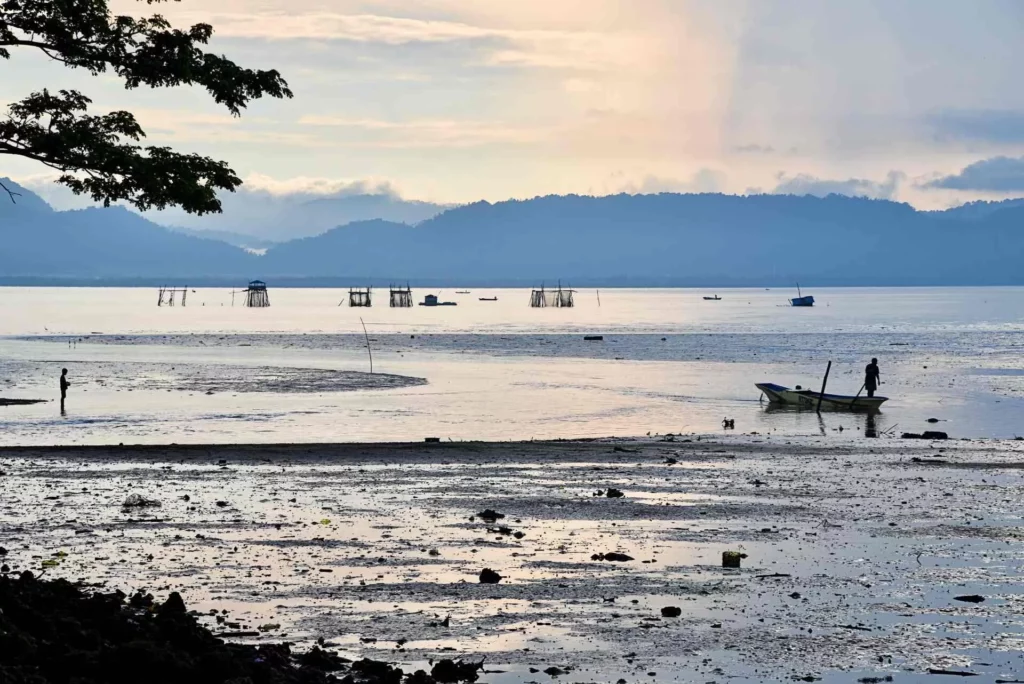
The imposing building of the Balai Taman Nasional (the Indonesian government’s national parks authority) on Hoga Island is deserted and closed. The beaches surrounding the island are littered with trash, plastic cups and bottles. Of course, people still want to project the image of Wakatobi as an idyllic paradise, but it is a distorted reality.
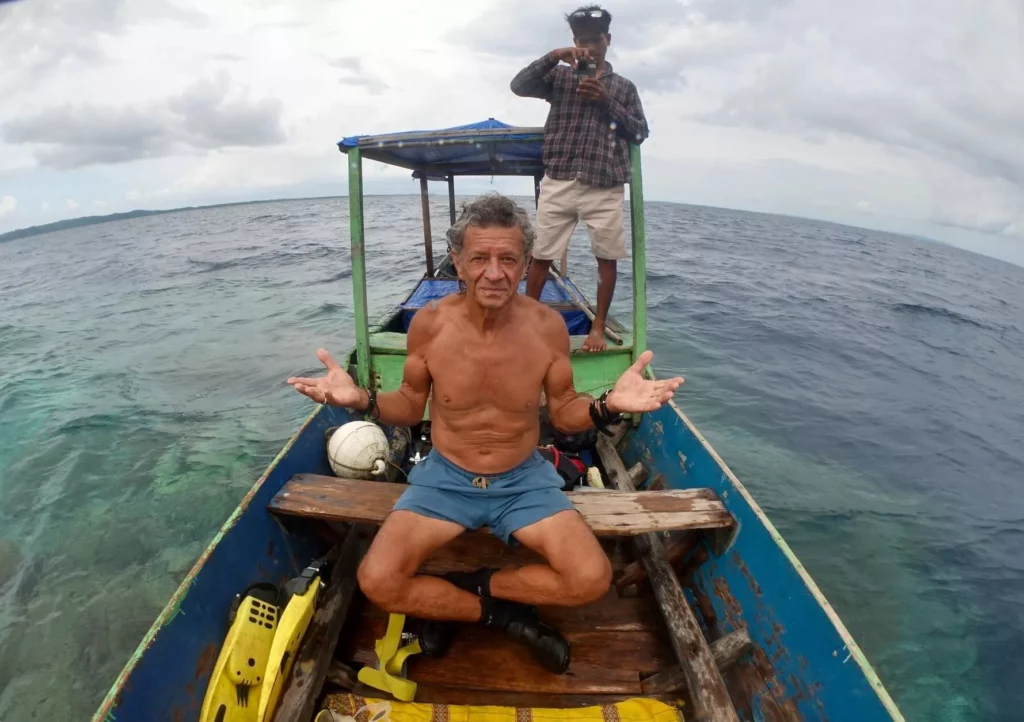
Pierre Constant organises and leads trips with his company Calao Life Experience. Find many more of his extended dive-adventure features on Divernet.