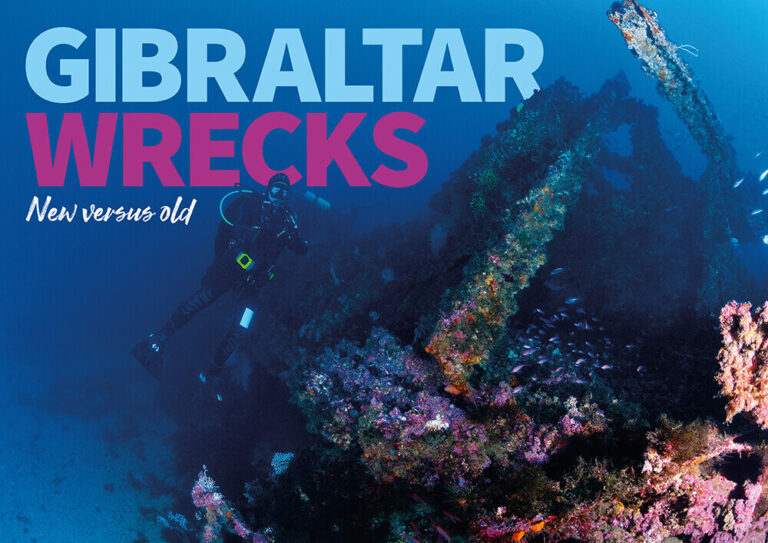
Gibraltar wreck diving provides a multitude of wrecks spanning decades, but two of the most beguiling come at opposite ends of the spectrum – the SS Rosslyn, which sank in a fierce storm in 1916, and the Sun Swale, which was purpose-sunk as an artificial reef in 2015.
Wreck Diving in Gibraltar: History Meets Adventure
While Gibraltar is only a small country, it boasts a decent number of dive sites, and most of these revolve around shipwrecks, whether that be purpose-sunk artificial reefs or genuine maritime mishaps. The rocky reefs and sandy seabed are home to plenty of marine life, which you will see as you head to and from the wrecks (the vast majority of dives can be conducted from the shore), but it is the shipwrecks themselves which provide the perfect habitat for a myriad species of crustaceans and fish and are the hotspots for divers.
Handily, many of the wrecks in the bays are linked by ropes, which aids with navigation (and also gives you something to pull yourself along in the event of encountering a current). However, two of my favourite dives are done by boat, and they date from completely opposite ends of what lies in Gibraltar’s waters.
Did you know?
The SS Rosslyn was a 3,679-ton Cardiff steamer built in 1902, and is considered the largest wreck in the area. The wreck is now home to a range of diverse marine life, including octopus, cuttlefish, conger eels, nudibranchs and many more!
The Sun Swale: Gibraltar’s Modern Artificial Reef
The Sun Swale is Gibraltar’s newest shipwreck, and lies on a sandy seabed just off the rocky reef running out from the South Mole. This 195-ton, 28-metre-long tugboat sits fully intact on her side in 22m, and was purpose sunk on 16 March 2015 as an artificial reef. When I dived it in 2024, coral and marine growth was still quite sparse compared with the older wrecks you’ll dive, but she still makes for a great dive, especially as you often swim on to her in excellent visibility. Give her a few more years submerged and she’ll begin to attract more coral, algae and sponge growth for sure.
Inside the Sun Swale: Structure and Marine Life
There are plenty of full-on penetration areas for those suitably trained, but the bridge area, complete with colourful damselfish, makes a nice swim-through. We found a cluster of large spider crabs nestled on the inside of the bow area, and spotted a big scorpionfish towards the stern.
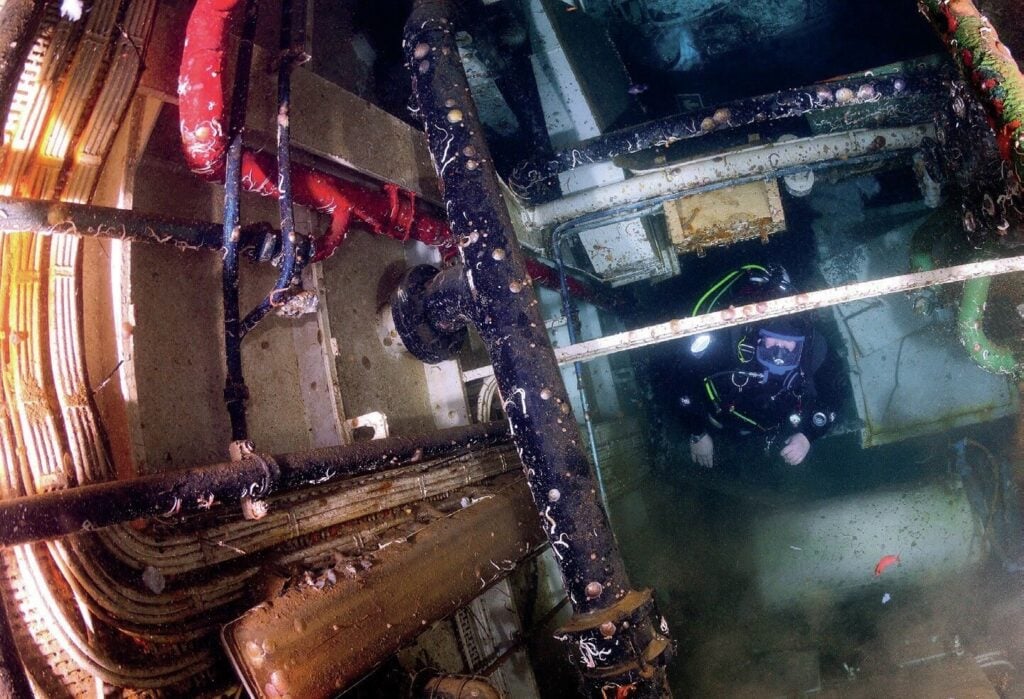
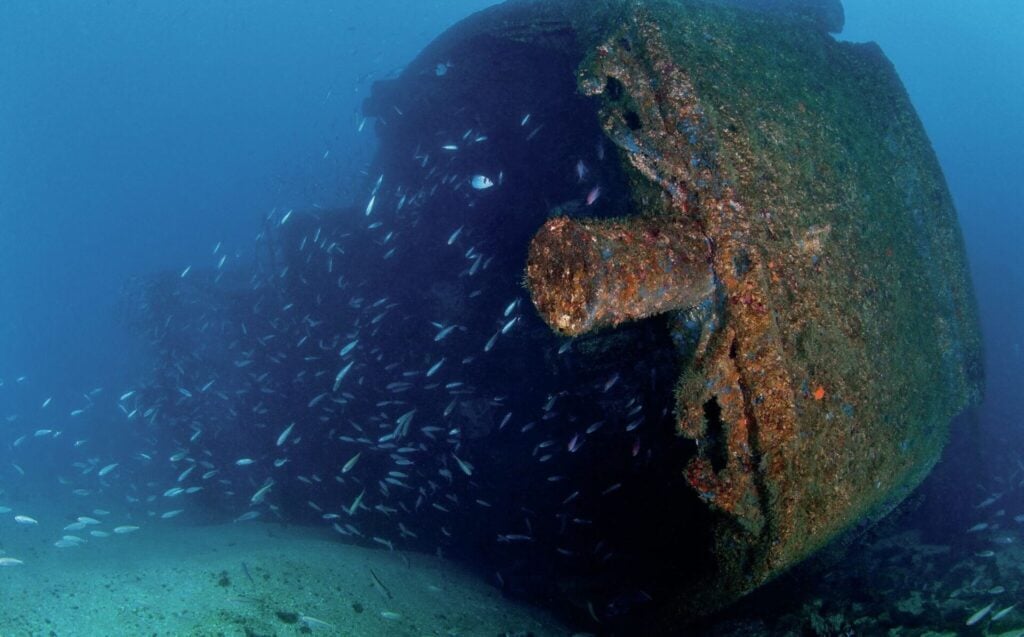
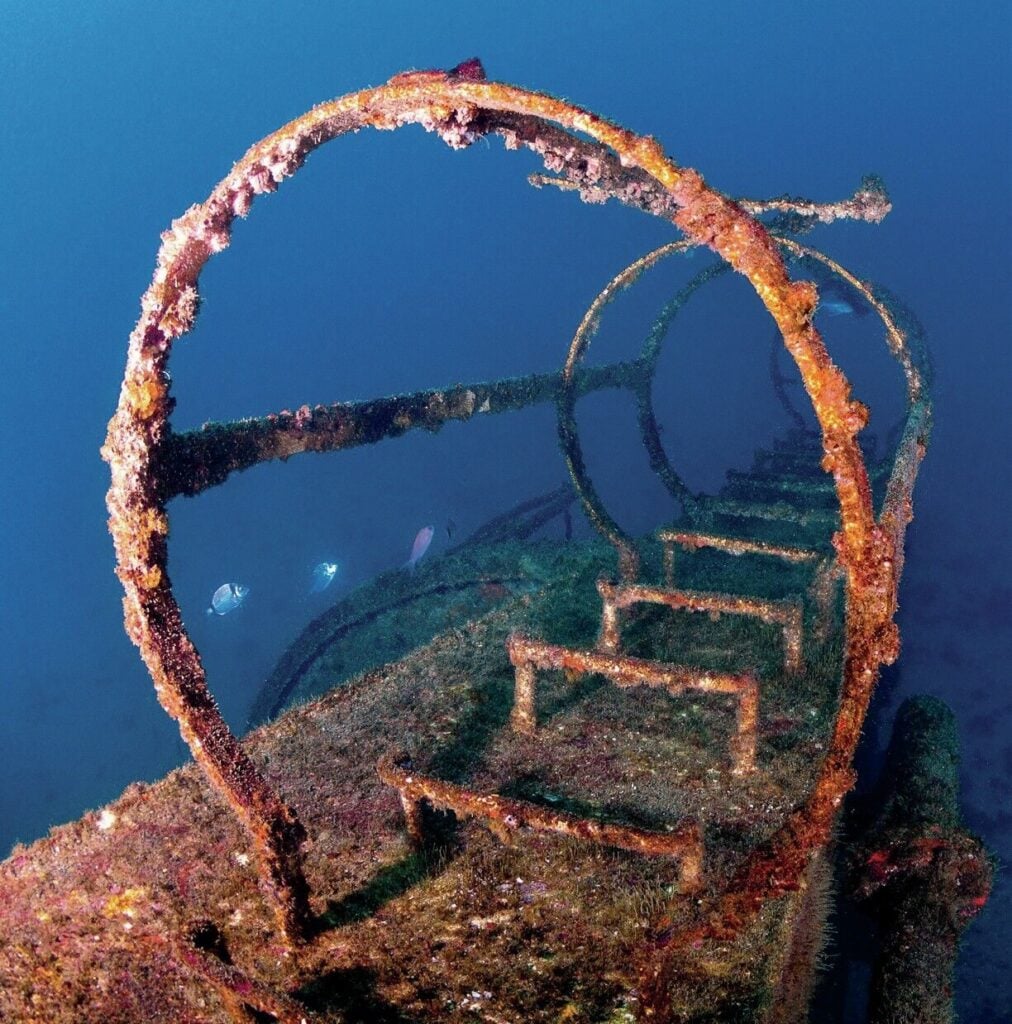
Due to time constraints, we did not have time to go for a rummage inside, but apparently the cavernous engine room in particular is well worth exploring and photographs I have seen are enough to have me hankering to go back to see it for myself!
”This 195-ton, 28-metre-long tugboat sits fully intact on her side in 22m, and was purpose sunk on 16 March 2015 as an artificial reef”
Very ‘British’ – but with more sunshine
The British Overseas Territory of Gibraltar is less than a three-hour flight from the UK, the locals speak English (the majority also speak Spanish too), and you can use British pounds. Cars drive on the right-hand side of the road, which makes sense to merge more seamlessly with Spain when people head across the border, but otherwise, it does very much feel like a slice of the UK positioned in a far more favourable climate.
Dive into Gibraltar
Presently, Gibraltar only has one dive centre, Dive Charters Gibraltar, and a BSAC club. This may sound a bit limiting, but given the size of the country – and the fact that the majority of the dive sites are located on the southwest of the peninsula – these two admirably cope with the influx of divers coming in.
Dive Charters Gibraltar offer morning and afternoon dive trips, which means a diver can have breakfast with their other half, head off for a dive, and be back before lunchtime, leaving the rest of the day to explore the topside attractions together. Or, they can enjoy a relaxed lunch at one of the proliferation of restaurants and bars that surround the Dive Charters Gibraltar centre, and then venture off for an afternoon dive, still getting back well before dinner time and leaving the evenings free for more fun and games.
The SS Rosslyn: Gibraltar’s Grand Old Lady of the Deep
Undoubtedly, the most well-known wreck lying off Gibraltar, the SS Rosslyn, easily deserves two or three dives to appreciate fully. I managed a good hour exploring inside the various nooks and crannies, but I could have done another two hours without a problem; there is so much to see.
The Rosslyn was a 3,679-ton Cardiff steamer, built back in 1902, which was a genuine sinking – she went down in a southwest gale in February 1916. She was returning from Malta when she dragged her anchor and ended up wrecked off the South Mole.
”The whole wreck is smothered in marine growth, and areas are literally adorned with vibrant purple gorgonians, especially sections where you can tell the current flows through on a regular basis”

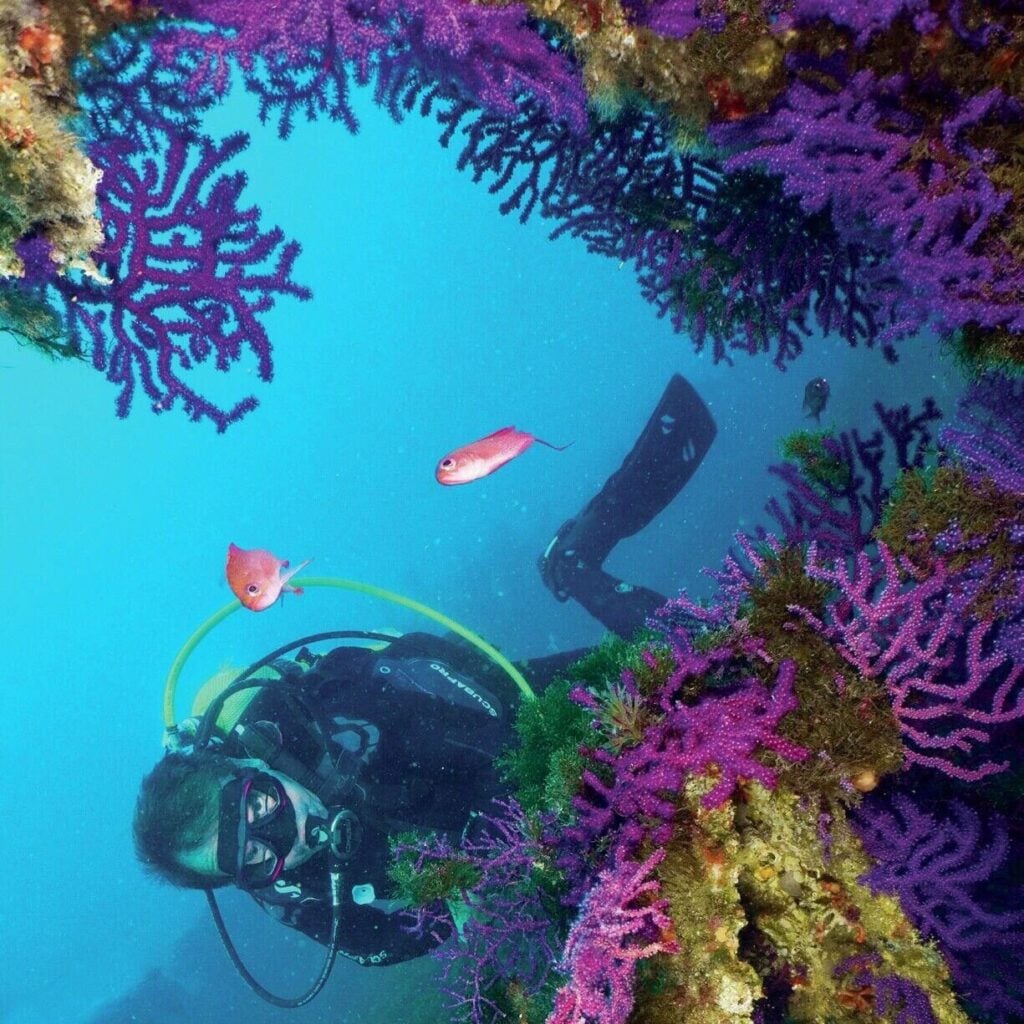

At 106 metres in length, she is a sizeable vessel, and while she has been down at 23m for nearly 110 years, she is still remarkably ‘ship-shape’. The bow is still intact, though twisted over to starboard, and you can see one of the massive anchors. The whole wreck is smothered in marine growth, and areas are literally adorned with vibrant purple gorgonians, especially sections where you can tell the current flows through on a regular basis.
We made several circuits of the main areas, and as well as the ubiquitous damselfish, which were everywhere, we also encountered several scorpionfish, large wrasse, and some curious octopus.
Why Gibraltar Wreck Diving Should Be On Your Diving To Do List
Both the Sun Swale and the SS Rosslyn make great wreck dives, but Gibraltar boasts a rich selection to choose from, including the 80-metre steamer SS Excellent, and a host of artificial reefs comprising boats, barges, etc, many of which are in fairly shallow waters, making them accessible for all levels of diver.
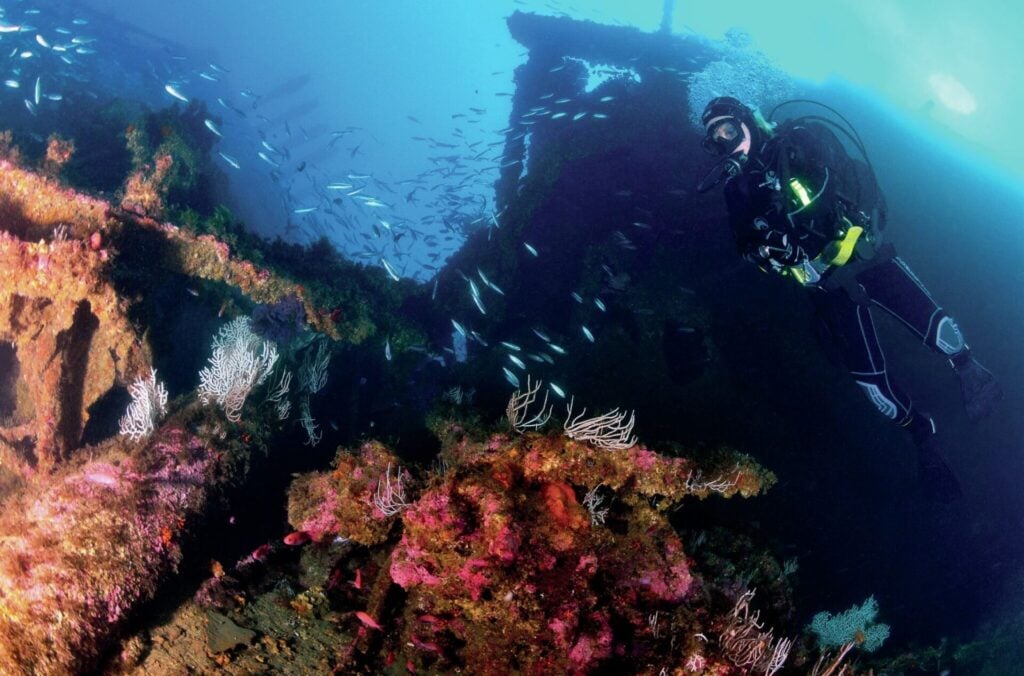
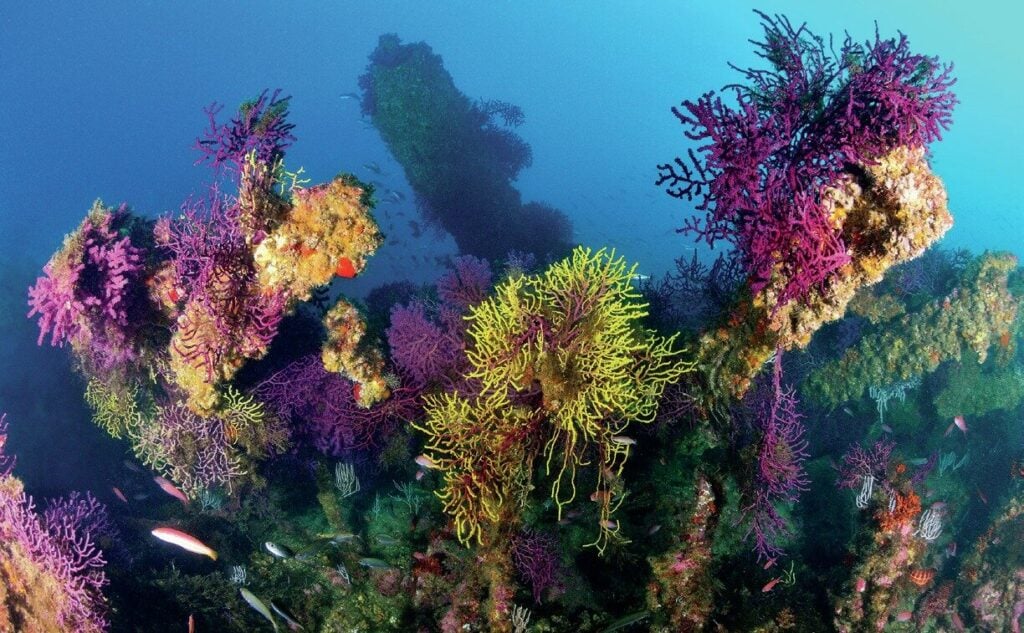
Whether you are a dedicated ‘wreckie’ or more into your marine life, you are sure to find plenty to keep you occupied in Gibraltar’s waters. And best of all, it is only a three-hour flight away! n
Did you know?
The Sun Swale was a 195-ton tug boat built in 1966. She sits in 22m of water, close to the rocks of the South Mole and a stone’s throw away from the Seven Sisters dive site.
Where to Stay: Ocean Village and Marina Bay
There is a selection of accommodation options in Gibraltar, but I stayed in the luxurious Sunborn Yacht Hotel, located in the heart of the Ocean Village and Marina Bay complex. Here you can find all manner of bars and restaurants to suit every budget, and handily, the Dive Charters Gibraltar dive centre is just a stone’s throw from the yacht hotel.
Frequently Asked Questions
How many wrecks can divers explore in Gibraltar?
Gibraltar features more than a dozen wreck sites ranging from early 20th-century steamers to modern artificial reefs, most of which are accessible by shore or a short boat ride.
What makes the SS Rosslyn special?
The SS Rosslyn is Gibraltar’s largest and most historic wreck, a 3,679-ton steamer that sank in 1916, now covered in coral, gorgonians, and home to octopus, wrasse, and scorpionfish.
Is the Sun Swale suitable for beginner divers?
The Sun Swale sits at 22m and is generally ideal for Open Water or Advanced divers. It’s fully intact, offers great visibility, and has easy navigation for supervised recreational dives.
Can you penetrate the wrecks safely?
Penetration is possible on both wrecks, but only for divers with the appropriate training and equipment. The Sun Swale’s bridge and engine room are particularly popular with technical divers.
What marine life can be found on Gibraltar’s wrecks?
Expect to see damselfish, octopus, conger eels, scorpionfish, cuttlefish, and nudibranchs. Seasonal visitors include rays and occasional barracuda around the wreck zones.
This article was originally published in Scuba Diver Magazine
Subscribe today with promo code DIVE1 — enjoy 12 months for just £1!
