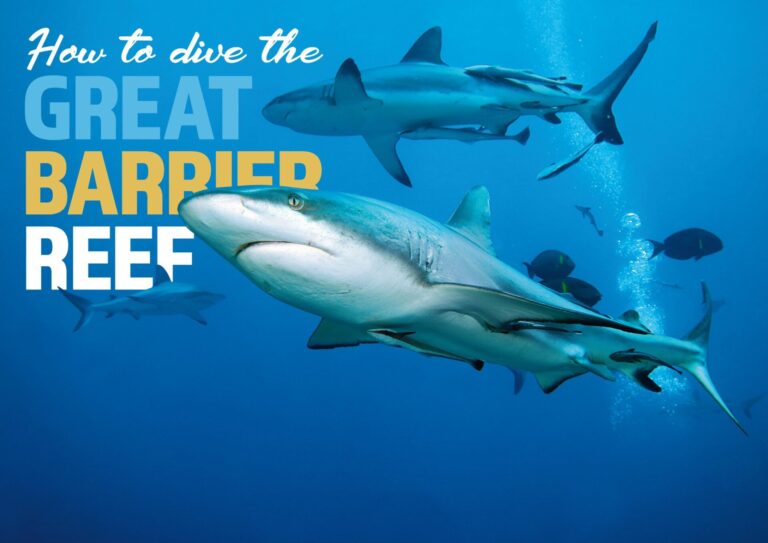
Deborah Dickson-Smith explains everything you need to know, and what you didn’t know that you didn’t know, about the world-famous Great Barrier Reef in Australia
Photographs by DDS, Michelle Barry, Gemma Molinaros, Pablo Cogollos,
Julia Summerling, and Mike Ball Dive Expeditions
The Great Barrier Reef is on most divers’ bucket list, the most famous reef in the world – the longest barrier reef in the world, home to Nemo and Dory – and seriously, it’s famous simply for being famous.
But what will you see when diving there? The Reef is 1,42 miles long, visible from outer space, and home to over 9,000 known species, including 600 species of coral, 1,625 bony fish species, 1,300 crustaceans, and more than 30 species of marine mammals.

Over 133 species of sharks and rays call the Great Barrier Reef home, ranging from curious little epaulette sharks that walk through the shallows at sunset, to enormous migratory species such as tiger sharks and whalesharks that cruise by in the blue.
So, it’s vast. And the variety of diving experiences you can have here is incredibly diverse, from north to south, season to season.
So, it’s a good idea to break it down into smaller chunks, to plan the best way to explore this vast reef system and make sure you choose the right adventure.
North: Cairns, Port Douglas, and the Far North.
Central: Townsville, Magnetic Island, Whitsunday Islands.
South: The Southern Great Barrier Reef, Lady Elliot Island, Heron Island.
North: Cairns, Port Douglas, and the Far North
Both Cairns and Port Douglas have a great range of day trips to their adjacent outer reefs, and Cairns is gateway to the more remote and exciting reefs of the tropical north, the Ribbon Reefs, Osprey Reef, Bougainville Reef, and Holmes Reef – must-dos for experienced divers.
Day Trips The reefs accessible on a day trip from Cairns and Port Douglas are very pretty, shallow reefs suitable for beginners – and a great place to learn how to dive. Day trips are diverse too, with something to suit everyone – and worth adding on to a liveaboard trip.
• Dreamtime. For an immersive cultural experience, spend a day with local indigenous rangers on a tour with Dreamtime Dive & Snorkel, or on the Reef Magic pontoon at Moore Reef.
• Environment. Become a marine biologist for a day on Passions of Paradise and learn how to identify species, how to assess coral health and learn about the Coral Nurturing Program managed by Passions in Cairns and Wavelength in Port Douglas.
• Luxury. The much-loved TUSA dive boat recently relaunched as a 100% carbon neutral luxury dive operator, offering an all-inclusive day trip where you can choose to do three dives or a more leisurely (longer) two, and afterwards enjoy gourmet food and locally sourced wine and beer from companies that use their profits to contribute to reef restoration and plastic pollution mitigation programs.
Did you know?
Gray reef sharks often migrate short distances as they seek prey, they are very loyal to their home turf and seldom leave an area once they are established.

Far, far north – the Great Barrier Reef by Liveaboard: Ribbon Reefs and Coral Sea
To experience the far north’s more-exciting dives, you need to jump on a liveaboard and head further afield.
Here you’ll find plenty of pelagic action, reef walls covered in vibrant soft and hard corals that descend into a seeming abyss, stunning pinnacles adorned with giant gorgonian sea fans, with plenty of macro life in the nooks and crannies, while in the blue, enormous schools of jacks, barracuda, snapper, and giant trevally.
There are a couple of liveaboards, namely Mike Ball’s Spoilsport, and Spirit of Freedom, that run weekly trips to these more-remote far north reefs. You can choose from three and four-day fly/cruise trips that include a scenic flight to/from Lizard Island, or seven-day Cairns to Cairns trips.
Signature sites
North Horn, Osprey Reef – Known mainly as a sharkfeeding dive, the site’s location ensures plenty of pelagic action. Located at the northern-most tip of Osprey Reef, food-rich currents from the surrounding deep water attract large pelagics such as gray reef sharks, whitetip and silvertip sharks, hammerheads, and the occasional thresher shark.
The shark spectacular itself happens at the tip of the reef, with divers seated around natural coral amphitheater while the sharks are lured in for a thrill (and photo opportunity) with a bucket of chum.
Once the sharks have had their feed, drift along the Western Wall, which is festooned with vibrant soft corals and forests of gorgonian fans while clouds of purple anthias add to the whole rainbow of colors.
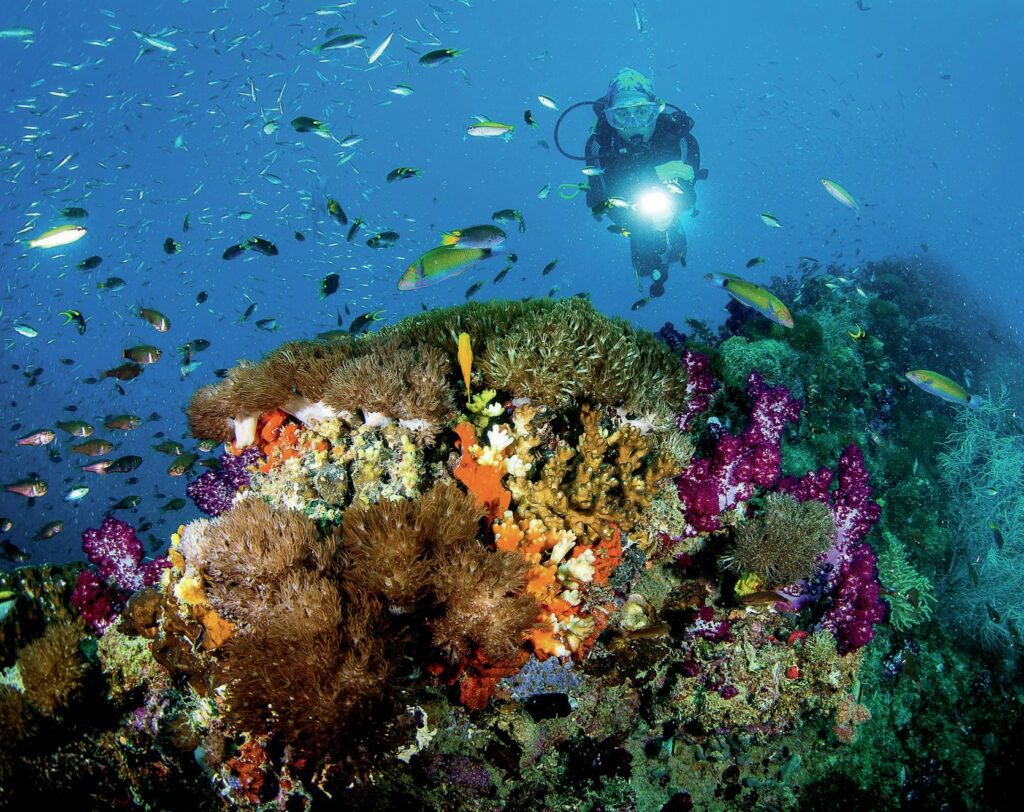
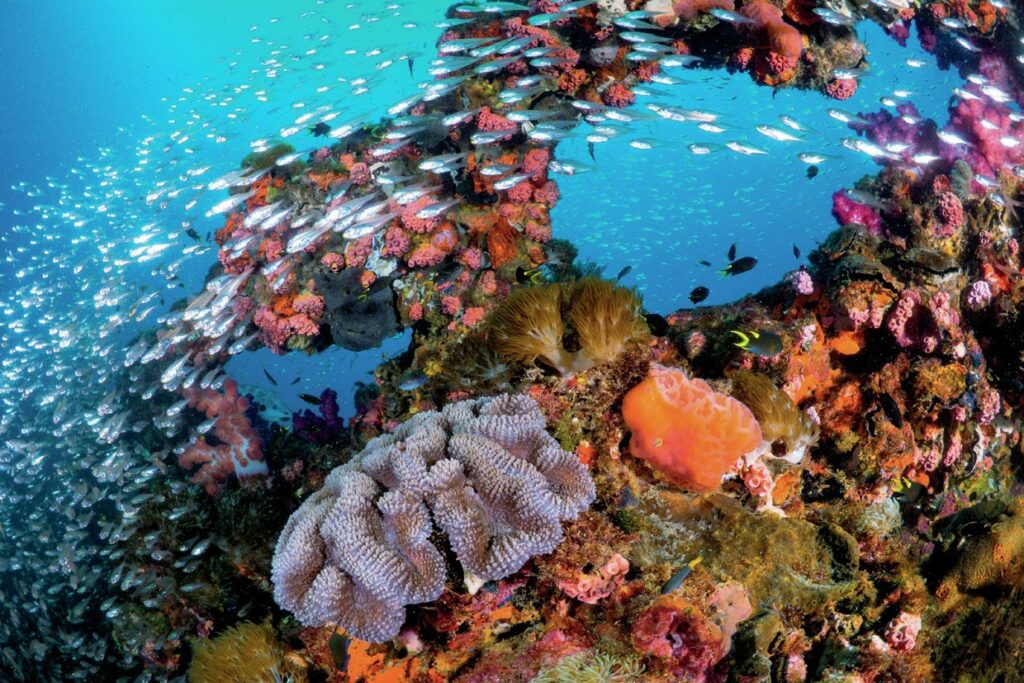
Soft Coral Wall, Osprey Reef – This drift dive runs along the outer edge of Osprey Reef, dropping down to unimaginable depths. After dropping in at around 100ft, drift past huge gorgonian fans and soft corals of all sorts, and in all sorts of candy colors – yellow, pink, orange, blue, red… populated by clouds of reef fish.
Be sure to look out into the blue for sailfish, hammerheads, dogtooth tuna, eagle rays and big schools of bigeye jacks, barracuda, and herds of bumphead parrotfish. The drift ends with a finale of sharks at North Horn, where even the odd whaleshark has been sighted.
Crystal Plateau, Bougainville Reef Bougainville Reef is one of the more-remote reef systems in the Coral Sea. The reef here is one of the healthiest in the Coral Sea, and even in the shallows you can expect to see large schools of drummer, trevally, barracuda and bumphead parrotfish.
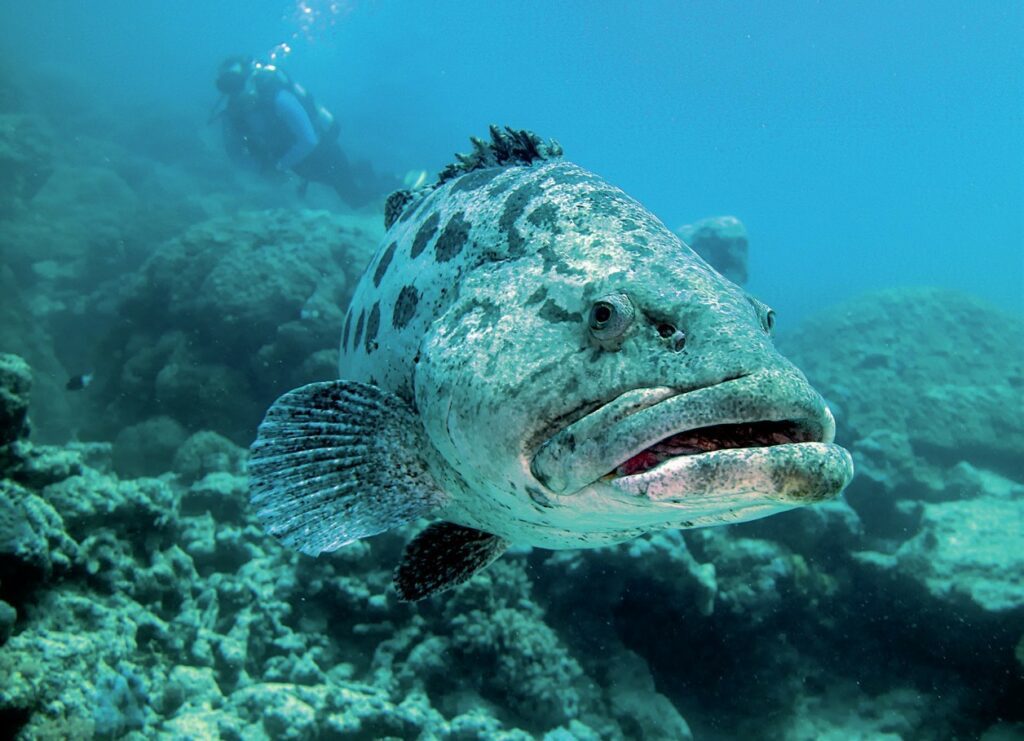
There is a fantastic drift dive here between the western reef wall and a row of five or six pinnacles where you’ll drift by large schools of fish before reaching the end of the slipstream to be greeted by the friendliest potato cod.
Two Towers, Ribbon Reef 10 – Two Towers is located on the northern tip of the Ribbon Reefs, and there are two big reasons to love it.
Firstly, this reef is a poster child for coral resilience, showing remarkable recovery from damage from two cyclones in 2013 and 2014. In just seven years, the coral cover on the shallower parts of this once-dead reef is dense and diverse.
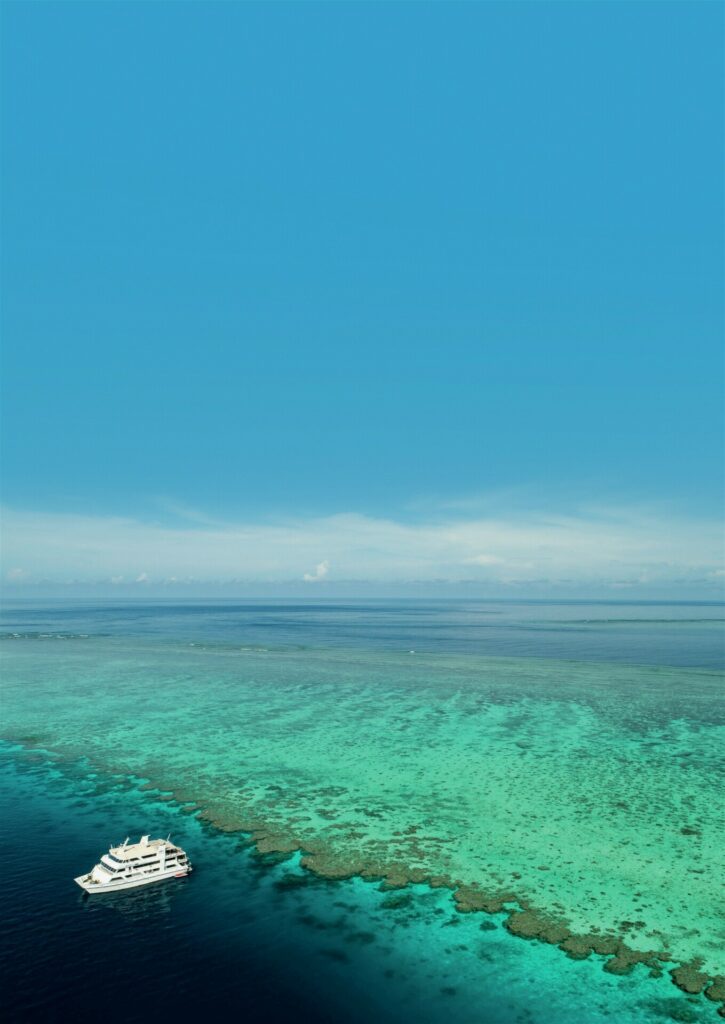
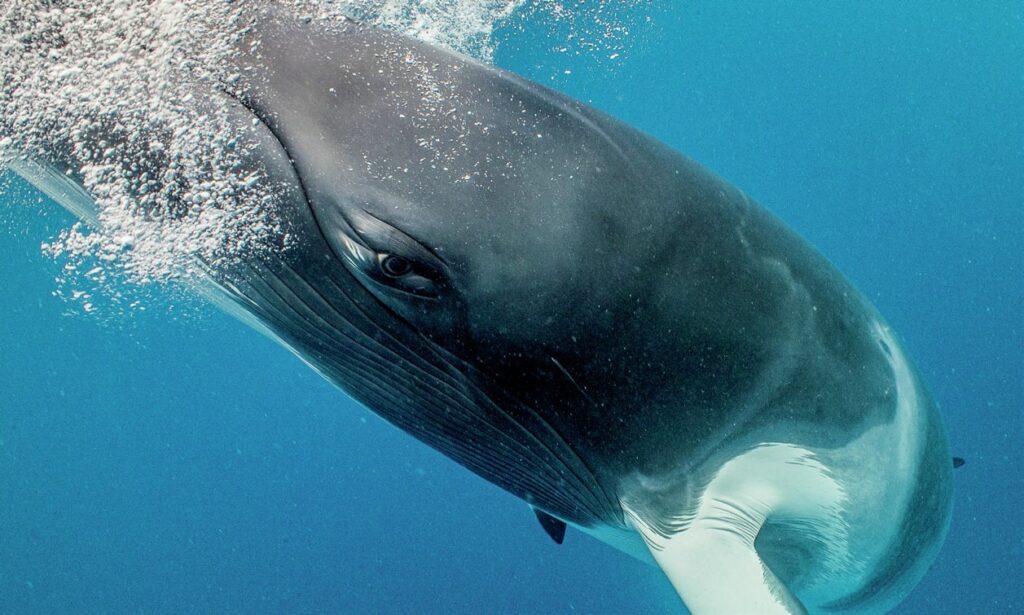
Secondly, the reef’s unique topography forms a perfect nursery (in winter months) for brooding dwarf minke whales.
Between this long section of reef and the mainland, there are no large reefs or bommies, just a wide-open paddock with a sandy sea floor, protected from the open ocean by Ribbon Reef 10.
Cod Hole, Ribbon Reef 10 Located on the northern stretch of the Ribbon Reefs, Cod Hole is possibly the Great Barrier Reef’s best-known dive site. It’s home to a group of very friendly human-size potato cod, reaching up to 250lb, that have become accustomed to divers over the past 30 years.
The giant fish approach quite closely and are sometimes hand fed by a couple of licensed liveaboard operators.
Cod Hole also delivers an abundance of marine life, including giant flowery cod, humphead wrasse, whitetip reef sharks, several varieties of sweetlips and anemonefish, red bass, green turtles, titan triggerfish and pufferfish.
Central: Townsville, Magnetic Island, Whitsunday Island
Not to bang on about it, but the Great Barrier Reef is vast. So, a few hundred miles south from Cairns you’ll find Townsville.
The reefs here are not visited as often as the reefs out from Cairns, possibly because they’re a little further out, but there are two incredible dive experiences here worth adding to your dive bucket list.
The SS Yongala, Ayr The wreck of the SS Yongala lies in open water about 30 to 40 minutes boat ride from the closest point on shore at Ayr, south of Townsville, or slightly longer from Townsville.
A passenger ship caught in a cyclone in 1911, it’s believed she was simply swamped and went down with all lives lost. She remained lost until 1958.
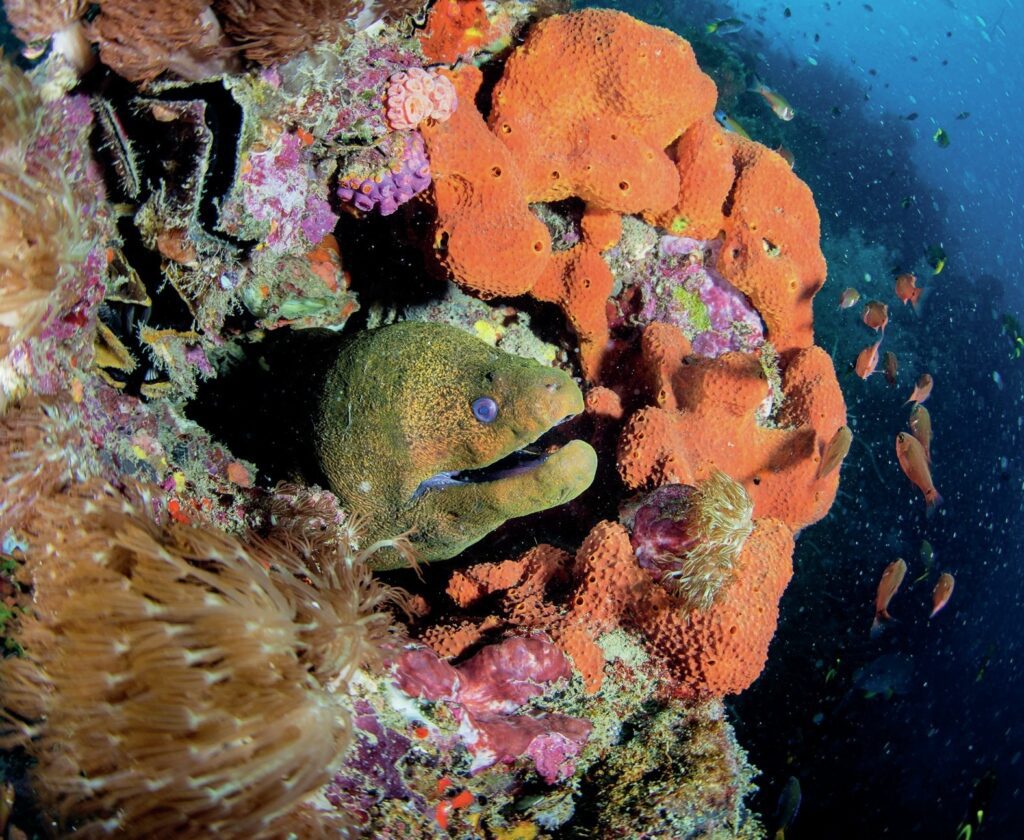
Covered entirely by vibrant soft and hard corals, it is rated one of the best dive sites in the world, famous more for the sheer abundance of life that this artificial reef has attracted.
You’ll normally find it surrounded by huge schools of barracuda, jacks, and batfish, all sorts of sharks and rays – and it is particularly famous for its large population of olive sea snakes.
Did you know?
With almost 3,000 individual reefs, 900 islands, and stretching for 2,600km there is no denying the scale of the reef. If you want to get an idea of size, then imagine the country of Italy lying just off the coast of Australia!

The Museum of Underwater Art (MOUA), Jon Brewer Reef -This submerged structure was designed by world-renowned sculptor Jason deCaires Taylor, who has designed similar underwater installations in Indonesia, the Caribbean, and the Maldives.
Located around two hours off the coast of Townsville, the installation includes a coral ‘greenhouse’ and gardens as well as eight ‘Ocean Sentinels’, stylised statues of ocean conservationists and marine scientists: protectors of the Great Barrier Reef.
South: The Southern Great Barrier Reef, Lady Elliot Island, Heron IslandSouth: The Southern Great Barrier Reef, Lady Elliot Island, Heron Island
And the southern-most point of the Great Barrier Reef you’ll experience completely different diving to that in the north. Two island resorts, on Heron Island and Lady Elliot Island, provide some very special marine encounters.
And the southern-most point of the Great Barrier Reef you’ll experience completely different diving to that in the north. Two island resorts, on Heron Island and Lady Elliot Island, provide some very special marine encounters.
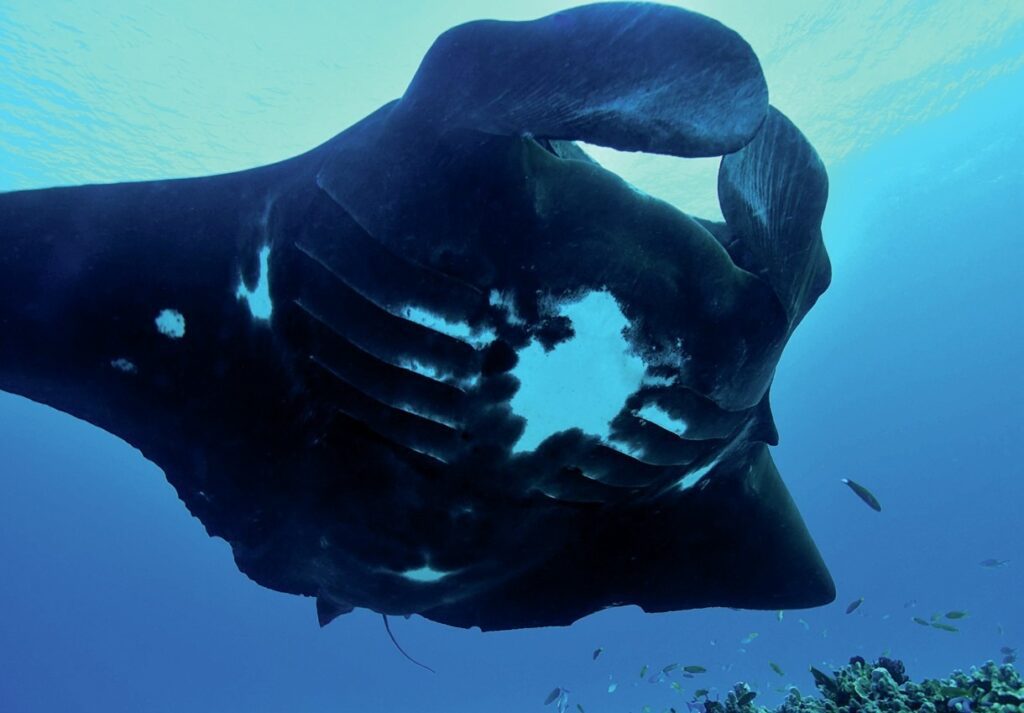
Lady Elliot Island, Home of the Manta Lady Elliot Island is a coral cay located at the southern tip of the World Heritage Listed Great Barrier Reef. Situated within a highly protected ’Green Zone’ the island is a sanctuary for over 1,200 species of marine life and is known for its abundance of manta rays, turtles, amazing array of spectacular marine life and unspoilt coral reef.
The mantas here are surveyed as part of Project Manta, with over 2,000 individuals identified. It is reached by plane, a one-hour flight from Hervey Bay or Bundaberg, and slightly longer from Brisbane and the Gold Coast.
Heron Island, Turtles Galore – A two-hour ferry trip from Gladstone, Heron Island is more famous for turtles, with hundreds nesting here during nesting season between November and March each year.
In the shallow waters and fringing reef, you’ll also see many stingrays, shovel-nose rays, guitar sharks and curious little epaulette or walking rays, guitar sharks.
How to plan your Great Barrier Reef Dive Trip
Contact the team at Diveplanit Travel, Australian dive travel specialists. We can help design the perfect dive trip down under, including visits to other iconic Australian destinations such as Sydney Harbour, Uluru and the Red Center, and tropical northern Queensland’s ancient Daintree Rainforest. Email enquire@diveplanit.com, or visit Diveplanit.com
FAQ: Diving the Great Barrier Reef
Q: Why is the Great Barrier Reef so famous?
A: Stretching over 1,400 miles and home to 9,000+ species, including 600 corals, 133 sharks and rays, and iconic fish like clownfish, it’s the world’s largest reef system and a UNESCO World Heritage site.
Q: Where are the best places to dive on the Great Barrier Reef?
A: Cairns and Port Douglas for day trips and liveaboards, Osprey Reef for shark encounters, Townsville for the SS Yongala wreck, and the Southern Reef for manta rays and turtles.
Q: What makes Cairns and the Far North popular with divers?
A: Cairns is the gateway to the Ribbon Reefs and Coral Sea, offering trips to iconic sites like Cod Hole, North Horn, and Two Towers with abundant marine life and pelagics.
Q: Why is the SS Yongala wreck special?
A: Sunk in 1911, the SS Yongala is covered in coral and attracts huge schools of fish, sharks, rays, and a famous population of olive sea snakes, making it one of the world’s best wreck dives.
Q: What marine encounters are unique in the Southern Great Barrier Reef?
A: Lady Elliot Island is world-renowned for manta rays, while Heron Island is famous for nesting turtles, rays, and walking epaulette sharks.
Q: Do I need to join a liveaboard to dive the Great Barrier Reef?
A: Not always. Day trips from Cairns, Port Douglas, and Townsville are excellent, but liveaboards allow access to remote Ribbon Reefs, Osprey Reef, and the Coral Sea for the best experiences.
Q: When is the best time to dive the Great Barrier Reef?
A: Year-round diving is possible, but June–November offers the best visibility, while November–March is prime for turtle nesting and summer marine life events.
This article was originally published in Scuba Diver Magazine
Subscribe today with promo code DIVE1 — enjoy 12 months for just £1!