
Of all the large creatures swimming in the world’s oceans, none match the sense of regal calm embodied by the giant oceanic manta ray (Mobula birostris). It is mesmerising to see one glide effortlessly through the water with fluidic motions of its massive triangular pectoral fins, as if flying underwater – and Walt Stearns reckons Mexico is the best place to see them
Diving With Giant Manta Rays at Socorro Island
At a site called Punta Tosca, I hovered in anticipation midway between the seabed and the surface at a depth of 40ft on the inside edge of an underwater canyon. The first giant manta began its approach and was soon followed by another, and then another. We were diving near the southern tip of Socorro Island in an area where cleaning stations lured mantas with the promise of parasite removal.
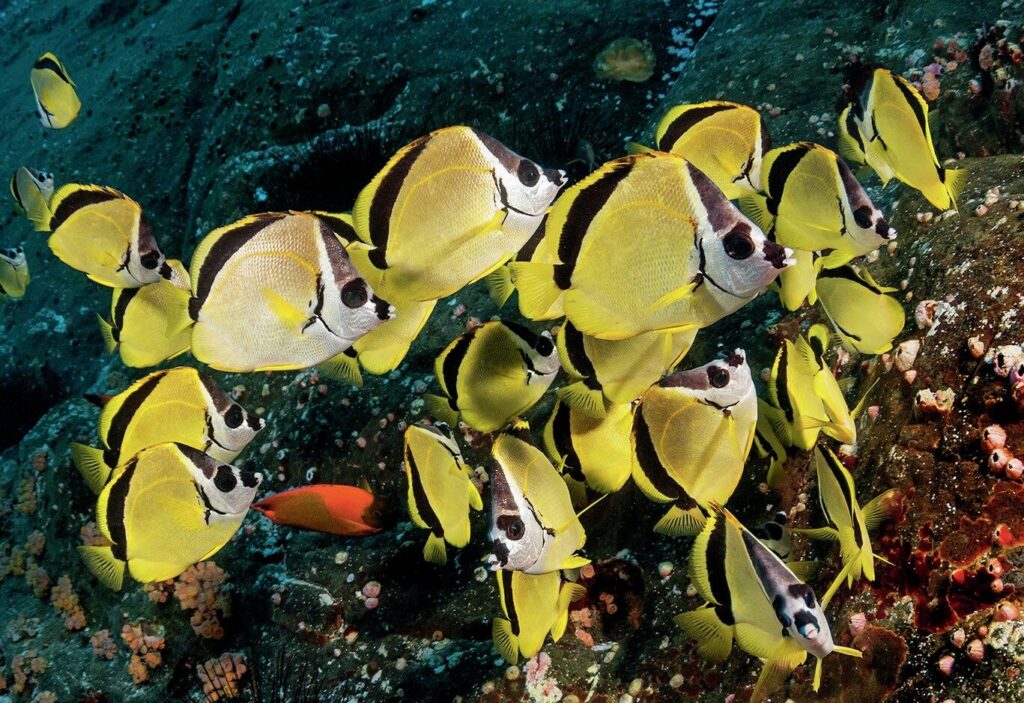
But on this day, the four mantas that arrived did not appear to be interested in visiting the station where clarion angelfish and barber fish (both are known as cleaner fish in this part of the world) were gathered. Instead, they turned their attention to our group of divers, marking the beginning of another ‘good day’ of diving in the Revillagigedo Islands. The day’s interactions began with them swimming in close to get a look at us, as if to judge our intentions, then changing course to gracefully glide into position just short of touching distance overhead. Here, they would pause for several seconds, waiting to bathe in our exhaust bubbles; something they seem to enjoy. On subsequent passes, they approached undaunted to get a good eye-to-eye look-see. By remaining calm, unthreatening, and not chasing after them, I was rewarded with repeated close-range passes. It was a behaviour that might seem peculiar when compared to manta encounters in other parts of the world. For example, manta encounters in Kona, Hawaii, are predominantly conducted as night dives. During these excursions, divers are required to remain on the bottom when the mantas arrive to feed on the plankton drawn by large underwater lights. As long as the divers remain in place, the Kona mantas will perform a ballet of sorts comprised of backflips and tight banking overhead turns. The performance continues until the lights are turned off.
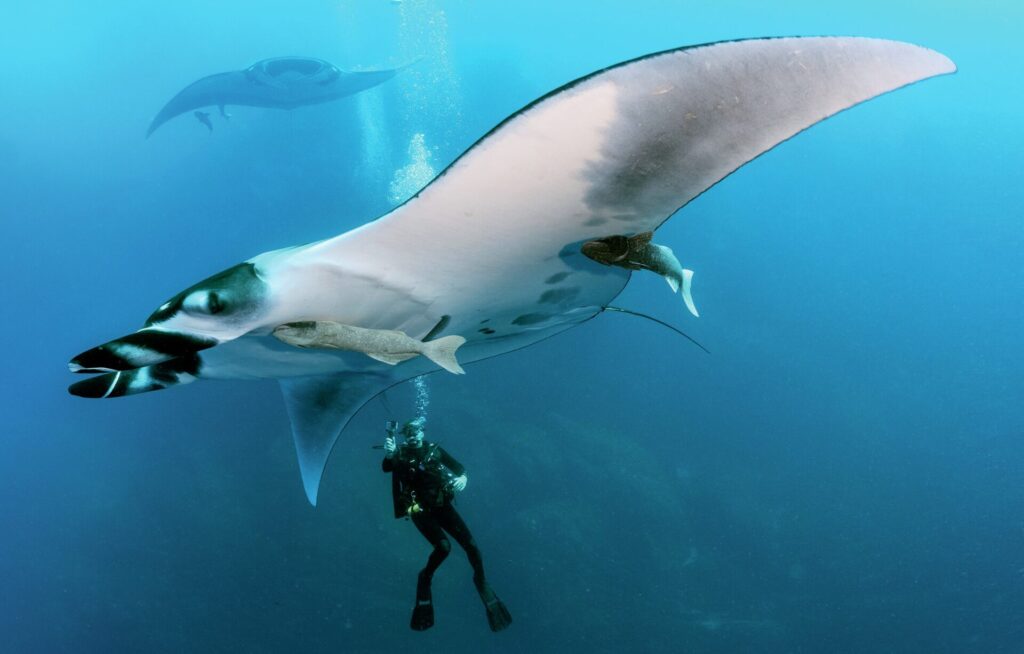
Across the Pacific in places like Yap and Indonesia, where mantas congregate around specific cleaning stations, the protocol typically requires divers to sit in one place to not disturb the mantas that hover as they allow a variety of butterflyfish and angelfish, and cleaner wrasses to nip at bothersome parasites. Something I should point out here is that the forementioned mantas from Hawaii to Micronesia are reef mantas, Mobula alfredi.
Elsewhere, from the Texas Flower Gardens to the Galapagos and Cocos Island to as far away as the Maldives, underwater interactions largely consist of flybys by individuals or groups cruising through the water column as they feed.
Historic and Modern Manta Ray Encounters in Mexico
For the giant mantas of Socorro, this somewhat odd behaviour may be a holdover from the latter half of the 1990s, when touching mantas was allowed. Back then, during my first five trips to the Socorro Islands, the drill for interacting with the mantas went like this – let them approach until they are in ample range overhead for you to make contact by gently caressing their belly region. When this was performed to their satisfaction, a type of ballet would ensue with the mantas making repeated giant somersaults to quickly reposition themselves for another tummy rub as they slowly passed overhead. This type of interaction was common during the numerous times I visited these magnificent creatures in the years between 1995 and 2003. The laws regarding physical contact with a giant manta in the Socorro Islands have since changed. It is no longer permitted to touch them – but the mantas still behave for the most part as if they did not receive the memo. Even after so much time had passed, on my return in November 2024, I saw little hesitation in their willingness to come close. If this inclination toward familiarity can be attributed to memories of past contacts, it raises the possibility that manta rays are capable of more sophisticated brain functions than the rest of their kin in the world of sharks and rays. Manta rays are unique among both bony and cartilaginous fish, as they have the largest brain-to-body ratio of any species. Dolphins, whales and sea lions also have a similarly large brain-to-body ratio, which may form the basis for exhibiting genuine curiosity to the point of sometimes initiating play.
Did you know?
Giant manta rays give birth to only one pup every two to three years, with gestation thought to last around a year. Although manta rays have been reported to live at least 45 years, not much is known about their growth or development.
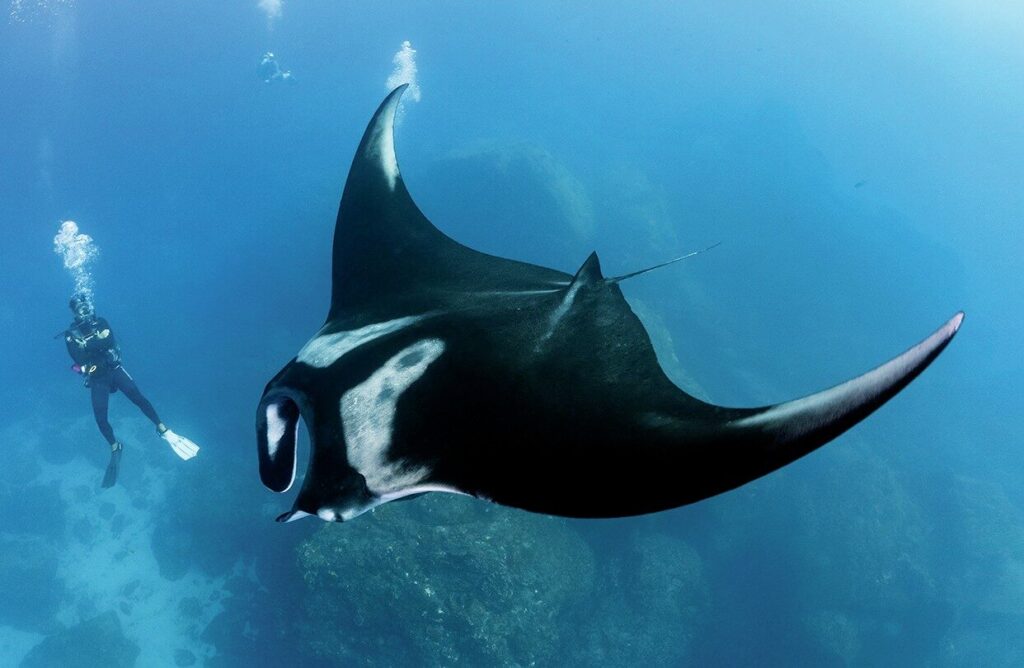
Equally intriguing is the evidence that mantas are the only member of the Elasmobranchii family that can pass the mirror test – meaning they possess the ability of visual self-recognition when they see themselves in a mirror. By comparison, the whale shark (Rhincodon typus), which is another massive member of the Elasmobranchii family, exhibits far simpler brain function. When swimming, these massive creatures are so focused on feeding that they barely register the presence of divers.
Giant Manta Rays vs Reef Mantas: How Big Is Big?
The Revillagigedos are one of the world’s most noted hotspots for predictable encounters with giant mantas. And it’s not just the frequency of these encounters that sets this destination apart. The specimens found here are some of the largest in the Pacific.
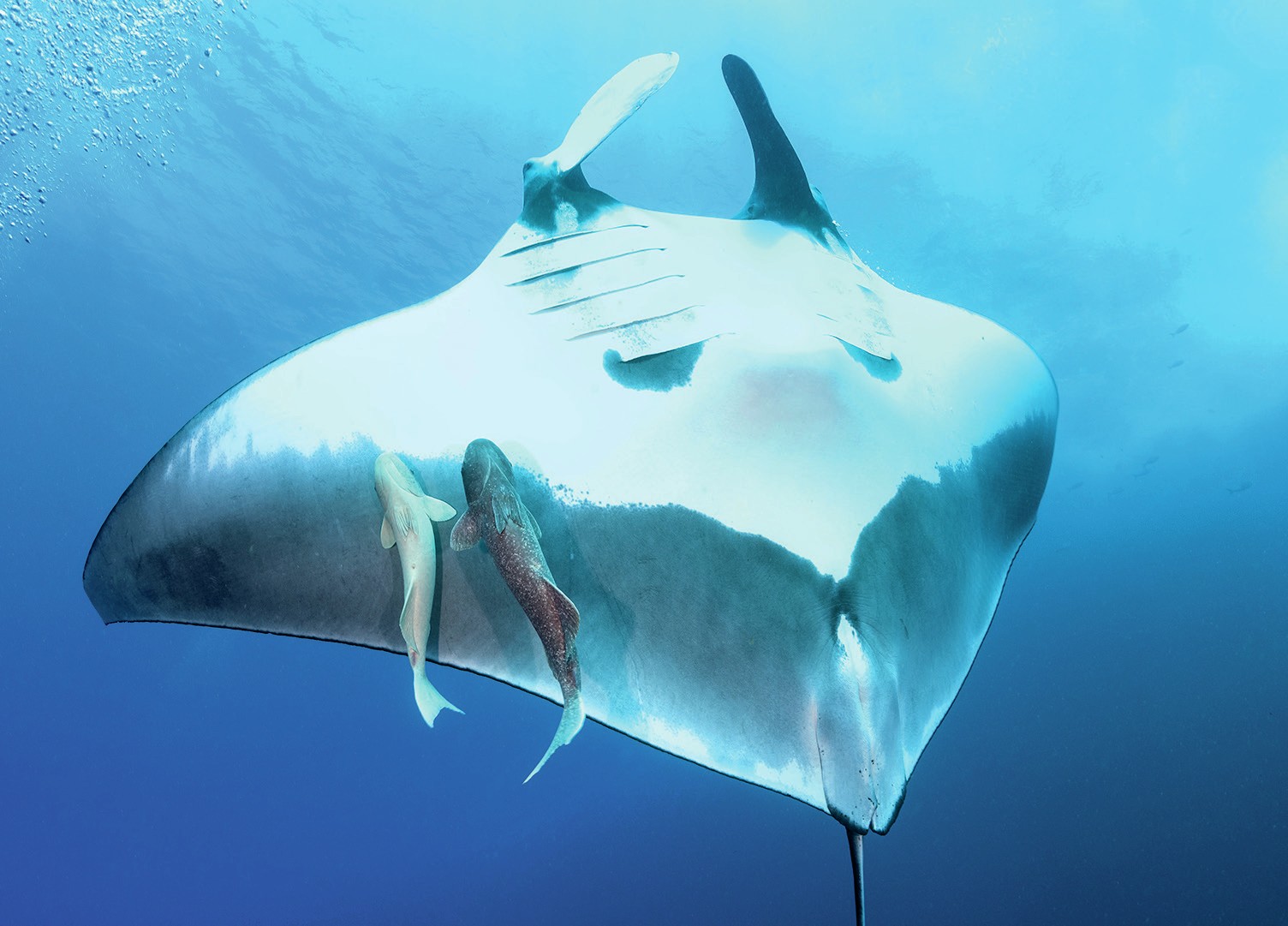
To provide perspective, the aforementioned reef manta (Mobula alfredi) is the second largest species in the Mobulidae family, with a maximum wingspan of up to 18 feet, but more commonly measuring nine to 11 feet wing tip to wing tip. By contrast, the giant oceanic manta (Mobula birostris) lives up to its name with a massive wingspan of up to 25 feet across, topping the scales at up to 2.8 metric tons.
Did you know?
The giant manta ray is the world’s largest ray with a wingspan of up to 26 feet. Giant manta rays are slow-growing, migratory animals with small, highly fragmented populations that are sparsely distributed across the world.
The Mobulidae family comprises 11 different species of large free-swimming rays that display the characteristic triangular-shaped pectoral fins, horn-shaped cephalic fins and forward-facing mouths. Except for the oceanic and reef mantas, the rest are dwarfs with a maximum wingspan between four and seven feet across.
So, when you see one of these giant beauties gliding toward you, remember that it’s not in-water magnification playing tricks on you!
Beyond Mantas: Pelagic Life of the Revillagigedo Islands
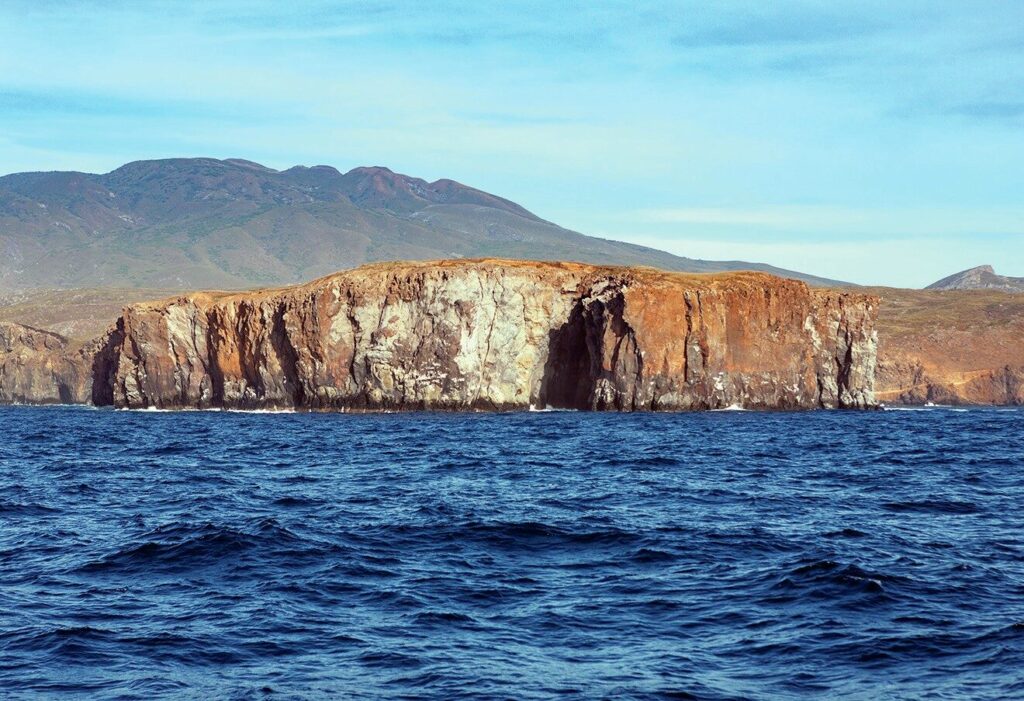
Like its kindred Eastern Pacific islands to the south -Galapagos, Malpelo and Cocos – the desolate volcanic landmasses of the Socorro Islands (an easier name to pronounce than Isla Revillagigedo) are among the globe’s most impressive destinations for adventure diving. This distinction is by the outstanding populations of marine life, from resident reef dwellers that include signature species like the clarion angel and Socorro lobster to transient pelagics like tuna, billfish, sharks, manta rays, dolphins and whales. A good rule to follow:
‘If it lives in the Eastern Pacific, you are likely to meet it here. ’ In the Socorro Island, the island that lies closest to the Mexican mainland, is the three-quarter by half-mile-wide spire of San Benedicto, which is 220 miles due south of the Baja Peninsula.
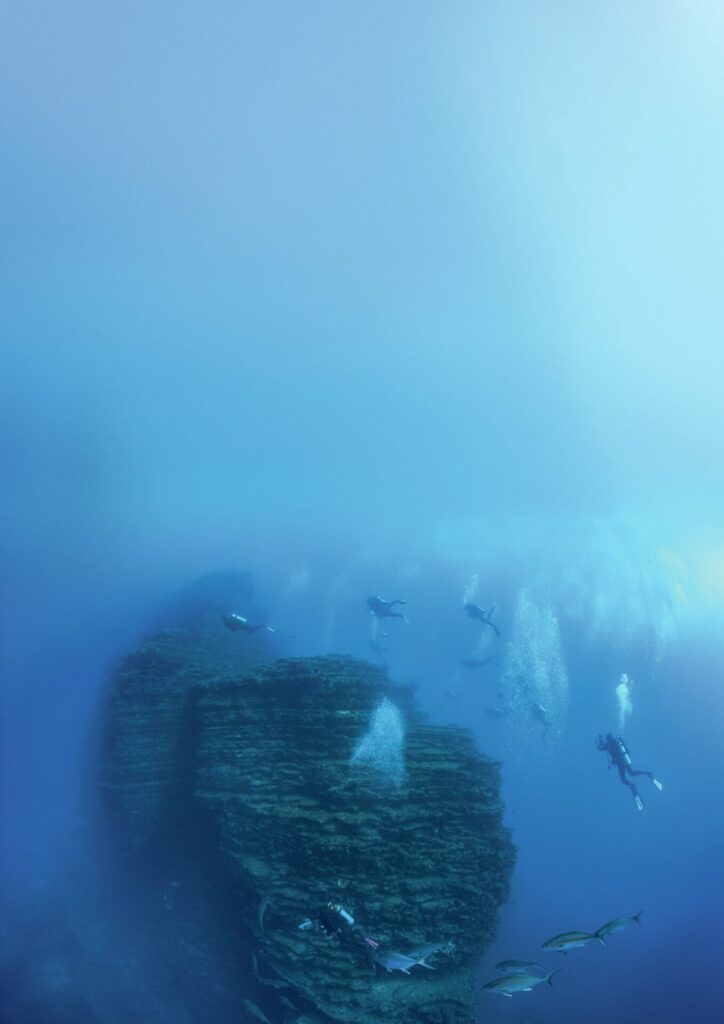
Identified by its prevalent cinder cone, which towers 975 feet above sea level, San Benedicto’s land mass was derived from a single volcano that has not yet become extinct. Fortunately, the last major eruption to shake it up took place on 1 August 1952, causing the cauldron’s cinder cone to grow 100 feet higher while at the same releasing a massive lava flow that added some 900 feet to one corner of the island, all within a two-week period. Since then, activities have been minor, marked by the occasional grumbling inside the cauldron. San Benedicto’s most prominent claim to fame is the Boiler, a dive site featuring a huge spire of rock towering up from a depth of 135ft to within a few feet from the surface. What makes the Boiler special is that it’s regarded as ‘the place’ for encountering both giant mantas and very friendly bottlenose dolphins at the same time.
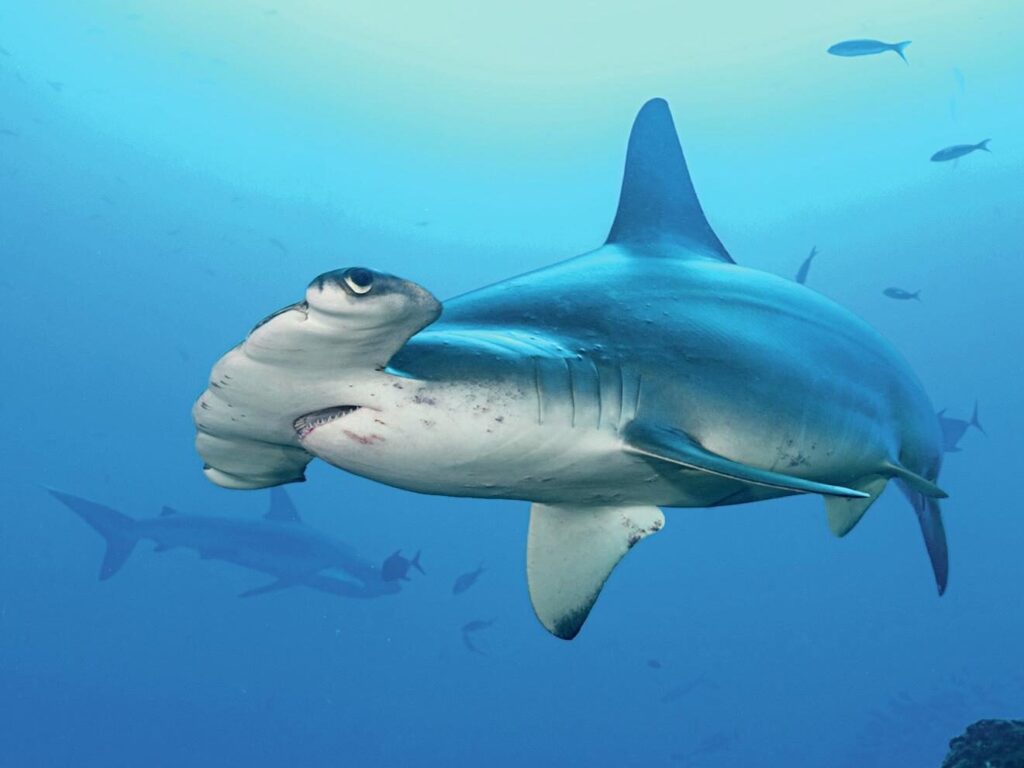
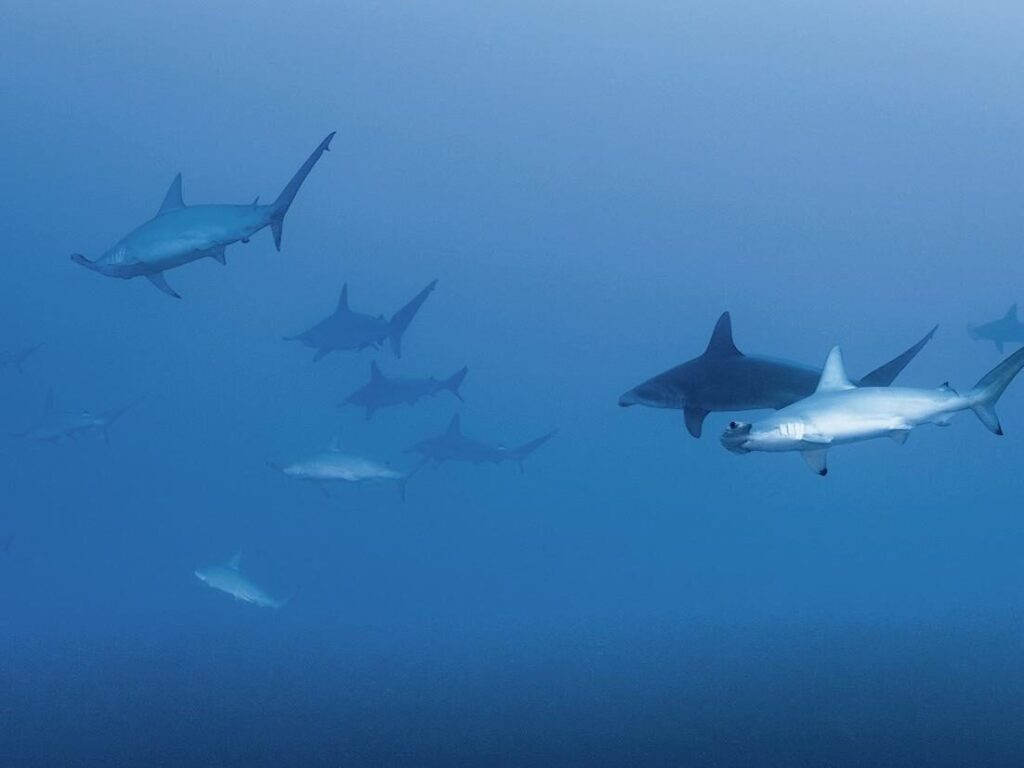
Around the opposite side of the island is another site called the Canyon, where you can see a mixed bag of shark species from reef whitetip to silvertip, Galapagos, silky, scalloped hammerheads, and, on rare occasions, big tiger sharks. Unlike the site known as Tiger Beach in the Bahamas, the tigers here generally prefer to keep their distance.
Did you know?
The scalloped hammerhead is distinguished from other hammerheads by an indentation located in the center of its laterally expanded head.
Sixty miles due west of San Benedicto Island is a lone rock outcropping called Roca Partida that protrudes from the sea 100 feet in height by roughly 200 feet in diameter. Roca Partida in Spanish means ‘split rock’. Below the surface, Roca Partida’s contours are near-vertical down past 200ft before sloping onward to depths beyond 3,000ft. A mere shaving of a mountain peak small enough to circumnavigate during a single dive, it is a magnet to passing pelagics. As such, it is rare to see it without large schools of jacks, tuna, and wahoo. And with all that food swimming around, of course, there are going to be sharks; sometimes lots of sharks! Throughout the years, I have seen not only silkies and schooling scalloped hammerheads but also Galapagos, duskies, gray reefs, silvertip and tiger here.
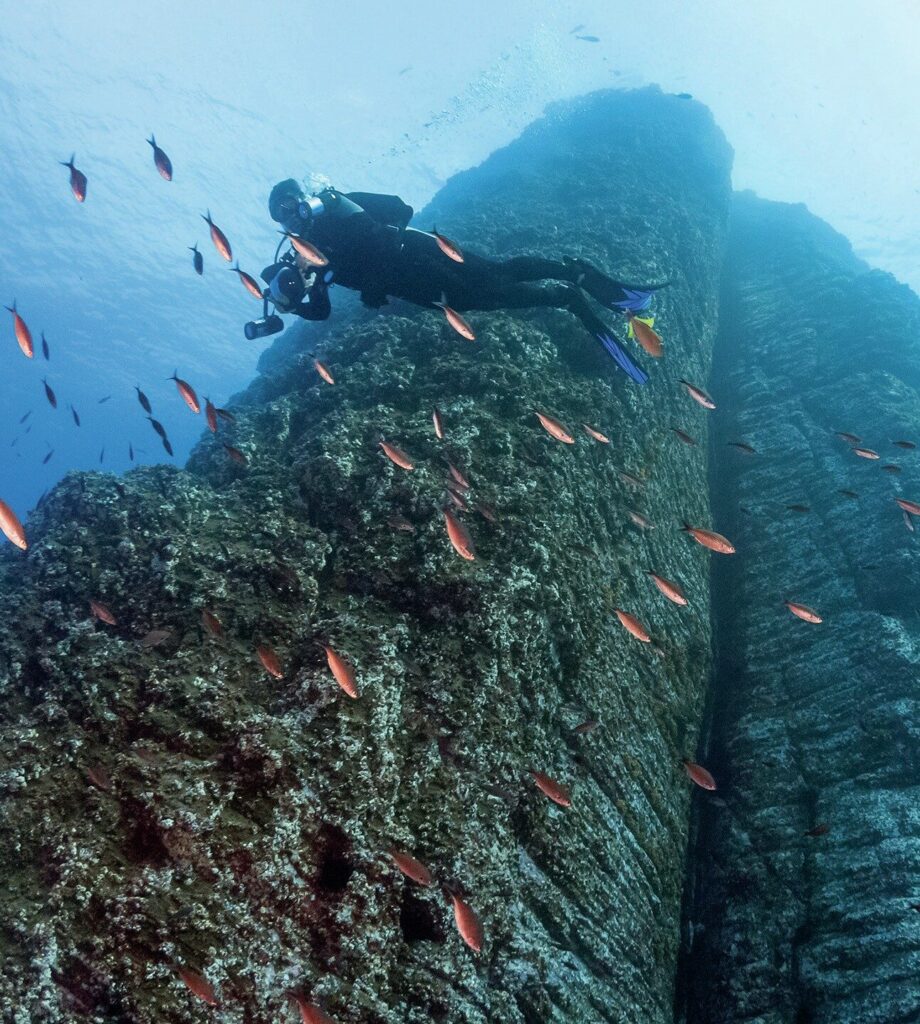
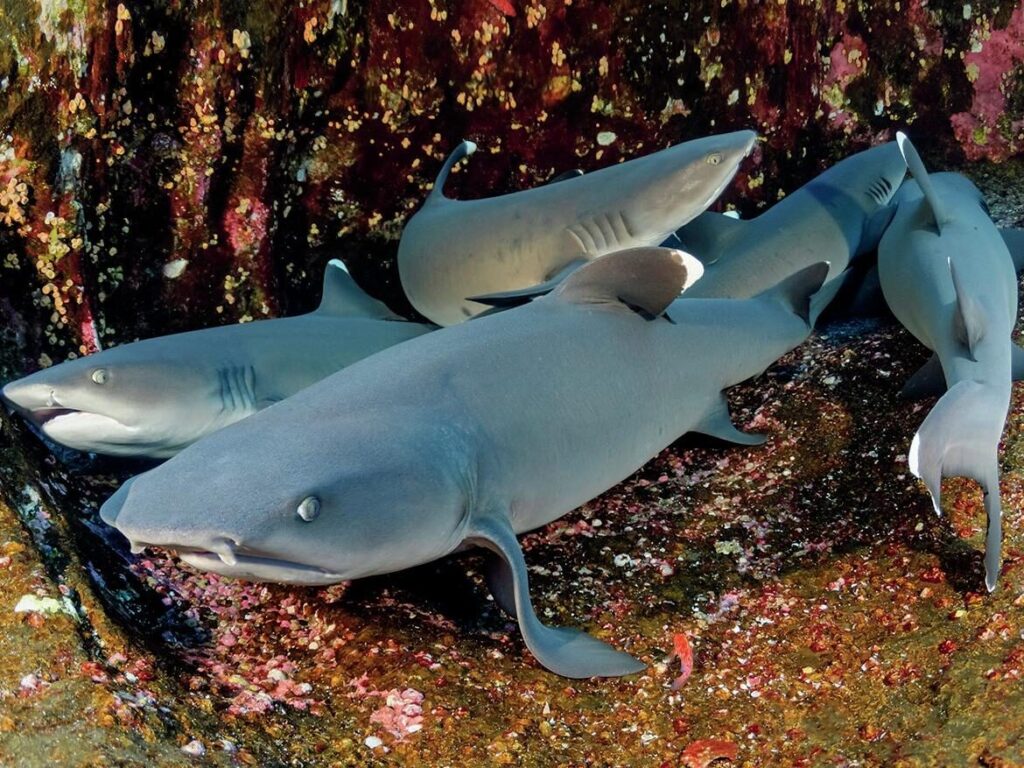
Among Roca Partida’s resident shark species are the whitetip reef sharks. They are nocturnal hunters, spending much of their day sleeping inside large indentations in the side vertical rock face. Seeing these small three- to five-foot sharks stacked up in a ‘puppy pile’, with one lying on top of another as they jostle for space, creates an entertaining picture.
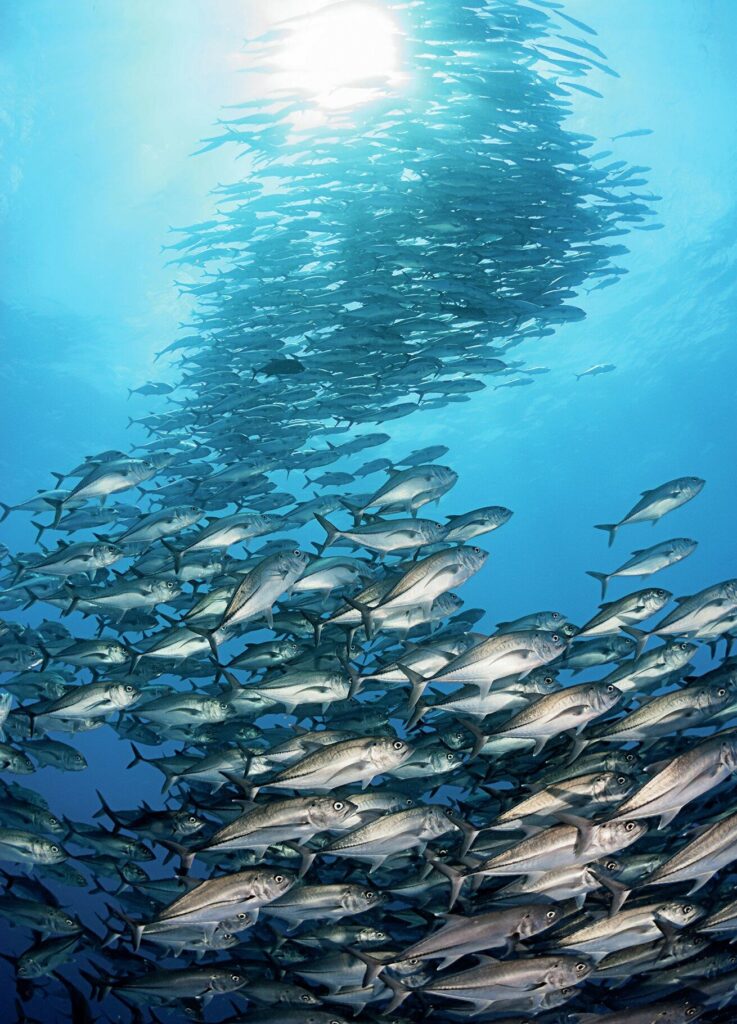
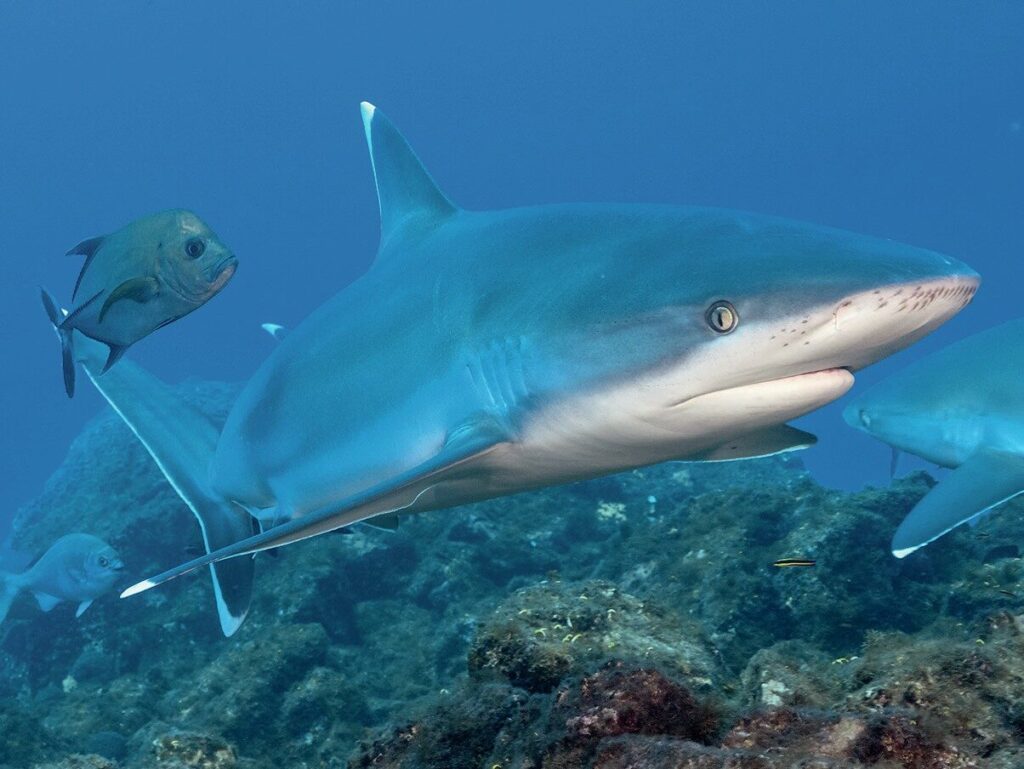
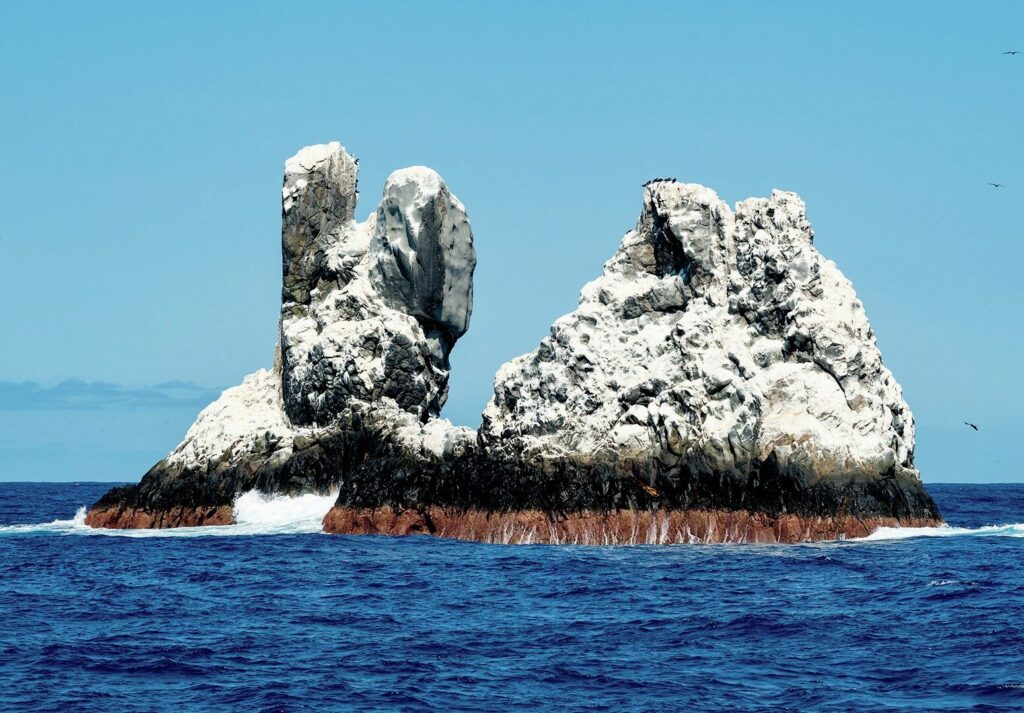
The largest of the four Socorro Islands is Punta Tosca, where I began this story. On this latest trip, the weather prevented us from diving the sites known as Roca O’Neal and Cabo Pearce, but I have visited them many a time in the past. Cabo Pearce is different from any of the dive sites in the Isla Revillagigedos as it features a massive, submerged ridge formation that extends outward below a cliff face on Socorro’s eastern shoreline. Just as with most places here, manta rays will sometimes make their appearance, but the more prevalent big animals here are schooling scalloped hammerheads.
During the winter season (from mid-January to the middle of April), the Socorro Islands turn into a port of call to a sizeable number of North Pacific humpback whales who have migrated from northern waters to mate and give birth.
Through the years, I have seen not only silkies and schooling scalloped hammerheads but also Galapagos, duskies, gray reefs, silvertip and tiger here.
Diving Conditions, Visibility and Access to Socorro
The draw for this comprehensive scope of marine life is the region’s wealth of food, namely zooplankton, and favourable water temperatures falling between lows of 69 degrees F to highs of 82 degrees F. A temperature range most big animals seem to prefer. The cooler waters can arrive without warning, as they are a result of periodic nutrient-laden upwellings.
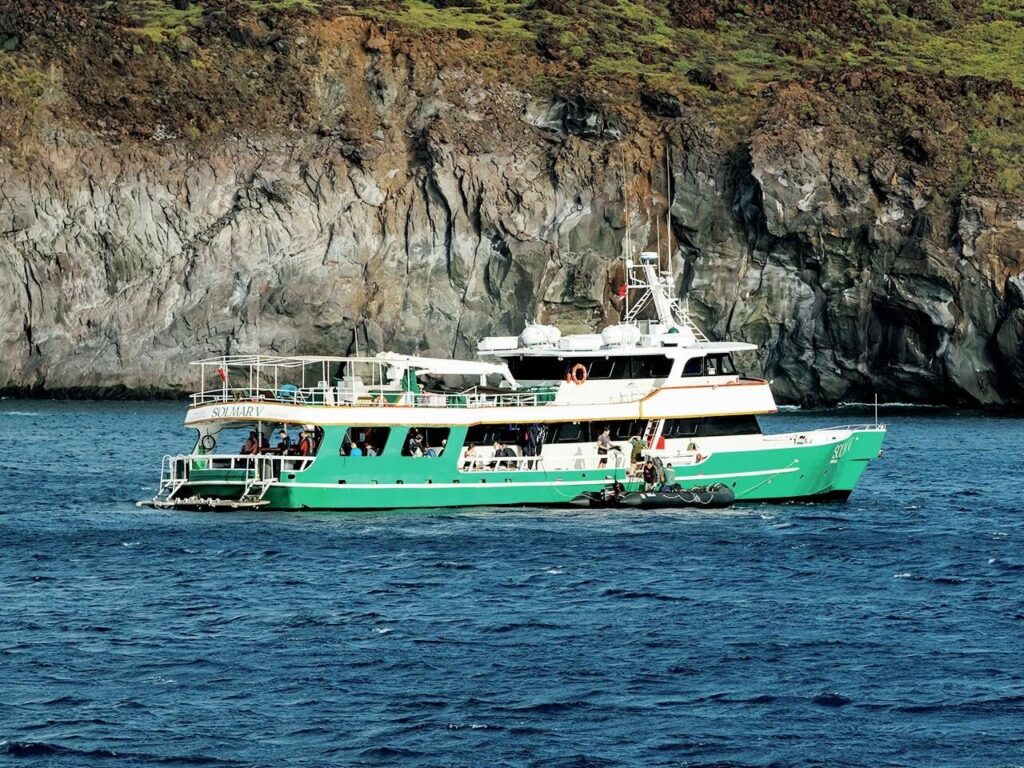
Being so far out in the open ocean, underwater visibility around the islands is customarily 80 to 100 feet, but lows of 35 to 50 feet near upwellings are not uncommon. Expect to encounter a few currents, up to two knots in strength, often combined with a surge generated from oceanic swells. Both are a constant fact of life in the Socorro Islands. Like a cruel joke, the big fellows seem to favour such conditions the most. Due to their remoteness out in the open sea, 220 miles due south of the Baja Peninsula, access is only possible through a handful of long-range liveaboards. Dive season is also curtailed to the inactive period of the Eastern Pacific’s hurricane season between the end of October to June. Keep in mind, when you are out there, you are really out there! At least with the mantas, you are in good company.
Frequently Asked Questions
Where is the best place to see giant manta rays in Mexico?
The Socorro Islands (Revillagigedo Archipelago) are considered Mexico’s top destination for predictable encounters with giant oceanic manta rays.
What species of manta ray is found at Socorro Island?
Socorro is famous for the giant oceanic manta ray, Mobula birostris, the largest ray species in the world.
When is the best season to dive with manta rays at Socorro?
The best diving season runs from late October to June, outside the Eastern Pacific hurricane season.
Are manta rays friendly to divers?
At Socorro, mantas are known for calm, curious behaviour, often approaching divers closely without being chased or disturbed.
How can divers interact responsibly with manta rays?
Divers should remain calm, avoid chasing or touching mantas, and allow the animals to initiate any close interaction.
This article was originally published in Scuba Diver Magazine
Subscribe today with promo code DIVE1 — enjoy 12 months for just £1!
