We chat to the Canadian underwater photographer, author, explorer, and marine conservationist Jett Britnell about the challenges of cold-water photography and organising expeditions to some of the most-remote destinations on the planet.
Photographs by Jett Britnell
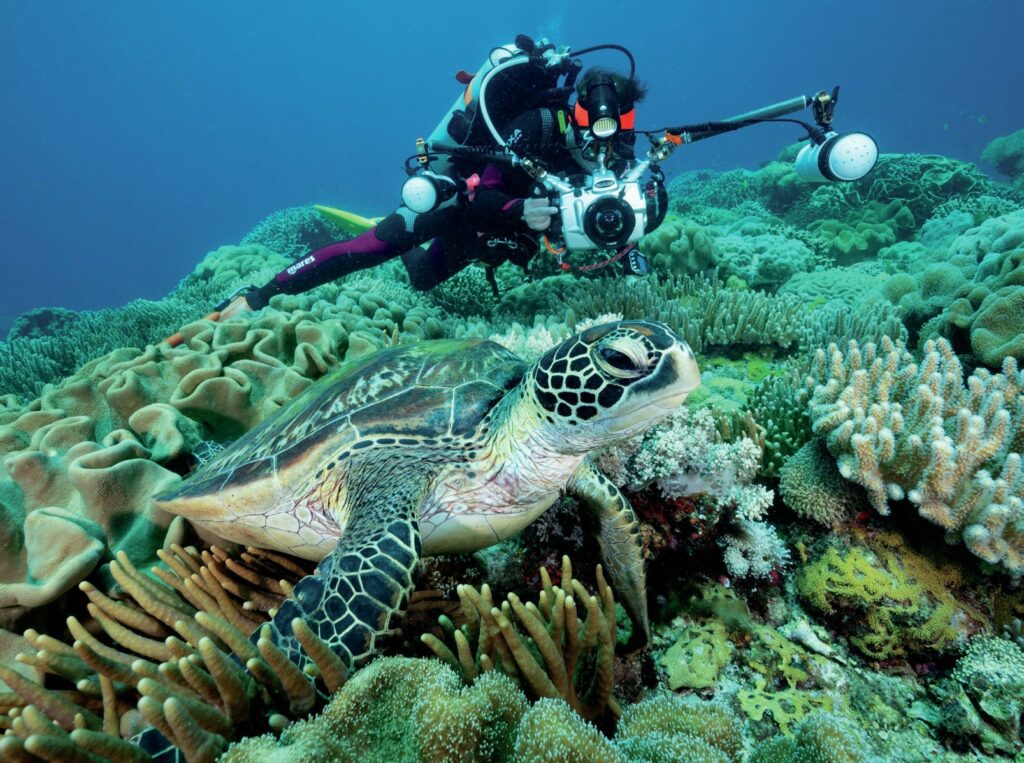
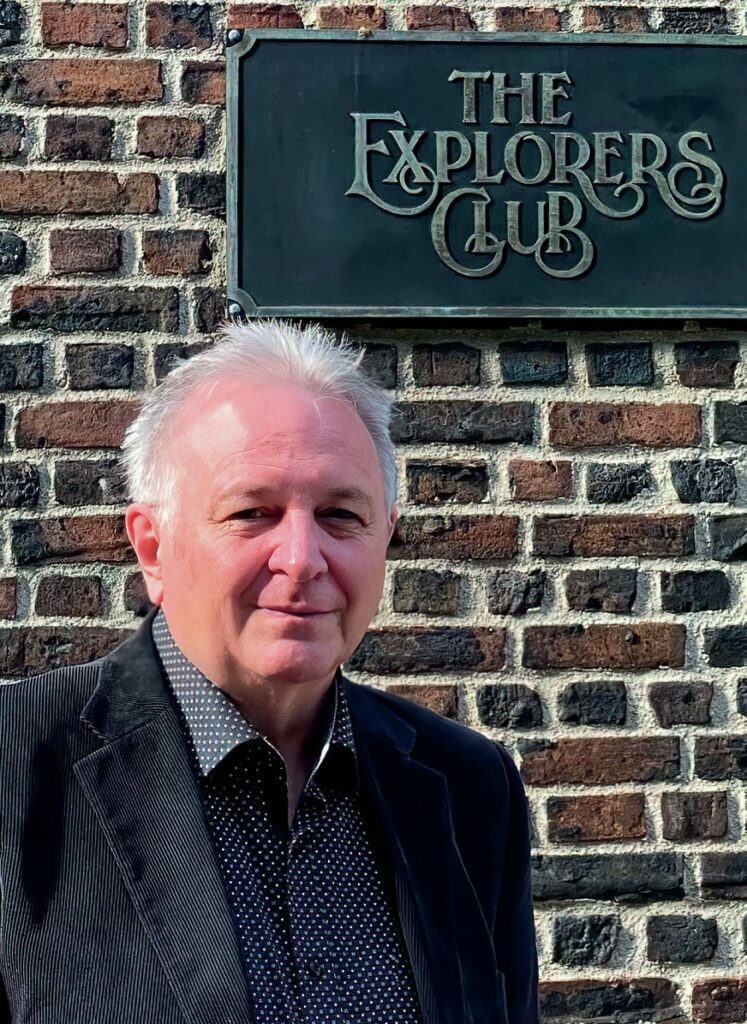
Q: As we always do with these Questions and Answer sessions, how did you first get into scuba diving?
A: I was five years old in the early 1960s when I happened to watch Sea Hunt, an American scuba-diving action-adventure television series. It seemed from that moment I was hooked on the notion that one day I would become a scuba diver.
Beyond watching TV documentaries such as The Undersea World of Jacques Cousteau or thumbing through the pages of National Geographic to follow the shark-diving exploits of Australia’s famous shark-diving duo, Ron and Valerie Taylor,
I learned how to snorkel in the current-swept Ottawa River when I was ten to retrieve lost fishing lures from the river bottom. In August 1980, I was 22 years old when I learned how to scuba dive in British Columbia’s Emerald Sea.
Q: You have been taking photographs underwater for decades, and your imagery has graced the pages of many magazines, including my former title Sport Diver UK. When did you first pick up an underwater camera, and what drew you to this discipline?
A: Like many who take up the art of underwater photography, I initially just wanted to show family and friends what I saw underwater. I’m a 100% self-taught photographer who learned how to adjust camera f-stops and shutter speeds while six fathoms deep.
Unlike today where everyone seems to have a digital underwater camera system, this was all back during the film days when I would be one of two or three people on a diving liveaboard shooting images underwater.
In time, my undersea images were deemed good enough to be published, but the scuba magazine editors required us to write stories to accompany my images.
My first published story was a four-page centre-spread feature article in Canada’s DIVER Magazine in August 1987. One of my photos also graced the magazine’s front cover in that same issue.
I truly never looked back after that and went on to become an internationally published diving photojournalist, which may seem rather surprising for someone without any formal writing degree or photography training.
“I have been credited as being among the first people in British Columbia to expound on the need for the preservation of marine life”
Q: You are often credited for putting British Columbia’s undersea realm on the world stage. This is an incredibly diverse ecosystem, but what are some of the biggest challenges with shooting in colder waters?
A: When shooting in cold water all the fundamental basics in underwater photography apply such as getting close to your subject, getting low, shooting at an upward angle, and trying to fill the frame with the subject
Lower ambient light levels and suspended particulate in the water column are everyday challenges that can successfully be overcome with strobe positioning and lighting techniques.
The colour balance in British Columbia’s Emerald Sea is lower than in tropical seas, so I now typically shoot at 5,200 degrees Kelvin to slightly reduce the greenish colour cast, whereas, in tropical blue seas, I will dial it up to 5,700 degrees.
Another consideration is to ensure one has adequate thermal protection for your body, head, and hands.
Q: You are a Fellow of the prestigious Royal Canadian Geographical Society, a Fellow of the in the world renowned and exclusive Explorers Club, and a Fellow of the famed Royal Geographical Society in London. You have also been involved in many expeditions around our watery planet. Tell us about some of the most-memorable projects you have been involved with over the years.
A: I have been credited as being among the first people in British Columbia to expound on the need for the preservation of marine life through my articles and public presentations. I have also included mention of British Columbia’s First Nations culture whenever possible.
My thinking was indigenous cultures are celebrated around the world, so why not in British Columbia too?
Among my most-memorable projects are the diving and articles we have written about Nakwakto Rapids, a place located at the entrance to Seymour Inlet, approximately 320km northwest of Vancouver in a remote section of British Columbia’s coastal mainland.
In recent times, the Guinness Book of World Records once listed Nakwakto Rapids as having ‘the fastest navigable tidal currents in the world!’ – up to 39km per hour during its largest tidal exchanges!
A notorious title Nakwakto Rapids can no longer lay claim to as in recent years, the turbulent currents at British Columbia’s Sechelt Rapids were measured as being a tad faster, with an equally stunning reef scape as Nakwakto.
Q: You are a staunch supporter of marine conservation and environmental education, what have been some of your biggest successes and projects?
A: There have been so many projects through the years that I documented with magazine stories. Two projects that proved satisfying to me for different reasons were the dives we did on the SS Princess Sophia shipwreck.
The second was discovering the location of a First Nations burial site on a remote stretch of wilderness on Vancouver Island’s western coastline.
The sinking of the SS Princess Sophia occurred approximately six years after the notorious sinking of the RMS Titanic. Hence, the worst maritime disaster on the west coast of North America became the ‘Unknown Titanic of the Pacific’.
Our objective on this expedition was to photograph this deteriorating shipwreck which sank on 24 October 1918. Soon after the publication of one of our stories about the fate of Alaska’s SS Princess Sophia, the Alaska State Museum contacted us through the Underwater Archaeological Society of British Columbia.
The museum curators were very excited about a crate of photographic plates on the wreck that I mentioned in our article as they believed the discovery of these photographic plates could be very important artefacts to the history of Alaska.
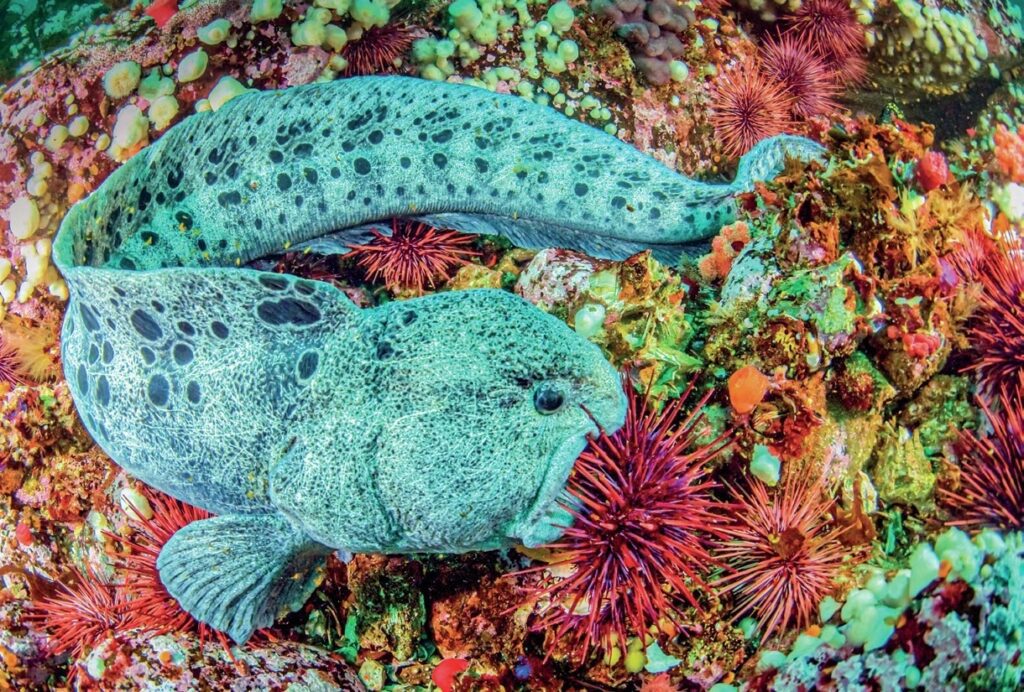
Alaska Fisheries Research also reached out to us about our published image of a bigmouth sculpin. They were intrigued that I had captured an actual underwater photo of this rarely photographed fish species and asked if they could include it in a science presentation about Alaskan fish habitats.
The second project that springs to mind was during our second expedition to remote Kyuquot Sound, off Vancouver Island’s west coast, when we discovered the ancient First Nations burial site we were looking for, replete with moss-covered skulls which we were able to photograph for posterity.
After we had our story published, I received a letter from an Archaeologist from Seattle. He stated… ‘It was a wellwritten and respectful article, Sacred Burial Sites of British Columbia’s First Nations.
I couldn’t have said it better myself – and that’s my business! I’m going to have my employees read it as well. Maybe I can convince one of them to take up diving with me’. I’ll admit that feedback felt pretty good.

Q: You are often joined on your adventures by your wife, Kathryn. She is also a talented underwater photographer. How do you decide who is going to be in front of the lens, and who is going to be behind the camera?
A: As it is often said, ‘teamwork makes the dream work’. My wife Kathryn is indeed a talented photographer/writer in her own right. We co-author an exploration, photography and travel column for Luxe Beat Magazine under the banner ‘Third Age Expeditions’ (www.luxebeatmag.com)
I would categorize our working style as being both collaborative and fluid. Either one of us will model underwater for each other or do whatever is necessary to support the other in getting the shot.
We endeavour to emulate what I have always felt were the prototype underwater image-making married couples, such as Hans and Lotte Hass, Ron and Valerie Taylor, Howard and Michele Hall, Stephen Frink and Barbara Doernbach, and David Doubilet and Jennifer Hayes.
One cannot help but up their game studying the work of these legendary underwater image-makers.

Q: What is your most-memorable diving experience?
A: My first time diving with six-gill sharks was an absolute thrill! Over two days we counted more than one dozen six gills on every dive. That has not happened to anyone since then.
Another memorable moment has stayed with me. It was back in the late 1980s when we were diving in open water with a pod of Pacific white-sided dolphins.
I was shooting with film at the time, and it was late afternoon. Sunlight was fading. All my fellow divers had returned to the skiff. I knew with the speed the dolphins were swimming past me, I was not capturing any images worth keeping.
Hanging at about 12m in a 90m-deep channel, I felt calm but only had about three minutes before I would have to surface. It was then I saw three dolphins together and they were going to rocket past me.
I had one frame of film left. But I could tell from experience I was not going to get a shot. I lowered my camera from my facemask and just soaked up the experience of being in the water with the dolphins.
As the three dolphins flew past me… I thought to myself well, that’s that. All of a sudden, one dolphin broke away from the others when it was about 15 metres away from me. It swam straight back toward me and stopped dead in the water right in front of me. I raised my camera to my eye and snapped a picture.
Now, this is where that dolphin made my spine tingle. As soon as I lowered my camera, it nodded at me three times and then blasted off to reunite with its friends. I then surfaced and got into the skiff. Everyone was asking me… “How was it? How was it?” I replied, “You are not going to believe what I am about to tell you.”
Q: On the flip side, what is your worst diving memory?
A: Truly, I don’t embrace bad diving memories. I had never been blown out by the bad weather on a dive trip until I went to North Carolina in 2016 to dive with sand tiger sharks.
High winds kept the dive boat tied to the dock the entire week, so we used our surface time to tour the impeccably restored pre-Civil War Fort Macon, along with visiting the Old Burying Ground cemetery in nearby Beauport.
The earliest legible date on one of the grave markers is from 1765, although many experts estimate that some of the graves are older than that.
Had we been out diving, we never would have visited these two historic sites. Of course, with over 40 years of diving experience, there have been a few that could be deemed as being close calls. But these misadventures were infrequent and are best shared in the evening hours over a fine bottle of single-malt scotch.
Q: What does the future hold for Jett Britnell?
A: In March 2024, Kathryn and I will be doing some scuba diving in Antarctica’s Circle and Weddell Sea with Aurora Expeditions from aboard their purpose-built, polar-class expedition ship MV Sylvia Earle.
Beyond this, our calendar is relatively open to what or where our next assignment will be. We would like to return to Tahiti to snorkel with humpback whales. Increasingly, we are being contacted to participate in undersea and topside exploration projects or editorial assignments.

FAQ: Jett Britnell – Underwater Photographer & Explorer
Q: Who is Jett Britnell?
A: Jett Britnell is a Canadian underwater photographer, author, explorer, and marine conservationist. He is a Fellow of the Royal Canadian Geographical Society, The Explorers Club, and the Royal Geographical Society.
Q: How did Jett Britnell get into scuba diving?
A: Inspired at a young age by TV shows like Sea Hunt and documentaries by Jacques Cousteau, Britnell began snorkelling as a child and learned to scuba dive in British Columbia’s Emerald Sea in 1980.
Q: What are the challenges of cold-water photography?
A: Cold-water diving presents lower ambient light, suspended particles, and colour balance issues. Jett uses careful strobe positioning, adjusts white balance (around 5,200K), and ensures proper thermal protection to capture high-quality images.
Q: What notable expeditions has Jett Britnell been part of?
A: His projects include documenting Nakwakto Rapids in British Columbia, photographing the SS Princess Sophia wreck, and discovering a First Nations burial site in Vancouver Island’s wilderness. He has also worked on assignments worldwide, from the Philippines to the Bahamas.
Q: What is Jett Britnell’s role in marine conservation?
A: Britnell has been an outspoken advocate for marine life preservation in British Columbia and beyond. His articles and photography highlight conservation issues and often integrate recognition of indigenous cultures.
Q: Does Jett Britnell collaborate with others on his expeditions?
A: Yes, Jett often works alongside his wife, Kathryn Britnell, who is also an accomplished underwater photographer. Together, they co-author Third Age Expeditions for Luxe Beat Magazine.
Q: What are Jett Britnell’s future plans?
A: In 2024, Jett and Kathryn will dive in Antarctica’s Circle and Weddell Sea with Aurora Expeditions. They also hope to return to Tahiti to snorkel with humpback whales and continue contributing to exploration and conservation projects.
Jett Britnell works
You can see more of Jett’s work following these links:
Website: www.jettbritnell.com
Website: thirdageexpeditions.com
Facebook: www.facebook.com/jett.britnell
Instagram: www.instagram.com
This article was originally published in Scuba Diver UK #83
Subscribe today with promo code DIVE1 — enjoy 12 months for just £1!