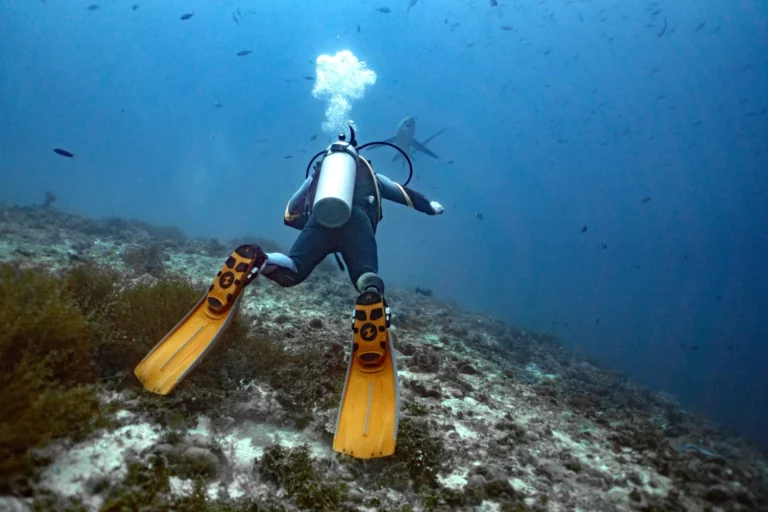
Bad news for scuba-divers who assume that their underwater activities automatically support marine-conservation efforts has emerged in the shape of a devastating report from Australia’s University of Sydney.
The study concludes that recreational diving is causing frequent, often hidden and mostly unintentional damage to fragile marine ecosystems – and that this is because so many divers wildly over-estimate their abilities.
The study, led by Dr Bing Lin from the Thriving Oceans Research Hub in the university’s School of Geosciences and published today (26 May), analysed the behaviour of more than 700 scuba divers across tourism hotspots in the Philippines and Indonesia, including Bali.

Drawing on data from more than 300 hours of underwater observation, the researchers recorded no fewer than 4,981 reef-contact events among 411 divers.
Some 41% of these contacts caused observable damage to coral, from direct breakage to the stirring of sediment that can smother reef life.
What might surprise divers most is that those being observed made on average 0.26 reef contacts a minute – about one every four minutes – and spent nearly two seconds of every minute in direct contact with the reef.

“This work documents the unsustainable underwater footprint of scuba-diving tourism on coral reefs,” says Lin, who began the research during his PhD studies at Princeton University and completed it in his post-doctoral position at the University of Sydney.
Illusory superiority
A central finding was that most damage is not deliberate. More than 80% of damaging contacts were unintentional or unnoticed by the diver, revealing how routine tourism activity can quietly degrade reef systems over time.
Most divers in the study also seemed to care about reef conservation, self-reporting very high pro-environmental attitudes. However, some 75% rated themselves as “above average” in their ability to avoid reef contact.
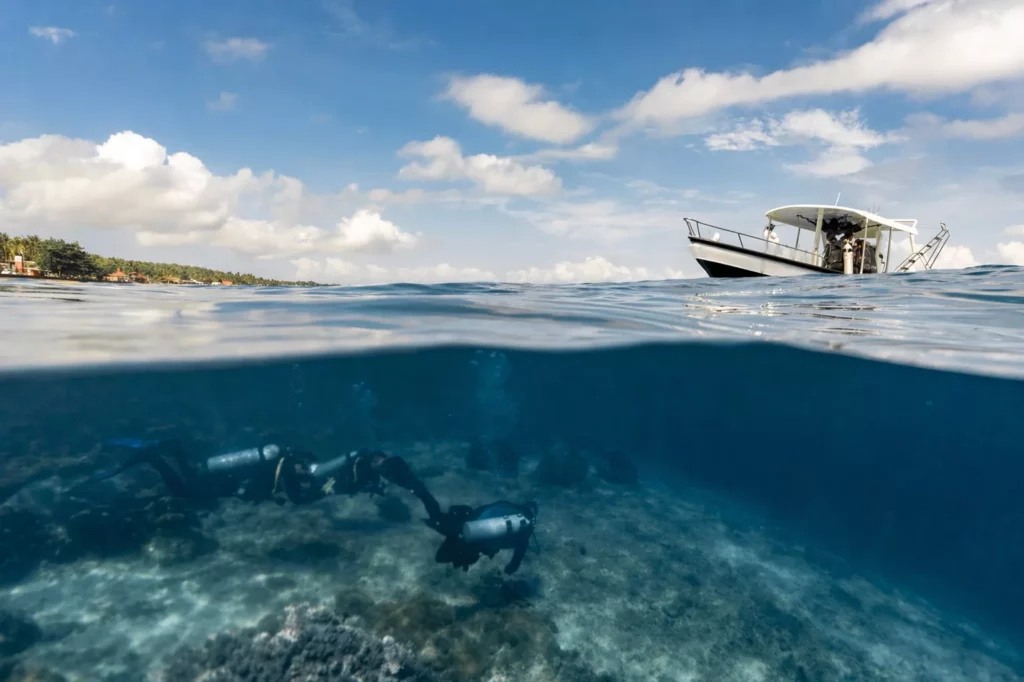
Dr Lin describes this as an example of the “illusory superiority effect”, by which people systematically overestimate their abilities relative to others.
The “Dunning-Kruger effect”, whereby people with lower skill levels disproportionately over-estimate their competence, also came into play among the divers. In matched observations, they under-estimated almost fivefold how often they contacted the reef.
“Many divers believe they are careful and low-impact, but our data shows a consistent mismatch between perception and behaviour,” says Lin.
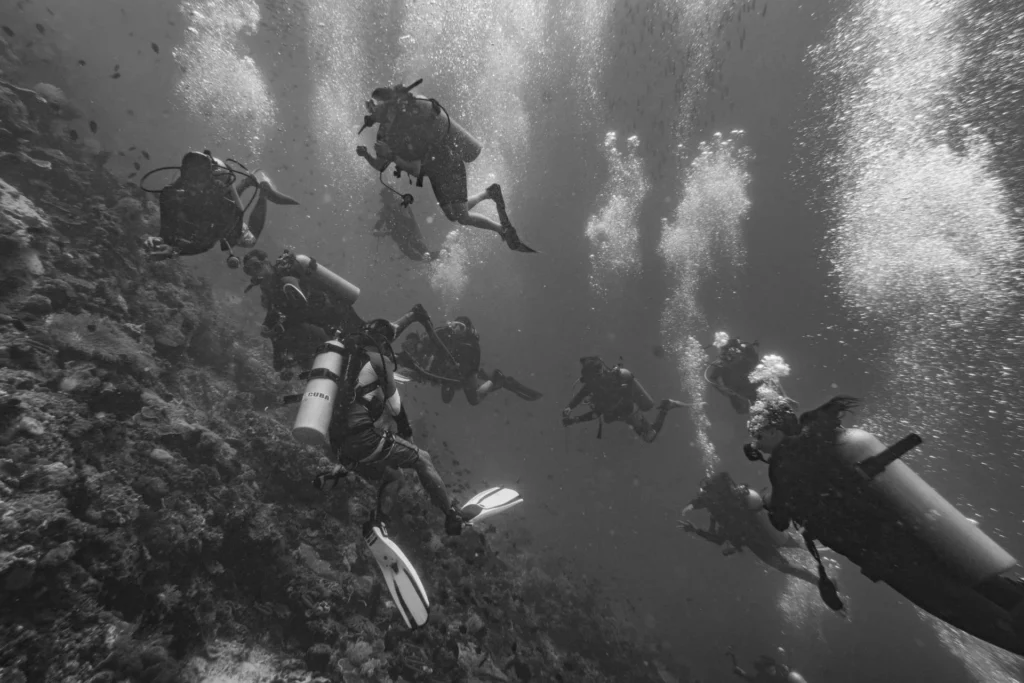
Divers using underwater cameras, gloves or pointer sticks showed higher contact rates, and peer behaviour played a significant role, because it took only one diver to touch the reef for others to become more likely to follow suit.
Damaging contacts
Marine-life encounters significantly amplified damage levels. The presence of animals increased intentional reef contacts by 220%, unintentional contacts by 85% and damaging contacts by 106%, often as divers approached or adjusted position to watch the wildlife.
A small minority of divers accounted for a disproportionate share of total reef damage, suggesting that targeted interventions by dive-guides or fellow-divers could be beneficial.

“It’s difficult to quantify the true scale of the reef-contact problem, but what is clear is that unregulated underwater tourism is an overlooked local driver of damage that adds to, and amplifies, other acute and chronic reef stressors,” says Lin.
He and his team point to practical solutions such as improved buoyancy training, stricter controls on equipment use, stronger environmental briefings and higher standards in diver and dive-operator certification to reduce cumulative damage.
“First and foremost, divers need to understand that they are a part of the problem before we can convince them to become a part of the solution,” says Lin.
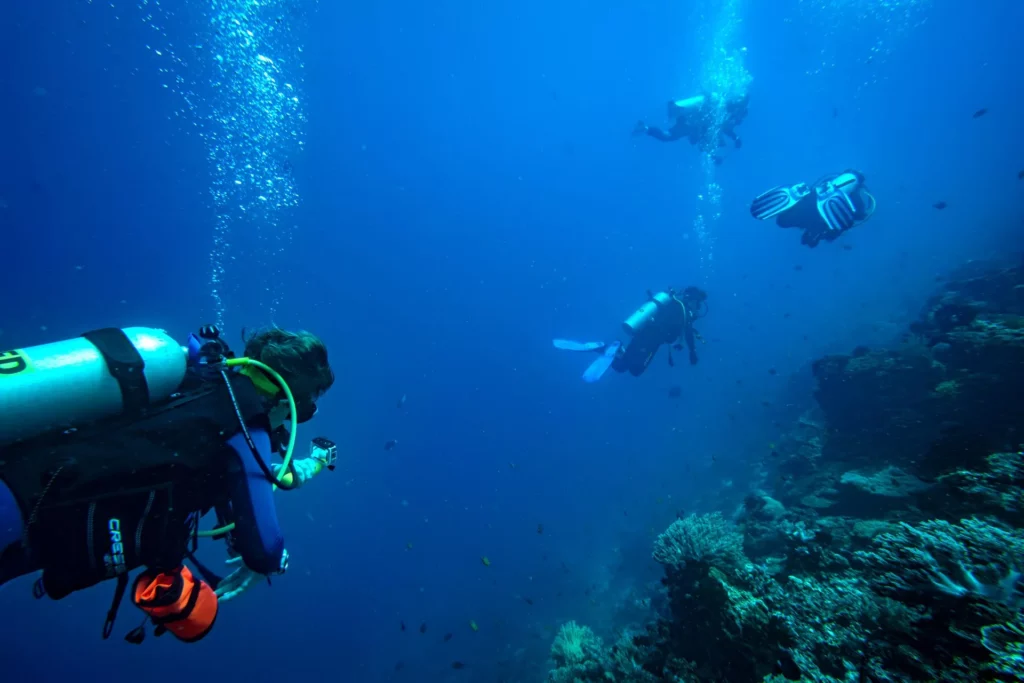
His previous research, published in Nature Sustainability, has demonstrated detectable effects of coastal tourism, including scuba diving, on coral reefs across an entire archipelago. With coral reefs already under pressure from climate change, pollution and overfishing, the findings highlight the need for better management of tourism effects in heavily visited regions.
“Tourism is critical to many coastal economies, including those closely linked to Australia, but without changes to diver behaviour, training and industry standards, it risks undermining the very ecosystems it depends on,” says Lin. The paper is published in Conservation Letters.
Also on Divernet: What makes someone a good diver? Pt 1